Why Can Two 100% Polyester Fabrics Perform So Differently?
Table of Contents
Two fabrics can both be labeled 100% polyester fabric and still feel almost unrelated because the label identifies the fiber, not the full textile recipe. Polyester is the shared raw material, but yarn type, fabric structure, weight, density, stretch engineering, and finishing determine whether the result is a crisp shirt fabric, a stretchy jersey, a fleece, a mesh, a satin-like lining, or a durable outdoor shell.
In other words, “100% polyester” answers one question: what fiber is present. It does not tell you how that fiber was turned into yarn and fabric. Those later choices explain most of the differences people notice when they touch, wear, wash, or sew with polyester.
A reader raised this basic question in a sewing discussion: can one textile fiber create more than one type of fabric? Polyester is a clear example of why the answer is yes.
The fiber is the starting point, not the finished fabric
Polyester generally has low moisture absorbency, good durability, and quick-drying behavior. But these base characteristics do not automatically make every polyester fabric slick, hot, stiff, or stretchy.
A fabric’s final behavior comes from several layers of construction:
- The form of the polyester fiber: continuous filament or short staple fiber
- The yarn’s thickness, texture, and twist
- Whether yarns are woven, knitted, or otherwise bonded
- Fabric weight and how tightly the yarns or loops are packed
- Mechanical stretch created by the structure
- Finishes that alter surface feel, water behavior, appearance, or performance
Each choice can reinforce or counteract another. A lightweight open polyester knit may feel airy and flexible, while a tightly woven polyester fabric of similar fiber content may feel crisp, stable, and far less stretchy.
Filament and staple polyester do not feel the same
One major difference begins with fiber length.
Filament polyester makes smoother yarns
Filament polyester consists of long, continuous strands. Yarns made from these filaments usually have fewer loose fiber ends on their surface. This can produce fabrics with a cleaner appearance, smoother hand, and sometimes more sheen. Fine filament yarns are common in fabrics intended to be lightweight, drapey, sleek, or performance-oriented.
Filament yarn can also be textured. Texturing introduces bulk, crimp, or elasticity-like behavior into the yarn, so a filament polyester fabric does not have to feel flat or shiny. Textured yarns can create a softer, fuller, less formal surface.
Staple polyester can feel softer and more cotton-like
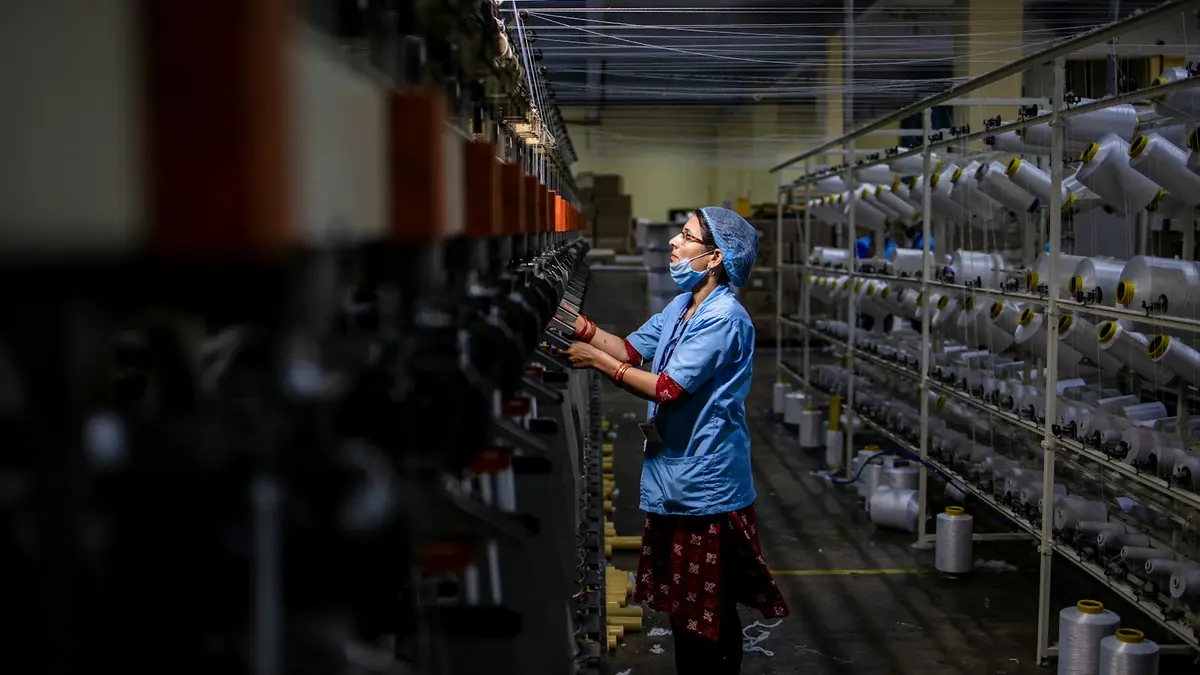
Staple polyester is cut into short lengths and spun into yarn. Because short fibers are twisted together, small fiber ends can project from the yarn surface. That often creates a softer, warmer, more matte, or more natural-looking fabric character than a smooth filament yarn.
Spun polyester is not automatically better or worse than filament polyester. It simply serves different purposes. A fabric designed to resemble a casual cotton jersey may use spun yarn, while a smooth lining, lightweight shell, or drapey dress fabric may use filament yarn.
As one overview of filament and staple fiber differences explains, fiber form can substantially affect surface smoothness, bulk, and drape before the fabric construction is even considered.
Polyester weave versus knit changes stretch and stability
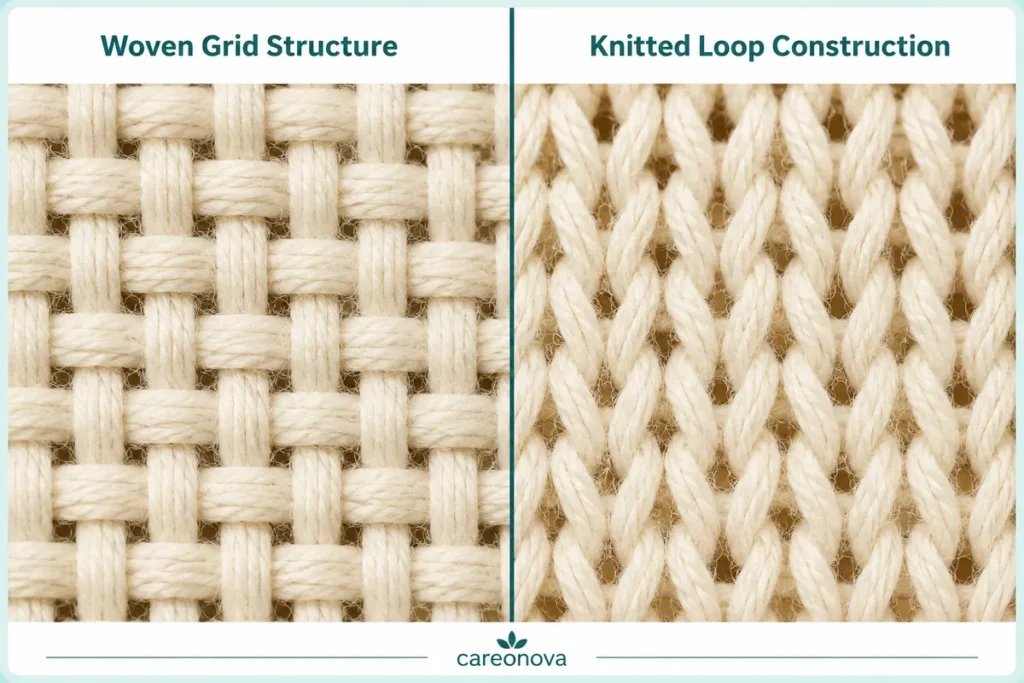
Source: careonova
The biggest practical distinction for many shoppers is whether the polyester is woven or knitted.
Woven polyester is usually more stable
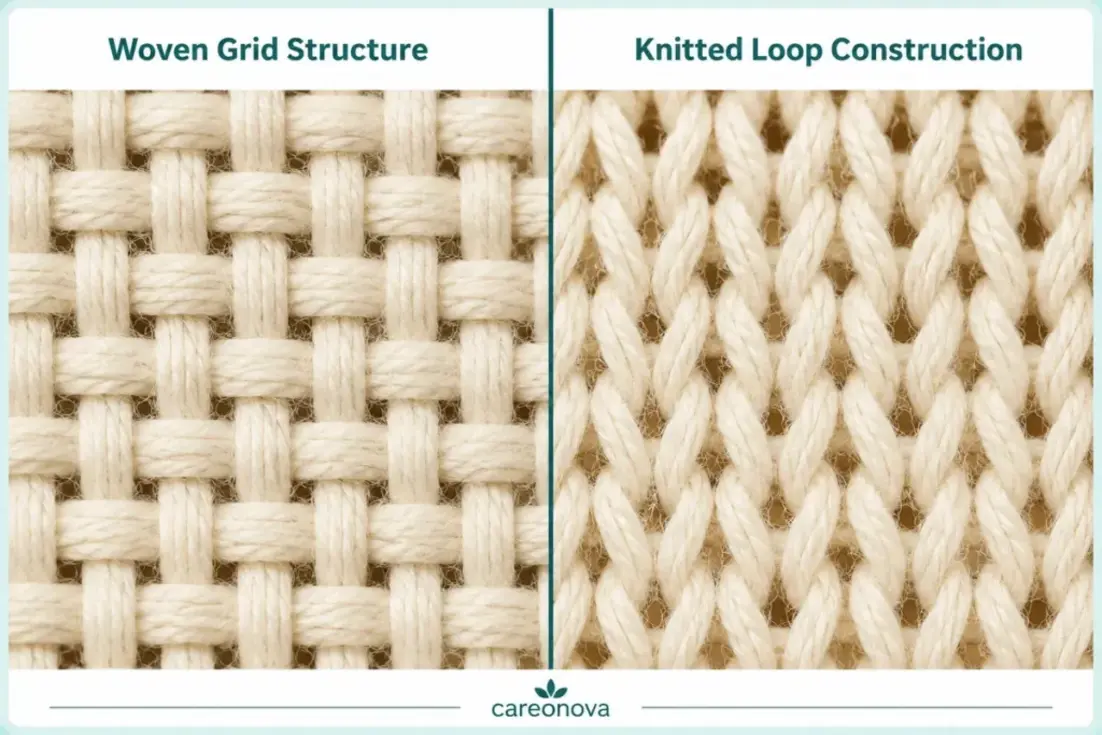
A woven fabric is made by interlacing lengthwise warp yarns with crosswise weft yarns. This structure generally gives the fabric stability and makes it less likely to stretch unless stretch yarns are included or the fabric is cut on the bias.
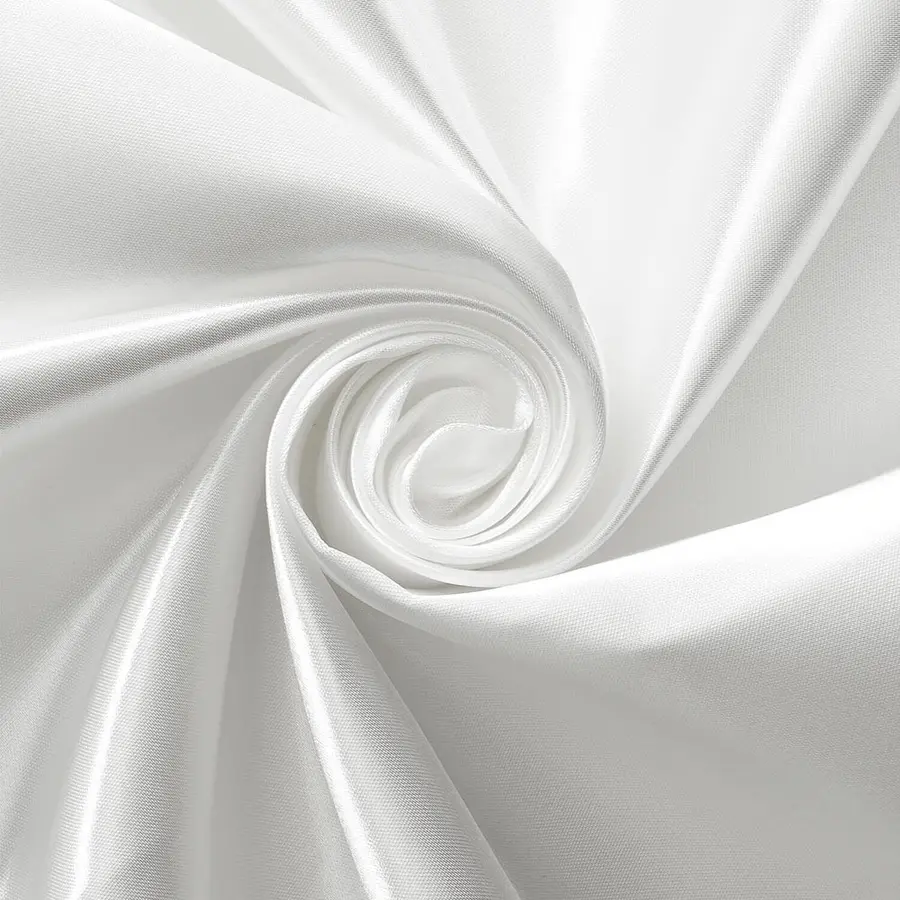
A plain-woven polyester may be crisp, lightweight, and durable. Depending on yarn size and density, it can become taffeta-like, chiffon-like, shirt-like, or technical-shell-like. Twill weaves create diagonal lines and often produce a more flexible, durable fabric. Satin weaves can make polyester appear smoother and more lustrous because longer yarn floats reflect light differently.
Woven polyester is often a good choice when shape retention, clean tailoring, wind resistance, or abrasion resistance matters. The tradeoff is that it may feel less flexible than a knit fabric.
Knitted polyester is usually more flexible
Knits are built from connected loops rather than intersecting yarns. Those loops can move and deform, giving the fabric natural mechanical stretch even when it contains no elastane.
A simple polyester jersey can stretch noticeably across its width because the loops open and shift under tension. It is often used in T-shirts, activewear, and casual garments because it can move with the body. Double knits, such as interlock, are usually heavier and more stable than single jersey while retaining a knit-like feel.
Mesh is another knit-based example. Its intentionally open structure can improve air movement, though breathability still depends on thickness, density, garment design, and whether another layer sits over it.
The source of stretch matters. A 100% polyester knit may stretch because of loop structure, but it may not recover as strongly as a fabric that contains elastane. A garment can therefore feel stretchy in the fitting room yet gradually lose shape if its construction and finishing are not designed for repeated recovery.
Fabric weight affects drape, warmth, and opacity
Fabric weight is commonly discussed as mass per unit area. In everyday terms, a lighter polyester fabric tends to feel thinner and may drape more easily; a heavier one usually feels more substantial and may provide more coverage or warmth.
But weight alone does not determine performance. A lightweight tightly woven polyester can block air better than a heavier open mesh. A lofty fleece may feel warm because its raised surface traps air, even though the underlying construction differs from a dense woven fabric.
Weight works together with structure:
- Lightweight, open constructions can feel more breathable but may be less opaque or durable.
- Dense constructions can be more durable and wind-resistant but may feel less airy.
- Bulky textured yarns can add warmth without making a fabric feel rigid.
- Fine filament yarns can make a fabric light and fluid while still appearing polished.
This is why comparing only garment weight or only fiber content is rarely enough.
Density controls air flow, coverage, and hand feel
Two polyester fabrics can use similar yarns and still differ because one is made more densely than the other. Higher density means more yarns or loops are packed into a given area.
A denser fabric may be more opaque, stable, and resistant to snagging. It can also feel smoother or firmer because there is less open space between yarns. A less dense construction may feel lighter and allow more air movement, but it may snag more easily, show through more, or stretch more under stress.
Breathability is especially easy to misunderstand. Polyester’s low absorbency helps it dry quickly, but fast drying is not identical to ventilation. Air circulation depends heavily on pore size, fabric thickness, density, and garment design. An open polyester mesh and a tightly woven polyester rain shell may both dry relatively quickly, yet they manage heat and airflow very differently.
Twist and yarn texture affect softness and drape
The yarn itself can be engineered in many ways before it becomes fabric.
More twist can make a yarn firmer and more compact, which may contribute to a crisper fabric hand. Lower-twist or bulkier yarns can create softness, loft, or a more relaxed surface. Textured polyester yarns may be crimped or otherwise modified to add volume and create a less slick feel.
Yarn thickness matters too. Fine yarns can create delicate, lightweight fabrics with smooth drape. Thicker yarns can create more body, durability, or insulation. Neither is universally preferable; the right choice depends on whether the garment needs fluid movement, structure, warmth, abrasion resistance, or coverage.
Finishing can change the fabric after it is made
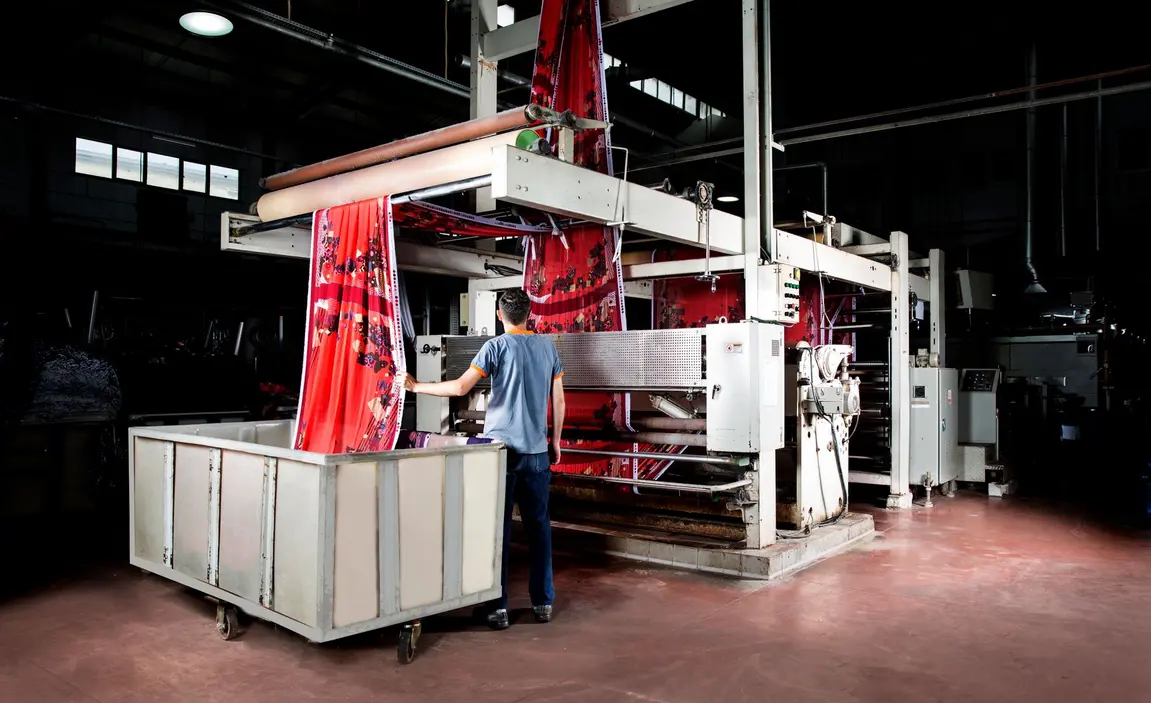
A polyester fabric is often finished after weaving or knitting. Finishing can alter how the material looks, feels, or behaves without changing the fiber-content label.
For example, finishing may be used to create a softer hand, a brushed surface, a matte appearance, a smoother face, added water repellency, or improved moisture transport across the fabric surface. Brushing can turn a relatively ordinary knit into a soft fleece-like material. Heat setting can help stabilize polyester’s dimensions and preserve the intended shape.
These treatments are one reason two fabrics with the same yarn and similar construction may still feel different. They also explain why the same garment can change after repeated laundering or heavy wear: the finish may diminish, the surface may pill, or the structure may relax over time.
What to look for beyond the care label
If you are choosing between polyester garments or fabric yardage, treat “100% polyester” as only the first clue. Look for details that reveal construction:
- Knit or woven: Knits usually provide more structural stretch; wovens usually offer more stability.
- Surface: Smooth, shiny surfaces often suggest filament yarns; soft or slightly fuzzy surfaces often suggest spun or brushed constructions.
- Weight and thickness: These influence opacity, warmth, drape, and perceived quality, but should be considered alongside density.
- Stretch and recovery: Stretch may come from knit loops, textured yarn, fabric geometry, or elastane. For a 100% polyester item, test whether the fabric returns to shape after a gentle pull.
- Opacity and airflow: Hold the fabric to light, inspect its openings, and consider how many layers the finished garment uses.
- Intended use: A dense woven polyester may suit outerwear or tailored pieces; a jersey may suit activewear; a brushed knit may suit warmth and softness.
The useful question is not “Is polyester good?” It is “What kind of polyester fabric is this, and what was it built to do?” Once you consider yarn, structure, weight, density, and finish, the differences between two 100% polyester fabrics become much easier to predict.
References
- Filament vs Staple Fiber: Key Differences Explained. begoodtex.com. https://begoodtex.com/blog/filament-vs-staple-fiber
- Polyester Fibre Guide: Properties, Production and Uses - Textile Blog. textileblog.com. https://www.textileblog.com/polyester-fibre-guide-properties-production-and-uses
- Polyester Fabric: Complete Guide to Types, Weaves, Characteristics, Uses & Care - Polyester Staple Fiber Partners from Asia - VNPOLYFIBER. vnpolyfiber.com. https://vnpolyfiber.com/polyester-fabric-complete-guide-to-types-weaves-characteristics-uses-care
- Polyester Fabric: Complete Guide to Types, Weaves, Characteristics, Uses & Care - Polyester Staple Fiber Partners from Asia - VNPOLYFIBER. vnpolyfiber.com. https://vnpolyfiber.com/what-is-polyester-fleece
- What Does 100% Polyester Feel Like? A Detailed Look. northshorecrafts.com. https://northshorecrafts.com/what-does-100-polyester-feel-like
- Polyester Fabric: Complete Guide to Types, Weaves, Characteristics, Uses and Care - Polyester Staple Fiber Partners from Asia - VNPOLYFIBER. vnpolyfiber.com. https://vnpolyfiber.com/polyester-fabric-complete-guide-to-types-weaves-characteristics-uses-and-care
- Comparing Staple to Filament Fiber: Structure and Properties. hedafiber.com. https://www.hedafiber.com/comparing-staple-to-filament-fiber-structure-and-properties