How Should You Choose Between 100% Wool and Wool-Nylon Knitwear?
Table of Contents
Choose 100% wool when you want an all-wool hand feel, natural-fiber composition, and knitwear intended mainly for everyday, lower-abrasion wear. Choose a wool-nylon blend when the garment will face repeated rubbing, frequent laundering, pack straps, footwear friction, or a high risk of stretching out of shape. In the practical 100 wool vs wool nylon blend decision, nylon is usually a performance tool—not automatic proof that one garment is better made.
A well-designed merino nylon blend is often the more sensible choice for socks, hiking layers, fitted fine-gauge knits, and garments worn hard. A good 100% wool sweater can still be long-lasting, comfortable, and resilient, especially when it has suitable yarn quality, a firm knit, good fit, and careful care.
Start with the garment’s job
The most useful question is not, “Which fiber percentage is premium?” It is, “What kind of stress will this garment receive?”
Choose pure wool for:
- Sweaters, cardigans, and half-zips used mostly for office, home, travel, or casual layering
- Shoppers who prefer a fully natural-fiber garment
- Pieces where softness, drape, and traditional wool character matter more than maximum abrasion resistance
- Knitwear likely to be repaired, reknit, or kept for a long time with gentle use
Choose wool with nylon for:
- Socks and base layers exposed to frequent rubbing
- Hiking, skiing, travel, and workwear-adjacent use
- Fitted garments that must recover well after repeated wear
- Fine-gauge sweaters, tights, or knit layers where a small amount of reinforcement can help the yarn tolerate stress
- Areas exposed to backpack straps, elbows, inner thighs, cuffs, heels, and toes
Nylon is commonly used in relatively small percentages in knitwear, often to strengthen the yarn without removing wool from the garment’s overall character. A knitwear manufacturing guide notes that wool-nylon yarns are widely used in fine-gauge knitting because nylon improves yarn strength and stability. That does not mean every blend is superior to every pure-wool garment; knit density, yarn spinning, garment fit, finishing, and care still strongly affect wear life.
Abrasion resistance: the clearest advantage of nylon reinforcement
Abrasion is the gradual wear caused by rubbing. It happens inside shoes, under bag straps, at elbows against desks, and where one part of a garment repeatedly rubs another. Wool fibers are naturally resilient, but nylon has greater strength and can help hold a spun yarn together as friction works on the surface.
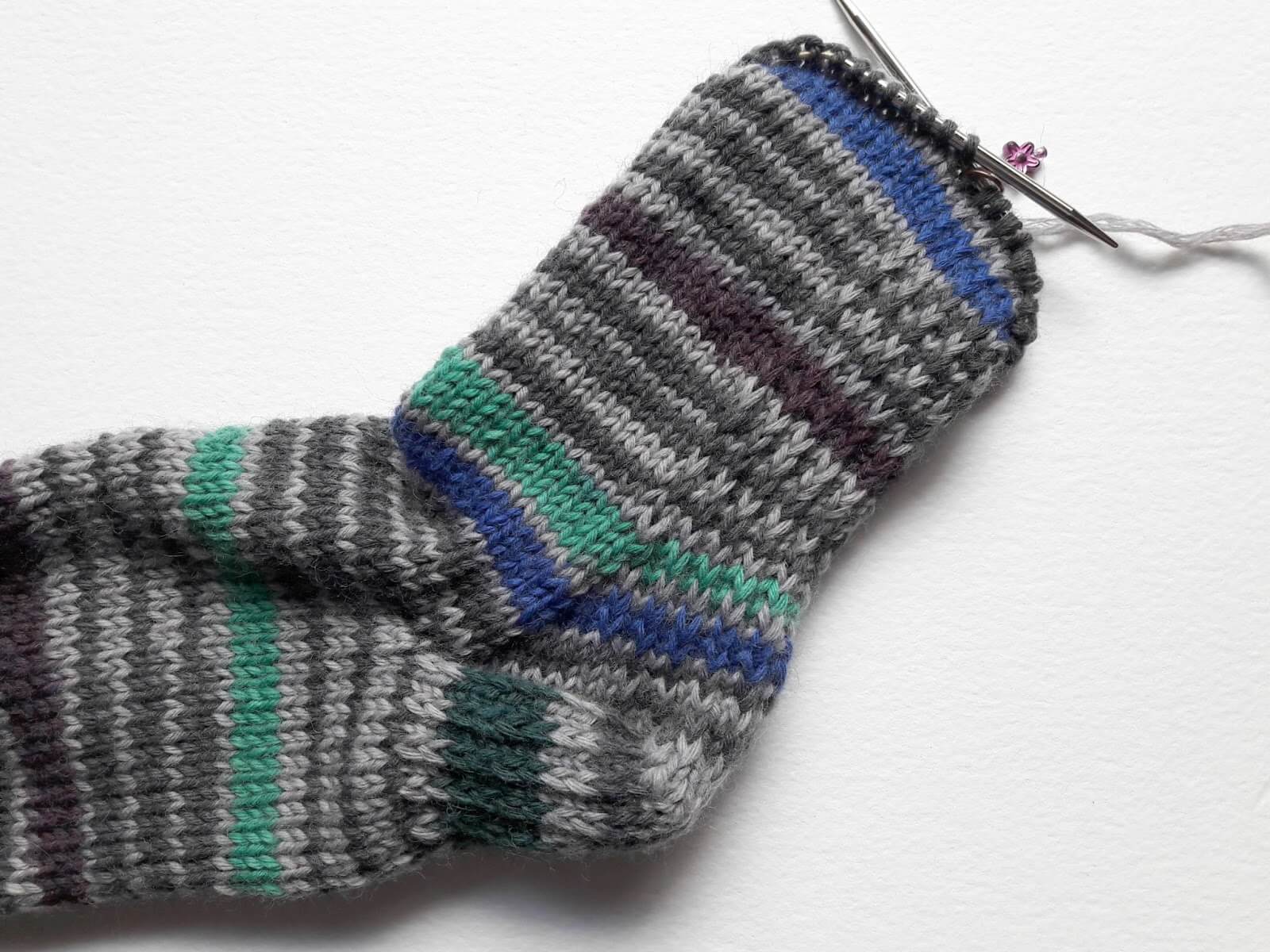
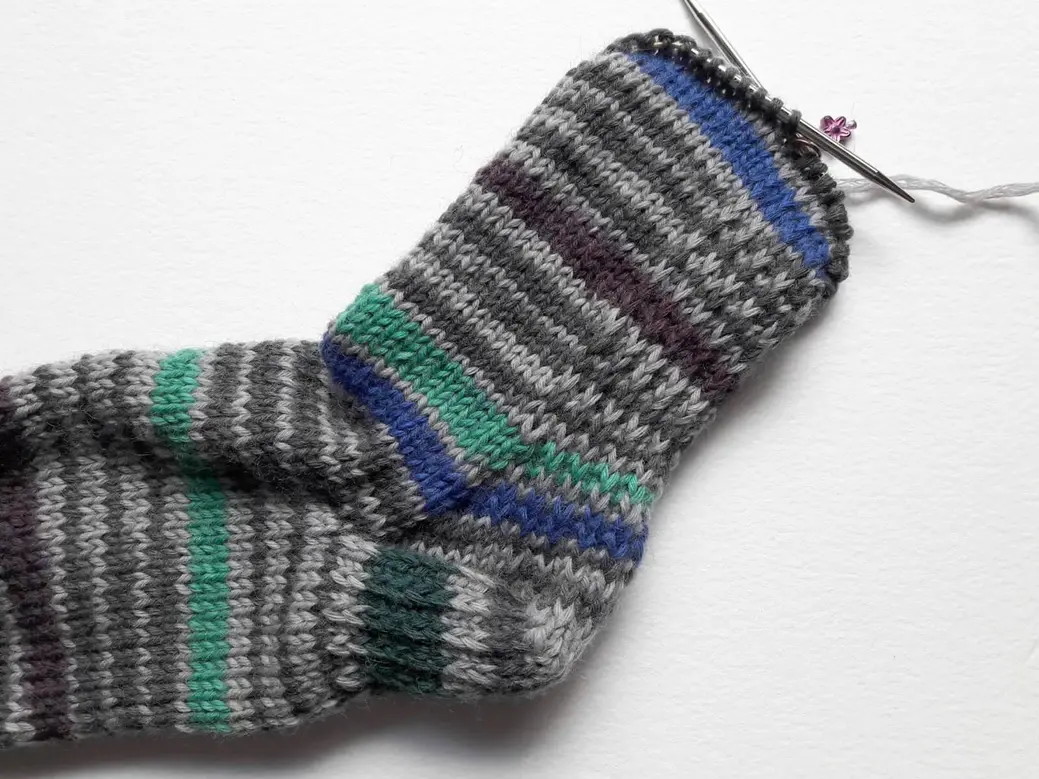
That is why nylon reinforced wool is particularly common in socks. A wool-nylon sock may hold up better under repeated shoe friction than an otherwise comparable all-wool sock. But “otherwise comparable” is essential: a dense, well-fitted pure-wool sock can outwear a loose, poorly made blend.
Look for construction evidence, not just a promising fiber label:
- Reinforced heels and toes on socks
- A firm, even knit rather than a loose, fragile-looking structure
- No excessive thinness at likely wear points
- A shape and size that do not create avoidable rubbing
- Care instructions you can realistically follow
Source: winwickmum.co
Shape retention and recovery depend on more than nylon
A wool-nylon blend can offer better shape retention because nylon contributes strength and resilience to the yarn. This can be especially useful in slim layers, cuffs, lightweight sweaters, and socks that are pulled on and stretched repeatedly.
Still, do not assume nylon alone solves stretching. A garment that needs strong elastic recovery may also contain elastane, have rib construction, or use a specific stitch pattern. Nylon is not the same as elastane. It can reinforce a yarn and improve durability, but it does not automatically provide the close recovery associated with stretch fibers.
Pure wool also has natural elasticity and can recover well when the yarn and knit structure are appropriate. A 100% wool sweater is not inherently delicate or destined to bag out. It may simply need more careful handling in the places where friction is highest.
Drying behavior and moisture comfort
Wool absorbs moisture vapor and is valued for comfort across changing temperatures. Adding nylon reduces the proportion of absorbent wool and can help a garment dry more quickly after washing or heavy perspiration, though drying speed also depends on fabric thickness, knit openness, weather, and airflow.
For ordinary sweater wear, the drying difference may not be decisive. For a travel base layer or hiking sock that may need to dry overnight, it can be meaningful. If quick turnaround matters, a merino nylon blend is often the more practical option.
That tradeoff is not one-directional. More wool generally preserves more of the wool-rich feel and moisture-buffering character many shoppers want. More nylon may improve durability and drying, but it also means less wool by percentage.
Hand feel, appearance, and pilling
Pure merino knitwear can feel especially soft, warm, and natural against the skin. That is one reason brands still make 100% merino sweaters even when a blend could improve certain durability measures. For many people, the sensory experience and all-wool composition are the point.
A wool-nylon knit can still feel soft, particularly when nylon is a modest part of the blend. However, hand feel varies enormously with fiber fineness, yarn twist, fabric weight, finishing, and the amount of nylon used. A label cannot reliably tell you whether a sweater will feel luxurious, scratchy, smooth, or firm.
Pilling is similarly complex. Fibers can work loose from a knit surface under friction and form pills. Nylon may help reinforce the yarn, but it does not guarantee a pill-free garment. In some blends, durable synthetic fibers can also help pills remain attached rather than breaking away. Evaluate the knit in person when possible, and remember that backpacks, seatbelts, desk edges, and frequent rubbing can make almost any soft knit pill.
Repairability and end-of-life considerations
A 100% wool garment is usually the simpler option if your priority is a single-fiber composition. It may be easier to match with wool yarn for visible mending or darning, and it avoids adding a petroleum-based fiber to the textile.
A wool-nylon blend can be harder to classify as a single-material textile and may shed synthetic microfibers over its life. But durability matters too: a garment that stays wearable longer may avoid replacement sooner. There is no universal sustainability winner without considering how long the item is used, how it is cared for, and whether it suits the owner’s actual needs.
A separate note on heat, sparks, and flame exposure
Do not choose either ordinary wool or wool-nylon knitwear as a substitute for purpose-designed protective clothing. Fire-related performance depends on the entire garment, its weight, construction, fit, contamination, exposure conditions, and applicable workplace requirements—not simply the percentage on a retail label.
The material distinction is still important: wool is generally valued for its comparatively greater resistance to ignition than many common apparel fibers, while nylon is a thermoplastic synthetic fiber that can melt when exposed to sufficient heat. For work around welding, forging, fire performance, or other ignition hazards, avoid treating a casual wool-nylon sweater as protective equipment. Follow the employer’s safety rules and use properly specified protective clothing.
A discussion in r/Fabrics raises this exact concern, with a commenter preferring natural-fiber clothing around sparks because they wanted to avoid synthetic material melting onto skin. That is a relevant personal safety concern, but it is an anecdote from a user discussion, not a certification or a substitute for professional hazard guidance.
The practical buying decision
Buy 100% wool when you want a soft, wool-forward sweater for moderate use and are comfortable giving it attentive care. It is a particularly good choice for classic knitwear where natural composition, feel, and repairability matter most.
Buy a wool-nylon blend when the garment has a demanding job: socks, trail layers, travel essentials, fine-gauge fitted knits, or anything exposed to repeated friction. The blend is especially worthwhile when nylon is used deliberately in wear zones or in a construction that clearly supports the garment’s intended use.
In either case, inspect the whole product. A durable sweater is not created by one number on a care label. The yarn, gauge, stitch structure, reinforcement, fit, finishing, and care routine determine whether wool knitwear performance matches the promise of its fiber content.
References
- Wool nylon blend socks durability: Blend wins | 2026 – The Nordic Sock Company. nordicsockcompany.com. https://nordicsockcompany.com/blogs/news/is-a-wool-nylon-blend-more-durable-than-100-wool-socks
- Merino Wool Blends vs 100% Merino: What You’re Actually Getting – Aiua Clothing. aiuaclothing.com. https://aiuaclothing.com/blogs/news/100-merino-wool-vs-merino-blends-what-youre-actually-getting-when-you-buy-merino
- Wool Nylon Blend: Superior Performance Fabric for Durability and Comfort. kindawool.com. https://www.kindawool.com/application/wool-nylon-blend
- 100% Wool Vs Synthetic Wool Blends. oliver-charles.com. https://www.oliver-charles.com/blogs/repeat/100-wool-vs-synthetic-wool-blends
- Wool Blends & Performance Blends for Knitwear - Best China Knitwear Supplier. knitwear.io. https://knitwear.io/wool-blends-performance-blends-for-knitwear
- Merino Blends vs Pure: What the Ratio Actually Means | Lone Creek Apparel. lonecreekapparel.com. https://www.lonecreekapparel.com/blogs/news/hybrid-fabrics-combining-merino-and-synthetic-for-performance
- Why Darn Tough Blends Merino Wool with Nylon and Spandex · Seam & Sole. seamandsole.com. https://seamandsole.com/materials/why-sock-makers-blend-merino-wool-with-nylon-and-spandex
- Wool Blends: Improving Performance & Versatility - selvane. selvane.co. https://www.selvane.co/blogs/knowledge/the-unseen-alchemy-when-wool-blends-surpass-the-sum-of-their-parts