Why Is Border Print Fabric Difficult to Source in Small Quantities?
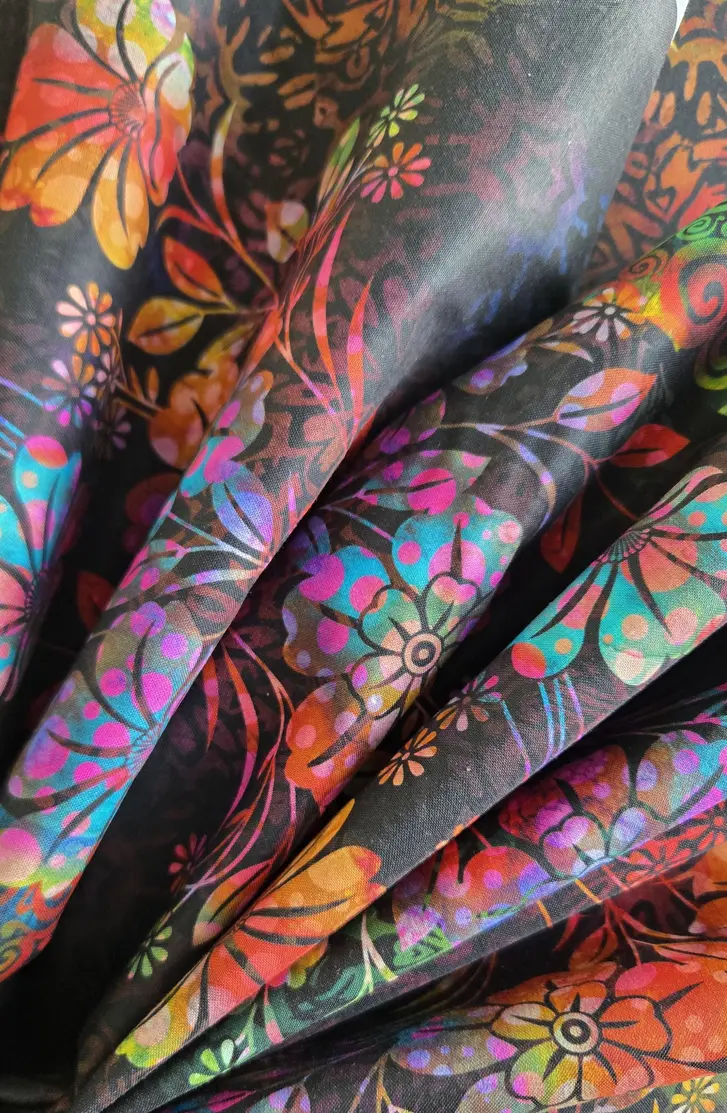
Table of Contents
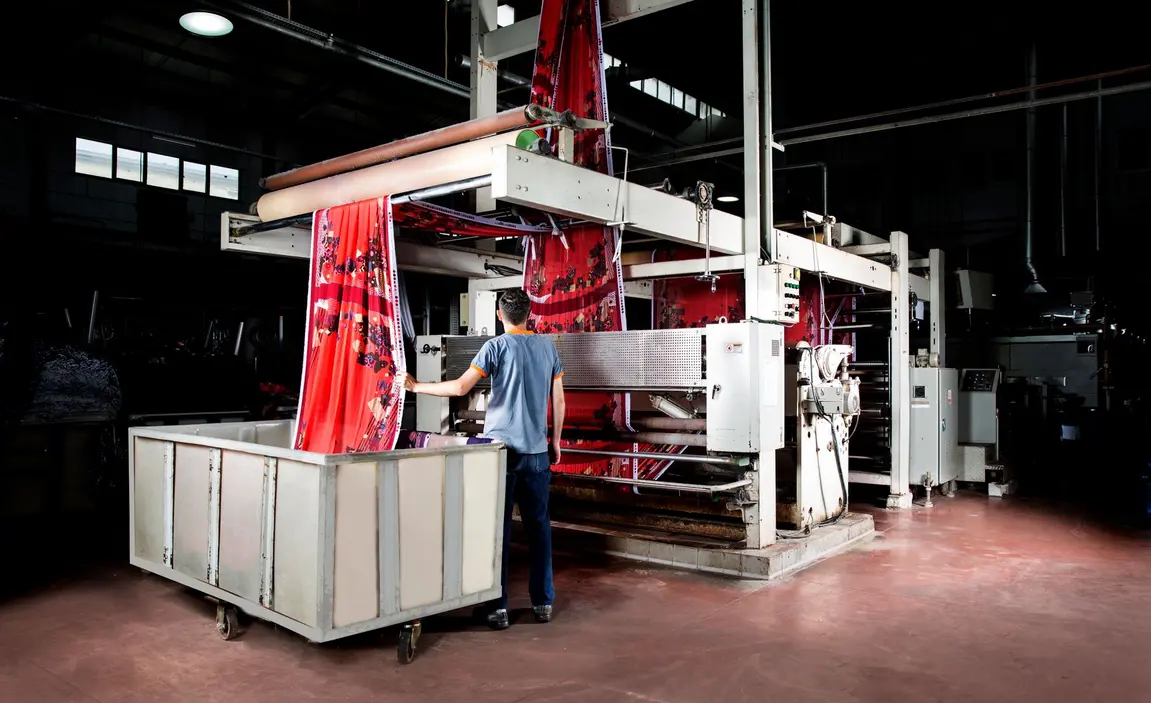
Border print fabric is difficult to source in small quantities because it is not simply an all-over pattern printed on a roll of cloth. The design has to stay in a specific position—usually along one or both long edges of the fabric—so the printer, mill, cutter, and garment maker all need to work from a controlled layout. That added planning is useful for the finished garment, but it reduces flexibility and can make small runs less economical.
For a designer who wants border-print cotton or jersey, the most realistic route is often to look first for existing stock fabric, then consider a digital printer that accepts fixed-placement panels or short custom runs. A conventional mill may be a better fit only when the expected quantity is large enough to justify setup, sampling, testing, and production coordination.
A discussion in r/Fabrics highlights the underlying sourcing problem: a user noted limited consumer availability of border-print cotton and jersey, particularly compared with older examples. That observation does not establish a universal rule about every mill, but it reflects a real challenge for buyers seeking a specific base cloth, print style, and low quantity at the same time.
A border print is not the same as an all-over print
An all-over print is designed as a repeat tile. The same artwork repeats across the width and length of the fabric, often with no single “correct” place for a motif to land after cutting. A floral, stripe, dot, or abstract repeat can continue across a roll with relatively flexible garment cutting.
A border print design has a deliberate orientation and location. It may have:
- one decorative border near a selvedge or finished edge;
- matching borders on both long sides;
- a large motif intended for a hemline;
- a center field plus a border on each side; or
- a directional layout for scarves, skirts, dresses, or engineered panels.
The visual point of the design is that the border appears where the wearer expects it: at a skirt hem, cuff, sleeve edge, scarf edge, or dress panel. If the fabric is cut without regard to that placement, the border may disappear into a seam, sit too high on the garment, or land unevenly between pieces.
This is why border print sourcing is partly a printing question and partly a product-development question. The fabric is not fully specified until the intended garment use is clear.
Why placement can increase the production burden
A printer needs more information for a border print than for a basic seamless repeat. At minimum, the supplier needs to know the usable fabric width, border width, distance from the edge, orientation, repeat length if any, and whether the design will be printed on one side or both sides of the cloth.
A border also has to remain registered in the intended position from one section of fabric to the next. Registration means keeping artwork aligned relative to the fabric edge or another reference point. Exact capability and tolerance vary by printer, fabric, print method, and finishing process, so designers should ask the supplier what they can reliably control rather than assume that every border can sit at an identical distance from the edge.
This is especially important on jersey and other knit fabrics. Knits can stretch, relax, or change dimensions during processing and handling. Cotton and other natural-fiber fabrics may also change after wet processing. A printer may need to allow for such behavior when assessing whether a border will meet the required placement after printing and finishing.
The garment stage adds another constraint. A border intended for a hem must be compatible with the pattern pieces and the size range. A border height that looks right on a small skirt may be too shallow, too deep, or poorly positioned on a larger size. The more precisely the border must land on each garment, the more carefully the cutting plan has to be managed.
MOQ is usually about setup and risk, not a technical impossibility
A minimum order quantity, or MOQ, is the smallest order a supplier agrees to produce under a particular set of conditions. It may apply per fabric base, colorway, print design, or production run. A quoted minimum is therefore not always a single number that applies to the entire project.
As TKNP explains in its overview of textile MOQs, minimums commonly reflect fixed costs such as setup, programming, and dyeing. In fabric printing, those costs can include artwork preparation, color management, machine preparation, sampling, fabric handling, and finishing. Those activities still take time whether the order is a few yards or a full production run.
Border prints can make the economics less favorable because the supplier may have to check more than color and print clarity. They may also need to confirm border position, scale, usable width, and the behavior of the artwork after finishing. If a mill must source a special cotton jersey base, develop the print, and run a short quantity in a unique colorway, its minimum can rise further.
That does not mean every border print requires a large MOQ. It means the available options differ sharply by production method. Some digital print services accept very small orders. For example, The Textile District states that it offers custom printing from one yard and accepts both continuous seamless repeats and fixed-placement panels. Muzefab similarly states that it has no minimum order quantity. Those are supplier-specific offers, not an industry-wide guarantee, but they show why digital services can be worth investigating for development quantities.
The fabric base can be as limiting as the artwork
A designer may be able to find a printer willing to make a small border-print order but still struggle to obtain the desired fabric. Cotton poplin, cotton lawn, cotton jersey, rayon challis, polyester jersey, and stretch knits do not all use the same printing systems or preparation routes.
For example, The Textile District notes that its cotton, linen, and cotton-linen fabrics are direct printed with fiber-reactive dyes, then steamed, washed, and dried. That process is different from the approaches commonly used for polyester-based fabrics. The appropriate route depends on fiber content, fabric construction, desired color, hand feel, wash expectations, and the printer’s equipment.
For jersey, also specify the fiber composition and stretch requirements. “Jersey” alone is too broad for a production quote. A supplier may need to know whether the desired base is cotton jersey, cotton-elastane jersey, viscose jersey, polyester jersey, or another knit construction. A border layout that works on a stable woven cotton may need adjustment for a stretchy knit.
What to send when requesting a quote
A vague request for “border-print fabric” often produces vague answers. Give a printer or mill a production brief that makes the layout visible and measurable.
Include the following:
The end use
State whether the fabric will become skirts, dresses, scarves, leggings, children’s garments, home furnishings, or another product. Explain where the border should appear on the finished item.
The fabric specification
Identify the preferred fiber content, construction, weight range if known, stretch requirement, color of the base cloth, and whether substitutions are acceptable. If you have a physical reference, ask whether the supplier can assess it rather than assuming an exact match is possible.
The border layout
Provide artwork at the intended scale and show the full width of the fabric. Mark the border position, border depth, direction of the motif, background area, and whether the design needs one border or a double border.
Width and cutting assumptions
Ask for the printable width and usable width, not just the nominal fabric width. If the garment pattern needs the border at a particular hem depth, share the pattern dimensions or at least the planned cutting layout.
Quantity by design and colorway
Say how much fabric is needed for sampling and how much may be needed for production. A supplier may accept a small development order but quote a different price or process for later bulk orders.
Approval expectations
Ask whether a printed proof, strike-off, or sample yardage is available. For placement work, approve color, scale, print sharpness, hand feel, and border position before committing to a larger run. The Textile District specifically describes production-quality proofs as a way to evaluate color, scale, repeat, and placement before ordering more fabric.
Better small-quantity alternatives
If a true edge-to-edge border is outside the budget or minimum, simplify the concept before abandoning it.
One option is to use a narrow all-over stripe or a repeating band near the edge. The print can still create a border-like effect, but it may be easier to lay out and cut than a complex engineered design.
Another is to print fixed panels rather than continuous yardage. Fixed-placement panels can work well for scarf squares, apron fronts, cushion covers, or garment panels with predictable dimensions. This approach is most practical when the finished product uses a consistent pattern shape and size.
A third option is to separate the border from the printed ground fabric. A plain or small-repeat main fabric paired with printed bands, contrast binding, ribbon, lace, or another trim may achieve a similar visual result with less placement risk. This changes the construction, but it can make small-batch sourcing more manageable.
Finally, check stock fabric before commissioning custom work. Deadstock, vintage fabric, specialty quilting cottons, scarf-weight prints, and seasonal collections may offer borders that are already printed and ready to buy. Availability will be inconsistent, so this route works best when the design can adapt to what is found.
Ask suppliers the question that matters most
Instead of asking only, “What is your MOQ?” ask: “What is the minimum for this exact fabric base, print method, colorway, and border layout—and what does that minimum include?”
That question reveals whether the obstacle is the fabric itself, artwork preparation, print placement, proofing, finishing, or the supplier’s preferred production scale. Border print fabric is not inherently too difficult to make. It is simply less interchangeable than a conventional repeat, and that loss of flexibility is what makes small-quantity sourcing harder.
References
- Placement Print vs All-Over Print for Clothing | Zameett. zameett.com. https://zameett.com/blog/placement-print-vs-all-over-print
- Fabric & Custom Printing FAQs | The Textile District. thetextiledistrict.com. https://thetextiledistrict.com/faqs
- Do you have a minimum order quantity for wholesale fabric printing? | FAQ | Muzefab. muzefab.com. https://muzefab.com/help/wholesale-b2b/minimum-order-quantity-wholesale
- Custom Printed Jersey Fabric. Custom Textile Printing.. contrado.com. https://www.contrado.com/custom-printed-jersey-fabric?optionValue=4581
- Textile MOQ: minimum order quantity, definition and pitfalls · TKNP. tknp.io. https://tknp.io/en/resources/moq
- All-Over Custom T-Shirt Printing. Design All-Over Print T-Shirt. contrado.ca. https://www.contrado.ca/all-over-custom-t-shirt-printing
- Merchandisers Guide to All over Print (AOP) Fabrics - Dinesh Exports. dineshexports.com. https://dineshexports.com/guide-all-over-print-aop-fabric
- Minimum Order Quantities (MOQ) - Everything You Need To Know! | Sewport. sewport.com. https://sewport.com/learn/what-is-moq-minimum-order-quantities