How Is a Bra Fitted? Requirements, Fit Checks and Measurement Steps
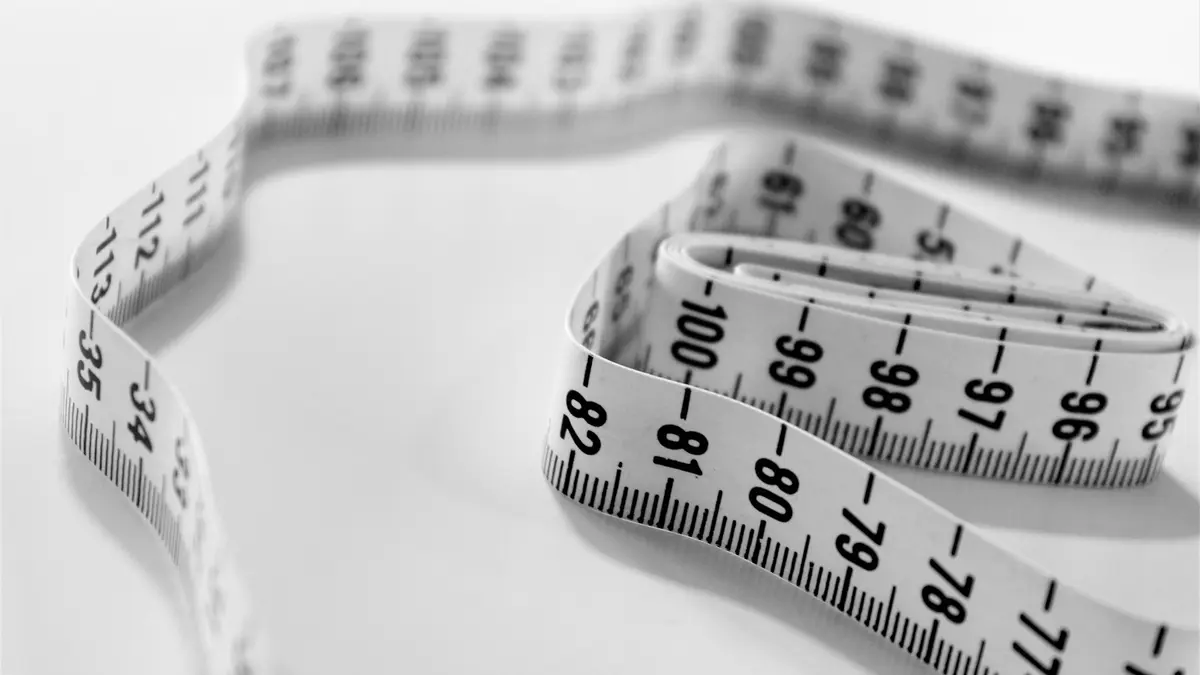
Table of Contents
Core Requirements for Bra Fit
Bra fitting is the process of selecting or developing a bra that contains breast tissue, distributes support appropriately, remains stable on the body, and produces the intended silhouette for the garment style. It is more complex than matching a numerical size because breast tissue can vary in position, distribution, firmness, projection, and symmetry. A person may have a broad breast base, lower-set tissue, fuller upper or lower breast volume, or one breast that differs slightly from the other. These factors affect how a cup, wire, band, and strap system behaves in wear.

Source: Unsplash
Historically, fitters commonly positioned breast tissue into the area where the finished bra was intended to support it before taking a bust measurement. The practical principle remains useful: measurements should be taken with the breasts in their intended supported position, rather than from a distorted, compressed, or unsupported posture. Measurement provides a starting point, but final bra fitting requires visual inspection, wearer feedback, and movement assessment.
Intended Bust Silhouette
A bra should create the silhouette intended by its design while still providing suitable support for its expected use. The desired shape is not identical for every style. A balcony or balconette bra generally creates uplift and visible upper-bust fullness, while a plunge or deep-V style is cut to allow lower centre-front exposure and may direct breast tissue toward the cleavage area. Push-up designs use shaping, padding, or cup construction to increase apparent fullness and cleavage.
Other styles pursue different visual and functional effects. Minimizer bras are designed to distribute breast volume over a broader area and reduce forward projection. Triangle bras often provide a lighter, more natural shape with less structured coverage than a full-cup style. Full-coverage bras generally prioritize containment and coverage, while sleep bras are usually intended for lighter support and a comparatively natural resting shape.
The target silhouette must be considered with comfort and stability. A highly lifted, compressed, or cleavage-focused shape may not suit every body, activity level, fabric system, or wearer preference. For product development, the fit brief should define the intended support level, breast position, coverage, neckline compatibility, and acceptable degree of shaping before patterns and component specifications are finalized.
Fit Functions of Bra Components
Bra fit depends on the coordinated performance of several components rather than on the cup alone. The principal parts include:
- Cups: Enclose and shape the breast tissue. Their capacity, depth, seam placement, stretch direction, and edge finish affect containment and appearance.
- Gore or bridge: The centre-front section between the cups. Its width, height, rigidity, and contact with the chest influence cup separation and stability.
- Cradle: The frame that supports the lower cup area and connects the cups to the wings. It helps transfer load from the cup structure into the band.
- Wing or band: The side and back portion that encircles the torso. It supplies much of the bra’s anchorage and must remain level during wear.
- Shoulder straps: Help control cup position and provide vertical support, but should not carry all of the load or cause excessive shoulder pressure.
- Hook-and-eye closure: Allows adjustment of the back band and should fasten securely without twisting, sharp edges, or uncomfortable bulk.
Elastic behavior is important across the bra system. Powernet, elastic bands, strap elastic, cup fabrics, and stretch lace may all extend and recover differently. If one component stretches too easily, is cut in the wrong direction, or recovers poorly, the bra can lose position even when other components are correctly sized. A stable fit therefore requires compatibility among the fabrics, elastics, wires, seams, and pattern geometry.
Surface Smoothness and Visual Fit Assessment
A well-fitted bra should look smooth and controlled in its intended wearing position. Cups should not show obvious gaping, wrinkles, collapsed areas, or excessive compression. The band and wings should lie smoothly against the torso without rolling, cutting in sharply, or forming unstable folds. At the cup edge, breast tissue should be contained without a visible ridge caused by the cup being too small or too closed at the neckline.
Appearance should be reviewed at more than one stage. A product may be examined flat on a table, assessed by hand for symmetry and component consistency, placed on a mannequin for general shape review, and evaluated on a live fit model. Each method identifies different issues. Flat inspection can reveal seam quality, asymmetry, puckering, and inconsistent elastic application. A mannequin can help assess construction balance, while a live model reveals body interaction, tissue displacement, pressure points, and movement-related faults.
Creases and wrinkles can result from workmanship problems, incorrect grain or stretch orientation, uneven seam allowance control, incompatible material stretch, or cup sections that do not match correctly. For example, a stable lower cup combined with an overly extensible upper cup may change the intended cup shape. Similarly, a fabric cut off its specified stretch direction can alter cup depth or wing tension.
Static inspection alone is not sufficient. A bra may appear smooth while the wearer is standing still but gape, shift, ride up, or dig in during normal activity. When a pattern is altered after fitting, the adjustment should be reviewed alongside construction method, fabric direction, elastic tension, wire size, and the behavior of replacement materials. A pattern correction that solves one visible issue can create another if these variables are not considered together.
Comfort and Dynamic Wear Performance
Comfort is a central requirement of bra fitting. A technically correct measurement is not enough if the wearer experiences pressure, itching, rough seams, wire discomfort, strap cutting, sharp hardware, or restricted movement. Because comfort is subjective, wearer feedback should be assessed alongside the observations of designers, technicians, and quality teams.
Comfort is affected by material selection, cup coverage, strap width and placement, seam location, closure construction, wire shape, pattern design, intended activity, body shape, and individual expectations. A lounge or sleep bra may prioritize softness and low pressure, whereas a sports-oriented style may require firmer containment and reduced breast movement. The appropriate balance depends on the product category and wear situation.
A suitable fit normally produces smooth wing panels, rounded and supported cups, and breast tissue that is held without obvious sagging, pinching, or forced displacement. The underband should remain broadly level around the body. Straps should be adjusted to stabilize the cup position without being tightened enough to carry excessive load or leave pronounced marks.
Dynamic assessment is essential because the body changes shape and posture during wear. Fit evaluation should include raising the arms, reaching forward, bending, sitting, walking, and changing posture. For bras intended for active use, controlled checks may also include jogging, running, or jumping. During these movements, assess whether the band rides upward, cups shift away from the breast, straps slip, the wire moves, or breast tissue escapes at the neckline, underarm, or centre front.
Bra Fit Checkpoints and Fault Diagnosis
A systematic fitting review helps distinguish between a size issue, a pattern issue, a component issue, and a construction issue. The fitting team should check cup shape, cup volume, breast distribution, cleavage position, strap tension, band tension, wire placement, and the alignment of the gore, back band, straps, and wings.
Common fit symptoms and possible diagnostic directions include:
| Fit symptom | Possible causes to investigate |
|---|---|
| Bulging at the neckline or underarm | Cup volume may be insufficient, cup edge may be too closed, or breast tissue may not be fully positioned into the cup. |
| Wrinkling or collapsed cup areas | Cup volume or shape may not match the wearer, fabric may be too soft, or cup sections may have incorrect stretch or grain direction. |
| Gaping at the cup edge | Cup may be too large or too open, cup height may be unsuitable, or the style may not match the wearer’s breast shape. |
| Band riding up at the back | Band tension may be insufficient, elastic recovery may be poor, or straps may be over-tightened. |
| Double-breast appearance | Cup capacity, neckline shape, or cup-edge elasticity may be inadequate for the breast volume and position. |
| Digging wires or pressure at the side | Wire width, wire length, cradle shape, cup position, or band tension may require review. |
| Gore lifting away from the body | Cup volume, cup separation, wire shape, breast projection, or centre-front construction may be incompatible. |
| Straps slipping or hiking | Strap placement, strap tension, shoulder slope, back-wing geometry, or elastic performance may be unsuitable. |
Fit faults are often interrelated. A bra with an overly loose band may cause the back to rise, which changes strap angle and reduces cup stability. A wire that is too narrow can create side pressure and apparent cup overflow. A fabric with unsuitable modulus, meaning resistance to stretch, can allow excessive movement even when the pattern dimensions appear correct. Wires, elastics, grainline, cup construction, seam workmanship, and pattern development should therefore be evaluated as a connected system.
An experienced fit team should avoid correcting a symptom in isolation. The target outcome is breast tissue that is contained and lifted according to the style brief, with a smooth bra that remains stable against the body and supports the intended garment silhouette.
Basic Steps for Measuring Bra Size
Basic measurements can be taken independently, although assistance may improve tape placement and reading accuracy. Measurements are most useful as a starting estimate for trying on bras or selecting an initial development size. They do not replace a fit test because brand blocks, cup shapes, materials, and regional sizing systems vary.

Source: Unsplash
Start in a non-padded bra that does not significantly alter breast shape, or measure without a bra if that is more appropriate for the intended sizing method. Stand naturally, keep the torso relaxed, and use a flexible tape measure held level to the floor.
- Measure the underbust or band circumference. Place the tape around the torso directly beneath the breasts, passing across the back at a level position around the shoulder-blade area. Keep the arms down rather than raised, because lifting the arms can change the tape position and torso circumference. The tape should be firm enough to remain in place but not so tight that it compresses the body excessively.
- Measure the full bust circumference. Position the tape around the fullest part of the breasts. Keep it level around the back and avoid pulling it tight enough to flatten the breast tissue. For a more representative reading, ensure the breasts are positioned as they would be in the intended bra style.
- Compare the measurements. The difference between bust and underbust measurements is commonly used to estimate a cup-size range. In many systems, progressively larger differences correspond to progressively larger cup letters.
- Use the result only as an initial size estimate. Try on bras in the estimated size and nearby sizes, then assess cup containment, band stability, wire placement, strap comfort, and the intended silhouette.
Cup conversion should be applied cautiously. A one-unit difference progression may be used in some sizing methods, but the actual band-number calculation and cup-letter sequence can differ by country, brand, and product range. A cup letter has meaning only in relation to its band size and the specific sizing system. For this reason, a measured result should be treated as a fitting starting point rather than a universal final size.
References and Further Reading
For technical study and product-development work, consult verified books on intimate apparel technology, bra fitting, bra pattern construction, and elastic-material behavior. Relevant professional resources may also include bra-fitting guidance, apparel sizing references, and manufacturer documentation for wires, elastics, foam, and powernet fabrics.
Before publication or training use, bibliographic details and web resources should be checked for current authorship, edition information, and availability. When using external guidance, confirm that the measurement method and size conversion system match the region, brand, and product category being evaluated.