How Do Fiber, Construction and Weight Affect Breathable Wrinkle-Resistant Travel Clothes?
Table of Contents
A breathable wrinkle-resistant fabric is not one universal material. For travel clothes, the most reliable approach is to compare the fiber content with the fabric’s construction, weight, stretch, finish and the job the garment must do. A light knit may pack with fewer sharp creases than a crisp woven shirt, while a woven fabric may feel cooler and less clingy in humid weather. A fiber label alone cannot tell you which will work better.
Start by deciding what matters most for the trip. In hot weather, airflow, low cling and fast drying may be more useful than a perfectly smooth appearance. For business travel, packability and wrinkle recovery may take priority. Pants and structured shirts also need more stability than a relaxed T-shirt or draped dress. The practical goal is not truly “wrinkle-free” clothing; it is clothing whose creases are limited, subtle or easy to release after hanging.
Read the label as a combination, not a verdict
Fiber content is a useful first clue because fibers bend and recover in different ways. But it is only the first clue.
- Linen is valued for warm-weather comfort and a dry, airy feel, but it is well known for creasing. Linen wrinkles are often part of its casual look rather than a defect. A heavier or more textured linen may disguise rumpling better than a very fine, crisp linen, but it can still crease after being compressed in a suitcase.
- Cotton can be comfortable and breathable, especially in light constructions such as lawn. Untreated cotton commonly wrinkles, however, and a crisp lightweight cotton shirt may show fold lines readily.
- Wool, particularly fabrics made for tailoring or lightweight travel use, often recovers well from creasing. It can be a strong option for trousers, dresses and layers when smooth appearance matters, though the particular weave and garment care requirements still matter.
- Silk can be light, breathable and compact. Its performance varies substantially with fabric type: a silk jersey, a crepe and a crisp silk woven do not drape, wrinkle or dry in the same way.
- Viscose and lyocell are often chosen for soft drape and a cool hand. They can be useful in warm-weather garments, but their wrinkle behavior and drying time depend heavily on construction and blend. Viscose can wrinkle more readily than a similarly styled synthetic fabric and may require more careful laundering.
- Polyester and nylon generally offer good crease recovery and easy care. Their breathability is not guaranteed by the fiber name: yarn type, fabric density, knit or weave structure, garment fit and finishes all influence comfort. A dense synthetic woven can feel less airy than an open, lightweight one.
- Elastane or spandex is usually included in small amounts for stretch. Stretch can help a garment move and recover from minor distortion, but it does not automatically make every fabric cooler or more breathable.
Blends can be especially useful because they distribute tradeoffs. Cotton or linen may contribute a natural hand and airflow, while polyester, nylon or elastane can improve recovery, durability or stretch. A blend is not automatically better; it simply deserves a closer look at the complete fabric and garment.
Why construction changes the result
The same fiber can perform very differently as a woven or a knit.
Woven fabrics: more structure, but often sharper creases
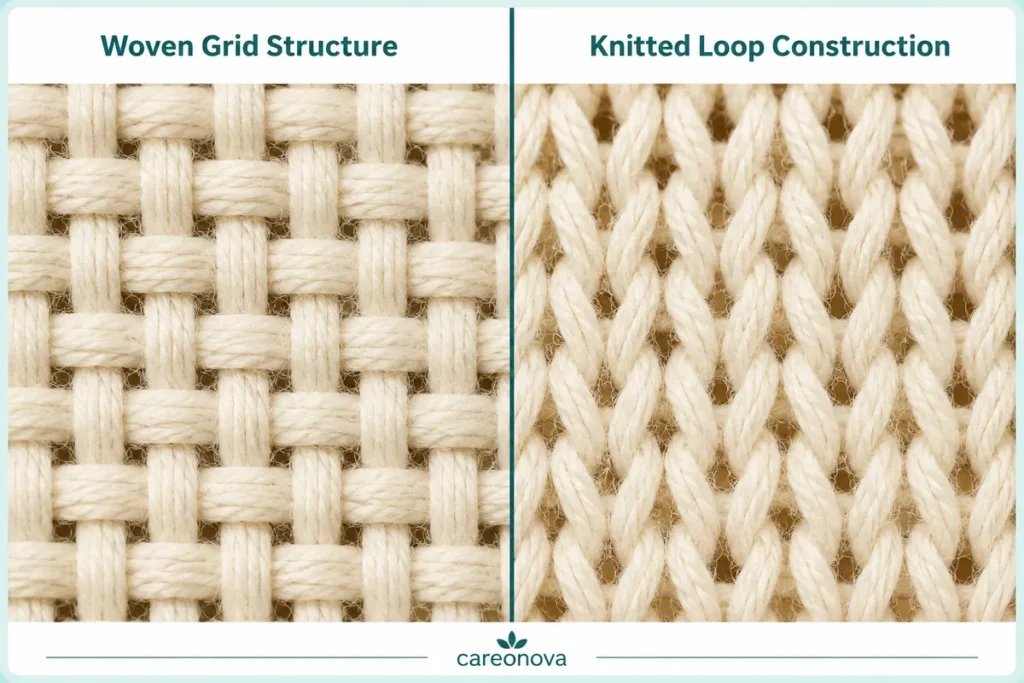
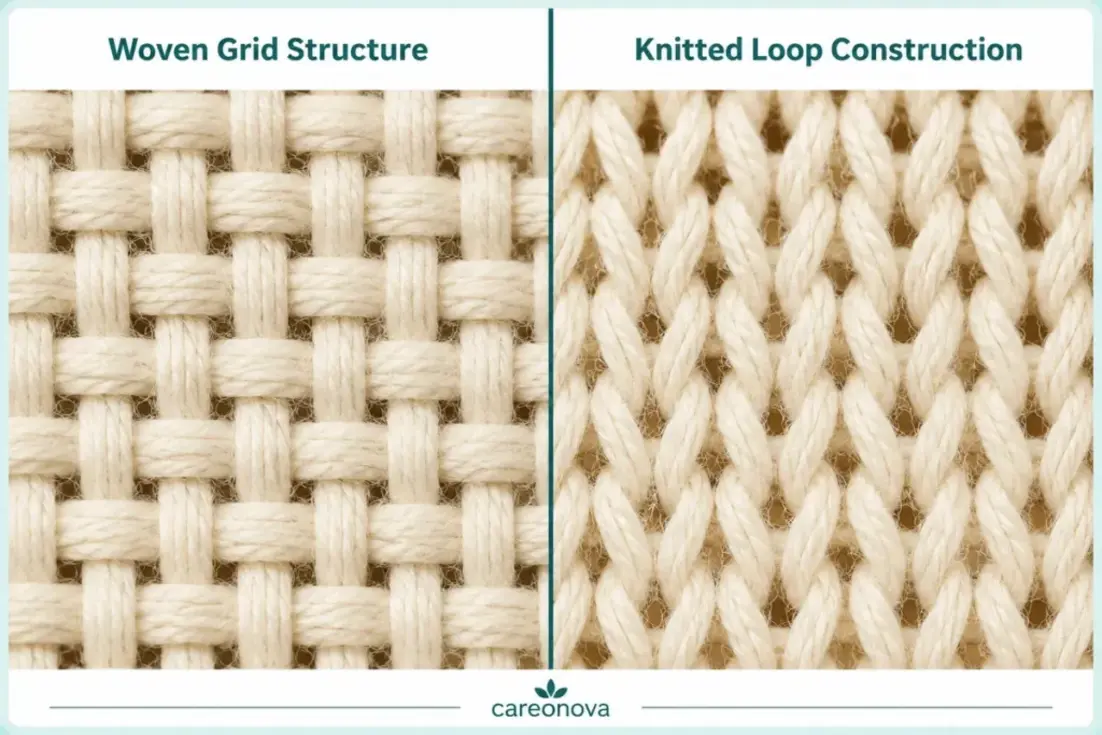
Wovens are made by interlacing lengthwise and crosswise yarns. They usually have less natural stretch than knits unless stretch fibers or mechanical stretch are built in. This makes them useful for button-front shirts, trousers, overshirts and dresses that need shape.
A plain woven cotton shirt can feel open and cool, but its relatively crisp surface may display fold lines. Denser or more complex woven constructions can resist creasing better because the fabric has more body and structure. Twill, recognized by diagonal lines, is commonly denser than a comparable plain weave and often wrinkles less visibly. The tradeoff is that denser fabrics may feel warmer, take longer to dry or pack with more bulk.
Texture also matters. Crepe, crinkle, seersucker and other textured surfaces can make small wrinkles less obvious than they would be on a flat, smooth fabric. That does not mean the fabric cannot wrinkle; it means the surface is more forgiving visually.
Knit fabrics: stretch and softer wrinkle recovery
Knits are built from interlocking loops. Their stretch and flexibility often let them bend without forming the crisp fold lines associated with many wovens. Jersey tops, knit dresses and stretch travel pants can therefore be practical choices when suitcase creases are a major concern.
The tradeoffs are stability and cling. A very light jersey may drape beautifully but cling in humidity, show body contours or lose shape depending on its fiber and quality. Knits can also snag or pill, and some need gentler care than a sturdy woven. For trousers, a knit with enough weight and recovery is usually more useful than a very thin, floppy jersey.
Source: careonova
Fabric weight affects more than warmth
Fabric weight is often expressed in grams per square meter, but shoppers do not always see that information on a garment label. You can still assess its effect by handling the cloth.
Lightweight fabrics usually pack small, feel less bulky and may dry faster. They can also be more breathable when the construction is open. But very light fabrics may be sheer, clingy, less durable or more likely to show every fold. A thin, crisp woven can develop visible suitcase creases because there is little fabric mass to soften them.
Medium-weight fabrics often provide the most versatile balance for travel pants, overshirts and dresses. They can drape with enough body to avoid looking rumpled immediately, while remaining wearable across changing temperatures.
Heavier fabrics may resist wrinkles more effectively because they have more substance, but they are not automatically better travel fabrics. They take more luggage space, may dry slowly and can be uncomfortable in heat. Denim is a familiar example: it is durable and structured, but rarely the best choice when quick drying and low bulk are priorities.
Weight must be considered with construction. A lightweight open knit can feel airy but cling. A lightweight tightly woven synthetic may be smooth and fast drying but less ventilated. A medium-weight textured weave may look polished after packing, even if it is not the lightest option.
Match the fabric to the garment, not just the climate
A single fabric rarely performs equally well in every category.
For T-shirts and casual tops, lightweight jersey, piqué or fine knit fabrics often offer easy movement and relatively good wrinkle recovery. Cotton, lyocell, wool blends and synthetics can all work, depending on the desired feel and drying speed.
For button-front shirts, look for a fabric with enough structure to hold its shape without being extremely crisp. A slightly textured woven, a soft twill, a blend or a garment marketed as wrinkle-resistant may be more travel-friendly than ultra-fine cotton broadcloth. Check whether the shirt feels stiff and paper-like; that can signal that creases will show clearly.
For pants, prioritize recovery, opacity and enough weight to resist bagging at the knees. Stretch woven fabrics and stable knits can work well. Very thin fabrics may be cool but may cling, reveal pocket outlines or look less polished after a long day.
For dresses and skirts, drape matters as much as wrinkle resistance. A soft knit or textured woven can camouflage minor rumpling. A crisp linen dress may be comfortable in heat, but it should be chosen when a relaxed, rumpled appearance is acceptable.
For layers, lightweight wool, textured synthetics and stable blends can offer better crease recovery than crisp plant-fiber wovens. Consider whether the item will be worn often enough to justify its slower drying time or more specialized care.
A Reddit discussion about thin travel fabrics made the same practical point: the commenter emphasized that weave or knit and fabric weight matter alongside fiber, and noted that a fabric suitable for a top may not perform equally well for pants or a skirt. That is an individual observation rather than a controlled comparison, but it reflects a useful shopping principle: judge fabric in the context of the finished garment.
What “wrinkle-resistant” on a label can mean
Wrinkle-resistant, easy-care, non-iron and durable-press labels may indicate a finish, a fiber blend, a construction designed for recovery, or a combination of these factors. They are useful claims to notice, but they do not guarantee that a garment will remain completely smooth after days in a packed bag.
Finishes can improve cotton’s resistance to creasing, while polyester, nylon, wool and many blends tend to recover well without relying on a crisp cellulose surface. Still, the best question is not “Does this say wrinkle-resistant?” It is “Does this garment recover after being squeezed, and does its care label suit my trip?”
A finish may also affect hand feel, breathability or long-term performance. If comfort is a priority, handle the garment rather than assuming an easy-care claim has no tradeoff.
Use a quick in-store assessment
When a label is vague, the garment itself can reveal more than its marketing description.
- Check the full fiber-content label. Note whether the fabric is a single fiber or a blend. Identify stretch fibers separately from the main fiber.
- Look at the surface. Flat, crisp and smooth fabrics tend to display creases more clearly than textured, heathered or patterned surfaces. Texture can be helpful when you want a forgiving appearance.
- Gently squeeze a hidden area. Hold a small section in your hand briefly, then release it. This is not a laboratory test, but it can reveal whether sharp creases remain immediately or relax quickly. Avoid damaging the garment or treating this as proof of long-term performance.
- Hold it to the light. This helps identify openness, sheerness and lining. A fabric can be light and breathable without being transparent, but very thin garments may need layering or careful color selection.
- Feel for body and rebound. For pants and structured garments, lightly stretch or flex the fabric where appropriate. It should return without feeling limp or permanently distorted.
- Read the care instructions. A travel garment that needs dry cleaning, special reshaping or a lengthy drying process may not match a wash-in-the-sink plan.
- Consider the cut. Loose silhouettes permit more air circulation and are less likely to cling, regardless of fiber. A close-fitting garment made from an airy fabric can still feel warm or damp against the body.
Practical travel-fabric choices by priority
If maximum wrinkle resistance is the main need, begin with wool, polyester, nylon or blends designed for stretch and recovery. Favor knits, textured weaves and fabrics with moderate body over very thin, crisp plain weaves. The compromise may be a less natural hand or reduced airflow in dense constructions.
If cool comfort in heat matters most, consider linen, cotton lawn, light cotton blends, lyocell, silk or breathable knits. Expect more care with packing, especially from linen and crisp cotton. Choose relaxed silhouettes, texture or prints if visible wrinkles would bother you.
If overnight washing and fast drying are essential, lightweight synthetics and some light blends are often practical, although actual drying speed depends on fabric thickness, absorbency and indoor humidity. Avoid assuming that every lightweight cellulosic fabric will dry quickly; a soft, absorbent knit may take longer than its weight suggests.
If you want one versatile travel wardrobe, mix rather than force every item to do everything. A crease-resistant knit top, a structured stretch-woven pant, a breathable warm-weather shirt and a layer with good recovery often work better together than a suitcase full of garments made from one supposedly ideal fabric.
The most useful rule is simple: compare fiber, construction and weight together, then judge the garment against its real purpose. Breathability, wrinkle resistance, drape and drying time are connected, but they do not always move in the same direction. Choosing knowingly among those tradeoffs is what makes travel clothing work.
References
- Thin, wrinkle-resistant fabric?. reddit.com. https://www.reddit.com/r/Fabrics/comments/1io8l5u/thin_wrinkleresistant_fabric
- Wrinkle-Resistant Fabrics: 20 Fabrics Compared. careonova.com. https://careonova.com/wrinkle-resistant-fabrics-20-fabrics-compared
- Is there a fabric which is lightweight, breathable, opaque, wrinkle free and does not stick to body? - Quora. quora.com. https://www.quora.com/Is-there-a-fabric-which-is-lightweight-breathable-opaque-wrinkle-free-and-does-not-stick-to-body
- What Is Wrinkle Resistant Fabric? Benefits & Types Overview – JudyP Apparel. judypapparel.com. https://judypapparel.com/blogs/my-inspiration/what-is-wrinkle-resistant-fabric
- What Makes a Fabric Wrinkle Resistant? | Proper Cloth Help. propercloth.com. https://propercloth.com/reference/what-makes-a-fabric-wrinkle-resistant
- wrinkle resistant fabric - wrinkle resistant fabric for sale.. everychina.com. https://www.everychina.com/site-wrinkle-resistant-fabric
- Best Thobe Fabric Suppliers for Wrinkle-Resistant & Breathable Materials. apparel.alibaba.com. https://apparel.alibaba.com/supplier/thobe-fabric-material
- Poly Wrinkle Fabric: Durable & Customizable. accio.com. https://www.accio.com/plp/poly-wrinkle-fabric