Cellulose Fibre and Nanocrystal Extraction from Peanut Peel: Preparation and Characterization
Table of Contents
Study Overview
Cellulose extraction from peanut peel is an agricultural-residue valorisation route in which the lignocellulosic peel of Arachis hypogaea is chemically purified to obtain a cellulose-rich fraction. The reported workflow uses sodium hydroxide treatment followed by sodium-chlorite bleaching to reduce non-cellulosic constituents. Hydrochloric-acid hydrolysis is identified as the intended route for producing cellulose nanocrystals, although the available method description does not fully document that acid-hydrolysis stage.
Scanning electron microscopy (SEM), Fourier transform infrared spectroscopy (FTIR), X-ray diffraction (XRD), and thermogravimetric analysis (TGA) provide complementary information. Together, they can indicate particle morphology, functional groups, crystalline order, and thermal degradation behaviour. They do not, however, independently prove nanocrystal formation unless sample identity, dimensions, and measurement methods are adequately documented.
Introduction to Peanut-Peel Cellulose Recovery
Cellulose is a renewable structural polysaccharide found in plant cell walls. In agricultural biomass, it occurs with lignin, hemicellulose, pectin, extractives, waxes, ash, and other constituents. Extraction therefore involves selectively removing or reducing these accompanying materials while preserving as much of the cellulose structure as practical.
Controlled hydrolysis can reduce purified cellulose into smaller crystalline domains commonly described as cellulose nanocrystals. The resulting material may be relevant to fibre finishing, coatings, composites, paper, packaging, and other cellulose-based systems, but end-use performance must be verified for each material and formulation.
Research Problem
Peanut peel is a crop-processing residue that may be discarded, burned, composted, or otherwise treated as a low-value by-product. Recovering a cellulose-rich fraction may offer an alternative material pathway where collection, chemical use, water treatment, energy demand, and product quality are technically and economically justified.
Potential uses often proposed for recovered cellulose include paper products, composite reinforcement, textile sizing, thickening, and levelling-related formulations. These are prospective applications rather than demonstrated performance outcomes for every peanut-peel-derived sample.
Rationale for the Study
Using crop residues as cellulose feedstock may reduce dependence on virgin wood pulp or purpose-grown fibre sources in selected applications. It also supports a circular-material approach in which a processing residue is assessed for material recovery before disposal.
The value of this approach depends on local feedstock availability, consistency, extraction yield, reagent recovery, wastewater management, and the properties of the final cellulose fraction. Peanut peel should therefore be evaluated as a specific feedstock rather than assumed to behave like wood, cotton, or other biomass sources.
Arachis hypogaea as the Feedstock Source
Arachis hypogaea is the botanical name for peanut, an annual legume cultivated primarily for its edible seeds and oil-bearing kernels. The peel or skin is separated during processing and may be available as a dry agricultural residue.
For cellulose recovery, the relevant considerations are the peel’s composition, particle size after grinding, moisture condition, storage history, and variability between peanut varieties and processing conditions.
Properties of Peanut Peel
Peanut peel is a plant-derived residue with lignocellulosic characteristics. Its non-cellulosic fraction may include lignin-related compounds, hemicellulose, pectin, extractives, pigments, and mineral matter, all of which can affect chemical treatment and final colour.
Dietary-fibre and antioxidant discussions can help describe peanut peel as a biomass resource, but they do not establish cellulose extraction efficiency or nanocellulose quality. Extraction performance should instead be assessed through compositional testing and material characterization.
Cellulose Structure and Reactivity
Cellulose consists of linear glucan chains joined by beta-1,4-glycosidic bonds. Extensive hydrogen bonding between and within chains creates microfibrils containing ordered crystalline regions and less ordered domains. This structure contributes to the stiffness and strength associated with cellulose fibres.
Hydroxyl groups on cellulose provide sites for water interaction, dye or chemical modification, oxidation, esterification, and compatibility adjustment with polymer matrices. At the same time, crystallinity and hydrogen bonding can limit reagent penetration. Alkali, bleaching, oxidation, hydrolysis, and mechanical treatments are therefore selected according to the intended fibre or nanocellulose product.
Historical Context
Plant fibres have long been used in rope, basketry, paper-like sheets, and textiles. Industrial fibre processing later introduced mechanical separation, spinning, weaving, pulping, bleaching, and chemical modification at larger scale.
Modern cellulose manufacturing remains central to paper, regenerated cellulosic fibres, filtration media, absorbent products, coatings, and technical materials. Interest in agricultural residues reflects the continuing search for feedstocks that can supplement conventional cellulose sources.
Relevant Experimental Literature
Nanocellulose preparation methods can be grouped broadly into chemical, biological, mechanical, and combined physicochemical approaches. The preferred route depends on the feedstock, desired particle type, equipment, wastewater controls, and required surface chemistry.
Pretreatment Approaches for Cellulose Nanofibrils
Pretreatment can loosen fibre bundles, remove matrix components, increase swelling, and improve access to cellulose surfaces. It may reduce the mechanical energy required for later fibrillation, although the overall energy and chemical burden must be evaluated across the full process.
Enzymatic Hydrolysis
Enzyme-assisted processing uses selected enzymes to act on cellulose or associated lignocellulosic components. It can be integrated with refining or homogenization to promote fibrillation under milder mechanical conditions. Enzyme selection, dosage, residence time, and substrate accessibility strongly influence outcomes.
Alkali-Acid Pretreatment
Alkali and acid sequences are commonly used to reduce lignin, hemicellulose, pectin, and other non-cellulosic constituents. Conditions reported in literature are feedstock-specific examples, not universal requirements. Excessively severe treatment can reduce molecular weight or damage cellulose structure.
Mechanical Nanofibrillation Methods
Mechanical methods reduce fibre dimensions through shear, compression, impact, turbulence, or repeated stress. Pretreatment is often important because untreated lignocellulosic fibres can require high energy input and may cause equipment blockage.
High-Pressure Homogenization
In high-pressure homogenization, a cellulose suspension passes through a narrow nozzle. Pressure drop, turbulence, shear, and particle collisions can separate fibrils. Limitations include high energy demand, nozzle clogging, multiple-pass requirements, and possible fibre shortening.
Microfluidization
Microfluidization uses an intensifier pump and interaction chamber to apply controlled shear and impact forces to a suspension. Repeated passes can improve fibrillation, but excessive processing may increase aggregation or alter fibre length and surface characteristics.
Grinding Treatment
Grinding disrupts fibre bundles through shear between opposing grinding surfaces. Processing time, solids content, frictional heating, and energy consumption are important variables. The method can be useful for fibrillation but requires process control to avoid unnecessary energy use.
Cryocrushing
Cryocrushing generally involves allowing water to enter fibres, freezing the absorbed water, and crushing the frozen material. Expansion and brittleness can assist structural disruption. Reported nanofibre dimensions from other biomass sources should not be assumed for peanut peel without direct measurement.
Steam-Explosion Processing
Steam explosion exposes biomass to pressurized steam followed by rapid decompression. The sudden pressure release can disrupt fibre structure and improve accessibility. It may also alter chemical composition, generate degradation products, and require subsequent washing or fractionation.
Ball Milling and Chemical Hydrolysis
Ball milling reduces particle size and can increase accessible surface area before chemical hydrolysis. A subsequent mild-acid stage may further reduce dimensions. SEM, FTIR, XRD, and TGA are commonly used to evaluate the resulting material, but particle-size confirmation may require higher-resolution microscopy or scattering analysis.
TEMPO-Mediated Oxidation
TEMPO-mediated oxidation selectively converts accessible cellulose hydroxyl groups, particularly at the C6 position, into carboxyl-containing groups under controlled conditions. The added surface charge can support later mechanical fibrillation, but the chemistry also changes the material’s surface functionality.
Refining Methods
Disc refining, PFI milling, and related processes repeatedly stress fibre surfaces to increase fibrillation and reduce dimensions. These methods can improve water retention and fibre flexibility, but high water retention may complicate dewatering, storage, and transport.
Ultrasonication
Ultrasonication produces cavitation in liquid suspensions. Bubble formation and collapse create local forces that can disrupt fibre interactions. Power, treatment time, temperature, and solids concentration affect the result, while excessive exposure may shorten or alter fibrils.
Radiation-Assisted Processing
Microwave, ultraviolet, gamma, and electron-beam treatments may be used with chemical or mechanical processing. Their effects depend on dose, penetration, moisture, and material composition. Radiation should be treated as a process option requiring direct validation rather than a universally beneficial treatment.
Materials and Experimental Methods
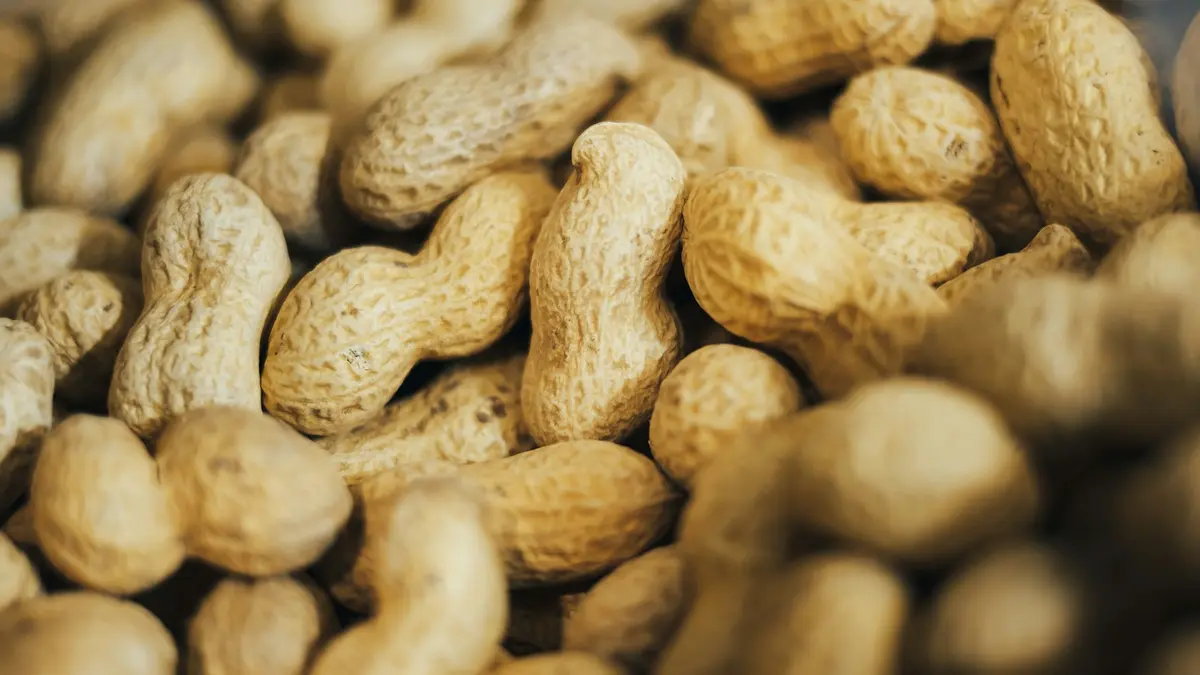
The reported work used peanut peel as the feedstock and applied alkaline treatment followed by sodium-chlorite bleaching. Its characterization workflow included moisture-related testing, XRD, FTIR, SEM with elemental analysis, and TGA.
Source: Unsplash
Materials Used
The listed materials were Arachis hypogaea peel, sodium hydroxide, sodium chlorite, glacial acetic acid, and hydrochloric acid. Reagent grade, supplier details, peel origin, and complete pre-processing conditions were not fully documented in the available description.
Experimental Procedure
The reported procedure describes an alkaline extraction and bleaching sequence intended to obtain a lighter, cellulose-rich material. Hydrochloric acid is listed among the reagents and acid hydrolysis is claimed in the broader study narrative, but a complete acid-hydrolysis procedure is not clearly provided.
Alkaline Treatment and Bleaching
Ground peel was reportedly refluxed in 4 wt% sodium hydroxide at 60°C for two hours. The treated solid was cooled, filtered, and washed with distilled water. This step was intended to reduce lignin and hemicellulose content, although complete removal cannot be assumed without compositional evidence.
The material was then bleached using an acetic-acid–sodium-chlorite system at 60°C for two hours, followed by filtration and washing. Bleaching can reduce colour-forming and lignin-related components, but its effectiveness depends on reagent ratio, pH, liquor ratio, and washing practice.
Results and Discussion
The reported results provide indications of cellulose-associated structure and thermal behaviour, but interpretation should account for incomplete process documentation and uncertainty about whether all tested samples were extracted peel cellulose, composite material, or another cellulose-containing fraction.
Source: Unsplash
Particle Characterization Methods
The characterization programme addressed moisture, crystalline structure, functional groups, morphology, elemental composition, and thermal degradation. These methods are useful in combination because each evaluates a different aspect of material quality.
Moisture Content Measurement
Samples were reportedly conditioned at room conditions and 55–65% relative humidity for one week before drying-based measurement. Moisture content normally uses the mass of water relative to the original wet or conditioned mass. The exact source equation was not available for confirmation.
Moisture Regain Measurement
Moisture regain differs from moisture content because it is calculated on a dry-mass basis. Although the reported work refers to a moisture-regain equation, the equation and corresponding result are not sufficiently available to confirm the calculation.
X-Ray Diffraction Analysis
Powdered samples were reportedly examined using Cu Kalpha radiation over an approximately 10°–50° 2theta range. The Segal crystallinity-index approach uses the intensity of a cellulose-associated crystalline peak and a lower-intensity amorphous-region signal. Results depend on peak assignment, background treatment, sample identity, and the calculation method used.
Fourier Transform Infrared Spectroscopy
FTIR spectra were reportedly collected over 4000–500 cm−1. FTIR can identify cellulose-associated bands and compare chemical changes before and after treatment. It is most informative when raw peel, treated cellulose, and any composite samples are clearly identified and compared.
Scanning Electron Microscopy
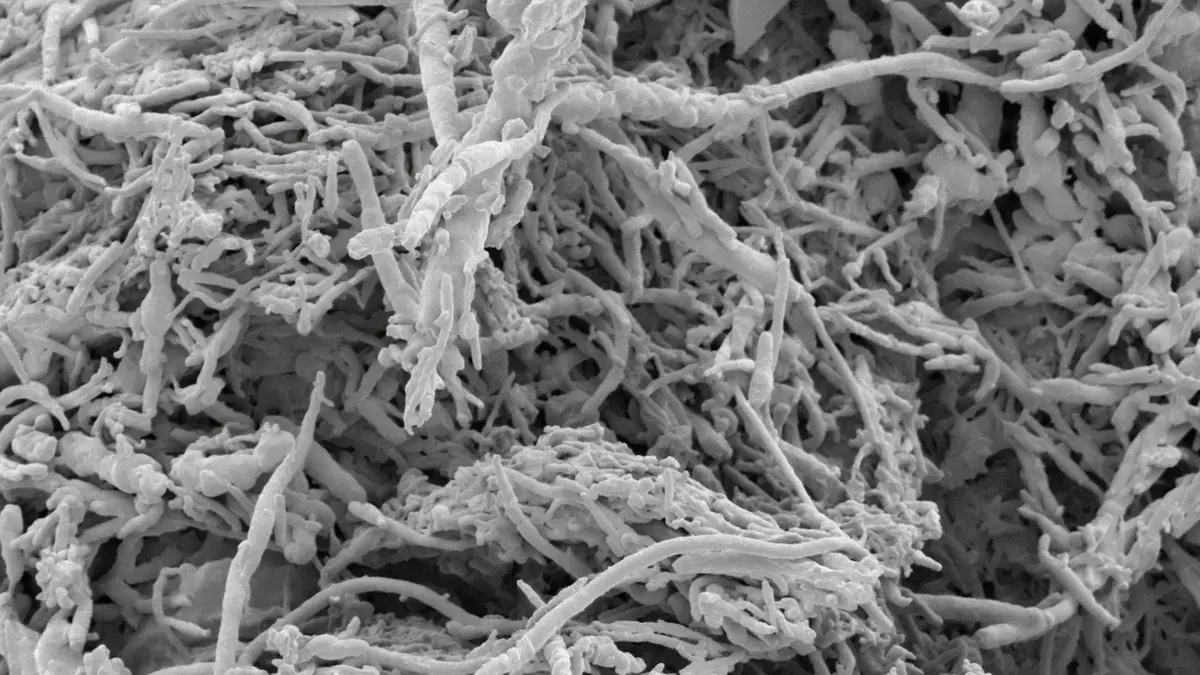
SEM was used to inspect particle morphology at a reported operating voltage of 5 kV, with energy-dispersive X-ray spectroscopy used for elemental assessment. SEM can reveal fibre bundling, roughness, and agglomeration, but a nanoscale diameter claim requires suitable magnification, calibration, image resolution, and measurement practice.
Thermogravimetric Analysis
TGA was reportedly conducted on approximately 5 mg samples under nitrogen from 25°C to 500°C at 10°C per minute. The method tracks mass loss with temperature and can help compare moisture loss, principal decomposition, and residual mass.
Interpretation of Results
The findings are consistent with a cellulose-containing product, but they should be interpreted as reported observations rather than conclusive proof of pure cellulose nanocrystals. A robust evaluation would compare untreated peel, alkali-treated material, bleached material, and hydrolysed material using matched testing conditions.
XRD Results
The reported diffraction pattern contained cellulose-associated features near 16°, 22°, and 35° in 2theta, with a stated crystallinity index of 72.22%. This value may indicate a relatively ordered cellulose-containing material, but it cannot demonstrate treatment-driven improvement without directly comparable raw-material data and transparent calculation details.
FTIR Results
Reported bands near 3270 cm−1 and 2890 cm−1 were assigned to O–H and C–H stretching. A band near 1645 cm−1 was associated with absorbed water, while features near 1034 cm−1 and 890 cm−1 were attributed to C–O vibration and beta-1,4-glycosidic linkage-related vibration.
These assignments support the presence of cellulose-associated functionality. However, demonstrating lignin or hemicellulose removal requires comparative spectra and examination of relevant bands before and after treatment.
TGA Results
The reported sample showed limited mass change up to approximately 250°C, followed by a principal decomposition region of about 250–360°C. This pattern is broadly compatible with cellulose-rich material, although thermal stability should be described using the actual onset temperature, peak degradation temperature, and final residue rather than a single broad claim.
SEM Results
The material was described as rough and agglomerated, with clumping attributed to intermolecular hydrogen bonding. An average diameter of approximately 30 nm was reported. Because the study also noted SEM-result difficulties, this nanoscale value should be treated as provisional unless image quality and measurement details are available for review.
Moisture Content Results
A reported powder mass decreased from 1.23 g to 1.05 g after drying at 105°C for 20 minutes. Using the conditioned mass as the denominator, the mass loss corresponds to about 14.6%, which is close to the stated 14.88% but not identical. The difference may reflect rounding or an undisclosed calculation basis.
Moisture Regain Results
The same initial and dried masses were repeated for moisture regain. Since moisture regain requires dry mass as the denominator, a separate value cannot be confirmed without the original equation and a clearly identified conditioned sample mass.
Cellulose Content Results
The reported cellulose-content procedure treated holocellulose with 17.5% sodium hydroxide for five hours, then washed the recovered white powder to neutral filtrate. Masses of 4.20 g initial material and 2.15 g recovered powder were provided, giving a simple mass ratio close to 51%.
That ratio should not automatically be equated with pure cellulose content. The identity of the starting fraction, solubility losses, residual non-cellulosic matter, and analytical method must be established before making a compositional claim.
Study Limitations
The researchers reported difficulty obtaining the desired SEM results and stated that retesting was not possible because of analysis cost. This limitation reduces confidence in morphology interpretation, especially the reported nanoscale diameter.
Additional uncertainty arises because the available method description does not clearly document the acid-hydrolysis stage that is central to the nanocrystal claim. Future work should include a complete hydrolysis protocol, replicates, particle-size analysis, compositional testing, and clear sample tracking across each treatment stage.
Conclusions
The reported study indicates that peanut peel can be treated with sodium hydroxide and sodium-chlorite bleaching to obtain a cellulose-rich material. XRD, FTIR, TGA, and SEM were used to examine the recovered product, with reported results suggesting cellulose-associated structure, crystallinity, and thermal decomposition behaviour.
Hydrochloric-acid hydrolysis was presented as the route to cellulose nanocrystals, but the available procedure does not fully describe or verify this stage. The reported moisture value of 14.88% is broadly consistent with the disclosed drying masses, while the stated 51% cellulose-related value appears to be a recovered-mass ratio that requires fraction validation.
For textile and material applications, peanut-peel-derived cellulose may be investigated for sizing, thickening, levelling-related formulations, paper, coatings, and composite systems. Suitability should be confirmed through application-specific testing, including purity, rheology, particle dimensions, compatibility, strength, colour, and safety assessment.