How Textile Production Can Support Circular Fashion Models
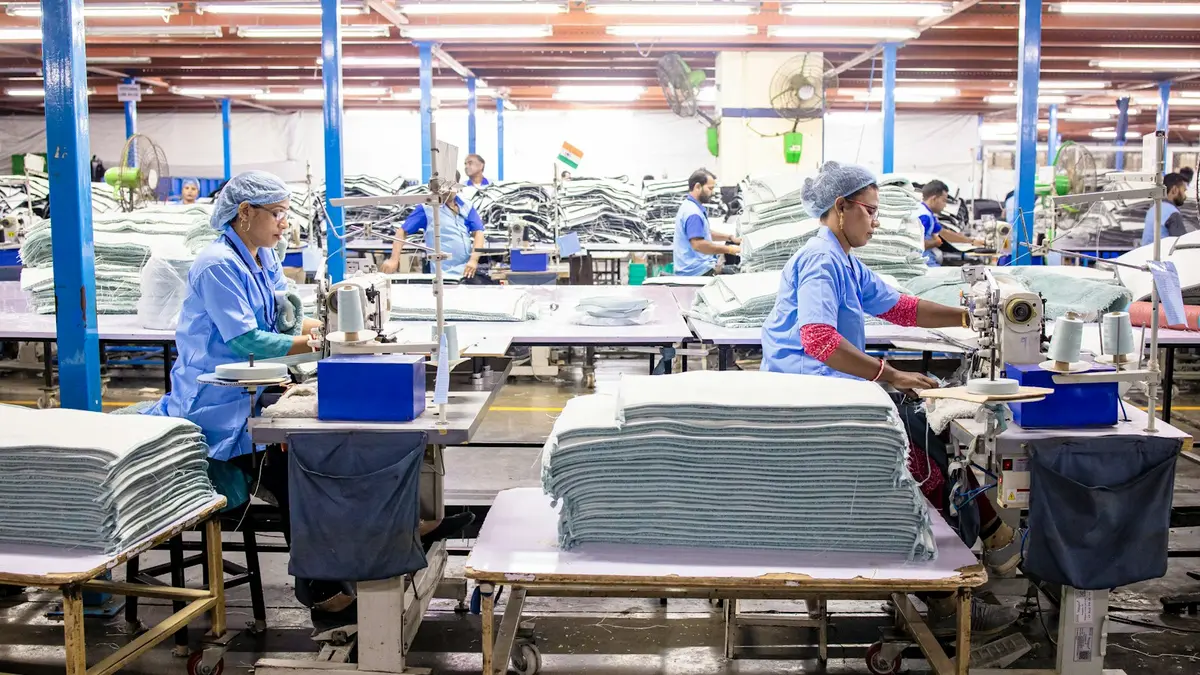
Table of Contents
Circular Fashion and Textile Production
Circular fashion is an alternative to the linear take-make-dispose model. Its aim is to keep textiles, components, and materials in use for as long as practical through durability, care, repair, reuse, resale, remanufacture, recycling, and, where suitable, biological recovery. Circular textile production therefore begins well before a garment reaches a collection bin.
For manufacturers, circularity is a value-chain design question. Fiber selection, yarn and fabric construction, dyeing, trims, product architecture, labeling, production volumes, and recovery partnerships all influence what can happen to a product after its first use. Innovation and production data can support these decisions, but they do not guarantee lower impact without suitable infrastructure, credible measurement, and operational follow-through.
How Circularity Developed in Fashion
Repair, alteration, inheritance, and textile repurposing were common practices when clothing was relatively costly and garments were often made for long-term use. Worn textiles could be re-cut into household goods, insulation, wiping materials, or other lower-value applications.
Industrialized mass production and rapid fashion cycles increased product volumes and shortened many garment lifetimes. In response, circular-economy thinking brought renewed attention to material loops. Cradle to Cradle concepts helped popularize design approaches that distinguish biological and technical material cycles, while the Ellen MacArthur Foundation made circular-economy principles widely influential in fashion discussions.
More recently, fiber-recovery technologies, traceability systems, resale platforms, and policy incentives have expanded the practical conversation. Their contribution depends on factors such as collection quality, product composition, market demand for recovered materials, and the availability of sorting and recycling capacity.
Technologies Enabling Circular Textile Production
Digital fabric simulation and virtual product development can reduce some physical samples, prototype rounds, and communication delays. These tools are most useful when digital approvals replace, rather than merely supplement, physical development samples.
On-demand or demand-responsive manufacturing can reduce the risk of unsold inventory by aligning production more closely with confirmed demand. It is not inherently circular, however: lead times, transport, returns, fabric waste, and product durability still require management.
Water-reducing coloration technologies include processes using supercritical carbon dioxide and plasma-assisted surface treatment. Their water, chemical, energy, colorfastness, and scale performance vary by substrate, dye chemistry, machinery, and operating conditions. Manufacturers should assess verified process data instead of assuming that a technology is universally lower impact.
Automated cutting, trim removal, and garment disassembly are developing tools for recovery operations. Reversible joining methods, accessible seams, and removable hardware can also make manual or semi-automated separation easier. Fully automated disassembly remains challenging for diverse garments with stretch fabrics, coatings, adhesives, and complex construction.
PHA and PLA are polymer families that may be relevant for selected textile applications. Their biodegradation depends on the specific formulation and on disposal conditions such as industrial composting systems. A material described as biodegradable should not be assumed to break down safely in ordinary soil, marine environments, or mixed municipal waste.
Redesigning the Production Process for Circularity
Circular production is not a single recycling activity at the end of a product’s life. It is a coordinated approach linking material selection, product design, manufacturing, labeling, use, collection, sorting, and recovery. Decisions made at one stage can enable or constrain options at another.
Source: Unsplash
Material Selection
Mono-material products can simplify identification, sorting, and recycling because the main textile content is more consistent. When blends are necessary for performance, compatible fibers and known recycling routes should be considered during development. A small amount of elastane, coating, adhesive, or decorative trim can complicate recovery even when the base fabric is otherwise recyclable.
Natural, recycled, and regenerative inputs can each be appropriate in particular applications. Their environmental performance depends on origin, processing, durability, transport, local agricultural practices, recycled-content quality, and the intended use phase. Material choices should be evaluated in product context rather than ranked as universally preferable.
Circular Product Design
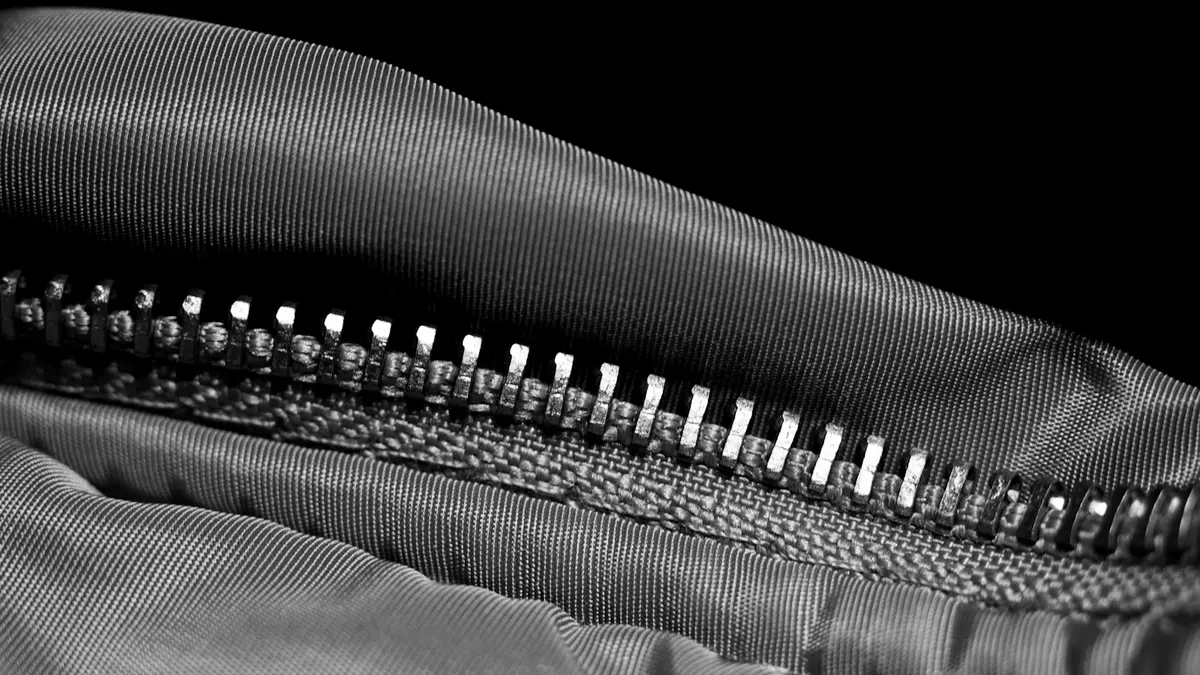
Design for disassembly helps recovery teams separate textiles from zippers, buttons, labels, padding, linings, and other components. Practical measures include standardized hardware, removable components, accessible seams, reduced material complexity, and clear construction specifications.
Life extension is equally important. Durable fabrics, repairable seams, replaceable components, spare parts, adaptable sizing, and modular updates can keep a garment in use longer. A product designed only for recyclability may still have limited circular value if it fails prematurely or cannot be repaired.
Lower-Impact Manufacturing
Manufacturers can reduce process burdens through renewable-energy procurement, energy efficiency, water recirculation, wastewater treatment, and carefully managed chemical inputs. Process control also matters: right-first-time production, defect reduction, accurate cutting, and controlled inventory can prevent avoidable material loss.
Environmental performance is site-specific. Water recirculation, for example, depends on treatment capability, dyehouse chemistry, local water conditions, energy demand, and discharge requirements. Claims about cleaner production should be supported by relevant process data and verification methods.
Product Data and Smart Labels
QR-linked product information and digital product passports can make lifecycle information easier to access and update. Depending on the system, records may include fiber composition, recycled content, supplier or production information, care instructions, repair guidance, component details, and end-of-use recommendations.
Accessible data can support better care by users and more accurate decisions by resale operators, repair services, sorters, and recyclers. Implementation differs across brands and markets, so a digital label is useful only when its data are accurate, maintained, and available to the people who need them.
Integrating Post-Consumer Textiles
Take-back programs, resale channels, repair services, remanufacturing, and textile-to-textile recycling are routes for integrating post-consumer textiles into circular systems. Each route requires a clear operating model for collection, inspection, sorting, cleaning, logistics, and destination management.
Durable and versatile products are generally better suited to reuse than short-life, trend-led products. On-demand production and resource-efficient manufacturing can further support circular objectives by reducing surplus, but they do not remove the need for recovery planning.
End-of-use options depend on product composition and local systems. Reuse may be suitable for wearable products; upcycling may suit selected materials; recycling requires compatible feedstock and processing capacity; and composting is relevant only for products designed for verified composting conditions. Landfill and incineration are generally outside circular material loops.
Major Innovations in Circular Textile Systems
Chemical recycling routes are being developed for cellulose-rich textile feedstocks, including cotton-containing materials. These processes can convert suitable feedstock into dissolved pulp or other intermediate materials for new cellulosic fibers. Output quality depends heavily on feedstock composition, contamination, dyes, finishes, and process controls.
Source: Unsplash
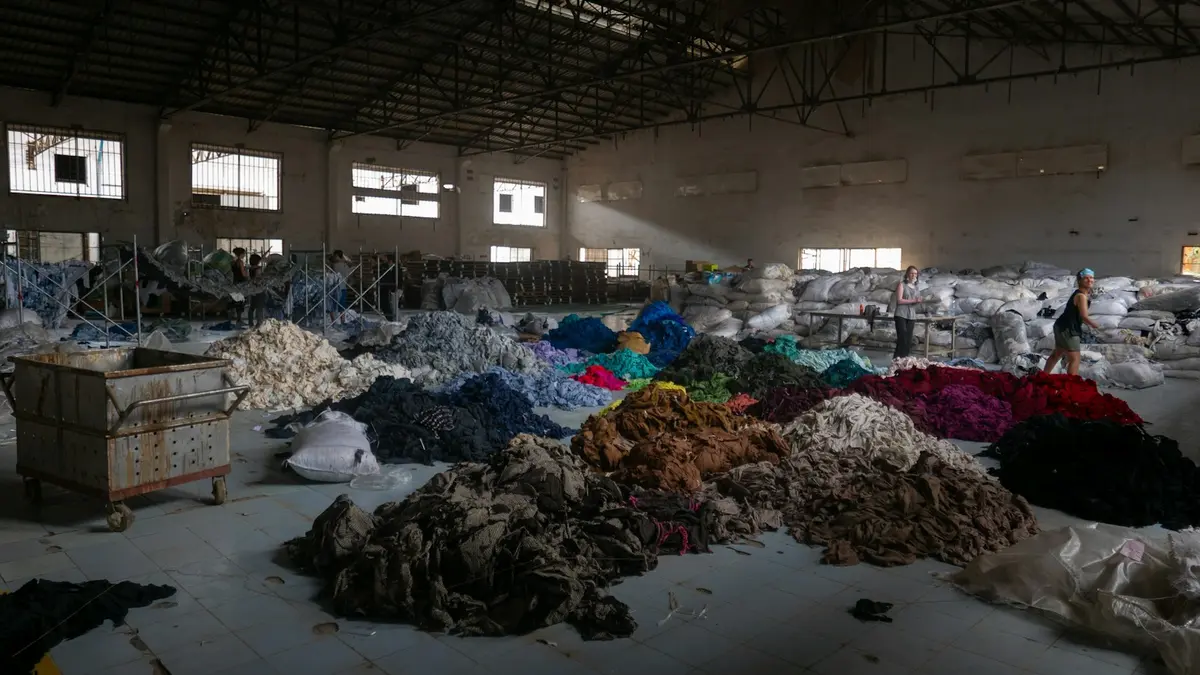
Automated fiber identification and sorting can improve recovered-material purity by distinguishing fiber types and directing items to appropriate pathways. Near-infrared detection, machine vision, and data-linked identification can assist sorting, although dark colors, complex blends, finishes, and missing labels remain practical limitations.
Bio-derived colorants from microorganisms or algae are emerging alternatives to conventional color systems. Their performance, scale, color range, processing requirements, and environmental profile need case-by-case assessment. Blockchain can also support traceability or authentication where participants record reliable data, but it is not independent proof that a product is sustainable.
Textile Material Strategies for Circularity
Mono-material garments reduce separation steps and can make recycling routes easier to identify. This does not eliminate the need to manage labels, prints, sewing threads, coatings, and accessories.
Biodegradable textiles should be described with their required disposal conditions. Industrial-composting, home-composting, and biodegradation claims are not interchangeable, and a compostable textile may not be accepted by local composting services.
Recycled polyester and recycled wool can use post-consumer or industrial feedstocks, but material quality, contamination, fiber length, additives, and repeat recycling affect final performance. Regenerative fiber sourcing refers to agricultural practices intended to improve soil health and ecosystem function; associated environmental claims require evidence from the relevant supply system.
Polyester-cotton and other multicomponent blends remain difficult to separate economically at scale. Mechanical and chemical separation technologies are advancing, but product developers should not assume that a blend has an available recycling route in every market.
Examples of Circular Fashion in Practice
Patagonia has developed repair, resale, and used-gear initiatives alongside material-sourcing efforts. Its programs illustrate how product durability and customer-facing repair services can complement recovery systems, although program availability and accepted items can change by market.
H&M’s Looop has been presented as an in-store garment-to-garment recycling demonstration and system. Such systems help make fiber recovery visible to customers, but they operate within practical limits relating to feedstock type, output quality, throughput, and the need for supplementary materials in some applications.
Eileen Fisher Renew uses returned garments in resale, remanufacture, and recycling activities. This model shows how condition grading can direct products into different next-use pathways rather than treating all returns as recycling feedstock.
Re:newcell developed a textile-to-pulp approach for cotton-rich textile waste, producing dissolving pulp intended for regenerated cellulosic fiber production. These examples demonstrate alternative product-life pathways, but their outcomes depend on collection quality, customer participation, processing capacity, and commercial demand.
Market Conditions and Consumer Expectations
Interest in product transparency, repair, resale, rental, durability, and traceable sourcing has increased attention on circular fashion. For brands and suppliers, this creates a need for clearer product information and practical services rather than broad environmental claims alone.
Circular production can align supply-chain choices with ethical, resource-efficiency, and regenerative objectives when those choices are defined, measured, and communicated accurately. Younger consumers are an important audience for accountability claims, but expectations vary by price point, geography, product category, and access to repair or resale services.
Barriers to Optimizing Circular Textile Production
Collection, sorting, and recycling infrastructure remains uneven across regions. Mixed waste streams, missing product data, contamination, and variable garment quality reduce the value and usability of recovered textiles.
Circular systems can require initial investment in product redesign, traceability, reverse logistics, staff training, new equipment, and supplier coordination. Blends, coatings, prints, trims, elastane, and bonded constructions create additional separation challenges.
Policies, standards, and definitions also differ among markets. Finally, take-back, repair, resale, and reuse systems depend partly on consumer participation, convenient return channels, and trust that products will be managed responsibly.
Policy Tools and Incentives
Extended producer responsibility can assign producers financial or operational responsibility for end-of-life textile management. Well-designed schemes may support collection, sorting, reuse, and recycling, but their outcomes depend on scheme rules, governance, fees, reporting, and infrastructure investment.
Governments can also use tax incentives, subsidies, research funding, eco-labeling rules, sustainability disclosures, and green public procurement to encourage circular textile development. Public purchasing can create demand for durable, repairable, or recycled-content textile products when specifications are clear and verifiable.
The EU Strategy for Sustainable and Circular Textiles sets policy direction toward more durable, repairable, reusable, and recyclable textile products. Its objectives should be distinguished from individual binding measures, which require separate legal adoption, implementation, and market-specific interpretation.
Emerging Directions in Circular Textile Production
Textile-to-textile recycling is expected to expand where commercial capacity, consistent feedstock, suitable economics, and demand for recovered outputs develop together. Regenerative agricultural sourcing may become more integrated into fiber procurement where practices and outcomes can be substantiated.
AI and generative design tools may help reduce cutting waste, improve marker efficiency, explore modular construction, and identify material choices that fit defined recovery routes. Their effectiveness depends on the quality of product, material, and manufacturing data used in the design process.
Digital identities and product passports are likely to become more relevant for lifecycle information management. Circular-design education is also increasingly important for textile and fashion students, since designers need to understand both product aesthetics and downstream material consequences.
Key Takeaways
Circular fashion is a system-level industrial and cultural transition, not a short-term styling trend. Circular textile production combines long-life design, material compatibility, controlled manufacturing, reliable product data, and realistic recovery pathways.
The most effective approaches require collaboration among brands, mills, manufacturers, recyclers, policymakers, educators, and consumers. With credible measurement and coordinated implementation, circular strategies can reduce avoidable waste, retain material value, and create resilient business opportunities.
References and Further Reading
For current guidance, consult recognized circular-economy and textile-industry resources, including the Ellen MacArthur Foundation, Fashion for Good, and European Commission materials on sustainable and circular textiles. Verify program details, policy status, and technical claims against current primary sources before using them in procurement, compliance, or product communications.