Why Does Cotton-Spandex Fabric Lose Shape After Wearing?
Table of Contents
Cotton-spandex fabric loses shape during wear because elastane is only one part of a knitted system. The cotton fibers, knit loops, yarns, garment cut, and repeated tension from sitting and moving all affect whether the fabric returns promptly to its starting dimensions. A small percentage of spandex can add comfortable stretch, but it does not automatically make a cotton jersey resistant to bagging.
That is why a cotton-elastane T-shirt, waistband, legging, or fitted top may feel looser by the end of the day and appear closer to its original fit after washing and drying. Some of that change is temporary relaxation; some can become lasting growth as the garment ages or is repeatedly overstretched.
Stretch is not the same as recovery
Two properties matter in any elastane knit fabric:
- Stretch is how far fabric extends under force.
- Recovery is how completely and quickly it returns after that force is removed.
A fabric can stretch easily yet recover poorly. In fact, an especially soft, drapey jersey can feel wonderful at first while being more prone to looseness at the knees, elbows, seat, neckline, and hem.
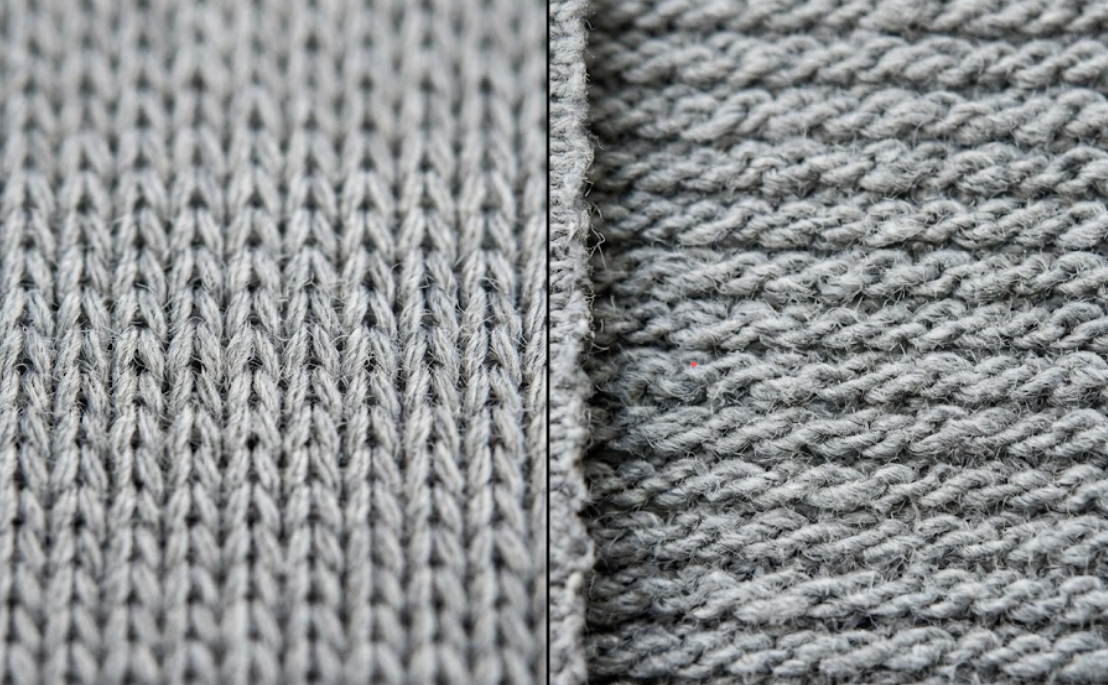
Knits are made from interlocking loops rather than the fixed crossing yarns of a woven fabric. When a knit is pulled, its loops can open, shift, and lengthen. Elastane provides a pulling-back force, but the cotton yarns and loop structure still have to settle back into position. If the loops remain partly distorted after movement, the garment looks larger even when its elastane has not failed.
Why cotton plays such a large role
Cotton absorbs moisture from humidity, perspiration, and washing. During wear, moisture and body heat can help cotton fibers and yarns relax under tension. This is one reason cotton-rich stretch knits commonly feel roomier after hours against the body than when first put on.
A source on fabric shape loss describes cotton-spandex as having moderate, moisture-dependent recovery compared with many synthetic-spandex blends. Cotton’s moisture absorption can allow it to extend more readily under wear tension, while laundering and drying can make the fabric look more compact again. That does not mean washing permanently repairs the fabric; it often resets part of the temporary relaxation.
This behavior matches an observation shared in a Reddit discussion about replacing synthetic fabrics. One user reported that cotton knits containing 10% spandex became loose and baggy after a couple of days and needed washing to tighten again. It is a personal report rather than a controlled test, but it describes a familiar cotton-rich knit wear pattern.
The spandex percentage is only part of the answer
A label such as 95% cotton and 5% elastane gives useful information, but it does not predict shape retention by itself. Two fabrics with the same fiber percentages can perform very differently.
The elastane yarn’s size and placement matter. A thicker or more substantial elastane yarn can provide more recovery force than a finer one, even if the fabric has a lower elastane percentage by weight. How the elastane is integrated into the knit also matters: it may be plated with another yarn, knitted into selected courses, or used differently across the fabric construction.
More elastane is not automatically better, either. A higher-elastane fabric may be appropriate for close-fitting activewear or leggings, but a casual cotton jersey is usually designed for softer, lighter stretch rather than firm body-hugging recovery. The intended use should determine the fabric choice.
Knit construction can make a garment bag out faster
Source: canvasetc
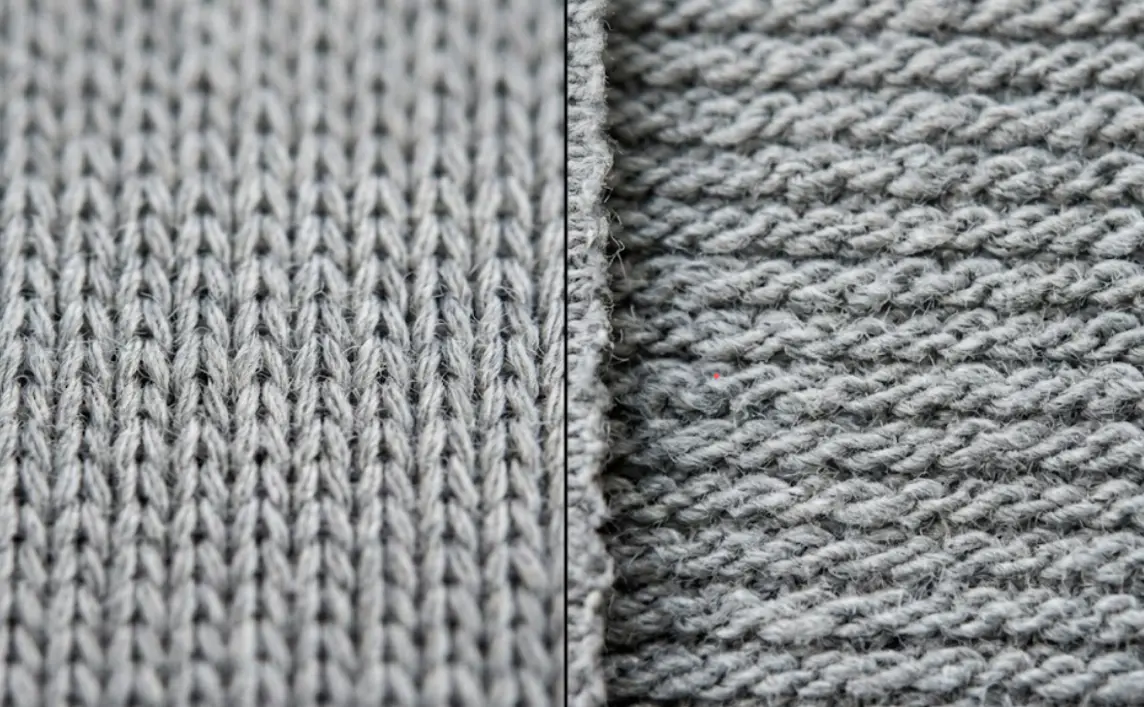
A loose, lightweight single jersey has a naturally flexible loop structure. It is widely used for soft T-shirts because it drapes well and feels light, but it may show more relaxation than a denser construction. If a garment is expected to stay close to the body throughout the day, an airy jersey may not be the best choice.
Denser fabrics generally offer more structural support, although weight alone is not a guarantee of quality. A heavier knit can still have poor recovery if its loops are loose, its yarn quality is inconsistent, or its elastane is weak. Conversely, a well-engineered lighter knit can perform well within its intended use.
Rib knits are often useful where recovery is important, such as cuffs, neckbands, waistbands, and fitted tops. Their vertical ribs create a structure that can accommodate stretch while maintaining a more resilient feel than many plain jerseys. Piqué and other textured knits may also behave differently from single jersey because their structures distribute tension differently.
Yarn quality and finishing affect recovery
The yarns in a knit influence how stable its loops remain. Uneven, low-twist, weak, or highly variable yarn can make the fabric more likely to shift and grow. Fabric finishing can also influence initial hand feel, compactness, shrinkage, and apparent recovery.
A newly purchased garment may feel compact because of finishing, then relax after laundering and wear. That is not always a defect: fabrics are often designed to settle after their first wash. But a garment that repeatedly becomes much wider, longer, or visibly distorted may have inadequate recovery for its fit and use.
For sewing or sourcing, asking only for fiber content is not enough. Request or check the knit structure, finished fabric weight, shrinkage information, and stretch-and-recovery results. A supplier guide similarly recommends evaluating weight, construction, and recovery rather than relying solely on a blend ratio.
Fit can overload an otherwise good stretch knit
A garment can bag out because it was asked to stretch beyond the range for which it was designed. This is especially common when a casual cotton jersey is cut like compression wear.
High-stress areas include:
- Knees in leggings and slim pants
- Elbows in close sleeves
- The seat and upper thighs in fitted bottoms
- Necklines that are pulled repeatedly over the head
- Waistbands that carry the garment’s weight
A well-fitting stretch garment normally uses some negative ease: its unstretched measurements may be smaller than the wearer’s body. But excessive negative ease puts continuous strain on the loops and elastane. Choosing a larger size may reduce localized stress, while choosing a more supportive fabric may be the better solution for a garment that must stay fitted all day.
Why washing makes it look better again
Washing changes the moisture condition of the cotton and lets the knit relax without the same concentrated body tension. As the garment dries, loops can draw closer together and cotton yarns may regain a more compact arrangement. Mild drying can also make a knit look temporarily tighter.
However, relying on a hot wash or high-heat dryer to shrink a garment back into shape is not a good long-term strategy. Heat can damage elastane and eventually reduce its recovery. Sources discussing cotton-spandex care advise cool washing and air drying or low tumble drying to help preserve elastane performance.
If washing restores the fit every time, the issue may mostly be ordinary cotton-knit relaxation. If the garment remains baggy after washing, develops permanently stretched knees or neckline rippling, or no longer springs back when gently stretched, lasting structural growth or elastane damage is more likely.
How to judge a cotton-spandex knit before buying
When possible, handle the garment rather than judging it from the percentage label alone.
First, gently stretch a small area in both directions and release it. A promising fabric returns smoothly and quickly, without remaining visibly wavy or thin-looking. This is only an informal shop test, but it can reveal obvious poor recovery.
Next, look for a compact, even knit surface. Very open loops, extreme softness combined with low density, or visible distortion after a light pull can indicate a fabric intended for drape rather than stable close fit.
Then match the fabric to the job. A cotton-rich 95/5 jersey can be excellent for a comfortable T-shirt, casual tank, or light fitted top. It is less dependable when the garment must resist hours of knee strain, intense exercise, or compression-level fit. For those uses, a denser structure, more supportive elastane construction, or a nylon- or polyester-spandex blend may offer more consistent recovery.
Finally, wash-test a sample when buying fabric or committing to an unfamiliar brand. Wear performance cannot be predicted perfectly from fiber content. The best cotton-spandex knit is not the one with the highest elastane number; it is the one whose fiber blend, loop structure, weight, and fit are appropriate for how the garment will actually be worn.
References
- Why Fabric Stretches Out of Shape? - MFG Merch. mfgmerch.com. https://mfgmerch.com/fabric-stretches-out-of-shape
- How to Choose Cotton Spandex Fabric: A Complete Buyer’s Guide. smartbuy.alibaba.com. https://smartbuy.alibaba.com/buyingguides/cotton-spandex-fabric
- Cotton Spandex Explained:Composition, Uses & Sewing Tips – Sportek International Inc.. sportek.com. https://sportek.com/blogs/news/cotton-spandex-explained-composition-uses-sewing-tips
- Cotton-Spandex vs Nylon-Spandex: Which Stretch Blend Should You Buy? – Spandexbyyard. spandexbyyard.com. https://spandexbyyard.com/blogs/spandex-vs-other-stretch-fabrics-type-explained/cotton-spandex-vs-nylon-spandex-which-is-best
- 2026 Top Cotton Spandex Fabric Types for Global Buyers. suertetextile.com. https://www.suertetextile.com/blog/2026-top-cotton-spandex-fabric-types-for-buyers
- Why Does Knit Fabric Lose Its Shape? Understanding Stretch .... runliglobal.com. https://www.runliglobal.com/news/why-does-knit-fabric-lose-its-shape-understanding-stretch-growth-and-recovery.html
- Cotton Spandex Fabric Technical Specifications: Blend Ratios for Optimal Comfort & Stretch. szoneierfabrics.com. https://szoneierfabrics.com/cotton-spandex-fabric-technical-specifications-blend-ratios-for-optimal-comfort-stretch
- Why Shape Retention Matters in Modern Apparel Fabrics – Regen-tech Fashion. regentech-fashion.com. https://www.regentech-fashion.com/pages/why-shape-retention-matters-in-modern-apparel-fabrics-1