How Can Small Makers Source Custom Sustainable Fabric Without High Minimum Orders?
Table of Contents
Small makers can source custom sustainable fabric without committing to hundreds of meters by separating the material decision from the print decision. Instead of asking a mill to develop a new fabric and a new print at once, buy a verified blank fabric in the quantity you need, then use a local or print-on-demand textile printer that accepts short runs.
This approach will usually cost more per yard or meter than a large production order, and the sustainable outcome depends on both the base fabric and the printing process. But it is often the most realistic route for a personal project, samples, made-to-order work, or a small product launch. Deadstock and repurposed textiles can reduce the need for new fabric altogether, although they come with limits on color, quantity, and repeat availability.
Why custom prints usually have high minimums
A custom print involves more than putting an illustration on fabric. The printer may need to prepare artwork files, profile color, set up machinery, test the fabric, and schedule a dedicated production run. Those fixed tasks cost nearly the same whether the order is small or large, so suppliers often use minimum order quantities to spread setup costs across more fabric.
Mill-direct fabric orders can have especially high minimums because the mill is producing or dyeing material specifically for a customer. A sourcing guide from SWATCHON describes traditional mill minimums as typically hundreds of yards per color, while stock fabric and sample-yardage routes can be available in much smaller quantities.
The same pattern appears with printing. One industry comparison notes that a supplier may accept digital textile printing from 100 meters while machine screen printing begins at far higher volumes. That does not mean every printer has the same thresholds, but it explains why the printing method matters as much as the fabric choice.
A discussion in r/ethicalfashion reflects this barrier directly: one commenter said custom prints can carry minimums of 500 to 750 meters or more per print. This is a user-reported observation rather than a universal industry rule, but it matches the basic economics of production-scale printing.
Start with the route that fits your actual quantity
For most small makers, there are four practical routes. The best choice depends on whether your priority is a specific print, the lowest environmental burden, a repeatable fabric supply, or the lowest initial spend.
1. Buy sustainable blank fabric and print it separately
This is usually the best route when your own artwork is non-negotiable and you need only a few yards or meters.
Look for a blank fabric that is already stocked in the fiber, weight, stretch level, and finish your project needs. Then ask a nearby printer or short-run digital textile service which fabric constructions it can print successfully. Confirm this before buying the blank fabric: some printers only accept particular fiber types, widths, or prepared-for-print materials.
This route gives you control over both parts of the decision:
- You choose the base cloth rather than accepting whatever a printer offers.
- You can purchase only the amount needed for a garment, test sample, or micro-run.
- Local printing may reduce shipping distance between fabric, printer, and maker.
- You can inspect a printed strike-off before committing to more fabric.
The tradeoff is coordination. You are responsible for confirming compatibility, sending artwork, accounting for print shrinkage or color variation, and arranging delivery or pickup. A printer may also decline customer-supplied fabric because print results can be less predictable on unfamiliar substrates.
When requesting quotes, ask whether the price includes pre-treatment, color management, test printing, steaming or curing, and washing. These steps affect both the look and durability of the result.
2. Use a print-on-demand textile service for prototypes or one-offs
Print-on-demand services can be useful when you need a small quantity and do not want to manage a separate printer. These services generally offer an online upload process, a defined range of base fabrics, and low or no minimum ordering for certain products.
The advantage is simplicity. You can order a sample or a single garment-length cut, assess color and hand feel, then revise the design without carrying unused inventory. Low-MOQ ordering can also support made-to-order production, which may help avoid producing goods that are not needed.
The limitation is that “eco-friendly” labels alone are not enough to establish sustainability. Check what the offered fabric is made from, whether its environmental claim applies to the fiber, the printing, or both, and whether the company provides current certification or traceability information. If the service lists a certification, ask what specific product or material it covers.
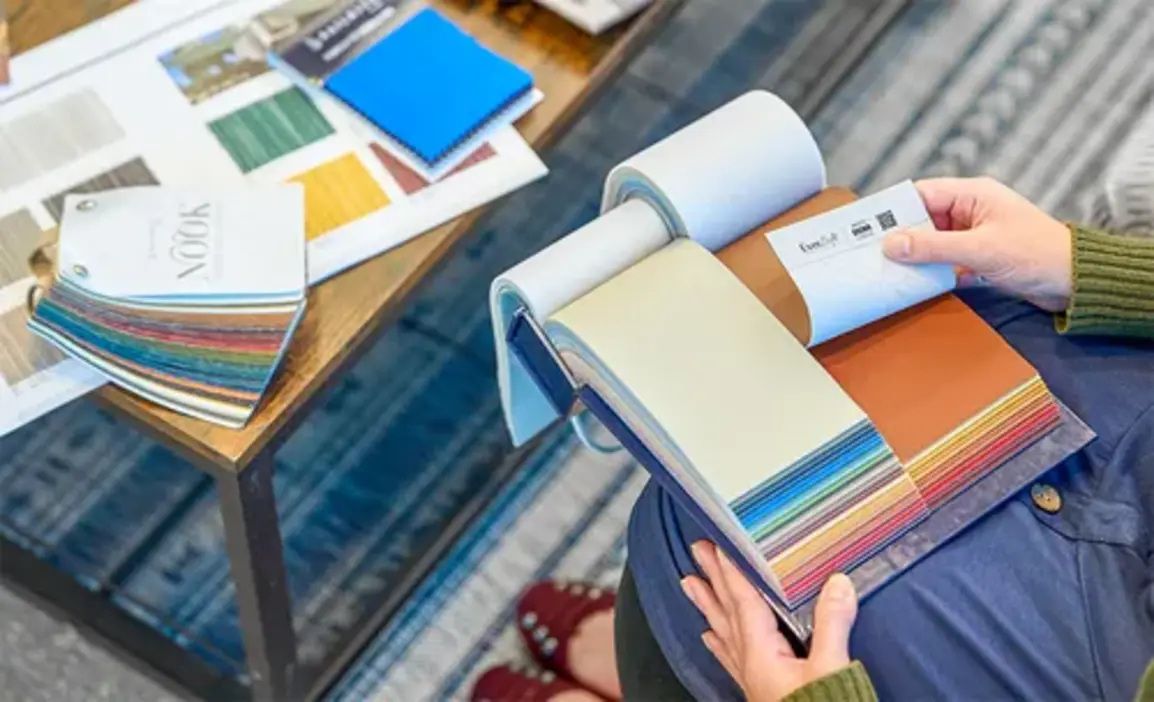
For clothing, do not skip swatches. A fabric that looks suitable online may have very different opacity, recovery, drape, surface texture, or stretch once it arrives.
3. Choose deadstock for a low-volume material solution
Deadstock fabric is unused surplus material from a mill, manufacturer, retailer, or prior production run. It can be a strong option when the priority is avoiding the production of a new fabric specifically for your project.
Deadstock sellers often sell by the yard or meter, and stock may be available immediately. According to the SWATCHON comparison, deadstock can have low minimums and quick availability, but it is finite and generally cannot be reordered once sold out.
That makes deadstock particularly suitable for:
- One-off garments and personal sewing projects
- Limited-edition products
- Prototypes and photography samples
- Designs that can accommodate fabric variation
- Makers who can adapt a pattern to the available yardage
It is less suitable for a product that must be reproduced identically over time. If you are selling items made from deadstock, be careful not to promise permanent availability or exact future fabric matches.
Deadstock is not automatically sustainable. It may prevent usable fabric from being discarded, but its original fiber content, chemical processing, transportation, and labor conditions can still be unknown. Ask for fiber composition, original supplier information where available, remaining quantity, width, care instructions, and any documentation that accompanies the lot.
Source: directus.sailrite
4. Repurpose existing textiles when repeatability is not essential
Vintage textiles, secondhand garments, surplus linens, and other reusable materials can be a practical material source for one-of-a-kind work. In the Reddit discussion, a commenter suggested vintage sarees and repurposed traditional textiles as possibilities for makers seeking distinctive fabrics. That is an individual suggestion, not evidence that every vintage textile is responsibly sourced or appropriate for every use.
Repurposing can avoid demand for a new fabric purchase, but it requires more inspection. Check for weak areas, stains, sun damage, seam marks, uneven fading, and fiber deterioration. Wash or clean the item appropriately before cutting, and buy enough extra material to work around flaws.
This route is usually better for woven garments, accessories, patchwork, or decorative applications than for performance garments. Swimwear, activewear, and fitted stretch garments need reliable recovery and resistance to chlorine, perspiration, or abrasion; older unknown fabrics may not perform consistently.
How to assess sustainability claims before ordering
A low minimum does not prove that fabric is sustainable, and a certified material does not guarantee that every stage of a project has low impact. Treat sustainability as a set of specific, checkable claims.
Ask the supplier or printer these questions:
What is the fiber content?
Request the full composition, not just a marketing term. For example, know whether a fabric is 100% cotton, a cotton-elastane blend, recycled polyester, conventional polyester, or a blend of several fibers. Fiber content affects print compatibility, garment performance, end-of-life options, and care requirements.
What exactly is certified?
Certifications can apply to a fiber, a fabric, a facility, a chemical input, or a finished product. They do not all cover the same issue. A supplier claiming to work with certified mills is not necessarily itself certified for every process.
The distinction matters: a manufacturer comparison notes that some businesses say they work with GOTS- or OEKO-TEX-certified mills, which is different from showing their own current certification. Ask for the certificate scope, certificate number if available, validity dates, and the material or process covered.
Can the supplier provide a traceable data trail?
The World Collective guide recommends checking whether certifications are current and whether a supplier can explain fiber origin, processing, labor practices, and environmental information. Not every small seller will have complete documentation, but vague claims should not be turned into strong marketing statements.
What happens during printing and finishing?
Ask what ink system is used, whether the fabric requires pre-treatment, and how the printed fabric is cured or washed. For a garment you plan to sell, ask for care guidance and, where relevant, information about colorfastness or print durability. Avoid assuming that water-based, digital, local, or natural-fiber printing is automatically low impact without supporting details.
Order a sample before committing
For custom textile printing, a sample is not a luxury. It is a risk-control step.
Order enough fabric to test the real use case. Sew a small sample if possible. Wash it according to the proposed care instructions. Check whether the print shifts in color after washing, whether the fabric shrinks, whether the print affects stretch or breathability, and whether the fabric remains comfortable against skin.
Also inspect the print at normal viewing distance. Fine lines, pale colors, large solid areas, and photographic designs can behave differently across fabrics and printers. A design that is sharp on a smooth woven polyester may look softer or more textured on a knit, linen, or brushed surface.
Make low-volume sourcing easier on your next order
Design choices can reduce future minimum-order problems. Use fewer fabric bases, limit colorways, and create prints that work across more than one product. If you use the same blank fabric for a dress, a top, and an accessory, you may be able to purchase enough total yardage to access better pricing without committing to a single oversized product run.
For a small brand, consider pre-orders before placing a larger print order. Low-MOQ sourcing can make testing feasible, while pre-orders can help estimate demand before more material is purchased. Another option is demand aggregation: the World Collective guide describes multiple buyers combining orders to meet a supplier’s minimum, allowing each participant to take a smaller share.
The most workable answer for a small maker is rarely a perfect, fully custom mill run. Buy only what you can use, document the material claims you can verify, test your print before scaling, and choose deadstock or reused textiles when their limited availability fits the project. That combination makes custom sustainable fabric sourcing possible without taking on production-scale inventory.
References
- 8 Best Low-MOQ Sustainable Fashion Manufacturing Partners. megavickwear.com. https://www.megavickwear.com/post/low-moq-sustainable-fashion-manufacturing-partners
- How To Source Sustainable Fabrics: A Guide for SME Fashion Brands – World Collective - Fashion Sourcing Platform. world-collective.com. https://world-collective.com/blogs/news/how-to-source-sustainable-fabrics
- Eco-Responsible Fabric Suppliers for Sustainable Brands | Low Minimum Orders — Fashion Production Agency. frankydune.com. https://www.frankydune.com/resources/p/low-moq-fabric-suppliers-directory
- Best Low MOQ Clothing Manufacturers: 11 Compared. collectivestudioltd.com. https://collectivestudioltd.com/journal/best-low-moq-clothing-manufacturers
- 7 Steps to Sourcing Sustainable Fabric for Custom Dresses. kahindo.com. https://kahindo.com/blogs/news/7-steps-sustainable-fabric-sourcing-custom-dresses
- Low Minimum Order Quantity for Sustainable Design | Buy Fabrics Online — Fabric Sight. fabricsight.com. https://www.fabricsight.com/blogs/posts/revolutionizing-fashion-low-minimum-order-quantities-for-sustainable-design
- Fabric suppliers with no minimum order | SWATCHON. swatchon.com. https://www.swatchon.com/fabric-suppliers-no-minimum
- MOQ in Apparel Manufacturing: Minimum Order Guide. cordapparel.com. https://cordapparel.com/blog/moq-apparel-manufacturing-guide