How Can You Tell Whether a Denim Weaving Irregularity Is Character or a Defect?
Table of Contents
An irregular denim surface is not automatically a defect. Uneven yarn thickness, small slubs, subtle streaks, and localized texture changes can be normal consequences of coarse yarn, indigo dyeing, and traditional weaving. However, denim weaving defects should be treated as a quality problem when they create missing structure, loose yarns, openings, repeated bands, or distortion that could affect appearance, cutting yield, or wear.
The practical question is not simply, “Does this denim look uniform?” It is, “Are the yarns still securely interlaced, and is the irregularity isolated and intentional-looking rather than a sign of failed weaving control?” A visibly irregular fabric may remain durable, while a fabric that looks only slightly unusual can contain a missing pick, broken warp, or loose section that deserves rejection or a claim.
Start by separating yarn character from weaving failure
Denim is commonly made with relatively coarse yarns and a twill structure. Its surface is therefore less visually even than a fine, tightly finished shirting fabric. Yarn-level variation often appears as a slub: a thicker, elongated section of yarn that creates a short raised line or thicker spot. Small neps may also appear as tiny tangled fiber clusters or pale specks.
These features can be acceptable, particularly in heritage-inspired, slubby, or selvedge denim. They are usually part of the yarn itself rather than evidence that the loom failed to form the fabric correctly. A slub may alter the surface, but it does not necessarily leave an open space or interrupt the underlying weave.
By contrast, weaving flaws change how warp and weft yarns interlace. Common examples listed in denim defect references include broken or missing ends, missing weft picks, double picks, loose warp yarns, reed marks, snarl, and holes. These faults can create a visible line, gap, float, thin area, or repeated mark across the cloth.
Look closely at the fabric structure, not just the surface
Use good light and inspect both the face and reverse of the denim. You do not need to pull aggressively on the cloth; the goal is to see whether the weave remains continuous.
A likely character variation usually has these signs:
- The twill pattern continues through the irregular area.
- The yarn looks thicker, thinner, hairier, or differently colored, but remains held in the weave.
- The irregularity is short and isolated rather than recurring at regular intervals.
- There is no visible opening, loose loop, or yarn that can be easily lifted away from the fabric.
- The reverse side does not reveal a long float, gap, or disrupted yarn path.
A possible defect deserves more scrutiny when you see any of the following:
- A warp yarn is absent or broken, leaving a vertical channel along the fabric length.
- A weft pick is missing, creating a horizontal interruption across the width.
- A yarn floats across several interlacements instead of being bound into the twill structure.
- The fabric looks unusually open or thin in one area compared with the surrounding cloth.
- There is a hole, a pulled section, or yarns that shift apart when the fabric is handled normally.
- A conspicuous band, streak, or repeated mark continues across a broad area of the roll.
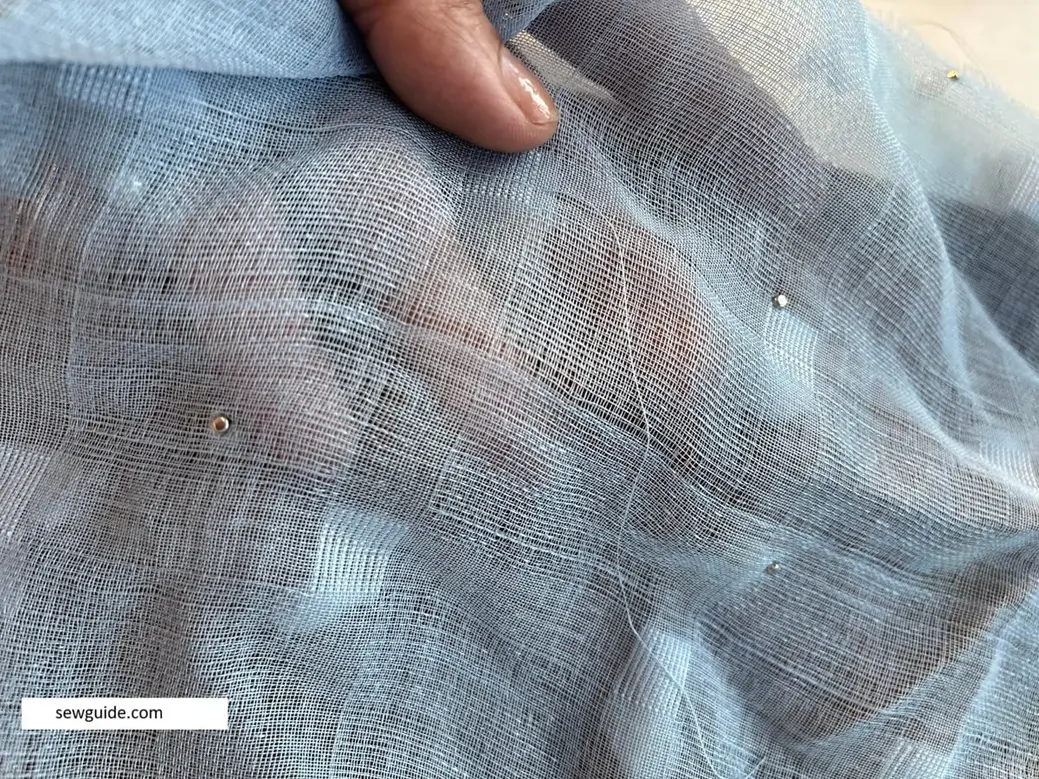
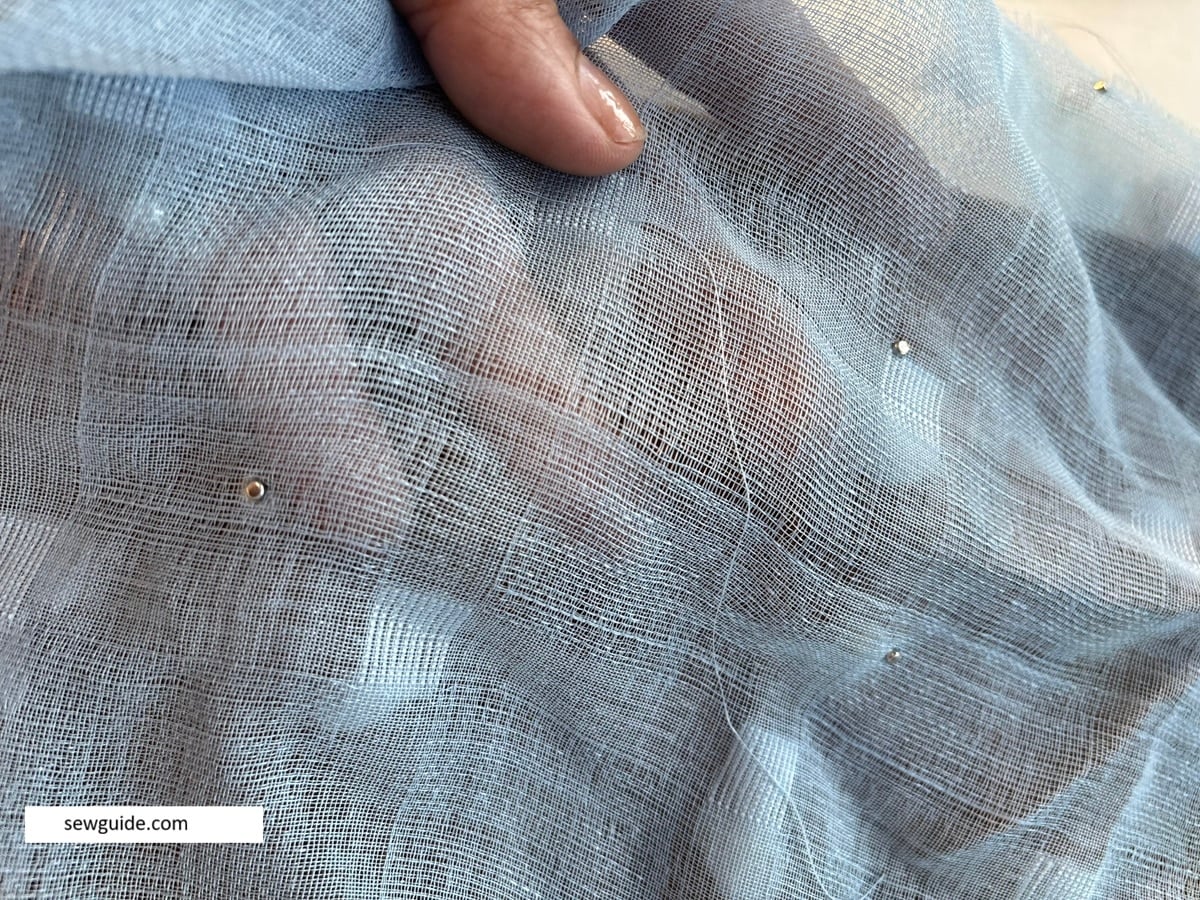
Source: sewguide
A useful distinction is that a slub is material inside the fabric, while a missing end or missing pick is material absent from the fabric. The first may be an intentional or tolerable visual feature; the second can reduce coverage and create a weak-looking line.
What loom chatter can—and cannot—tell you
Loom chatter generally describes an uneven, irregular appearance associated with loom movement or tension variation. Depending on the fabric and machine conditions, it may show up as texture variation, waviness, subtle spacing changes, or irregular marks. It is often discussed in connection with vintage-style and shuttle-loom denim because some buyers value the visual variation.
But “loom chatter” should not be used as a blanket label for every flaw. If the cloth has open spaces, obvious loose construction, repeated defects, or damaged yarns, calling it character does not resolve the underlying quality issue.
The relationship between chatter and durability is also not automatic. A discussion in the raw-denim community raised the concern that loom chatter could mean looser tension and, therefore, less tightly woven cloth. The commenter also noted that, in their experience, this did not necessarily mean the fabric would tear. That is a useful caution rather than proof: visible looseness may not predict failure by itself, but a buyer should still assess whether the weave is stable and consistent. The discussion is available at r/rawdenim.
In other words, texture alone is not a durability test. A well-interlaced but irregular denim can wear normally. A smooth-looking fabric with a missing yarn or weak area may be more concerning.
Check direction, repetition, and placement
The direction of an irregularity often helps identify its cause and seriousness.
A mark running lengthwise, parallel to the selvedge, may involve a warp yarn, warp tension, reed issue, or broken end. A mark running across the width may involve weft insertion, a missing pick, a double pick, or a loom stop mark. Broad horizontal bands may be especially noticeable after garments are cut and sewn because they can cross an entire leg or jacket panel.
Repeated defects are generally more serious than one isolated yarn variation. A single slub may be a normal characteristic of the yarn package. A regularly recurring line or band suggests a process condition that persisted through weaving. Denim quality control commonly treats such sustained appearance faults more seriously because they can affect many garments made from the same fabric length.
Placement matters, too. A small irregularity near an inseam allowance may be less consequential than one centered on a front thigh, jacket back, or other highly visible panel. For fabric purchased by the yard or roll, inspect enough length to determine whether the issue is isolated or continues through the piece.
Selvedge is not a guarantee that every imperfection is acceptable
Selvedge denim imperfections are often romanticized because shuttle-loom production and slower, narrower weaving can produce distinctive edges and surface variation. A clean selvedge edge can be a desirable construction detail, but it does not automatically establish the quality of the entire fabric.
Inspect the selvedge separately. It should be securely woven, without severe fraying, broken edge yarns, large holes, or recurring damage that will interfere with cutting. Also inspect the body of the denim away from the edge. A fabric can have an attractive selvedge and still contain missed yarns, streaks, stains, or other weaving flaws in the usable width.
When a buyer should ask for a return, replacement, or allowance
Return or raise the issue with the seller when the irregularity is structural, extensive, or inconsistent with how the denim was described. Strong reasons include holes, missing yarns, loose floats, visibly thin areas, persistent wide streaks, major skewing, or defects that repeat through the purchased length.
For garment buyers, inspect the affected area before washing or wearing when possible. If the flaw is already in a high-stress or highly visible location, such as a knee, seat, pocket area, or center front panel, it is reasonable to document it with clear photographs and contact the retailer.
For fabric buyers, unroll and inspect promptly. Photograph the full area as well as close-ups, note whether the mark runs with warp or weft, and measure how much fabric is affected. This helps distinguish a one-off surface variation from a production-wide issue.
A practical standard for judging irregular denim
Acceptable character is usually stable: the yarns remain interlaced, the fabric has no obvious gaps, and the variation reads as part of the textile rather than damage. A defect is more likely when the fabric has lost structure, shows recurring process marks, or cannot perform visually or physically as expected for its intended use.
If you are uncertain, compare the area with nearby denim. Ask whether the texture is simply uneven or whether the weave itself is incomplete. That distinction is the most reliable way to judge denim weaving defects without assuming that every rough-looking or irregular patch will compromise durability.
References
- Denim Weaving-Control of Fabric Defects (PDF). academia.edu. https://www.academia.edu/36248059/Denim_Weaving_Control_of_Fabric_Defects
- Denim Fabric Defects with Causes and Remedies. textileengineering.net. https://textileengineering.net/denim-fabric-defects-with-causes-and-remedies
- Comprehensive Guide to Textile Weaving Defects. lydenim.com. https://lydenim.com/comprehensive-guide-to-textile-weaving-defects
- r/rawdenim - Denim Defects. reddit.com. https://www.reddit.com/r/rawdenim/comments/kywbvb/denim_defects
- Reducing Defects in Denim Weaving by Applying Six .... globaljournals.org. https://globaljournals.org/GJHSS_Volume19/2-Reducing-Defects-in-Denim-Weaving.pdf
- Denim Fabric Defects Reference Guide - Testex. testextextile.com. https://www.testextextile.com/denim-fabric-defects-reference-guide
- Denim Fabric Defects and Identification Methods. fabric-supplier.com. https://fabric-supplier.com/denim-fabric-defects-and-identification-method
- Defects in Woven Fabric: A Guide for Fashion Brands in 2025. deepwear.info. https://deepwear.info/blog/defects-in-woven-fabric-a-guide-for-fashion-brands-in-2025