How Digital Twin Technology Is Used in Textile Manufacturing
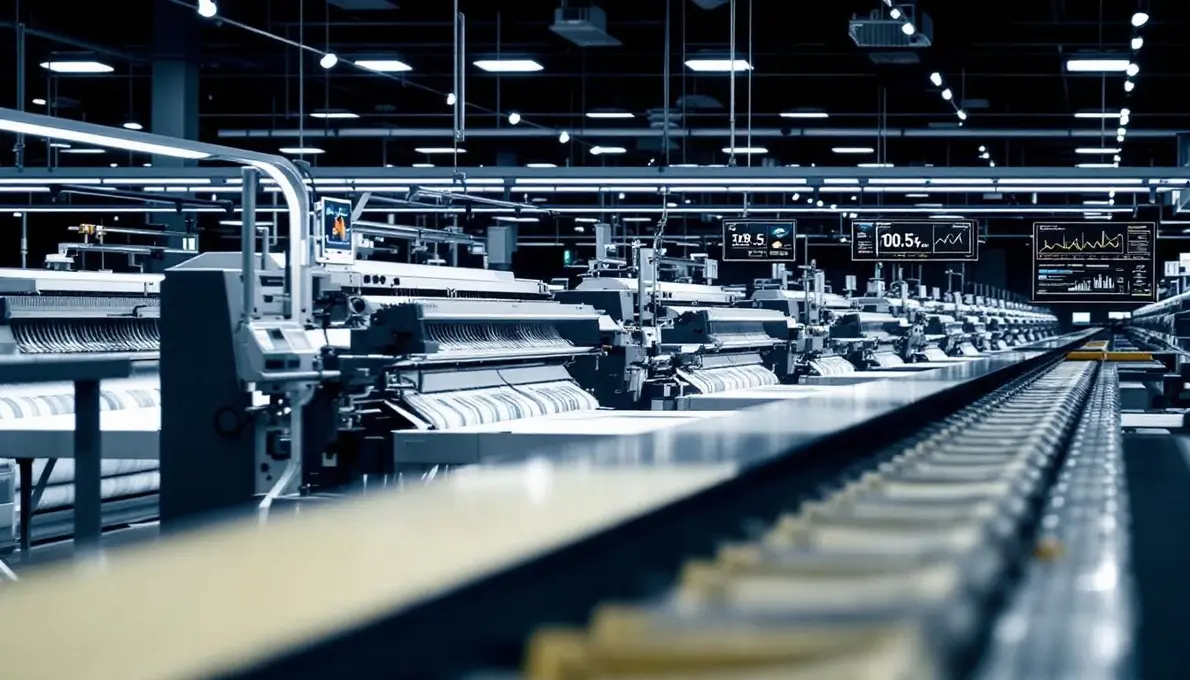
Table of Contents
Introduction to Digital Twins in Textile Manufacturing
Digital twin technology in textile manufacturing creates a connected digital representation of a physical asset, process, product, or operational system. The physical counterpart may be a loom, spinning frame, dyeing machine, finishing range, utility system, warehouse, or an entire production facility. Data from production equipment, sensors, quality systems, maintenance records, and enterprise software can update the digital model and support operational analysis.
Unlike a static three-dimensional visualization or a one-time simulation, a digital twin is intended to reflect changing operating conditions. Depending on the application, it may update in near real time, at production-event intervals, or after scheduled data uploads. Textile manufacturers can use such models to examine throughput, maintenance risk, quality variation, energy use, water consumption, inventory movement, and logistics performance.
Origins and Development of Digital Twin Technology
The digital-twin concept developed from earlier work in engineering simulation, product lifecycle management, and systems modeling. The idea of representing a physical system through a corresponding digital model has roots in aerospace and manufacturing engineering before the term became widely used.
NASA helped formalize influential digital-twin definitions for spacecraft lifecycle applications during the early 2010s. Broader industrial adoption accelerated with Industry 4.0, industrial internet of things (IIoT) infrastructure, cloud and edge computing, improved simulation tools, and machine-learning methods. Textile applications should be viewed as an emerging and unevenly adopted field rather than a single industry-wide milestone. Early work often focused on process simulation; current projects may extend to assets, products, factories, and supply chains.
What a Digital Twin Means in a Textile Setting
In a textile setting, a digital twin links a physical operation with a digital counterpart that can represent its condition, behavior, constraints, and expected outputs. For example, a loom twin may combine machine status, speed, stop events, warp-break information, fabric inspection results, and environmental conditions.
The distinguishing feature is synchronization with operating data. An isolated model of a dyeing cycle can be useful, but it becomes a fuller digital twin when relevant production data are used to update, test, or validate the model against the actual process. Required fidelity and update frequency depend on the intended use: strategic capacity planning does not require the same level of detail as machine-condition monitoring.
Core Layers of a Textile Digital Twin
A practical textile digital-twin architecture commonly includes four working layers, although this is not a universal taxonomy:
- Data acquisition: Machine controls, sensors, laboratory systems, inspection equipment, utility meters, maintenance records, and supply-chain platforms provide operational inputs.
- Modeling and simulation: Equipment, process, product, or factory models represent relationships among settings, materials, conditions, and outputs.
- Visualization: Dashboards, process maps, alarms, and three-dimensional views help users interpret the operating state.
- Analytics and optimization: Statistical analysis, rules, and machine-learning models identify patterns, anomalies, forecasts, or possible operating changes.
Examples include loom-condition monitoring, dye-house batch models, fabric drape or behavior models, and plant utility tracking. The architecture should be designed around a defined business or engineering question rather than around software features alone.
Potential Benefits for Textile Manufacturing
Digital twins can support better decisions, but benefits depend on data quality, valid models, process understanding, and integration into daily work. A twin does not automatically improve a mill; it provides a structured way to observe, test, and manage complex production conditions.
Process Optimization
Textile teams can use what-if simulations to compare machine settings, production sequences, batch conditions, or routing alternatives before conducting controlled plant trials. This can support bottleneck analysis, fabric-development planning, and throughput improvement.
For example, a process model may help engineers assess the likely effect of a speed adjustment, dwell-time change, or finishing parameter on production flow. Physical trials and quality validation remain necessary before permanent implementation.
Predictive Maintenance
Condition data such as vibration, temperature, motor load, stop frequency, lubrication history, and component replacement records can help reveal degradation patterns. A digital twin may combine these signals with expected operating behavior to prioritize inspection or maintenance work.
Predictions are only as reliable as the sensor coverage, historical evidence, maintenance records, and validation process behind them. Maintenance alerts should support technician decisions, not be treated as guaranteed failure prevention.
Quality Monitoring and Control
A twin can connect machine parameters and online inspection data with laboratory or final quality measurements. This may help teams investigate likely sources of defects such as uneven dyeing, streaks, broken ends, dimensional variation, or inconsistent fabric properties.
Earlier identification of an abnormal condition can reduce the amount of material produced before intervention. However, detection accuracy must be evaluated for the specific fiber, fabric construction, process, sensing method, and defect type.
Resource and Utility Efficiency
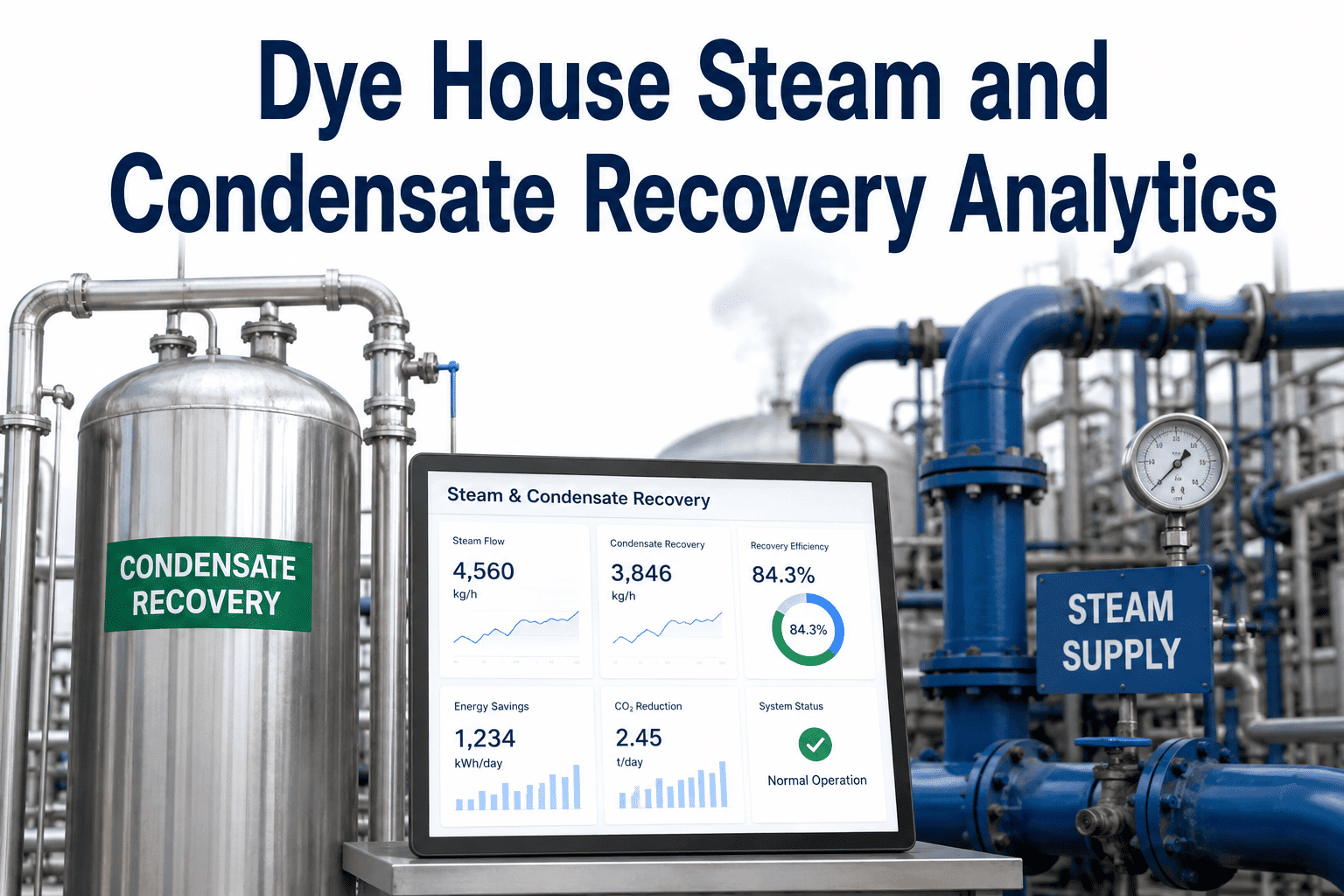
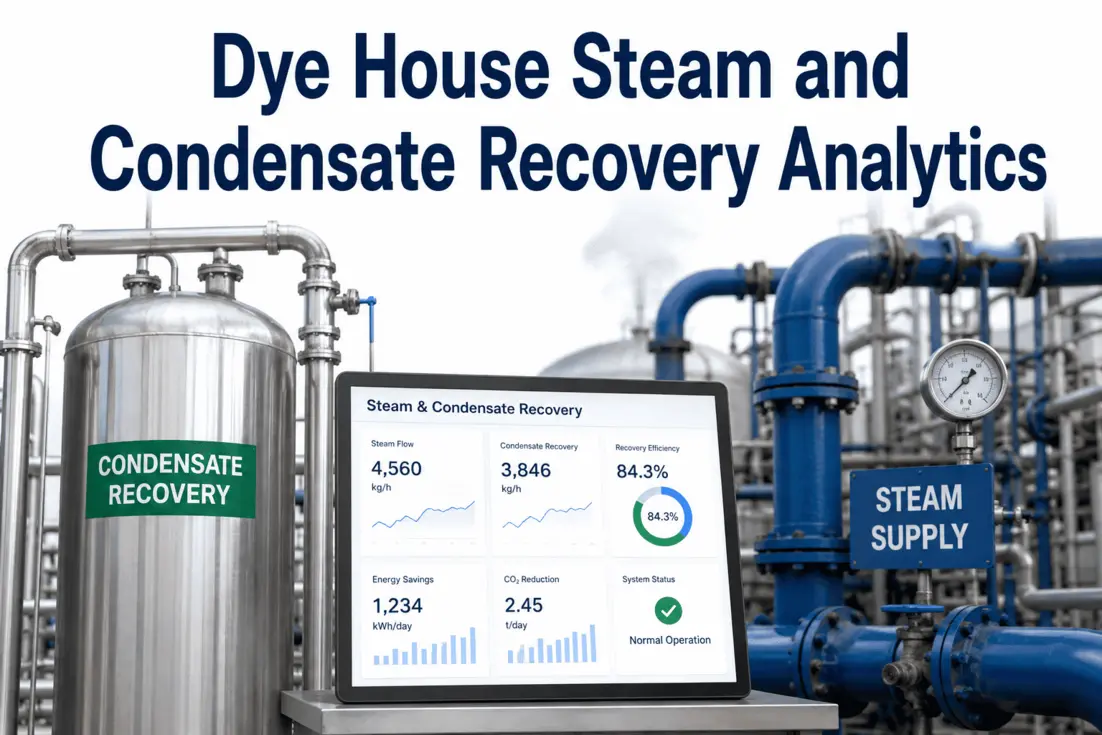
Dyeing, washing, drying, coating, and finishing operations can consume substantial amounts of water, steam, electricity, chemicals, and compressed air. Digital models can combine meter data with production and recipe information to identify unusual consumption patterns and evaluate process alternatives.
Potential improvements may include better batch scheduling, reduced idle running, improved heat management, or closer control of rinse and drying conditions. Actual savings vary with equipment condition, process baseline, production mix, and operational discipline.
Shorter Product Development Cycles
Product twins and virtual prototyping tools can support earlier evaluation of fabric, garment, color, fit, drape, and construction alternatives. This can reduce unnecessary physical sampling iterations and allow design changes to be reviewed before materials are committed.
Digital evaluation complements rather than replaces physical validation. Material behavior, color appearance, shrinkage, comfort, durability, and manufacturability may still require laboratory and production testing.
Textile Process Applications
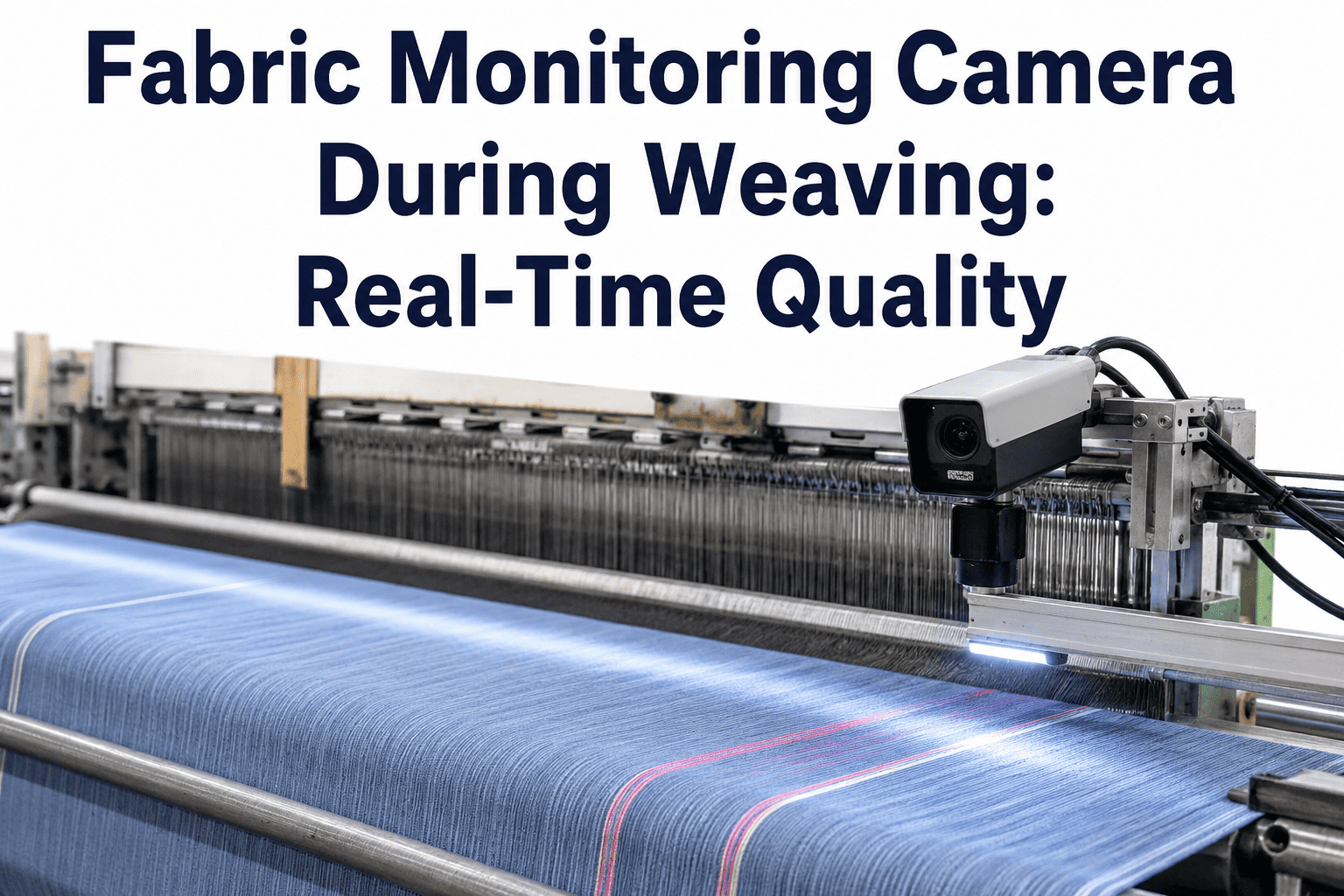
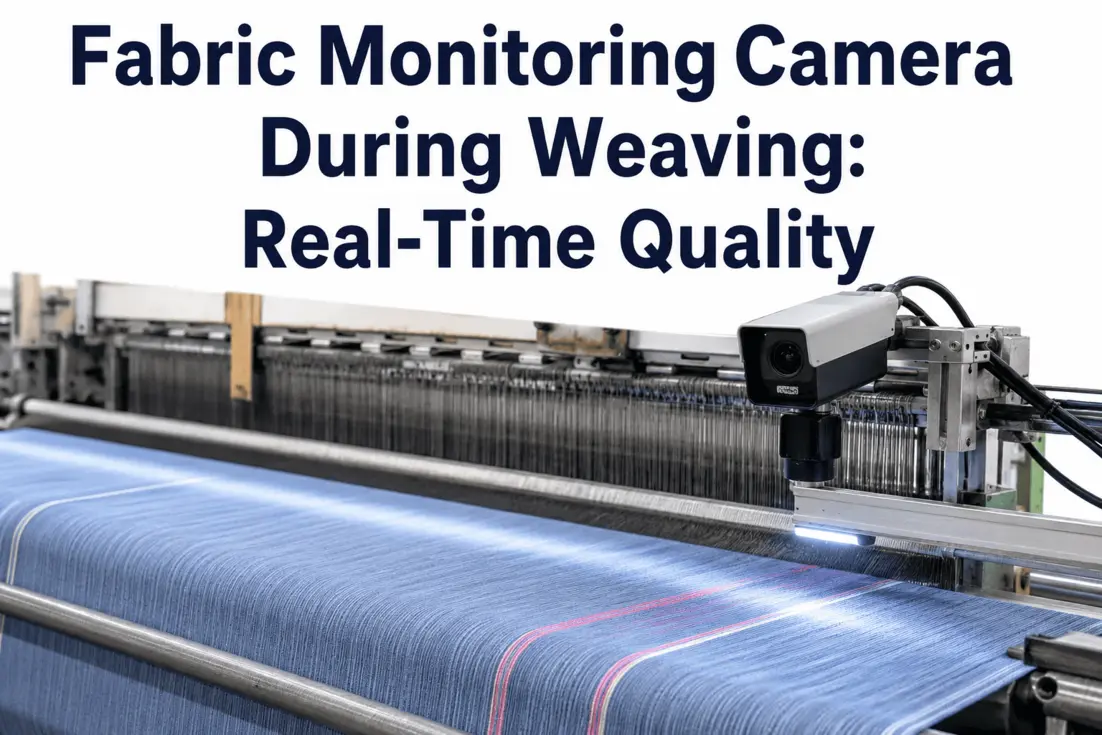
Digital-twin applications can be adapted across the textile value chain. In spinning, models may relate yarn diameter, twist, draft conditions, machine settings, and production events to yarn consistency. In weaving, they can examine loom performance, broken-end patterns, stop events, and potential threading or warp-management issues.
Knitting applications may model loop geometry, elasticity, yarn behavior, and dimensional response. In printing and dyeing, process models can support recipe evaluation, predicted dye uptake, batch comparison, and process-condition monitoring. Cutting and sewing operations may use digital representations for marker planning, production flow, workstation balancing, and defect avoidance. Maturity differs substantially among processes and facilities.
A Phased Implementation Approach
A digital-twin program is usually most effective when introduced as a staged operational improvement project. The initial focus should be a measurable problem, followed by validation and controlled expansion. Data governance, cybersecurity, ownership, and workforce readiness should be addressed throughout the program.
Step 1: Select a High-Value Target Process
Start with an operation that has significant cost, variability, downtime exposure, quality risk, or resource use. Dyeing, finishing, utility management, and constrained production equipment are possible pilot areas because their performance can often be measured against clear operational indicators.
Step 2: Establish Data Capture and Sensing
Collect relevant machine states, process conditions, production events, utility consumption, maintenance information, and quality results. Sensor placement, calibration, timestamp consistency, connectivity, and missing-data handling are important engineering considerations.
Step 3: Integrate Operational Data
Relevant data may come from machine controls, MES, ERP, laboratory systems, maintenance software, quality systems, inventory records, and utility meters. Common identifiers are needed to connect events to batches, orders, recipes, machines, material lots, and quality outcomes.
Cloud, on-premises, and hybrid architectures can all be suitable. The choice depends on latency requirements, network reliability, cybersecurity requirements, existing infrastructure, and data-governance policies.
Step 4: Build and Validate the Digital Model
Develop an equipment, process, product, or factory model appropriate to the selected use case. The model should be tested against observed operating and quality data to establish where it is reliable and where its assumptions are limited.
Software specialists can support implementation, but mill personnel remain essential because they understand material variation, machine behavior, recipes, operating constraints, and practical production decisions.
Step 5: Analyze Scenarios and Optimize Decisions
Use the twin to identify patterns, anomalies, constraints, and possible improvement opportunities. Proposed changes should first be evaluated in the model and then introduced through controlled production trials where appropriate.
Human review, operating limits, safety safeguards, and post-change monitoring are necessary when recommendations affect quality, equipment condition, production commitments, or chemical processes.
Step 6: Extend the Twin Beyond the Pilot
After a pilot is validated, the scope can expand to maintenance, design, logistics, inventory, planning, and customer-service processes. Scaling requires interoperable data practices, clear ownership, model maintenance procedures, and governance across departments.
Source: iFactory
Types of Digital Twins Used in Textiles
A product twin represents a fabric, garment, yarn, or material behavior. A process twin represents a production operation such as weaving, dyeing, finishing, or sewing. A factory twin models layouts, equipment interactions, material movement, and operational performance across a site.
A supply-chain twin can represent material flow, inventory, logistics, supplier coordination, and delivery scenarios. A customer twin is a more emerging concept that may use lawful, consented, and relevant post-sale data to inform product research or service design. It requires careful privacy, governance, and data-purpose controls.
Connections with Other Industry 4.0 Technologies
Digital twins are often connected with other Industry 4.0 tools. AI and machine learning can support forecasting, anomaly detection, classification, and pattern analysis. Edge computing may process time-sensitive data near equipment when low latency or limited connectivity makes centralized processing impractical.
Three-dimensional simulation can support fabric and garment representation, while augmented reality may assist technicians with maintenance guidance or equipment visualization. Blockchain can be considered for selected traceability architectures, but it does not automatically ensure accurate source data, supplier participation, or interoperability.
Adoption Challenges and Practical Constraints
Implementation can require investment in sensing, connectivity, integration, modeling, software, cybersecurity, and technical skills. Legacy machinery may lack accessible interfaces, while fragmented records and inconsistent identifiers can create data silos.
Connected industrial systems also increase cybersecurity responsibilities. Manufacturers should define access controls, network segmentation, backup procedures, vendor responsibilities, and incident-response processes. Change management is equally important: operators, engineers, maintenance teams, and managers need to understand how digital recommendations fit with established production authority and quality procedures.
Digital Twin Platforms and Software Considerations
Relevant industrial platforms include Siemens Digital Industries, PTC ThingWorx, Dassault Systèmes 3DEXPERIENCE, Microsoft Azure Digital Twins, and SAP Digital Manufacturing Cloud. These platforms have different strengths in areas such as industrial connectivity, product lifecycle management, data modeling, manufacturing operations, analytics, and enterprise integration.
No listed platform is inherently a complete textile-specific solution. Suitability depends on the use case, automation stack, existing software, data architecture, integration needs, security requirements, internal skills, and organizational scale. Implementation work is normally required to connect the platform to textile equipment, processes, and quality workflows.
Sustainability Applications of Textile Digital Twins
Textile digital twins can support sustainability work by monitoring and simulating dyeing, rinsing, drying, energy consumption, defect rates, and production planning. They may help identify conditions associated with overdyeing, excessive utility use, avoidable rework, or inefficient machine utilization.
They can also support material traceability and recycling planning when reliable product, batch, and material data are available across the value chain. Measured environmental improvements require facility-specific baselines, defined verification methods, and sustained changes in operating practice.
Source: iFactory
Market Direction and Industry Outlook
Demand for digital-twin capabilities is linked to agile manufacturing, traceability expectations, sustainability reporting, on-demand production, and wider smart-factory investment. Manufacturers are increasingly interested in connecting production information that is otherwise distributed across equipment, spreadsheets, laboratories, and business systems.
Textile-specific adoption rates and market forecasts vary by source and geography. Rather than relying on broad projections, organizations should assess their own process maturity, data readiness, expected operational value, and ability to maintain the system after deployment.
Emerging Directions for Textile Digital Twins
Improved fabric simulation, virtual fitting, and more realistic material visualization are continuing areas of development. Haptic interaction for digital materials remains an emerging capability rather than a standard feature of textile product development.
Other developing directions include closed-loop material tracking from production through recycling, managed digital-twin services that may lower entry barriers for smaller firms, and improved interoperability between machines, software platforms, and supply-chain systems. Consumer wardrobe twins are also exploratory and depend on privacy, consent, and useful post-sale data.
Key Takeaways
A textile digital twin is a connected digital representation of an asset, process, product, factory, or supply chain. It can help teams examine production conditions, test scenarios, monitor quality, plan maintenance, and manage resources with more context than isolated data sources provide.
Its value depends on a focused use case, trustworthy data, validated models, suitable governance, and sustained adoption by people responsible for production and quality. The most practical path is usually a well-defined pilot that proves operational value before broader expansion.
Further Reading and References
For additional background, consult current materials from Siemens on industrial digitalization, PTC on connected-product and IoT systems, Dassault Systèmes on simulation and product lifecycle management, Microsoft on digital-twin data models, and SAP on digital manufacturing operations. Industry analyses from manufacturing and fashion digitization sources can also help organizations compare implementation approaches and evaluate use cases.
References
- How to Use Digital Twin Technology in Textile Manufacturing - Textile School. https://www.textileschool.com/27888/how-to-use-digital-twin-technology-in-textile-manufacturing
- Revolutionizing Textile Industry: Digital Twin Technology. https://www.globaltextiletimes.com/articles/revolutionizing-textile-industry-digital-twin-technology
- Digital Twin Textile Factory Market Research Report 2033. https://dataintelo.com/report/digital-twin-textile-factory-market
- digital twin tech in textile for technology | PPTX. https://www.slideshare.net/slideshow/digital-twin-tech-in-textile-for-technology/282863730
- Digital twin - Wikipedia. https://en.wikipedia.org/wiki/Digital_twin
- Digital Twin Textile Mill Implementation Roadmap 2026. https://ifactoryapp.com/industries/textile-manufacturing/digital-twin-textile-mill-implementation-roadmap
- Digital Twin in Textile Industry – Use, Benefits & Examples. https://www.abhiwan.com/post/what-is-a-digital-twin-and-how-is-it-used-in-the-textile-industry