What Should Online Clothing Listings Say About Fabric Weight, Drape and Color?
Table of Contents
Online clothing listings should describe the actual fabric, not just give it a poetic name. A useful fabric description for online shopping tells shoppers what the garment is made of, how heavy or light it is, how it hangs, whether it is opaque, how much stretch it has, whether it is lined, and what the color looks like beyond a branded shade name.
The goal is not to promise that every shopper will experience a fabric in exactly the same way. Hand feel, comfort, and color perception are partly subjective and depend on lighting, fit, climate, and personal preference. The goal is to give enough specific information that a shopper can compare garments and make an informed decision without being able to touch the fabric.
Start with the full fabric composition
Every listing should state the shell composition as percentages, such as “55% linen, 45% viscose” or “95% cotton, 5% elastane.” If a garment has multiple materials, identify where they are used:
- Shell or outer fabric
- Contrast panels, trim, or ribbing
- Pocket bags
- Interfacing, if relevant to the garment’s structure
- Lining
Fiber content is not a complete performance prediction, but it gives shoppers an essential starting point. Cotton, linen, wool, silk, viscose, polyester, nylon, and elastane can behave very differently in wear and care. A blend may combine useful properties, but the listing should not rely on broad claims such as “breathable” or “luxurious” without explaining the construction and garment design behind them.
For example, “linen-blend shell with a full polyester lining” is more informative than simply calling a blazer “linen.” The outer fabric and the materials next to the skin can affect how the garment feels in warm conditions.
A discussion in the r/Fabrics community specifically raised concern about warm-weather garments with breathable outer fibers but synthetic linings. That is a shopper perspective rather than a universal performance test, but it shows why lining details should not be buried or omitted.
Give fabric weight in numbers and plain language
A listing should provide fabric weight in GSM (grams per square meter) when available, then translate that number into practical language. GSM helps shoppers compare similar materials, particularly when choosing between two jerseys, denims, twills, or knits.
A strong format is:
Fabric weight: 180 GSM; lightweight
The number should be paired with a garment-relevant description such as lightweight, midweight, heavyweight, or substantial. A number alone may not mean much to a shopper, while vague language alone makes comparison difficult.
Fabric weight is only one clue. A light fabric can still be crisp and structured, while a heavier fabric can be soft and flexible. For instance, an educational guide from Seamwork contrasts fabrics of different GSM values and explains weight alongside opacity, hand, and drape. Its examples also show why labels such as lightweight or medium weight work best when supported by other descriptive details.
For clothing listings, weight should answer practical questions:
- Does the fabric feel light enough for a warm day?
- Is it likely to feel substantial enough for trousers, denim, or a jacket?
- Does it need layering because it is thin or sheer?
- Is it intended for a close-fitting T-shirt, a structured overshirt, or a flowing dress?
Avoid treating “heavyweight” as automatically better or “lightweight” as automatically more breathable. Suitability depends on fabric construction, silhouette, lining, finish, and intended use.
Describe drape as garment behavior
Fabric drape is the way a material hangs under its own weight. It matters because it changes the silhouette of the finished garment: whether a skirt falls in soft folds, a blouse follows the body, or a jacket holds a defined shape.
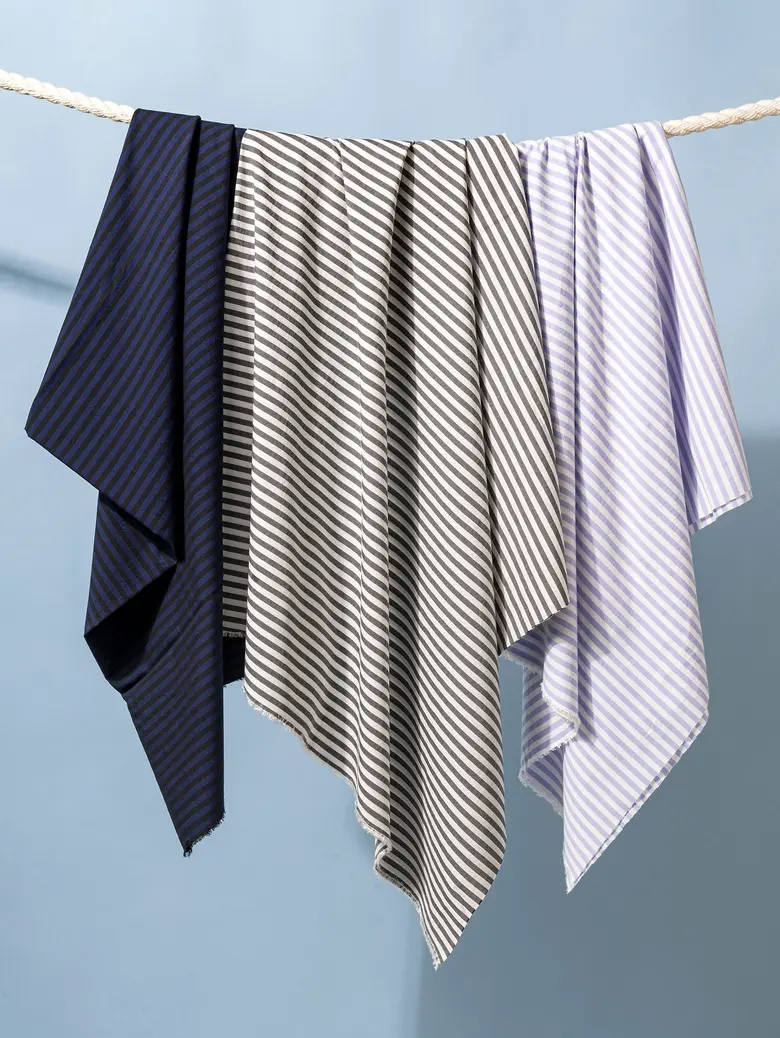
Source: corefabricstore
Drape should be described in familiar terms rather than presented as a mystery quality. Useful phrases include:
- Fluid or flowing drape
- Soft, body-skimming drape
- Relaxed drape
- Moderate drape with some body
- Structured or crisp
- Firm and shape-holding
- Stretchy knit with a close, flexible fit
The description should connect drape to the item being sold. “Fluid drape” is more meaningful when followed by “falls away from the body” or “creates soft movement through the skirt.” Likewise, “structured cotton twill” should explain that it “holds the shape of the collar and wide-leg silhouette.”
Drape should not be inferred from weight alone. As explained in a fabric-weight discussion, a very light fabric may be stiff, while a somewhat heavier material can drape well; fiber type and fabric construction also matter. ScienceDirect similarly defines drape as the way fabric hangs under its own weight and notes that fiber, yarn, and fabric structure influence it. See its overview of fabric drape.
Short video clips can add valuable context. A model walking, turning, sitting, or lifting an arm shows movement that flat product photos cannot. The clip should supplement, not replace, a written drape description because lighting, camera movement, and styling can still mislead.
State opacity, stretch, and surface character
Shoppers need to know whether a garment will require particular underlayers or fit differently than expected. A listing should plainly identify opacity:
- Opaque
- Slightly sheer in light colors
- Semi-sheer
- Sheer; intended for layering
This matters especially for white, pale, lightweight, open-knit, and loosely woven garments. If opacity varies by color, say so.
Stretch should also be described by direction and degree where possible. “Contains elastane” is not enough. A shopper benefits more from wording such as “light mechanical give,” “two-way stretch,” “four-way stretch,” or “minimal stretch.” The listing should clarify whether the garment is designed for ease, a fitted silhouette, or a relaxed fit.
Surface character is another missing detail. Terms such as smooth, brushed, peached, crisp, textured, ribbed, slubbed, fuzzy, slippery, or matte can help replace some of the information shoppers would otherwise get by touching a garment. Because hand feel is subjective, pair sensory language with observable construction details whenever possible.
Identify all lining details
A garment listing should make lining easy to find and easy to understand. State whether the item is:
- Unlined
- Fully lined
- Partially lined
- Lined only through the body, skirt, sleeves, or yoke
- Mesh-lined or pocket-lined
Then give the lining composition separately. “Fully lined” does not tell a shopper whether the lining is polyester, viscose, cupro, cotton, mesh, or another material.
Lining can affect opacity, ease of dressing, how a garment slides over other layers, warmth, and the feel against skin. It may also change how the garment hangs. These effects vary by construction and wearer, so listings should describe what is present rather than make sweeping comfort promises.
Name colors clearly and explain the undertone
Fashion names can be useful for branding, but they should never be the only color description. “Nightfall,” “Meadow,” or “Mist” means little without a plain-language color label.
Use a format such as:
Color: muted olive green with a warm yellow undertone
or:
Color: deep navy blue with a cool, slightly gray cast
A practical color description should include:
- A basic color family: red, blue, green, brown, cream, gray, and so on
- Depth: pale, light, mid-tone, deep, or dark
- Saturation: bright, muted, dusty, rich, or washed
- Undertone: warm, cool, or neutral when relevant
- Pattern scale and dominant colors for prints
The supplied retailer photos should show the garment in more than one lighting context when possible. A studio image is useful for consistency, while daylight imagery can help shoppers understand how color may read outside the studio. Photos cannot eliminate screen-to-screen variation, so a brief note that color may vary by display is reasonable—but it should not substitute for an accurate written description.
In the linked r/Fabrics discussion, users specifically asked for understandable color names and warm-versus-cool guidance because online images often make undertones difficult to judge. That feedback supports a simple rule: branded color names can stay, but descriptive color language should come first.
The minimum standard for a useful listing
A shopper should be able to find these details without opening multiple tabs or guessing from photos:
- Shell and lining fiber composition
- Fabric construction or recognizable fabric type, such as jersey, poplin, twill, satin, denim, or rib knit
- Fabric weight in GSM when available, plus lightweight, midweight, or heavyweight wording
- Drape description tied to the garment silhouette
- Opacity and lining status
- Stretch direction and amount
- Surface texture or hand description
- Plain-language color, depth, and undertone
- Care information and any relevant notes about shrinkage, wrinkling, or special handling
The best clothing listings do not pretend that digital shopping can perfectly replace touching fabric. They reduce uncertainty by describing the variables that most affect appearance, layering, comfort, and use. When listings combine measurable specifications with plain language and clear visuals, shoppers have a more realistic basis for deciding whether a garment suits their needs.
References
- How to Buy Fabric Online: Know Your Terms | Weight and Drape. seamwork.com. https://www.seamwork.com/fabric-guides/how-to-buy-fabric-online-know-your-terms-weight-and-drape
- Understanding Fabric Weight. youtube.com. https://www.youtube.com/watch?v=7NCClf7aa_c
- Fabric Drape - an overview. sciencedirect.com. https://www.sciencedirect.com/topics/engineering/fabric-drape
- Fabric Expert. seamwork.com. https://www.seamwork.com/fabric-guides/fabric-expert
- How to Read Fabric Specs: GSM, Denier, 20K/20K, Martindale | Graphene-X. graphene-x.com. https://www.graphene-x.com/articles/how-to-understand-fabrics
- Things to Know When Purchasing Fabrics Online. universityoffashion.com. https://www.universityoffashion.com/blog/things-to-know-when-purchasing-fabrics-online
- Fabric Weight, What Does It Mean and How Can it Help You? – Miss Maude. missmaudesewing.co.nz. https://missmaudesewing.co.nz/blogs/miss-maude-musings-1/what-is-fabric-weight
- *1K views · 46 reactions | Ever look at a fabric listing and think, “Okay… but what does all of that actually mean?” You’re not alone! 😅
In the first video of our new Fabric Basics series, we’re breaking down the language of fabric so you can feel more confident shopping online—even when you can’t touch the fabric first.
We’re covering the basics, including: ✂️ Fabric content vs. fabric type ✂️ Weave structure ✂️ Drape and fabric behavior ✂️ Fabric weight ✂️ Transparency
Understanding these terms can make it much easier to figure out how a fabric will look, feel, and behave before you add it to your cart.
Consider this your fabric vocabulary lesson! Follow along as we take a closer look at different fabric contents and types in the videos ahead.
▶️ Watch the full video on YouTube: https://youtu.be/w5t5kv3UxJ0 | Fabric Mart*. facebook.com. https://www.facebook.com/fabricmartfabrics/posts/ever-look-at-a-fabric-listing-and-think-okay-but-what-does-all-of-that-actually-/1532117252293302