What Is Fabric Grain? Straight, Crosswise and Bias Grain Explained
Table of Contents
Why Fabric Grain Matters in Garment Making
Fabric grain is a basic but decisive consideration in garment development. The direction in which a pattern piece is placed on fabric affects how that piece hangs, stretches, moves, reflects light, and responds to wear. A well-chosen grain direction can support a clean tailored silhouette, a soft body-skimming dress, a stable waistband, or a flared hem with controlled movement.
In woven fabrics, the main directions are straight grain, crosswise grain, and bias grain. Each has a different balance of stability, mechanical give, and drape. Grain is therefore not only a cutting-room requirement; it is also a design tool that influences fit, comfort, visual proportion, and the final character of a garment.
Correct grain alignment matters throughout production. Pattern makers specify grainlines, cutters align those grainlines during marker making and cutting, and quality teams assess whether panels remain true after sewing, finishing, and laundering. When grain is ignored or fabric is distorted before cutting, seams may twist, hems may become uneven, and the garment may not retain its intended silhouette.
Fabric Grain: Definition and Basic Direction
Fabric grain describes the direction of yarns in a textile. In a woven fabric, yarns running lengthwise are called warp yarns, while yarns inserted across the width are called weft or filling yarns. These two yarn systems form the structure of the cloth and normally intersect at right angles.
The principal grain orientations used in apparel construction are lengthwise grain, crosswise grain, and bias grain. Lengthwise grain follows the warp; crosswise grain follows the weft; and bias runs diagonally across both sets of yarns. Pattern pieces are usually marked with a grainline so they can be positioned accurately in relation to the fabric selvage.
Fabric is considered on grain when its warp and weft directions are square to one another and the fabric can be laid out without visible skewing. If the yarn directions are pulled out of square, the fabric is off grain. This distortion can complicate cutting and sewing and may lead to a garment that twists or hangs unevenly.
Main Types of Fabric Grain
Grain direction changes the way fabric behaves in the hand and on the body. A woven fabric is usually most controlled along its lengthwise direction, may behave differently across its width, and generally has its greatest mechanical give when pulled diagonally on the bias. The exact result still depends on fiber content, weave construction, weight, finishing, and fabric density.
For knitted fabrics, the terminology is related but not identical. Vertical columns of loops are called wales, and horizontal rows are called courses. Knits often stretch more than wovens because of their looped construction, so grain direction must be assessed alongside the knit structure and stretch recovery rather than treated as a direct equivalent of woven behavior.
Lengthwise or Straight Grain
Lengthwise grain, often called straight grain, follows the warp yarns in woven fabric. It runs parallel to the selvage, the finished edge formed along the length of the cloth. In knits, the comparable vertical direction follows the wales.
Straight grain is commonly selected for major garment panels because it provides a stable, controlled appearance. Fronts, backs, sleeves, trousers, tailored skirts, shirt plackets, and other structured sections are often placed with their main grainline parallel to the selvage. This alignment helps seams hang vertically and supports a crisp, predictable silhouette.
Warp yarns are typically held under tension during weaving, which often contributes to the relatively firm feel of the lengthwise direction. However, stability is not identical for every fabric. A loose weave, a highly elastic fiber blend, or a heavily finished fabric can still shift, stretch, or relax in use. Pattern placement should therefore reflect the actual performance of the material rather than relying on a general rule alone.
Bias Grain and True Bias
Bias grain runs diagonally across woven fabric rather than parallel to the warp or weft. True bias is conventionally positioned at approximately 45 degrees to the lengthwise and crosswise grain directions. At this angle, the yarn systems can shift against one another more readily, creating mechanical give even in a woven fabric with little stretch on the straight grain.
This flexibility allows bias-cut fabric to follow curves and produce fluid drape. Depending on the fabric, a bias panel may skim the body, fall softly from the bust or hip, or create a close-fitting line without the same number of shaping seams required in a straight-grain layout. Lightweight satin, crepe, silk-like fabrics, rayon fabrics, and fine wools can show particularly noticeable bias movement, although they also require careful handling.
Bias placement is useful for smaller details as well as complete garments. Designers may cut yokes, collars, cuffs, waistbands, pocket welts, plackets, or facings on the bias to add visual contrast or controlled flexibility. With stripes, checks, or plaids, joined bias-cut pieces can create a chevron effect when the diagonal lines mirror each other across a seam.
Bias edges can stretch during cutting, sewing, pressing, and hanging. Stabilization methods, seam placement, stay stitching, suitable interfacing, and a balanced construction sequence help manage that movement. A bias cut should be treated as an intentional engineering choice, not simply a diagonal layout.
Crosswise Grain
Crosswise grain follows the weft or filling yarns in woven fabric. It runs from selvage to selvage, perpendicular to the lengthwise grain. In knit fabrics, the corresponding horizontal direction follows the courses.
Crosswise placement can be selected for visual or functional reasons. It may present a stripe horizontally, change the direction of a textured surface, or position a decorative effect across a garment. Because weft yarns and warp yarns can differ in fiber, tension, density, or finish, crosswise behavior may not be identical to lengthwise behavior.
Cross-grain layouts are especially useful for border-print fabrics. Border motifs are commonly printed parallel to the selvage, so a pattern piece placed crosswise can position that border along a skirt, dress, sleeve, or trouser hem. The pattern must be planned carefully to preserve motif placement, allow matching between panels, and maintain enough fabric for the required garment length.
What It Means for Fabric to Be On Grain
On-grain fabric has a square relationship between its primary yarn directions. In woven cloth, warp and weft meet at right angles; in knitted fabric, wales and courses should appear aligned without unwanted skew or spiraling. A fabric may also be checked visually by comparing yarn direction, selvage position, stripe alignment, or the squareness of a printed grid.
When fabric is on grain, pattern pieces can be aligned accurately, seam lines are more predictable, and the finished garment is more likely to hang as intended. This is particularly important for symmetrical designs, tailored garments, straight skirts, trousers, centered closures, and fabrics with obvious checks, stripes, or directional prints.
Off-Grain Fabric and Its Effects
Off-grain fabric has yarn directions that are skewed rather than square. In a woven fabric, this may appear as weft yarns that do not run perpendicular to the selvage. The distortion may originate during weaving, finishing, rolling, storage, handling, or stretching during cutting and sewing.
If pattern pieces are cut from distorted fabric, a garment can develop twisting side seams, uneven hems, shifted stripes, or an unbalanced hang. These effects may be especially visible in fitted trousers, shirts, skirts, and garments with long vertical seams. A panel can appear acceptable while flat but reveal torque or diagonal pulling once it is worn.
Wear and laundering can reveal or aggravate existing distortion because moisture, agitation, heat, and relaxation may allow the structure to shift. Some fabrics can be gently squared before cutting, but correction is not always dependable, particularly after permanent finishing or when the construction itself has a strong tendency to skew. Quality control should identify significant off-grain distortion before garment production begins.
How Grain Direction Is Used in Garment Design
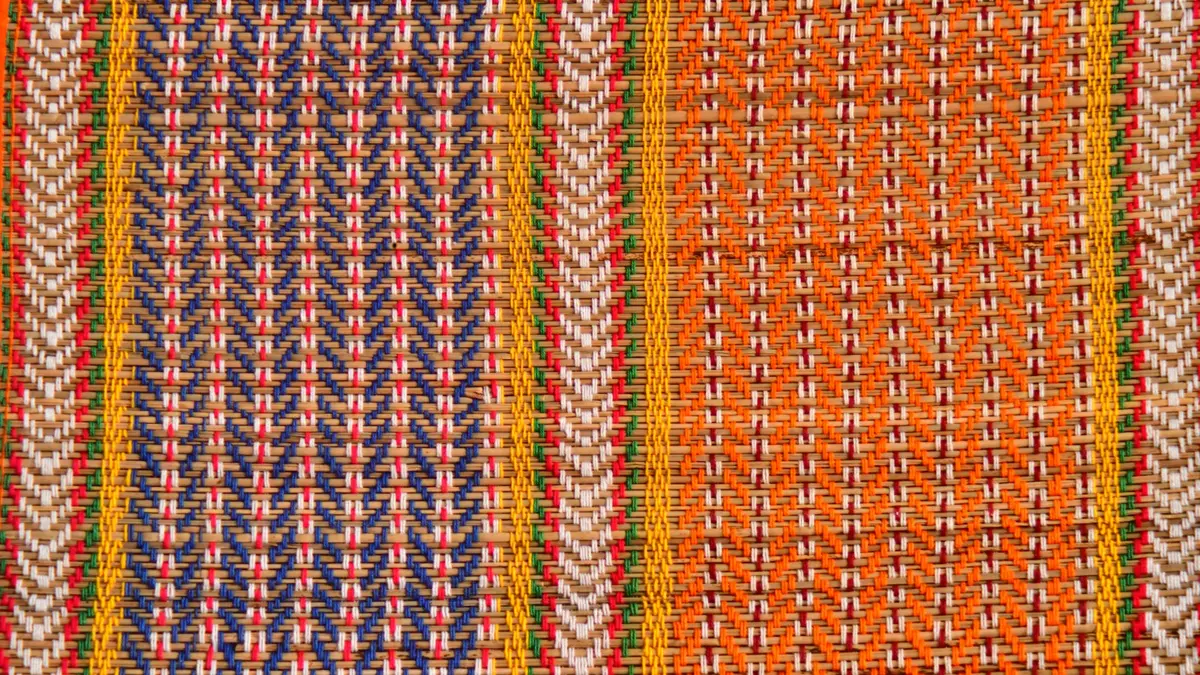
Designers and pattern makers use grain direction to control shape, movement, fit, and emphasis. Straight-grain placement generally supports vertical control and stability. Cross-grain placement can emphasize width, position a border, or redirect stripes. Bias placement introduces diagonal movement and may create softness, contouring, or visual energy.
Source: Unsplash
Grain can also influence the perceived proportions of a garment. Vertical stripes placed on straight grain can reinforce length, while horizontal stripe placement can broaden the visual impression of an area. Diagonal lines may direct attention across the body, frame a seam, or create a dynamic chevron arrangement. These visual effects should be considered alongside actual fit and garment construction.
The correct grain direction depends on the intended silhouette and end use. Relevant considerations include fabric weight, weave or knit structure, stretch and recovery, print direction, surface sheen, seam location, care requirements, expected wear conditions, and the target fit range. A stable workwear shirt, a fluid evening dress, and a flared resort skirt may use the same fabric family very differently because their performance requirements differ.
Understanding the Bias Cut
A bias cut places a pattern piece diagonally across the woven fabric, usually close to true bias. This layout takes advantage of the fabric’s ability to shift between warp and weft yarns, allowing greater flexibility than a conventional straight-grain cut. It is commonly used where a designer wants the cloth to conform gently to the body or move with a softer, more fluid character.

Source: Unsplash
Bias cutting is used in dresses, skirts, camisole-style tops, slips, collars, cuffs, and selected garment panels. A bias-cut dress may cling lightly at curves and fall away where gravity draws the fabric downward. A bias collar or cuff may have enough give to shape around an edge while retaining a refined appearance.
The behavior of a bias-cut garment varies considerably by fabric. A light, supple fabric may elongate under its own weight, while a heavier or firmer fabric may create a more sculptural line. Loose weaves may stretch and distort more than dense, stable constructions. For this reason, bias-cut panels are often allowed to hang before final hemming so any length changes can be assessed.
Seams are important in bias construction. They provide fit control, divide wide pieces into manageable panels, support style lines, and help limit uncontrolled stretching. Seam direction, seam finish, stabilization, and pressing must all be planned with the understanding that bias edges can extend more easily than straight-grain edges.
Garment Cut and Flare
Flare is fullness created by the cut and shape of garment pieces, particularly toward a lower edge. Unlike fullness produced only by darts, pleats, or gathers, flare can be built into a pattern by widening the hem area, using shaped panels, or cutting part of a garment from a circular or curved form.
A circular skirt illustrates how grain can change within one garment section. Depending on where each part of the circle falls, some areas may sit closer to straight grain while others fall near the bias. This variation affects drape, stretch, and hem behavior: bias areas often relax or lengthen more than straight-grain areas.
Flared construction appears in skirts, trapeze tops, capes, swing coats, bell sleeves, flared trousers, and other silhouettes requiring lower-edge fullness. Pleats or gathers may be added to increase volume or alter the visual effect, but the underlying cut remains a major source of the garment’s shape.
The amount and behavior of flare depend on material characteristics and design intent. Crisp fabrics can hold a more pronounced silhouette, while soft fabrics may fall close to the body before opening into movement at the hem. Fabric weight, drape, grain distribution, garment length, panel shape, and finishing methods all influence the final result.
Key Takeaways on Fabric Grain
Fabric grain links textile structure to garment performance. Lengthwise or straight grain generally provides the most controlled orientation for standard garment panels. Crosswise grain supports alternative visual layouts and is particularly useful for border prints. Bias grain provides diagonal give and can create body conformity, softer drape, and distinctive pattern effects.
For reliable construction, fabric should be checked and laid out on grain before cutting. Off-grain distortion can lead to twisting, uneven hang, and an unintended appearance that may become more obvious through wear or laundering.
Pattern placement, bias use, and the cut of flared sections should be considered together. By selecting grain direction deliberately, designers and production teams can better control stability, fit, movement, surface appearance, and the finished silhouette.