Why a Strong Factory Relationship Does Not Prove Readiness for Your Next Order
Table of Contents
A reliable supplier relationship is valuable, but it is not a production guarantee. A factory may have delivered an earlier order successfully, understand the buyer’s expectations, and communicate well with the merchandising team. Yet the next order can still face avoidable delays or quality risks if its current production conditions have not been checked.
Factory production readiness for repeat orders should be assessed against the requirements of the specific order being considered. The purpose is not to question the relationship or repeat a full factory audit without reason. It is to confirm whether the factory can support the required product, quantity, quality level and delivery date under today’s operating conditions.
A Past Successful Order Validates Only Its Original Production Conditions
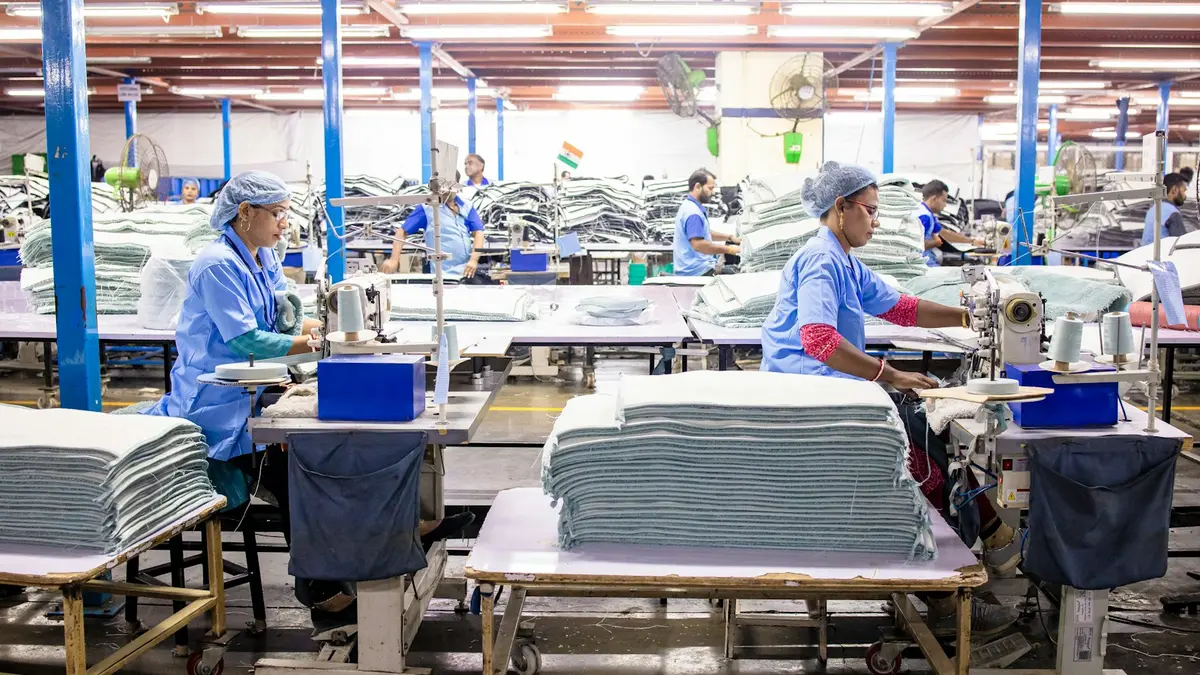
A completed order proves that the factory performed under a particular set of circumstances. Those circumstances include the order volume, garment construction, approved materials, production lead time, assigned sewing line, available operators, quality-control arrangements and any outside processes used during production. It does not automatically prove that the same resources remain available for another order.
Source: Unsplash
For example, a factory may have produced a basic knit style efficiently when the line was open, the fabric supplier was on schedule and the finishing contractor had capacity. A repeat order may appear similar but involve a higher quantity, a revised fabric, additional embellishment, a shorter delivery window or a different colour approval process. Each change can alter the practical ability to produce the order reliably.
A strong relationship demonstrates useful experience. The factory may already understand the brand’s fit expectations, packing requirements, approval process and quality concerns. This reduces the learning curve and can improve communication. However, trust and familiarity are different from confirmation of current capacity, material availability, specialist capability or delivery feasibility.
Before confirming a repeat order, compare the conditions that supported the previous production run with the requirements of the proposed order. Ask what is unchanged, what has changed and which resources are now critical. This comparison helps both parties avoid treating historical success as evidence of present readiness.
Changes That Call for a Fresh Readiness Check
A new review is needed when meaningful conditions have changed. An unchanged reorder with the same product, materials, quantity, delivery timing and production route may require only a brief confirmation. A different order situation, however, should prompt a focused readiness check.
Common review triggers include:
- A higher or lower order quantity
- More complex construction, new workmanship details or additional operations
- A different fabric, trim, colourway or material source
- A new material supplier or uncertainty about supplier delivery
- A shorter, revised or otherwise demanding lead time
- A different production line, production team or key technical employee
- New subcontractors for printing, embroidery, washing, finishing or packing
- Concurrent orders that occupy line capacity or quality-control resources
- Added testing, inspection, traceability or documentation requirements
The review should focus on the resources and processes affected by the change. This avoids two unhelpful extremes: repeating a full review when nothing relevant has changed, or assuming that an old decision remains valid when the production situation is clearly different.
Material changes are a common example. If a new fabric or trim is proposed, the factory and buyer should confirm whether it is available, whether required testing or approval is complete, and whether delivery timing supports the production schedule. A material may be technically acceptable but still unsuitable for the order if its arrival date leaves insufficient time for cutting, sewing, finishing and inspection.
Volume changes require a different set of checks. The factory may need to confirm available line capacity, staffing, output assumptions, quality-control coverage and the effect of other confirmed orders. A line that can produce a smaller repeat order may not be able to absorb a larger order without extending the lead time or affecting other commitments.
Using an Order-Specific Readiness Confirmation Card
A concise readiness confirmation card can make the review practical and traceable. It is especially useful when the factory has already been assessed generally and only certain order conditions need confirmation. The card is not a replacement for production planning, technical review or quality procedures. It is a short decision record that captures whether the critical conditions for this order are in place.
Source: Unsplash
The card can be maintained by the merchandiser, production planner, sourcing team or a jointly agreed factory contact. Its value comes from making assumptions visible and assigning ownership before production is authorized.
A useful card may include the following fields:
| Point to confirm | Accountable person | Acceptable evidence | Confirmation deadline | Open dependency or condition |
|---|---|---|---|---|
| Sewing line capacity | Factory production planner | Capacity plan showing planned line allocation | Before order confirmation | Earlier order must finish as planned |
| Main fabric delivery | Material supplier or factory sourcing contact | Dispatch confirmation and expected receipt date | Before cutting schedule is fixed | Final colour approval required |
| Critical workmanship process | Factory technical or production owner | Named responsible person and process plan | Before bulk production | Operator training or sample review pending |
| Product approval status | Buyer technical team or factory QA contact | Approved sample or documented approval | Before bulk cutting | Measurement comments must be closed |
| Required testing | QA team or external laboratory contact | Test result or confirmed testing schedule | Before shipment planning | Material receipt needed before test submission |
Evidence should be appropriate to the risk being checked. A verbal assurance may be sufficient for a minor scheduling point, but critical capacity, materials or external-process dependencies normally need clearer support. Examples include a capacity plan, a material dispatch confirmation, an approved sample, a test result or a named owner responsible for a critical production step.
Dependencies should be written explicitly. If the new order can start only after an earlier order leaves the line, record that dependency. If bulk cutting depends on colour approval, record it. If embroidery or washing depends on contractor availability, identify the contractor and the required confirmation date. A visible dependency is easier to manage than an assumption held informally by one person.
The readiness card should support the production schedule, not replace it. The schedule still needs planned milestones for material receipt, pre-production approval, cutting, sewing, finishing, inspection and shipment. The card simply confirms that the conditions behind those milestones are realistic.
Three Clear Outcomes of the Readiness Review
Every readiness review should end with a clear status that supports a production decision. The conclusion should tell the buyer and factory whether production can proceed, what remains open and who is responsible for closing any gap.
Vague conclusions such as “nearly ready,” “should be fine” or “generally acceptable” are not decision-ready. They leave uncertainty about production authorization, risk ownership and the response required if a dependency is missed. A simple three-status approach provides clearer control.
Ready to Produce This Order
This status means that the critical conditions for the specified order have been confirmed. Relevant production capacity is available, required materials can support the schedule, outside processes are arranged where needed, and quality-control resources are planned for the product and volume.
Production may proceed under the reviewed and approved conditions. The confirmation should align with the agreed product specification, order quantity, delivery date and production route. If those conditions change materially, the status should be reviewed rather than assumed to remain valid.
This outcome applies only to the order assessed. It does not establish that the factory is automatically ready for a different product, a larger quantity, a more complex construction or a tighter delivery date.
Ready Subject to Stated Conditions
Conditional readiness means the factory has the core ability to support the order, but one or more important requirements remain open. The open point may be a pending colour approval, late material dispatch confirmation, contractor allocation or completion of an earlier order that currently occupies the planned line.
The record should identify the unresolved condition, its owner, the expected confirmation date and the preliminary work that is permitted. It should also state what happens if the condition is not closed by the deadline. For instance, the factory may be allowed to reserve capacity and prepare approved components, while bulk cutting remains prohibited until the main fabric and colour approval are confirmed.
This is not unrestricted approval for full production. Any stage affected by an unresolved critical condition remains unconfirmed until the condition is closed. Treating conditional readiness as full readiness can create unnecessary material exposure, rework or missed delivery commitments.
Not Currently Ready for This Order
This outcome means the factory cannot presently support the required quantity, quality level and timeline with sufficient reliability. The limitation may involve capacity, material timing, technical capability, outside processing, staffing or quality-control resources.
A “not ready” decision does not necessarily mean the factory is unsuitable. The same supplier may be appropriate for a smaller order, a simpler product, a different material route or a longer lead time. The decision concerns the stated order conditions, not the overall value of the supplier relationship.
Practical responses may include revising the delivery date, reducing the volume, simplifying the product, splitting the order between production sites or using another factory. Direct communication of the constraint is better than an unsupported commitment to attempt production. Clear limits allow the buyer to make a timely commercial decision and protect the factory from taking on work it cannot control effectively.
When an Existing Readiness Decision Needs Rechecking
The first readiness review should take place before production confirmation. It should also be revisited whenever a recorded condition changes. Readiness is time-specific and condition-specific: a line that was available at the time of review can later be allocated to another order, and a material that was expected on time can become uncertain after a supplier delay.
For this reason, the readiness record should state an expiry date or clear validity conditions. For example, a capacity confirmation may remain valid only if an earlier order completes on schedule, while a material confirmation may remain valid only if dispatch occurs by the agreed date.
A recheck is appropriate when any of the following occurs:
- Approvals are delayed or new comments change the product requirement
- The order delivery date, quantity or shipment plan is revised
- New orders occupy capacity that was previously available
- A planned team, line, contractor or supplier is replaced
- Materials, trims or specifications change
- Supplier delivery becomes uncertain
- A recorded readiness status reaches its stated expiry date
Only affected items need to be reassessed. A late trim delivery, for example, may require a check of material timing and packing sequence, but not a complete review of every factory department. This targeted approach keeps the process efficient while ensuring that the decision reflects current conditions.
Each follow-up should produce an updated status and confirmation date. If the status changes from ready to conditional, or from conditional to not ready, the production plan and commercial decision should be updated accordingly.
Trust Is Stronger When Current Readiness Is Verified
Long-term factory relationships support better communication, faster problem-solving and a clearer understanding of working methods. These are significant advantages in textile and apparel sourcing. They do not, however, remove the need to verify whether the factory can support the order now being discussed.
An order-level readiness reset provides that verification without requiring a full factory audit for every repeat purchase. It checks the current position of capacity, materials, outside processes, timing and quality-control resources. It also gives the factory a structured way to identify limits before an unrealistic commitment is made.
Early identification of constraints protects both sides. The buyer gains a more reliable basis for delivery and quality planning. The factory gains the opportunity to recommend a revised timeline, a different production route or conditions for acceptance before production pressure increases.
The strongest supplier relationships are not built on automatic assumptions. They are built on clear information, realistic commitments and timely escalation when conditions change. Confirming factory production readiness for repeat orders helps turn past success into a more dependable decision for the next order.