Fashion Merchandising Practice in Bangladesh’s RMG Sector
Table of Contents
Fashion Merchandising in Bangladesh’s RMG Industry
Fashion merchandising in Bangladesh RMG sector sits between commercial demand and factory execution. It connects buyers, designers, sourcing teams, sample rooms, production planners, quality personnel and suppliers so that an apparel order can move from an initial concept to shipment. In export-oriented ready-made garment operations, the function is particularly important because product requirements, delivery schedules, material availability, quality expectations and cost targets must be aligned at the same time.
The term may refer to different roles across factories, buying houses, brands and retail organizations. In some workplaces, a fashion merchandiser is closely involved in trend interpretation and product development. In others, the role is more focused on buyer follow-up, sampling, costing, sourcing coordination and production tracking. The exact job scope therefore depends on the employer, product category, buyer relationship and degree of vertical integration.
Abstract
Fashion merchandising is often presented as an emerging professional pathway within Bangladesh’s garment and textile economy. The discipline combines commercial awareness with an understanding of apparel design, materials, manufacturing processes, buyer requirements and market presentation. A capable merchandiser helps translate a fashion or product brief into a feasible order that meets agreed quality, price and delivery conditions.
This article outlines the professional practice of fashion merchandising in Bangladesh’s RMG industry. It reviews the role’s functional responsibilities, workplace coordination requirements, reported survey material and possible career development routes. Because the supplied survey evidence is limited in scope and does not provide verifiable respondent-level records, the survey observations should be read as indicative rather than representative of the whole sector.
Introduction to Fashion Merchandising
Fashion merchandising covers the activities required to bring a fashion product from an idea or market need to commercial availability. Depending on the business model, these activities may include market research, range planning, product selection, fabric and trim sourcing, sample coordination, costing, order negotiation, production follow-up, retail presentation and post-order review.
Within a garment-export environment, merchandising is not identical to fashion design. Designers may develop silhouettes, colour stories, prints or styling details, while merchandisers evaluate whether those ideas can be produced at the required cost, quality and lead time. They also communicate specifications and revisions across departments. This commercial-technical bridge is central to apparel manufacturing.
Fashion communication can extend beyond the factory. Fashion shows, catalogues, trade presentations, product photography, retail displays and editorial promotion can help present garments to buyers and consumers. However, the relevance of each promotional method depends on whether the organization works as a manufacturer, buying house, brand, retailer or integrated fashion business.
Study Objective and Methodology
The stated objective of the underlying study was to assess the present position and future prospects of fashion merchandising as a profession in Bangladesh’s RMG sector. It considered the work performed by fashion merchandisers, their interaction with production and buyers, and the career potential associated with the role.
The study is described as qualitative and as relying mainly on existing information from fashion, garment-industry and buying-house-related reports, alongside survey responses. This approach can provide useful practical insight, especially when examining workplace perceptions. However, the available material does not establish the full provenance of every source, the sampling framework, questionnaire design, collection period or method of analysis.
Accordingly, the discussion below distinguishes between general operational practice and reported observations from the small survey. Broader claims about the Bangladesh RMG industry should not be inferred solely from a limited respondent group.
Work Scope of Fashion Merchandisers in Bangladesh’s RMG Sector
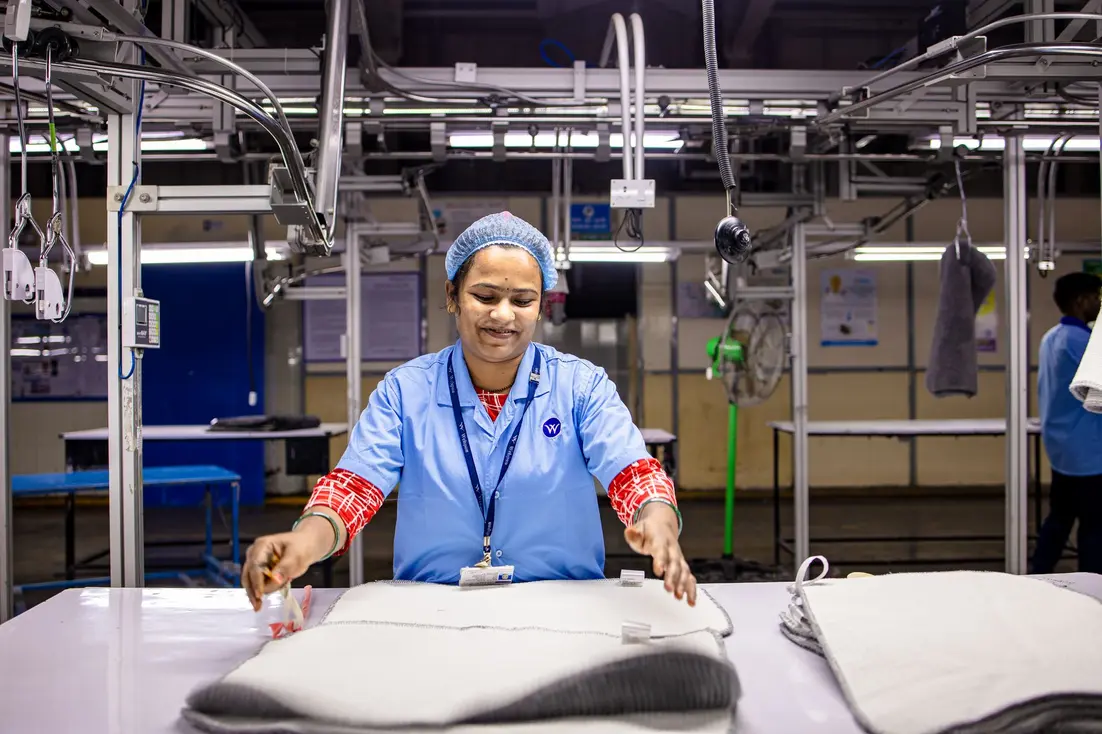
Fashion merchandisers convert market and buyer requirements into coordinated product-development and production actions. They may examine trend direction, customer expectations, target prices, material options and seasonal requirements before supporting sample development and order execution. Their effectiveness depends on both commercial judgment and practical knowledge of garment construction, fabric performance, trims, measurement control, production capacity and quality risks.
Source: Pexels
Common responsibilities can include:
- Reviewing buyer enquiries, tech packs, sketches, measurements and compliance requirements.
- Supporting fabric, trim and accessory sourcing according to quality, price and lead-time needs.
- Coordinating proto samples, fit samples, size sets, pre-production samples and approval comments.
- Preparing or checking preliminary costing with fabric consumption, trims, labour, overhead and logistics considerations.
- Communicating product revisions to pattern, sample, sourcing, production and quality teams.
- Monitoring material readiness, sample approval status, production progress and shipment schedules.
- Maintaining buyer communication on approvals, risks, corrective actions and delivery updates.
Trend analysis is relevant when factories or buying houses provide product-development support rather than only executing buyer-developed styles. Merchandisers may review colour directions, fabric innovations, silhouettes, washes, finishes and competitor offerings. The purpose is not simply to follow fashion trends; it is to identify market-relevant ideas that can be converted into commercially viable garments.
Product development also requires rapid feedback management. Buyer comments may affect fit, fabric weight, colour, print placement, accessories, packaging, labeling or construction details. The merchandiser helps ensure that these changes are correctly documented, costed where necessary and communicated before production decisions are finalized.
The source material refers to research-and-development and product-development functions, including an example associated with Square Fashion Limited. Such organizational arrangements should be verified directly with the company, because departmental structures and responsibilities may change over time. In general, R&D teams can support new fabric, wash, finish, silhouette or process development, while merchandising teams evaluate buyer suitability and commercial feasibility.
Merchandisers also coordinate with quality and production teams. They need visibility over raw-material delivery, capacity allocation, production status, inspection results, corrective actions and shipment deadlines. They do not replace technical specialists, but they often consolidate information and escalate risks when a delay or quality problem could affect the order.
Visual merchandising is another related discipline, particularly in retail operations. It concerns the presentation of garments through windows, fixtures, mannequins, signage and shop-floor layouts. It should be treated separately from export-factory merchandising, although both functions require product knowledge and customer awareness. The claim that professional visual merchandising is not well established across Bangladesh should be regarded as a contextual observation rather than a verified industry-wide conclusion.
Survey Data Collection
The referenced study reports surveys among garment factories and buying houses. Square Fashion Ltd., Beximco Fashion Ltd. and Sterling Style Ltd. are named as surveyed organizations in the source material. Their inclusion, the participants’ job titles, respondent selection process and the organizations’ exact relevance to each survey question require independent verification before the findings can be used as evidence of sector-wide practice.
Questionnaires were reportedly directed to relevant personnel to explore current conditions and future prospects for fashion merchandising. The available information identifies a reported sample of 10 respondents, but does not provide sufficient methodological detail to assess representativeness, response bias or statistical reliability. The results are therefore best treated as a small exploratory snapshot.
Survey Data Presentation
The following sections summarize the reported survey themes. They do not reproduce unsupported numerical tables or figures. Each topic reflects a 10-person reported sample and should not be generalized automatically to Bangladesh’s wider RMG workforce.
Fashion Merchandiser Job Responsibilities
The survey material addresses how respondents understood fashion merchandiser responsibilities. The reported framing is consistent with a role that combines product follow-up, sourcing coordination, sample management, buyer communication and production monitoring. Actual responsibility allocation varies significantly among factories, buying houses and brands.
Role in Creating Production Designs
The survey asked whether fashion merchandisers create designs for production. In practice, merchandisers may contribute product ideas, interpret buyer concepts or coordinate technical development, while formal design ownership may remain with designers, buyers or product-development teams. The reported 10-person sample cannot establish a universal division of design responsibility.
Involvement in Product Development
The survey considers fashion merchandiser participation in product development. Such participation commonly includes reviewing feasibility, managing samples, collecting comments, coordinating revisions and confirming cost implications. The degree of involvement depends on whether the employer offers design and development services.
Involvement in Garment Manufacturing
The survey material also considers involvement in manufacturing. Merchandisers are typically linked to manufacturing through production planning, material readiness, approval status, quality updates and delivery tracking. They coordinate information but may not directly control sewing-floor operations or technical production decisions.
Communication with Buyers
The survey addresses direct buyer communication. Direct contact can improve the speed of clarification on samples, costing, comments and delivery issues, but communication channels differ by organization. Some merchandisers communicate directly with buyers, while others work through senior merchandisers, buying offices or account managers.
Fashion Merchandiser Career Path
The survey explores career progression in fashion merchandising. A common progression may begin with trainee, assistant or junior merchandising roles, followed by merchandiser and senior merchandiser positions. Advancement into manager, merchandising manager, commercial manager or director-level roles depends on capability, experience, organization size and responsibility for accounts.
Availability of Fashion Merchandising Functions in RMG
The survey considers the availability of fashion merchandising functions in the RMG sector. Merchandising work is widely associated with export apparel operations, but job titles and scopes differ. Some organizations use general merchandising roles, while others separate fashion, product-development, sourcing and retail-merchandising functions.
Future Outlook for Fashion Merchandising in Bangladesh
The survey includes respondents’ views on the future of fashion merchandising in Bangladesh. These views may reflect the growing importance of product differentiation, shorter development cycles, buyer service and supply-chain coordination. They remain perceptions from the reported sample rather than a forecast validated across the industry.
Whether Designers Can Work as Fashion Merchandisers
The survey asks whether designers can perform fashion merchandising work. Designers may transition successfully when they develop costing, sourcing, production, communication and commercial skills. Creative capability alone is not sufficient; merchandisers must also understand order execution and buyer requirements.
Whether Merchandisers Can Become Fashion Merchandisers
The survey also considers whether conventional merchandisers can perform fashion merchandising roles. Experienced merchandisers may be well positioned to move into fashion-oriented work if they strengthen knowledge of trend research, product aesthetics, consumer preferences and range development. The transition depends on the job’s specific design and commercial expectations.
Results and Discussion
The survey themes support the view that fashion merchandising can contribute to design development, research and development, product development and manufacturing coordination. In practical RMG operations, the role is valuable because it brings together information that is often distributed across commercial, technical and production departments. A merchandiser who understands both the buyer brief and factory constraints can identify risks earlier and support more realistic decisions.
Buyer communication is a major requirement. Merchandisers need to interpret specifications accurately, record decisions, manage approvals and report potential deviations promptly. Knowledge of fashion seasons, product calendars, market trends and forecasting concepts can be especially useful for development-led suppliers and buying houses. For production-only operations, product and process discipline may be more important than trend creation, although market awareness remains beneficial.
The source material reports that 90% of surveyed merchandisers communicated directly with buyers. This figure should be understood only within the reported sample of 10 respondents and cannot be treated as an industry benchmark without access to the original questionnaire, respondent profile and response records.
The cited career pattern moves from junior merchandiser to senior merchandiser and then to manager or director positions. This is a plausible organizational pathway, but real progression is not uniform. Advancement can also lead toward sourcing, product development, key-account management, planning, commercial management, retail merchandising or entrepreneurship in buying and sourcing services.
The study interprets its primary and secondary information as indicating positive prospects for fashion merchandising in Bangladesh. That interpretation is reasonable where employers need stronger product-development support, faster buyer communication and closer supply-chain coordination. Nevertheless, future demand will depend on buyer sourcing strategies, technology adoption, skills development, factory capability, market conditions and the industry’s movement toward higher-value products.
Conclusion
Fashion merchandising is an important coordinating function across ready-made garment manufacturing, sourcing, buying-house operations and retail fashion activity. It connects market research, product requirements, purchasing strategy, sample development, cost awareness, production follow-up and, in retail contexts, product placement and display planning.
For students and professionals, the role requires more than communication ability. Useful preparation includes knowledge of textiles, garment construction, patterns and measurements, fabric and trim sourcing, costing, quality requirements, production processes, shipping documentation and buyer communication. Familiarity with fashion trends and consumer markets is especially valuable in product-development-oriented positions.
Practical experience remains important because merchandising decisions often involve trade-offs among cost, quality, speed and design intent. Entry-level professionals can build relevant capability through internships, sample-room exposure, sourcing support, quality coordination, production planning or assistant merchandising roles. Competition for desirable positions may be strong, but the claim that qualified applicants consistently outnumber available jobs requires broader labour-market evidence.
The strongest career foundation is a combination of technical understanding, commercial discipline, clear documentation, ethical professional conduct and the ability to coordinate across departments. As Bangladesh’s RMG sector continues to serve diverse international markets, fashion merchandising can remain a significant pathway for professionals who can connect product creativity with dependable order execution.