Garment Pressing Equipment: Types, Functions and Working Principles
Table of Contents
Garment Pressing Equipment: Scope and Overview
Garment pressing equipment includes the tools and machines used to remove wrinkles, set seams, shape components and give garments their required final appearance. It covers simple manual systems, such as steam irons and vacuum tables, as well as specialized presses, form finishers, tunnel finishers and pleating machines used in industrial apparel production.
The appropriate system depends on the garment category, fabric behavior, production volume and required finish. A knitted T-shirt may need only light steam relaxation, while a tailored jacket requires controlled under-pressing during construction and careful final pressing. Industrial finishing departments commonly combine several machine types so that each operation can be performed with suitable heat, moisture, pressure and drying control.
What Is Garment Pressing?
Garment pressing is a finishing operation in which heat and pressure are applied to textile materials, sometimes together with steam and vacuum. Its immediate purpose is to remove unwanted wrinkles and improve the appearance of garment parts or completed garments.
At a material level, heat and moisture make fibers and yarns more responsive to reshaping. Pressure holds the fabric in the intended position, while cooling and drying help stabilize the result. Depending on the operation, pressing may flatten a seam, open seam allowances, shape a curved area, sharpen an edge or establish a deliberate crease.
Pressing is therefore more than a cosmetic activity. It is used throughout garment manufacture: before selected sewing operations, during assembly of structured garments and as a final finishing stage before inspection, packing and shipment. Good pressing produces a smooth, clean and presentable garment without damaging the fabric surface, altering color or leaving shine marks.
Functions of Garment Pressing
The functions of pressing vary according to the product and production stage, but the principal purposes are consistent:
- Removing unwanted creases: Pressing eliminates handling wrinkles, crush marks and creases formed during cutting, sewing, storage or transport.
- Producing intentional creases: Trousers, skirts, uniforms and tailored products may need sharp, accurately positioned creases as part of their design.
- Shaping garment areas: Heat, moisture and pressure help shape collars, lapels, sleeves, darts, hems and curved panels so they conform more naturally to the body.
- Supporting sewing operations: Intermediate pressing can flatten seam allowances, set seams and prepare components for accurate joining in later operations.
- Improving final appearance: Final pressing gives the finished garment a consistent surface and silhouette before quality inspection and packing.
Effective pressing must balance temperature, moisture, pressure and dwell time. Excessive heat can scorch, glaze or distort fabrics, while excessive pressure may produce unwanted shine, seam impressions or flattened pile. Insufficient steam, drying or cooling can leave the garment with poor crease retention or residual moisture.
Garment Pressing Requirements by Product Type
Garments do not all need the same level of pressing. Product construction, fiber content, fabric weight, styling details and customer expectations determine the required process.
Some lightweight or stretch products require little or no conventional pressing. Certain foundation garments, swimwear and underwear are commonly designed to retain their shape through elastic materials and controlled sewing rather than intensive pressing. Where pressing is used, it is generally light and carefully controlled to avoid damaging elastic fibers or creating impressions.
Products needing minimal pressing can include slips, nightgowns, some synthetic knitted garments and T-shirts. These items may receive light steam treatment to remove handling wrinkles or improve presentation, often without forming sharp creases.
Moderate pressing is used where seam opening, edge definition, gathers, fullness or style changes must be controlled. Dresses, blouses, skirts and fashion garments may need several localized pressing steps during assembly and a final appearance press after sewing.
Tailored garments usually require the most extensive pressing. Jackets, trousers, waistcoats, structured skirts and top coats often receive under-pressing at several stages to build shape in collars, lapels, pockets, seams and hems. Final pressing then restores the intended silhouette and surface appearance without crushing the garment structure.
Specialized needs include pleating and permanent-press finishing. Pleated designs require repeated creases to be formed and set in a controlled pattern. Permanent-press treatments are used where durable crease recovery or lasting garment creases are required.
Types of Equipment Used for Garment Pressing
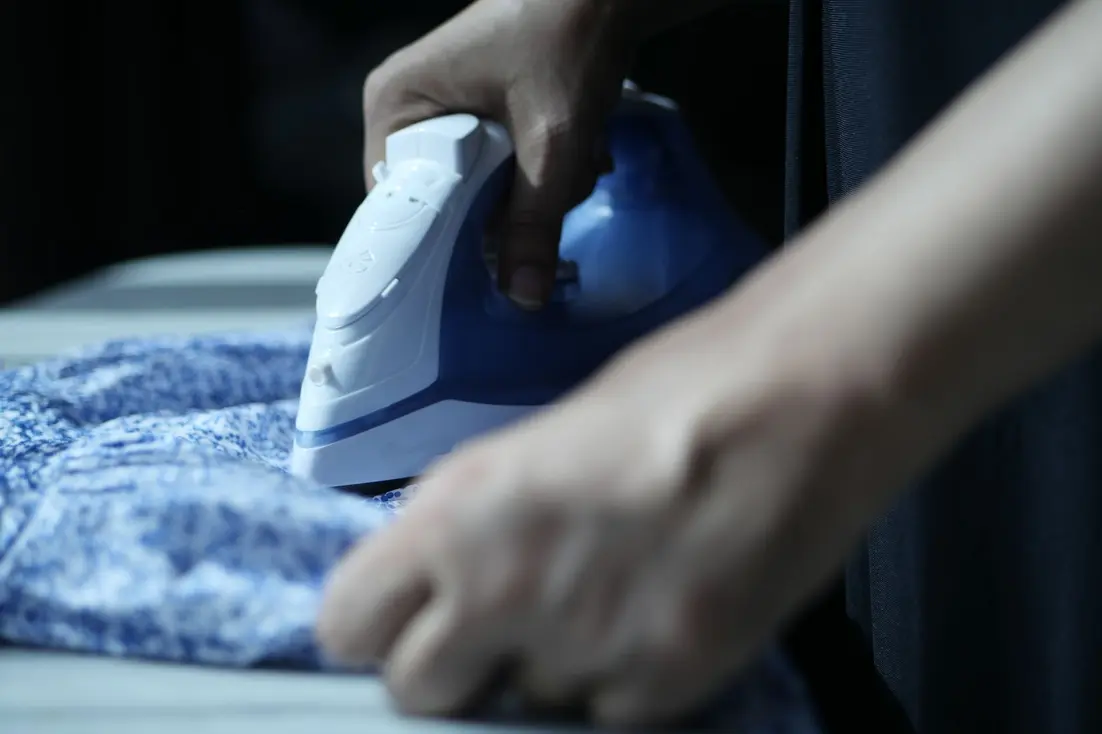
Garment pressing equipment ranges from portable hand irons to large automated finishing systems. The choice of equipment should reflect the garment shape, required finish, production rate, available utilities and the degree of process control needed.
Source: Pexels
Manual equipment offers flexibility for complex shapes, short runs and corrective work, but output and consistency depend strongly on operator technique. Specialized presses improve repeatability for defined garment parts, while form and tunnel systems are suited to finishing complete garments with reduced manual positioning. In practice, an industrial factory may use hand irons for detailed work, pressing machines for seams and components, and finishing systems for completed garments.
Steam Irons and Hand Irons
Steam irons and hand irons are among the most versatile tools in a pressing department. They are used for localized seam pressing, edge finishing, touch-up work and operations that require the operator to manipulate the garment directly. They are comparatively low-productivity tools when compared with dedicated pressing machines, but their flexibility is valuable for varied styles and small areas.
An industrial steam iron typically receives steam from a central boiler system or an independent steam generator. When the operator activates the control, steam is released through holes in the soleplate and passes into the fabric. The heat of the soleplate and the moisture from steam work together to relax wrinkles and assist reshaping.
Hand ironing is commonly performed on a padded pressing table equipped with vacuum suction. After steam is applied, suction draws air through the garment and table surface, helping remove residual moisture and heat. This cooling and drying step helps set the pressed form and reduces the risk of re-wrinkling during handling.
Dry irons rely mainly on soleplate heat and pressure, whereas electric steam irons generate or receive steam for moisture-assisted pressing. In either case, operator control remains important. The worker must select suitable temperature, steam quantity, contact time and vacuum use for the fabric and garment component.
Steam Pressing Machines
A steam pressing machine uses two complementary pressing surfaces: a fixed lower surface called the buck and an upper moving surface called the head. The garment or garment component is positioned over the buck, and the head closes onto it to apply controlled pressure.
Typical machine elements include a supporting frame, padded buck, press head, head-closing mechanism, steam piping, vacuum system, handling table and foot controls. The buck and head may be shaped for specific operations, such as collars, cuffs, sleeves, trouser legs, pocket flaps or flat garment panels.
Steam pressing machines combine pressure with steam and vacuum. Steam relaxes the material and assists shaping, while vacuum removes moisture and cools the pressed area. This sequence improves finishing stability and enables faster handling after pressing.
In manually operated presses, the operator determines the garment position and controls pressing variables such as steam duration, head closure, pressure application and vacuum time. These machines can provide excellent results, but consistent operation requires training and attention to fabric response.
Steam Pressing Machine Operating Sequence
Although machine controls differ by model and operation, the basic pressing sequence follows a common pattern:
- The operator positions the garment component correctly on the buck.
- Steam is applied through the buck to relax the fabric and prepare it for shaping.
- The press head closes over the garment and holds it in the pressing position.
- Additional steam may be delivered through the head, the buck or both surfaces, depending on the machine and operation.
- Steam is stopped and excess heat is allowed to release.
- Vacuum is applied through the buck to cool and dry the fabric while it remains in its intended shape.
- The head opens and the operator removes or repositions the garment.
The sequence must be matched to the fiber content and fabric construction. A delicate synthetic fabric may need lower heat and shorter exposure than a heavy wool-containing tailored fabric. Proper cooling before removal is especially important because a hot or damp area can lose its shape quickly.
Steam-Air Finishers, Form Presses and Dolly Presses
Steam-air finishers, form presses and dolly presses are designed mainly for final finishing of complete garments. Instead of pressing a flat area between two hard surfaces, these systems use an expandable form or bag that approximates the garment shape. The garment is placed over the form, which expands as steam or air passes through it.
The equipment generally includes a machine frame, steam supply, compressed-air or blower system, adjustable form bag, gauges, operating controls and cycle timers. Forms may be designed for particular product groups, such as shirts, blouses, dresses, knitwear or outerwear.
During operation, steam relaxes wrinkles while the inflated form supports the garment in a three-dimensional position. Air is then circulated through the garment to dry and cool it. The process uses relatively low pressure over the full garment form and can reduce the time needed to position and handle finished garments.
Form finishers are especially useful for products such as T-shirts, nightgowns and other garments that benefit from all-over wrinkle removal rather than sharply defined creases. They are not intended to create highly crisp trouser creases or sharply pressed hems. Where such details are required, separate flat pressing or steam-iron operations may still be necessary.
Tunnel Finishers
Tunnel finishers are conveyor-based finishing systems for garments carried through enclosed steaming and drying zones. Garments are usually suspended from hangers or hooks and move continuously through the tunnel. This makes the system suitable for higher-volume finishing of garments that need general wrinkle removal and shape recovery.
A tunnel-finishing line can include a conveyor, garment hooks, entry and exit air curtains, steam controls, condensation-management features, blowers and air-circulation modules. Smaller facilities may use cabinet-style tunnel systems that process garments in batches rather than through a long continuous conveyor tunnel.
The working principle combines steam, gravity and moving air. Steam relaxes wrinkles, particularly in fibers that respond well to moisture and heat. As the garment hangs freely, gravity helps it fall into shape. Turbulent or directed airflow then assists drying and removes remaining wrinkles.
Steam quality, temperature and airflow should be adjusted for the fiber type and garment construction. Natural-fiber garments may require sufficient moisture for relaxation, while synthetic fabrics must be protected from excessive heat that could cause distortion, surface damage or unwanted setting. Tunnel finishing is generally best for overall appearance improvement rather than precise crease formation.
Pleating Equipment and Methods
Pleating is a specialized pressing and shaping method used to create repeated folds or creases in garments. Pleats may be decorative, functional or both, and their size, spacing and direction must remain consistent across the garment.
Small, closely spaced pleats are commonly produced by machine. Larger pleats may be formed manually, particularly for small production runs, complex shapes or fashion details requiring individual control. The selected method depends on the pleat design, fabric behavior and permanence required.
Rotary pleating machines use paired roller dies that carry the pleat pattern. As fabric passes between the rollers, the dies form repeated fine pleats. This method is associated with regular small pleat structures, including crystal and accordion-style pleats.
Blade pleating machines use moving blades to fold material into the required formation. The pleated material is then passed through heated and pressured rollers to set the folds. For successful pleating, the fabric must respond to the selected combination of heat, pressure and, where needed, moisture or chemical treatment.
Permanent-Press Finishing
Permanent-press finishing is used to improve crease recovery and establish durable garment creases, particularly in cellulose-based fabrics. It is associated with garments that need to retain a neat appearance after wear, laundering or storage.
A traditional permanent-press route can involve applying a resin-based treatment to fabric, drying the treated material, making the garment and then curing it at elevated temperature. Curing helps form durable crosslinking effects within the treated cellulose material, improving resistance to wrinkling and helping creases remain in place.
Permanent pressing may be applied to trouser creases, seams, hems and pocket areas where long-lasting shape retention is required. Process conditions must be carefully controlled because chemical treatment and high-temperature curing can affect fabric handle, strength, shade and dimensional behavior.
Polyester has inherent crease-recovery advantages compared with many cellulosic fibers. As a result, polyester-containing blends can often achieve improved wrinkle recovery with less reliance on traditional resin-based permanent-press treatments. However, the required finish still depends on the blend ratio, garment design, intended care method and desired appearance.