Why Handwoven Textiles Are Returning to Luxury Fashion
Table of Contents
Introduction to Handwoven Luxury Textiles
Handwoven textiles in luxury fashion are valued for qualities that industrial fabric production cannot always reproduce: visible craft, material irregularity, limited output, and a direct connection to a maker or weaving community. A handloom fabric may carry evidence of its construction in its selvedges, yarn variation, motif placement, and surface texture. These characteristics can make it appropriate for couture, small-run collections, accessories, and interior applications where material identity is central to the product.
The renewed attention to handweaving is also connected to wider discussions about environmental responsibility, supply-chain transparency, cultural continuity, and slower production. However, handwoven fabric is not automatically sustainable or ethical. Its overall impact depends on fibre cultivation, spinning, dyeing, transport, finishing, labour conditions, purchasing practices, and product lifespan. Luxury value therefore depends not only on the fabric’s handmade status, but also on how responsibly its provenance and production are managed.
Historical Foundations of Handwoven Textiles
Weaving is among humanity’s oldest material technologies. It developed as a practical method of making clothing, shelter, containers, and ceremonial cloth, while also becoming a medium for visual language, regional identity, and technical innovation. Looms, yarn systems, dyes, and structures have evolved differently across cultures according to available fibres, climate, trade, and social practice.
Examples include Banarasi silk weaving in northern India, Andean textile traditions using camelid fibres, Kuba cloth traditions of Central Africa, and Japanese sakiori, a practice in which strips of reused cloth are woven into new fabric. These traditions should not be treated as interchangeable “heritage” products: each has its own materials, techniques, motifs, social meanings, and systems of knowledge.
Industrial mechanization changed textile production by enabling greater speed, repeatability, and volume. Power looms and mass-market apparel reduced demand for many manually woven goods, although handloom production continued in rural, Indigenous, and specialist craft communities. Today, handweaving survives both as a living cultural practice and as a specialist manufacturing method for products where complexity, scarcity, or narrative value justify slower production.
Why Luxury Fashion Is Embracing Handwoven Fabrics
Luxury fashion does not rely on a single definition of value. Alongside brand recognition and design, buyers may evaluate materials through rarity, traceability, craftsmanship, durability, and cultural relevance. Handwoven fabric can support these value propositions when its construction, sourcing, and artisan relationship are communicated accurately.
Sustainability and Slow-Fashion Production
Handweaving generally requires less direct electrical power at the loom than industrial weaving, particularly where treadle, frame, or backstrap looms are used. That fact alone does not establish a lower environmental footprint. Fibre production, yarn processing, dye chemistry, water use, transport, and finishing can contribute substantially to a textile’s impacts.
For luxury sourcing, the relevant question is therefore not simply whether a fabric is handwoven, but how it was made from fibre to finished cloth. Linen, hemp, wool, silk, and regenerated or recycled yarns each have different supply-chain conditions. Natural dyes may be appropriate in some contexts, but they still require responsible management of mordants, wastewater, and colour consistency. A durable garment designed for repair and long-term use may support slow-fashion goals more effectively than a handmade item with a short usable life.
Craftsmanship, Provenance, and Product Storytelling
Handwoven fabric can document place and process. A weave structure, border treatment, yarn twist, colour sequence, or motif may identify the technical vocabulary of a particular community or workshop. For designers, this makes provenance more than a marketing statement: it can be part of the material specification.
Product storytelling is most credible when it identifies the actual contributors to value. Useful documentation may include fibre origin, spinning method, dye process, loom type, weaving location, artisan group, and finishing route. Attribution should be specific, consent-based, and proportionate; vague references to “artisan inspiration” can obscure the people and knowledge behind a textile.
Natural Variation, Exclusivity, and Custom Design
Manual weaving can create controlled variation in yarn tension, weft packing, texture, and motif alignment. In couture and bespoke work, these variations may be desirable because they create a surface that appears materially alive rather than perfectly standardized. Handwoven cloth can also be developed for limited editions, one-off garments, and custom colourways.
Variation is not the same as poor quality. Commercial handloom production still requires agreed specifications for width, length, weight, colour tolerance, defects, shrinkage, and performance. Luxury buyers may welcome evidence of handcraft, but a sourcing team must distinguish acceptable handwoven character from faults that compromise cutting, seam performance, wear, or garment consistency.
Cultural Continuity and Heritage Protection
Fashion partnerships can help sustain weaving knowledge when they provide fair payment, repeat orders, credit, and meaningful creative participation. They may also create opportunities for younger makers to see weaving as viable work rather than as an activity disconnected from contemporary markets.
At the same time, heritage is not a resource that brands can use without responsibility. Designers should seek informed permission where motifs or cultural expressions have specific significance, avoid treating traditional knowledge as freely available decoration, and ensure that commercial benefits are not captured only by intermediaries. Long-term relationships are generally more valuable than one-season collaborations built around novelty.
Handweaving Techniques and Supporting Technologies
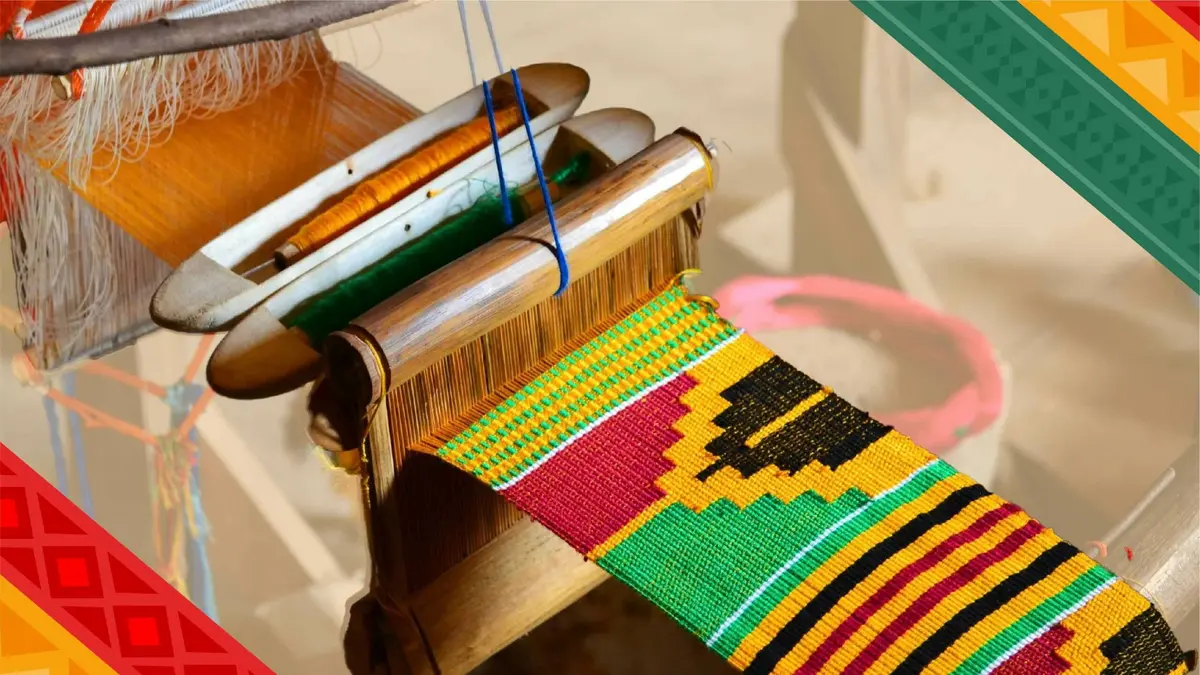
Handweaving includes many structures and loom systems. Ikat uses yarns that are resist-dyed before weaving so that colour patterns emerge as the warp, weft, or both are aligned. Tapestry weaving uses discontinuous wefts to build pictorial or geometric areas. Double weave produces two connected layers of cloth and can create reversible structures, pockets, or complex colour effects. Backstrap looms, used in many regions, rely on tension controlled between a fixed point and the weaver’s body.
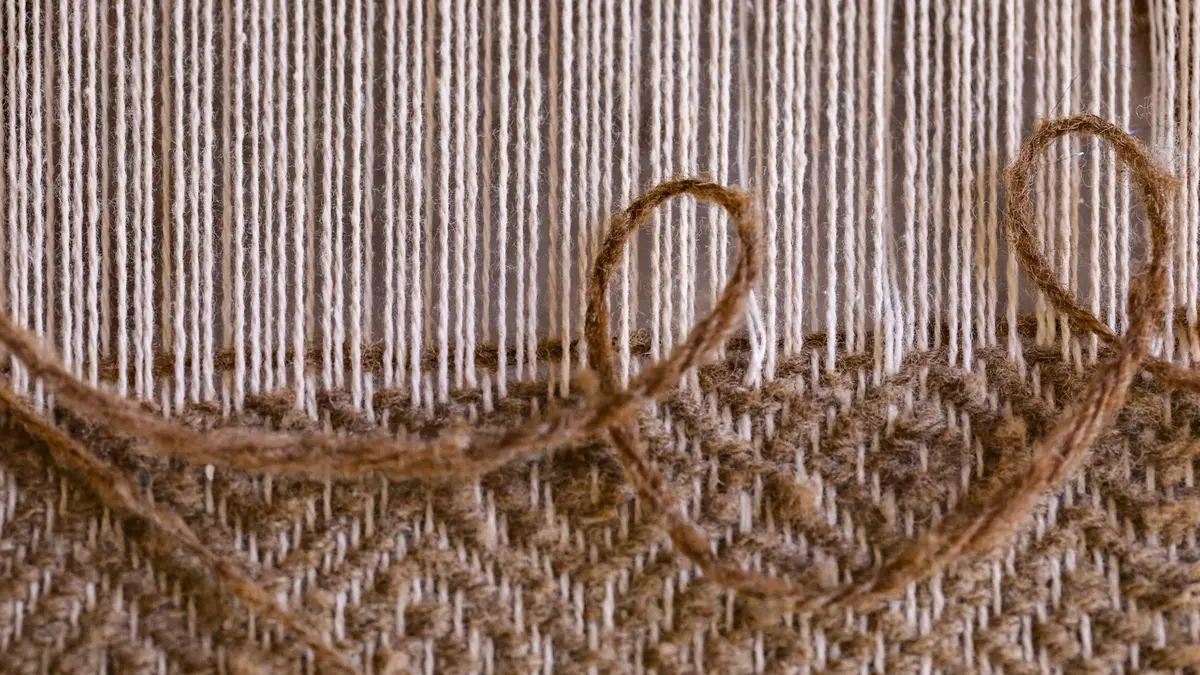
Handloom weaving requires continuous control of yarn tension, shed formation, weft insertion, and edge quality.
Source: Unsplash
Handloom jacquard weaving can produce intricate figured designs through controlled selection of warp ends. Depending on the loom and setup, pattern control may involve traditional cards, mechanical devices, dobby arrangements, or modern digital planning systems. These approaches should not be confused with fully automated industrial jacquard production; the weaving itself may remain manual even when the pattern is digitally prepared.
CAD pattern mapping, digital colour visualization, and production records can assist artisan workshops with sampling, repeat calculations, and client communication. Technology is most useful when it supports design accuracy, documentation, and quality control without replacing the skilled decisions involved in dressing, operating, and reading a handloom.
Fibres and Material Development in Handwoven Luxury
Luxury handwoven textiles may use alpaca, vicuña, silk, linen, hemp, handspun wool, and less common materials such as lotus fibre. Their value comes from different combinations of handle, warmth, lustre, rarity, local availability, technical performance, and cultural association. Alpaca and vicuña are camelid fibres associated with Andean regions, although sourcing and processing routes vary widely. Linen and hemp can provide crispness, strength, and breathable handle, while wool can produce resilience, loft, and complex surface texture.
Peace silk is commonly used as a market term for silk produced through systems intended to avoid killing the moth during cocoon processing, but terminology and production practices vary. Similarly, claims concerning organic fibres, natural dyes, or low-impact mordants should be supported by supply-chain evidence and, where applicable, recognized certification. Material claims should identify what has actually been certified: fibre origin, processing stage, chemical input, or finished textile.
How Handwoven Fabric Is Produced
The sequence for a handwoven fabric begins with yarn selection and preparation. Depending on the material, this may include cleaning, spinning, winding, degumming, or conditioning yarn before dyeing. Dyeing may occur at fibre, yarn, or fabric stage, while resist-dye methods such as ikat require carefully planned yarn placement before weaving.
Warping arranges the required number of warp ends at the intended length and spacing. Drafting determines how those ends pass through heddles and reed dents, establishing the structural logic for plain weave, twill, satin, figured patterns, or more complex constructions. During weaving, the maker controls shed formation, weft insertion, beat-up, edge formation, and tension. Sett, yarn count, loom condition, and humidity can all influence the resulting fabric.
Finishing may include washing, fulling, brushing, pressing, calendaring, embroidery, or other treatments appropriate to the fibre and intended use. Production time cannot be generalized reliably: it changes with loom width, yarn preparation, weave structure, pattern complexity, finishing requirements, and the weaver’s experience.
High-Fashion Uses of Handwoven Textiles
Handwoven fabrics can appear in runway garments, couture, menswear, eveningwear, accessories, and interior-focused luxury products. Handloom silk and brocade may be used for structured dresses and tailoring; ikat can provide graphic pattern; khadi can offer a light, irregular surface; and tapestry or handwoven wool can add sculptural weight to outerwear, bags, and decorative panels.
A garment need not be entirely handwoven to use handloom material meaningfully. Designers may incorporate a handwoven panel, border, lining, trim, or accessory component where limited yardage is available. This can help manage cost and production capacity while retaining the fabric’s visual and technical role.
Luxury houses including Stella McCartney, Dior, and Loewe have communicated craft and artisan activity through different projects and channels. When citing a specific collaboration, buyers and editors should verify the participating workshop, textile technique, collection, and terms of attribution rather than assuming that all artisan-focused work uses handwoven cloth.
Luxury Consumer Demand and Market Segments
Potential audiences for handwoven luxury include collectors, customers interested in ethical sourcing, diaspora communities seeking connections to textile heritage, and buyers looking for limited or distinctive pieces. These groups may value rarity, cultural relevance, traceable production, perceived longevity, and tactile material character.
Demand is not uniform across luxury markets or age groups. Some buyers respond to provenance and transparency, while others prioritize silhouette, brand identity, or performance. For merchandising, handwoven textiles are often best positioned with clear product information: fibre composition, care requirements, handmade variation guidance, maker attribution where appropriate, and an explanation of why limited quantities may be necessary.
Barriers to Scaling Handwoven Textile Production
Handloom production faces practical limits. Skilled weaving requires training and experience, and some communities face generational transition as younger workers pursue different employment opportunities. Production capacity may depend on a small number of looms, specialist yarn preparation, seasonal fibre availability, or a limited pool of pattern knowledge.
Consistency is another challenge. Batch-to-batch changes in yarn, dye lot, humidity, warp tension, or weft density can affect shade, width, handle, and pattern alignment. Strong quality systems can reduce risk through approved samples, measurable specifications, inspection points, and realistic lead times.
Value distribution also requires attention. Intermediaries can provide important services such as finance, logistics, market access, and quality coordination, but opaque pricing can leave makers with a small share of retail value. Machine-made imitations create additional confusion when they copy the appearance of handwoven fabric without disclosing their production method. Clear labelling and credible provenance records can help distinguish authentic handloom goods.
Designer–Artisan Collaboration Models
Effective designer–artisan collaboration begins with shared expectations. These include fair compensation, agreed sampling costs, realistic lead times, credit for makers and communities, communication about design changes, and ownership or permitted use of motifs and developed patterns. Contracts and purchase orders should account for the fact that handloom output cannot always be accelerated without affecting quality or working conditions.
Partnerships can take the form of direct commissioning, cooperative sourcing, studio residencies, technical exchanges, or long-term collection development. Sabyasachi Mukherjee’s luxury work has drawn attention to Indian textile traditions including Benarasi and Jamdani textiles. Studio One Eighty Nine is also associated with craft-based production and collaborations in Africa. Specific project claims, participants, and outcomes should be checked against primary brand or artisan sources.
The strongest collaborations create more than visual inspiration. They can support technical capability, new market access, design experimentation, and more reliable production planning. These benefits are not automatic; they depend on pricing, governance, communication, and the degree to which artisans participate in decisions that affect their work.
Future Directions for Handwoven Luxury Fashion
Digital tools may improve how handwoven textiles are documented and presented. Technique archives, high-resolution fabric records, digital swatch libraries, and material passports can preserve technical information while helping designers and buyers understand construction and origin. Virtual presentation can assist remote sampling, but it cannot fully replace physical assessment of handle, drape, density, and surface character.
Traceability systems, including digital product records and blockchain-based approaches, are emerging tools rather than universal solutions. Their usefulness depends on the accuracy of the information entered, the accessibility of the system for producers, and whether records improve real accountability. Similar caution applies to claims of carbon-neutral supply chains: meaningful claims require defined boundaries, measured emissions, reduction efforts, and transparent treatment of any offsets.
Nature-inspired colour, texture, and pattern may remain an important creative direction, sometimes described as biophilic design. In handweaving, this can mean using local fibres, landscape-informed palettes, or structures that evoke organic forms. Technology can extend the reach of these stories, but the craft value still rests on skilled material practice and equitable relationships with makers.
Key Takeaways
Handwoven textiles are increasingly relevant to luxury fashion because they combine technical skill, material depth, scarcity, and cultural meaning. Their value is not limited to nostalgia: handloom fabrics can support contemporary design, bespoke production, specialist accessories, and high-value interiors.
Responsible use requires more than selecting a handmade fabric. Brands and sourcing teams should evaluate fibre origin, dye and finishing processes, labour conditions, quality specifications, pricing, attribution, and long-term collaboration. When these factors are managed carefully, handwoven production can align with slow-fashion and luxury strategies while supporting the people and knowledge that make the textiles possible.
References and Further Reading
- The Revival of Handwoven Textiles in Luxury Fashion Markets - Textile School. https://www.textileschool.com/27890/the-revival-of-handwoven-textiles-in-luxury-fashion-markets
- Dream Weavers - Victoria and Albert Museum. https://www.vam.ac.uk/articles/dream-weavers
- Traditional Craftsmanship - UNESCO Intangible Cultural Heritage. https://ich.unesco.org/en/traditional-craftsmanship-00057
- Craftsmanship of Traditional Woven Textile Kente - UNESCO Intangible Cultural Heritage. https://ich.unesco.org/en/RL/craftsmanship-of-traditional-woven-textile-kente-02130