How Can Buyers Verify a Hemp Fiber Lot Before Textile Processing?
Table of Contents
Buyers should verify hemp textile feedstock one lot at a time: match the physical material to a unique lot ID, obtain its processing and traceability records, inspect representative samples, and confirm that moisture, fiber length distribution, cleanliness, and chemical information fit the intended process. Do not treat a supplier’s general statement that it supplies “textile-grade hemp” as proof that every bale is suitable.
That distinction matters because hemp varies substantially with crop conditions, retting, decortication, degumming, opening, and storage. A lot that is workable for a coarse nonwoven may create unacceptable waste, carding problems, or uneven yarn when purchased for spinning. Effective hemp fiber quality verification therefore begins with a written feedstock specification and ends with a documented accept, hold, or reject decision for the identified lot.
Start with the intended conversion route
Ask the processor what fiber form and performance window it needs before requesting supplier data. “Hemp fiber” can describe very different materials, including retted straw, decorticated line fiber, tow, cottonized fiber, and degummed fiber. These are not interchangeable feedstocks.
For example, long, aligned line fiber may be relevant to long-fiber textile routes, while shorter tow or cottonized material may be more appropriate for blending, carding, airlay, needle-punch, or other nonwoven processes. Hemp quality-control material published by the European Industrial Hemp Association links end use to fiber characteristics and distinguishes long fiber for textiles from shorter fiber applications such as nonwovens, paper, and composites. It also emphasizes that quality control and tracking are needed across the production chain.
Put the intended route in the purchase specification. At minimum, state:
- required fiber form and presentation, such as bale, opened fiber, sliver, tow, or cottonized staple;
- intended process, such as spinning, blending, carding, airlay, or needle-punching;
- target range or acceptance limit for moisture, contamination, and length-related characteristics;
- any requirement for retting, degumming, bleaching, softening, or other treatments;
- required traceability and chemical documentation;
- sampling, retest, and rejection rights.
A supplier cannot meaningfully demonstrate conformity until the buyer defines conformity for the actual end use.
Require a lot ID that follows the material
The most important document is a lot-specific record. The lot number on the certificate, packing list, bale label, sample bag, and invoice should match. If bales are split, repacked, blended, or reprocessed, the records should show how the new material relates to the original lot or lots.
The HFGA US Hemp Textile Standard describes a textile-feedstock framework covering quality, processing, chemical, and traceability requirements for U.S.-grown industrial hemp bast fiber. Its published summary makes a useful sourcing principle explicit: conformity is assessed per lot, and a conformity claim attaches to the lot ID rather than to the company as a whole.
This is a practical rule even when that particular standard is not part of the contract. A supplier may have good systems and still hold lots with different harvest seasons, retting outcomes, contamination levels, or processing histories. Ask for records that identify:
- supplier and production site;
- harvest season and origin, at the level appropriate to the purchase agreement;
- lot ID and bale or package IDs;
- fiber form and grade;
- retting method, such as field retting or controlled retting;
- decortication, cleaning, opening, cottonization, degumming, or other processing stages;
- dates of processing and packing;
- lot weight, number of bales, and shipment quantity;
- whether the lot is single-source or blended;
- any rework, blending, or reclassification after initial processing.
If the supplier cannot link the delivered material to these records, the buyer has limited ability to investigate a processing failure or make a credible downstream traceability claim.
Review retting and processing history, not just the final appearance
Retting separates bast fiber from non-fiber stem material, but its method and consistency can affect downstream behavior. Field retting may be influenced by weather and field conditions, while controlled retting is managed through a more defined process. Neither description alone proves quality. The buyer needs to know which method was used and whether a single lot combines material processed under different conditions.
Then ask what happened after retting. Decortication may leave varying amounts of hurd or shive. Cleaning and opening can change fiber presentation. Cottonization can shorten and individualize fiber for short-staple processing. Degumming may alter the amount of non-cellulosic material and improve processability, but it also creates a need for transparent chemical and wastewater-related documentation where relevant.
Request a process declaration that identifies the stages used rather than accepting vague descriptions such as “refined,” “soft,” or “spinning ready.” If a finish, softener, bleach, enzyme, alkali, solvent, or other processing chemistry was used, ask for the relevant chemical information and any restricted-substance documentation required by your brand, market, or customer program.
Inspect representative samples before releasing production
Paper records cannot replace a physical check. Obtain a sample that is clearly tied to the proposed lot, and establish a sampling plan for bulk delivery. For higher-risk purchases, retain a sealed reference sample from the approved lot and compare it with material received at the mill.
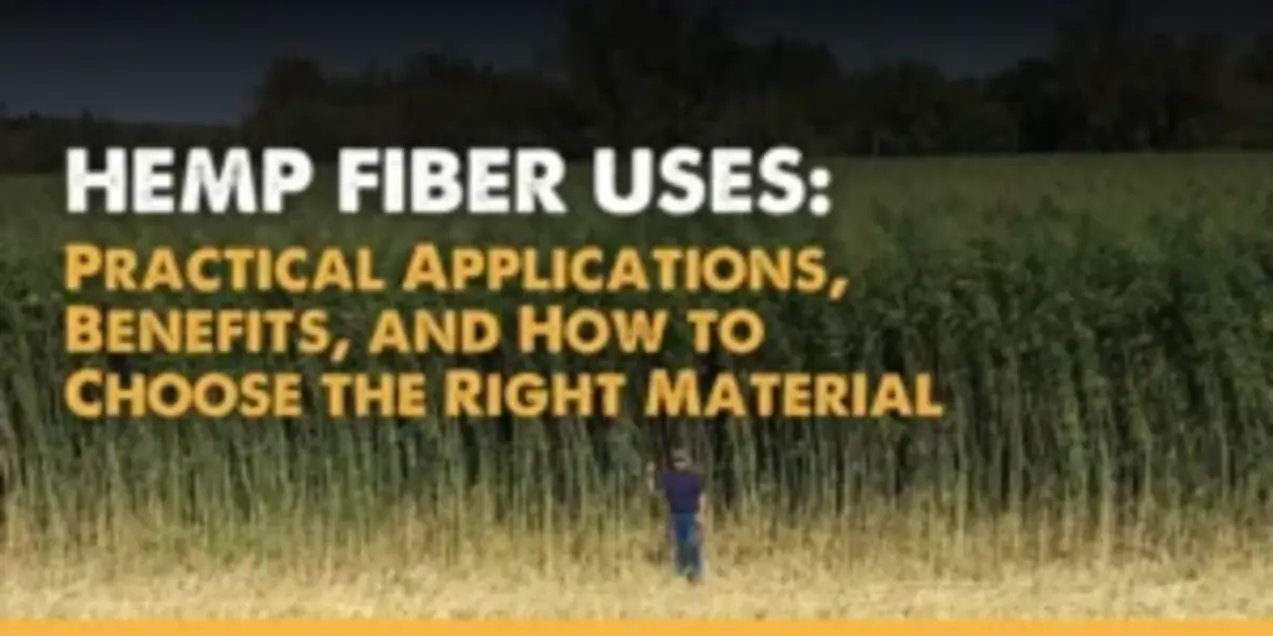
Source: bulkhempwarehouse
During visual and manual inspection, look for:
- consistency of fiber form across the sample;
- visible hurd, shive, bark, dust, leaf fragments, seed material, plastic, string, metal, or other foreign matter;
- clumps, hard bundles, excessive tangling, or poor opening;
- uneven color or signs of mixed material;
- mildew-like odor, evidence of moisture damage, or other storage concerns;
- unexpected residue, stickiness, or finish that could affect opening, carding, bonding, dyeing, or blending.
These checks are screening tools, not a substitute for validated laboratory testing. Still, they can quickly identify a mismatch between a sample described as clean textile fiber and one that is visibly closer to a lower-cleanliness feedstock.
Avoid approving a shipment from a polished small sample alone. A supplier sample may not represent the whole bale population. The contract should define how many packages will be sampled, how increments are combined, who performs the sampling, and what happens when results disagree.
Verify moisture with a stated method and condition
Moisture affects shipment weight, storage risk, fiber handling, and test comparability. A result without the test method, sampling date, sample condition, and basis of reporting is difficult to use.
The HFGA standard summary identifies ASTM D2495 as a moisture method for fiber using an oven-dry approach. Buyers should confirm the current method, edition, laboratory capability, and applicability to their material rather than assuming that a method named in a supplier document automatically answers every question. Ask the laboratory or supplier to state:
- the method used;
- how and when the lot was sampled;
- the reported moisture basis;
- the number of specimens or replicates;
- conditioning and storage conditions before testing;
- the lot ID connected to the result.
Set acceptance criteria in the purchase specification according to the mill’s process needs and storage controls. Do not invent a universal maximum for hemp. Suitable moisture depends on the material form, packaging, transit conditions, and planned conversion route.
Ask for length distribution, not only an average length
Fiber length and length uniformity can influence carding, drafting, blending, web formation, and yarn regularity. A single average can conceal a large short-fiber fraction or a broad distribution that causes processing variability.
The HFGA standard summary lists ASTM D1447 for length and length uniformity. Hemp buyers should use that reference carefully: a test method and instrument approach must be suitable for the particular hemp form, preparation method, and commercial decision being made. Research on hemp measurement notes that methods developed for other fiber types may need careful evaluation when used with hemp’s longer, more brittle bast fibers.
Request the complete result format, not merely a supplier statement that the material has “good length.” Useful reporting may include the method, sample preparation, measured length distribution, average or characteristic length values, and a measure of spread or uniformity. The important question is whether the data predict stable performance in your equipment.
Where possible, run a small mill trial before committing to a large order. Record yield, waste, opening behavior, carding performance, web or sliver regularity, breaks, and final-product performance. That trial is especially important when changing supplier, crop season, retting method, or degree of processing.
Treat conformity claims as evidence to review, not a blanket guarantee
A certificate can be useful when it identifies the exact lot, scope, grade, test results, date, verifier, and evidence reviewed. It is weaker when it is undated, refers only to a product family, omits the lot ID, or says simply that the supplier is “certified” or “compliant.”
The HFGA framework describes both direct lot declarations and recurring product conformance profiles. Either approach may help organize sourcing, but a buyer should still verify what was actually assessed for the lot being offered. A profile does not eliminate the need to confirm whether the delivered lot falls within the profile and whether its supporting verification is current.
For each claimed standard, certification, or conformity program, ask:
- What exact material and processing stage does the claim cover?
- Is the claim linked to this lot ID?
- Who issued or verified it, and on what date?
- What tests, documents, and samples supported the claim?
- What is excluded from the claim?
- Does the claim address environmental, organic, chemical-safety, or social requirements separately from physical feedstock quality?
Do not merge these categories. A cultivation-related claim does not automatically establish spinning suitability, and a finished-product chemical-safety claim does not document farm-to-bale traceability.
Build acceptance controls into the purchase order
The strongest verification system is contractual. Attach the textile feedstock specification to the purchase order and require that each shipment be identified by lot. Define the inspection window, sampling method, test methods, acceptable variation, documentation package, remedies, and who pays for retesting when results fail.
For repeat purchases, maintain a lot history. Compare supplier documents, incoming inspection results, mill-trial outcomes, yield, waste, and quality issues across harvest seasons and processing runs. This turns hemp fiber quality verification from a one-time document exercise into a sourcing record that can reveal which combinations of origin, retting, processing, and fiber form actually work in your operation.
The practical standard is simple: buy the documented lot you evaluated, not an undifferentiated promise about hemp fiber.
References
- LIST OF FIGURES. etd.ohiolink.edu. https://etd.ohiolink.edu/acprod/odb_etd/ws/send_file/send?accession=kent1755526478103583&disposition=inline
- Hemp-Sys, Quality control and integrated supply chain of hemp for .... eiha.org. https://eiha.org/media/attach/125/quality_control.pdf
- Industrial Hemp Bast Fiber and Hurd Phenotyping. ars.usda.gov. https://www.ars.usda.gov/research/project?accnNo=445203
- Textile, Yarn, Fiber and Zipper Testing Methods: FIBROGRAPH MEASUREMENT: ASTM D1447-89(1994)e1 Standard Test Method. textiletesting.blogspot.com. http://textiletesting.blogspot.com/2009/07/fibrograph-measurement-astm-d1447.html
- HFGA US Hemp Textile Standard. hfga.io. https://hfga.io/standards/us-hemp-textile-standard
- HFGA Standards. hfga.io. https://hfga.io/standards
- Hemp Fabric Properties: Fiber-Level Data and Comparisons. natuclothes.com. https://natuclothes.com/materials/hemp-fabric-properties
- Hemp Fibre Fineness & Length: A Practical OFDA Workflow - Robotic Vision. ofda.com. https://www.ofda.com/blog/hemp-fibre-fineness-length-ofda