How Should Hotels Choose Bed Linen Beyond GSM?
Table of Contents
Hotels should choose bed linen by specifying the performance needed after repeated commercial laundering, not by selecting the highest GSM, thread count, or cotton percentage on a label. The right product is the one that delivers a consistent guest-facing feel while fitting the property’s laundry capacity, bed dimensions, housekeeping workflow, and replacement budget.
A heavier towel or a higher-thread-count sheet can look like an upgrade during a supplier presentation. But it may also dry more slowly, occupy more washer and dryer capacity, shrink beyond the usable size, or become too costly to replace at scale. A practical hotel bed linen buying guide therefore starts with the operating environment and tests samples as a system: sheet, duvet cover, pillowcase, towel, laundry process, and expected service life.
Start with the guest promise and the laundry reality
Before comparing fabrics, define what the room category must communicate. A limited-service property may prioritize clean appearance, quick turnover, and dependable replacement availability. A resort or luxury property may accept more demanding care requirements to achieve a softer hand or more elevated presentation.
Then document the conditions the linen will actually face:
- How often each item is washed and dried
- Whether laundering is performed in-house or by a commercial linen service
- The wash temperatures, chemistry, extraction, and drying process used
- The number of linen sets held per bed or room
- The room types, mattress depths, duvet sizes, and pillow formats in use
- Whether housekeeping needs easy identification, rapid bed making, or color-coded inventory
This context turns a generic supplier specification into a usable purchase brief. Hospitality-focused guidance from DZEE Textiles emphasizes that sheets must withstand repeated industrial washing, drying, room turnover, and housekeeping handling. Those realities matter more than a headline number considered in isolation.
Treat GSM as weight, not a quality score
GSM means grams per square meter. It is useful because it describes fabric mass, but it does not independently establish absorbency, strength, softness, construction quality, or service life.
For towels, more GSM generally means more material per square meter. That may contribute to a fuller, denser initial feel, but it can also mean a heavier wet load and longer drying time. In a property with constrained dryer capacity or rapid linen turnover, that operational cost can outweigh the appeal of a heavier towel.
For sheets and duvet covers, GSM may help compare products with similar construction, but it cannot reveal the quality of the yarn, weave, finish, or sewing. Two fabrics of similar weight can feel and wear very differently.
The supplied hospitality discussion on Reddit specifically cautions buyers not to judge hotel towels only by GSM and notes that higher GSM has operational consequences. The available excerpt does not provide a full account of a particular property or outcome, but it reinforces the procurement principle: weight needs to be evaluated alongside laundry performance.
Specify sheet construction before thread count
Thread count can be a reference point, but it is not a complete indicator of hotel sheet quality. Construction and yarn quality affect how a fabric feels, breathes, looks, and survives repeated washing.
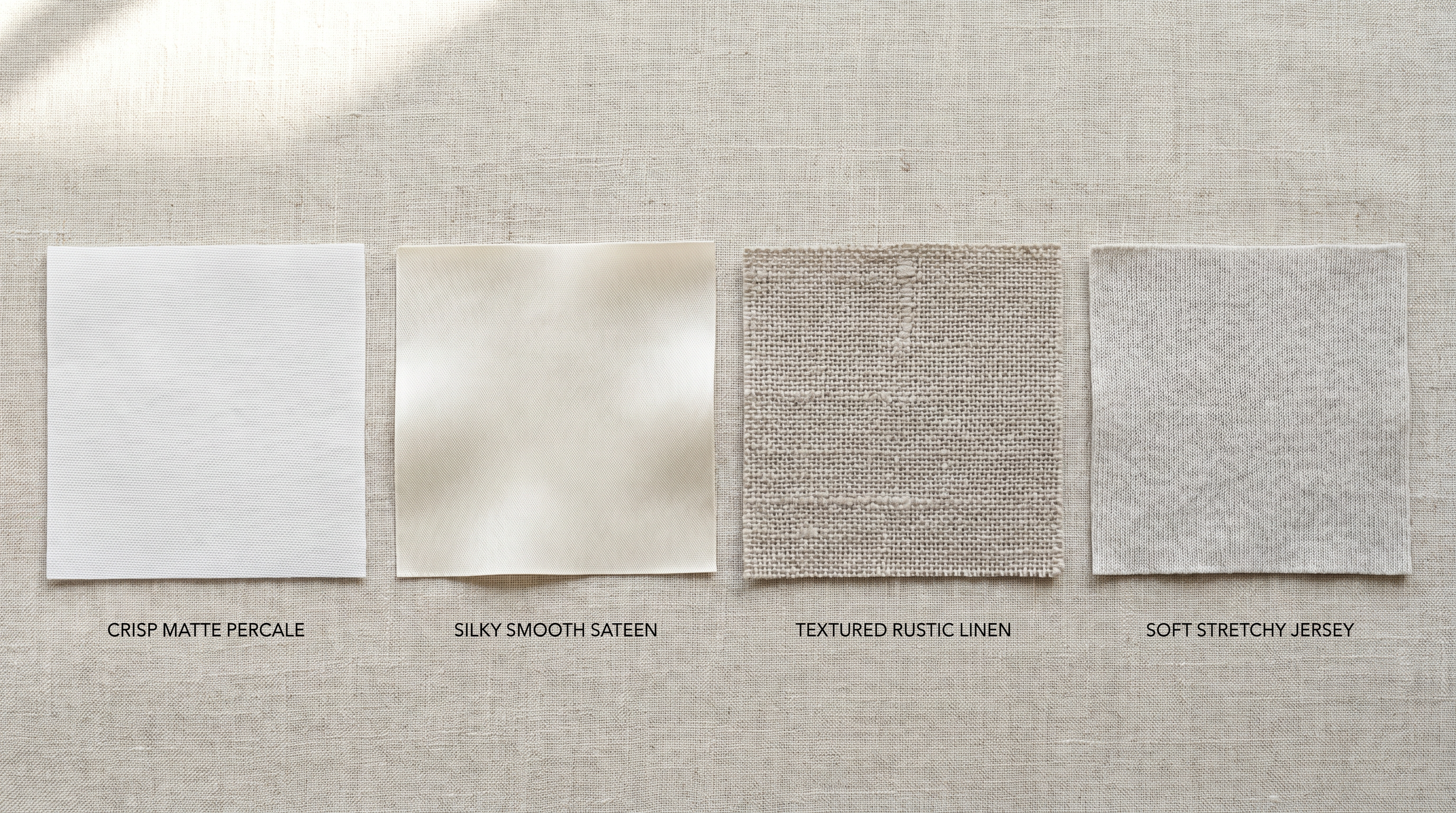
Choose a weave that suits the room experience
Source: library-cdn.storeclaw.ai
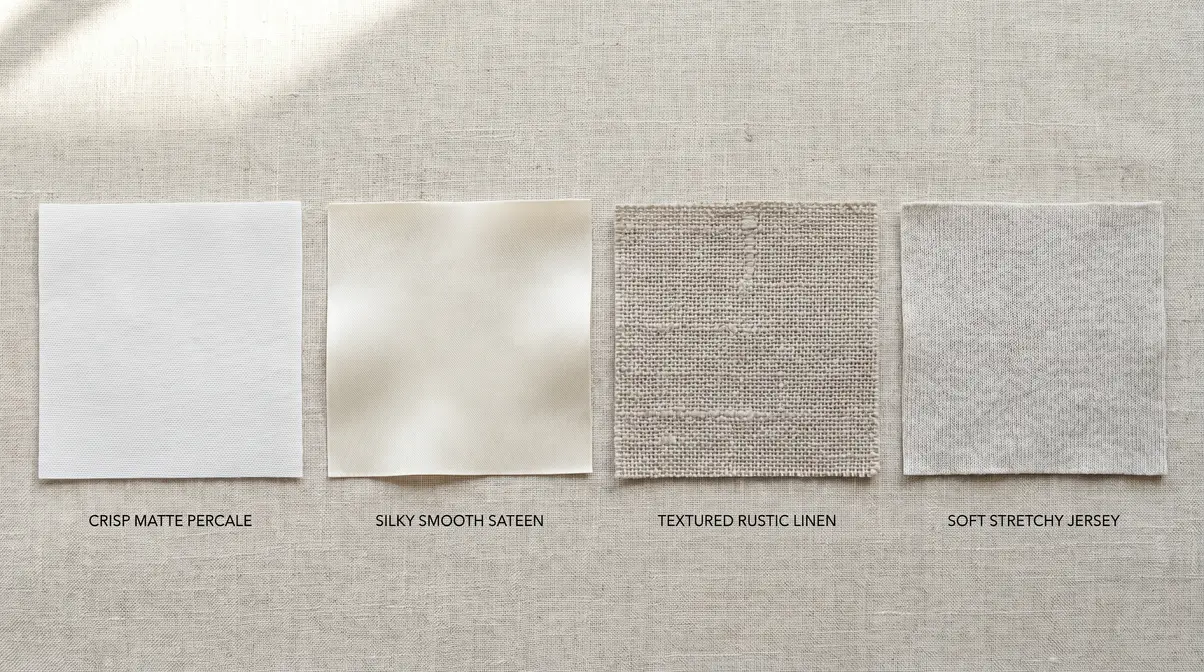
Percale has a plain-weave construction and is commonly selected for a crisp, breathable, matte-feeling bed. It is often a practical choice for properties that value a clean, tailored appearance and frequent laundering.
Sateen uses a weave structure that typically creates a smoother, more lustrous surface and a softer initial feel. It can support a more luxurious presentation, but procurement teams should assess how it performs after washing, including its tendency to show wrinkles, snagging, or surface wear under their actual conditions.
Neither weave is automatically superior. The choice should follow the desired hand feel, visual standard, laundry process, and replacement strategy.
Ask how the yarn was made and used
A bedding specification should identify more than fiber content. Ask suppliers about yarn type, yarn consistency, whether the fabric uses single or plied yarns, and how the yarn is incorporated into the fabric construction. Better yarn preparation and more consistent construction can support a more uniform appearance and reduce weak points, though the finished product still needs laundering trials.
“100% cotton” is also not a sufficient decision rule. Cotton can be comfortable and absorbent, but performance depends on the specific yarn, weave, finishing, fabric weight, and care process. Blended constructions may be considered where easier care, wrinkle control, or drying efficiency is important, provided the property evaluates their guest feel and long-term appearance rather than assuming a blend will solve every operational problem.
Supplier guidance from Sale Turkish Towels similarly notes that fiber quality, weave structure, and finishing can have more influence on bedding performance than thread count alone.
Measure dimensions after laundering, not only before delivery
A sheet that fits perfectly when new can become unsuitable after processing if shrinkage has not been allowed for. This is especially important for fitted sheets, duvet covers, pillowcases, and any item expected to align precisely with a bed or insert.
Build finished, post-laundering dimensions into the specification. For fitted sheets, include mattress width, length, depth, and the practical pocket requirement after shrinkage. For flat sheets and duvet covers, confirm that the finished size still provides sufficient tuck, drape, and coverage.
Also specify tolerance rules. A supplier should clearly state how dimensions are measured and whether the listed size applies before or after expected shrinkage. Otherwise, a buyer may receive technically compliant goods that become operationally unsuitable after a few wash cycles.
Useful fit checks include:
- Can one housekeeper make the bed without excessive pulling or rework?
- Does the fitted sheet remain secure on the deepest mattress in the property?
- Does the duvet cover still fit the insert after laundering?
- Are pillowcases compatible with all pillow types in circulation?
- Can teams distinguish sheet sizes quickly during sorting and stocking?
Evaluate wash durability with a realistic sample trial
The most valuable evidence comes from a controlled trial that follows the hotel’s normal laundry route. Request production-representative samples rather than relying only on a showroom swatch or one freshly opened unit.
Track the items through repeated wash and dry cycles consistent with normal operations. The purpose is not to claim a universal number of cycles; it is to compare candidate products under the same conditions.
Inspect for changes that matter in daily service:
- Shrinkage and fit loss
- Seam opening, loose hems, broken stitching, and label failure
- Pilling, snagging, thinning, or uneven surface wear
- Loss of whiteness or difficulty releasing stains
- Persistent wrinkles, twisting, or skewing
- Changes in softness, stiffness, absorbency, and appearance
- Excessive lint release or fiber shedding
Record the labor implications as well. A product that requires more time to fold, identify, iron, remake, or remove from circulation carries a cost even if its purchase price is lower.
Judge towels by the complete drying-and-absorbency trade-off
Hotel towel GSM is important, but it should be interpreted alongside loop construction, yarn quality, absorbency, drying behavior, edging, and wash durability. A dense towel can feel substantial in a guest’s hand yet create heavier wet loads and demand more drying energy and time. A lighter towel may move more efficiently through the laundry but may not deliver the desired guest perception.
The best choice depends on the property’s service model. Ask for samples and compare them after laundering for softness, moisture uptake, drying time within the existing process, linting, edge durability, and visual consistency. The hospitality guidance from Sale Turkish Towels makes the same central point: absorbency, construction, and laundering durability can be more important than GSM alone.
Do not overlook smaller towel categories. Washcloths, hand towels, bath mats, pool towels, spa towels, and cleaning textiles may have different needs and replacement patterns. Buying every item to the same weight target is rarely the most efficient approach.
Include sewing, finish, and identification in the specification
Construction details are easy to miss when reviewing fabric samples, but they often determine whether linen remains usable. Examine hems, seams, corner construction, reinforcement, labels, and closure systems on duvet covers.
For each product, clarify:
- Seam and hem quality expectations
- Whether corners or high-stress areas need reinforcement
- The type and placement of size labels or identification marks
- Closure design for duvet covers
- Color consistency requirements for white or colored programs
- Acceptable appearance after laundering
- Packaging, carton counts, and traceability by lot
Identification is operationally important. Clear size labeling can reduce sorting errors and prevent a king item from being sent to a queen room. If multiple properties, brands, or departments share a laundry operation, identification requirements should be addressed before purchase rather than improvised later.
Buy on cost per usable stay, not unit price alone
The cheapest case price can become expensive if items fail early, create housekeeping delays, or increase dryer bottlenecks. Conversely, the heaviest or most luxurious option may be excessive if it requires more inventory, energy, and labor than the guest experience warrants.
Estimate the total operating impact using questions such as:
- How many usable laundering cycles does the item reasonably deliver in this operation?
- How often will it need replacement because of damage, staining, shrinkage, or presentation failure?
- Does it slow washing, drying, folding, or bed making?
- Does it require more par stock because drying and turnaround take longer?
- Can the supplier reliably replenish the same construction and shade?
- Is the product appropriate for every room, or should premium rooms use a separate linen program?
A balanced sheet program in the range commonly used by hospitality properties may be more effective than pursuing maximum thread count. DZEE Textiles describes T-250 to T-300 sheets as a common commercial balance of comfort, breathability, durability, and laundering resistance, while noting that percale and sateen choices may differ by property type. This is useful market context, not a substitute for validating a specific product in your own laundry.
Turn the purchase into a performance specification
The strongest procurement documents describe desired results, not just material labels. Instead of requesting only “white 100% cotton, 300 thread count” or “bath towels, high GSM,” define the use case and the performance checks that matter.
For bed linen, specify the weave and hand-feel target, finished dimensions after laundering, acceptable shrinkage approach, construction details, visual appearance, and sample trial expectations. For towels, specify intended use, guest feel, absorbency expectations, wash durability, drying compatibility, and edging requirements.
Require approval samples from the proposed production construction, retain a signed reference sample, and check delivered goods against it. This gives the hotel a practical benchmark if future lots feel different, fit differently, or wear unexpectedly.
The best hospitality bedding specifications recognize that linens are working assets. GSM, thread count, and fiber labels are useful starting data—but construction, fit, repeated-wash performance, drying burden, and replacement behavior determine whether the linen program works in service.
References
- What Is the Ideal Thread Count for Hotel Bed Sheets? Hospitality Buying Guide. dzeeusa.com. https://dzeeusa.com/blog/what-is-the-ideal-thread-count-for-a-hotel-bedsheet
- Hotel Textile Standards: What Actually Matters. saleturkishtowels.com. https://saleturkishtowels.com/hotel-textile-standards-what-actually-matters
- What Hotels Should Look at Before Buying Bed Linen and .... reddit.com. https://www.reddit.com/r/hotels/comments/1wvzdr2/what_hotels_should_look_at_before_buying_bed
- GSM Hotel Towels: Meaning, Range, and Quality Guide. rmthospitality.com. https://rmthospitality.com/gsm-hotel-towels-meaning-range-quality
- What thread count and brand bed sheet do five star hotels .... quora.com. https://www.quora.com/What-thread-count-and-brand-bed-sheet-do-five-star-hotels-use
- 5-Star Hotel Towel: The Rigorous Technical Requirements .... mikhamex.com. https://mikhamex.com/technical-requirements-of-5-star-hotel-towel