Industrial Engineering Interview Questions for Apparel Manufacturing Jobs
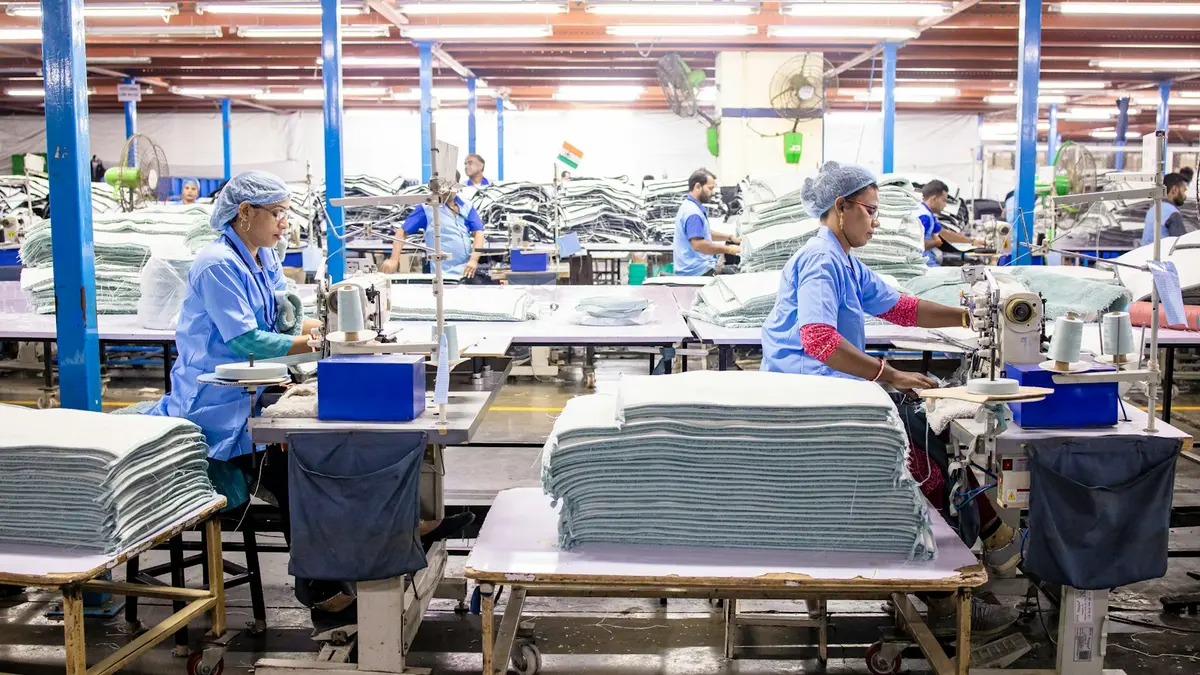
Table of Contents
Industrial Engineering Interviews in Apparel Manufacturing
Industrial engineering interview questions for the apparel industry often combine factory-management fundamentals with practical production knowledge. Candidates may be asked about planning, line coordination, productivity, work allocation, production control, communication and decision-making.
For garment manufacturing roles, interviewers may also assess how a candidate connects management principles with factory realities such as meeting delivery dates, balancing resources, controlling work in process, supporting supervisors and improving production flow. Use the questions below as a self-test, then review the answer key and relate each concept to an apparel production floor.
Core Skills for Apparel Industrial Engineers
Industrial engineers help coordinate and improve production activities in apparel factories. Their work can involve observing operations, supporting production planning, identifying bottlenecks, communicating with supervisors and helping teams use people, machines and materials effectively.

Source: Pexels
Strong candidates usually demonstrate time management, analytical problem-solving, clear interpersonal communication and leadership. They should be able to explain how they would approach issues such as delayed output, uneven operator loading, excessive work in process, quality-related disruptions or changing production priorities.
This practice material contains 40 multiple-choice questions. The questions focus mainly on management and planning theory, which can support interview preparation for entry-level and junior industrial engineering positions in apparel manufacturing.
Industrial Engineering Interview Practice Questions
Choose the best answer before checking the answer key. Some terminology can vary between management textbooks, so use the explanations as a guide to the underlying principle rather than as a substitute for workplace judgment.
Management Foundations and Classical Theories
1. How Is Management Defined?
A. Achieving results through the efforts of other people
B. Repairing equipment independently
C. Recording production only
D. Selling finished garments
2. Is Management an Art, a Science, or Both?
A. Only an art
B. Only a science
C. Both an art and a science
D. Neither
3. Who Led the Scientific Management Movement?
A. Elton Mayo
B. F. W. Taylor
C. Henri Fayol
D. Peter Drucker
4. Which Management Function Did Taylor Emphasize Least?
A. Work standardization
B. Task analysis
C. Directing people
D. Scientific selection
5. How Did Fayol Classify Production Activity?
A. Commercial activity
B. Technical activity
C. Security activity
D. Accounting activity
6. Which Functions Did Fayol Emphasize Most?
A. Planning and organizing
B. Advertising and selling
C. Purchasing and accounting
D. Security and maintenance
7. Who Originated the Human Relations Approach?
A. F. W. Taylor
B. Elton Mayo and associates
C. Henri Fayol alone
D. Max Weber
8. What Is the Effect of Division of Labour?
A. It usually improves specialization and efficiency
B. It eliminates the need for supervision
C. It removes all quality problems
D. It prevents coordination
9. What Does a Managerial System Include?
A. Top, middle and lower management levels
B. Only machine operators
C. Only external customers
D. Only accounting staff
10. Which Activities Are Not Management Functions?
A. Planning
B. Organizing
C. Controlling
D. Technology development
Management Levels, Functions and Employee Direction
11. Which Title Is Least Likely for the Top Executive?
A. Chief executive officer
B. Managing director
C. General manager
D. First-line supervisor
12. How Is Managerial Effectiveness Measured?
A. By the results achieved
B. By the number of hours spent at work
C. By the size of the office
D. By the number of reports written
13. Where Are Supervisory Technical Skills Most Needed?
A. In complex operating work close to the production floor
B. Only at board level
C. Only in marketing
D. Only outside the factory
14. Which Management Level Performs More Planning?
A. Top management
B. Machine operators only
C. Visitors to the factory
D. Customers
15. Which Function Covers Activity Grouping and Delegation?
A. Planning
B. Organizing
C. Controlling
D. Forecasting
16. What Does the Organizing Function Involve?
A. Creating a structure of duties and responsibilities
B. Inspecting every garment personally
C. Setting fabric prices
D. Replacing all production plans
17. When Must the Staffing Function Be Performed?
A. Only when a factory opens
B. Only during recruitment drives
C. In both new and established enterprises
D. Never by managers
18. Which Function Guides and Supervises Employees?
A. Directing
B. Forecasting
C. Auditing
D. Purchasing
19. What Is the First Management Function in Sequence?
A. Planning
B. Controlling
C. Staffing
D. Coordinating
20. What Is the Final Function in the Management Sequence?
A. Planning
B. Organizing
C. Controlling
D. Staffing
21. What Is Not an Element of Administration?
A. Planning
B. Organizing
C. Coordinating
D. Initiative
22. What Encourages Maximum Worker Effort?
A. Clear leadership, communication and commitment to goals
B. No performance feedback
C. Unclear work instructions
D. Isolation from the team
23. Which Activity Is Not a Basic Managerial Function?
A. Planning
B. Organizing
C. Directing
D. Recruiting
Planning, Forecasting and Objectives
24. What Is the Management Activity Focused on Future Events?
A. Planning
B. Controlling
C. Directing
D. Staffing
25. When Should Managerial Planning Take Place?
A. Before work begins and as conditions change
B. Only after production ends
C. Only when problems become severe
D. Never during normal operations
26. What Is the Correct Planning, Execution and Control Sequence?
A. Control, execution, planning
B. Planning, execution, control
C. Execution, planning, control
D. Execution, control, planning
27. What Is Forecasting?
A. An informed estimate of future conditions or events
B. A record of past attendance only
C. A final inspection activity
D. A method of machine repair
28. Which Forecasting Method Uses Expert Opinions?
A. Delphi method
B. Random inspection
C. Work sampling
D. Time study
29. Which Management Levels Perform Planning?
A. Top management only
B. Middle management only
C. Lower management only
D. All management levels
30. How Many Objectives Do Most Managers Handle?
A. One objective only
B. Multiple objectives
C. No objectives
D. Objectives only set by customers
31. What Does a Satisficing Objective Mean?
A. An acceptable objective achieved within practical constraints
B. The highest possible result regardless of cost
C. A goal with no deadline
D. A target unrelated to performance
Production Planning, Control and Decision-Making
32. What Does Production Planning and Control Do?
A. Schedules output and helps manage work in process and inventory
B. Performs only final packing
C. Replaces all line supervisors
D. Sets retail selling prices
33. How Can Sales Be Forecast?
A. Executive opinion, field input and sales information
B. By ignoring market information
C. By quality inspection alone
D. By machine maintenance records only
34. What Are the Four Elements of a Planning System?
A. Inputs, processes, outputs and feedback
B. Buyers, factories, stores and customers
C. Labour, fabric, trims and cartons
D. Plan, cut, sew and pack
35. What Characterizes Long-Range Planning?
A. It links objectives, strategies, assumptions, resources and programs
B. It addresses only today’s operator allocation
C. It excludes resource requirements
D. It avoids setting objectives
36. What Makes a Goal Statement Effective?
A. It is specific, measurable and time-bound
B. It is broad and impossible to assess
C. It has no time limit
D. It avoids responsibility
37. What Is the Correct Sequence of MBO Activities?
A. Define work, set objectives, implement, evaluate performance
B. Evaluate, implement, define work, set objectives
C. Implement, evaluate, define work, set objectives
D. Set objectives, evaluate, stop implementation
38. What Does Management by Objectives Imply?
A. Objectives are set with participation across relevant levels
B. Objectives are kept secret from employees
C. Only finance staff set all objectives
D. Performance is never reviewed
39. How Are Organizational Decisions Broadly Classified?
A. Strategic, administrative and operating decisions
B. Sewing, cutting and finishing decisions
C. Internal and external decisions only
D. Good and bad decisions only
40. What Type of Decisions Do Supervisors Mostly Make?
A. Operating decisions
B. National policy decisions
C. Long-term corporate acquisition decisions
D. Decisions unrelated to daily work
Answer Key
- A — Management achieves results through coordinated human effort.
- C — It requires knowledge as well as practical judgment.
- B — F. W. Taylor is closely associated with scientific management.
- C — Taylor gave comparatively less attention to directing and human relations.
- B — Fayol treated production as a technical activity.
- A — Planning and organizing were central in Fayol’s administrative approach.
- B — Elton Mayo and colleagues are associated with human relations research.
- A — Specialization can improve skill and efficiency when work is coordinated well.
- A — A managerial system includes different management levels.
- D — Technology development is important but not usually listed as a core management function.
- D — A first-line supervisor works close to operating employees.
- A — Results are the key indicator of effectiveness.
- A — Technical understanding is especially valuable in complex operational settings.
- A — Top managers devote relatively more attention to broad planning.
- B — Organizing includes grouping work and delegating authority.
- A — Organizing establishes duties, relationships and responsibility.
- C — Staffing continues as jobs and workforce needs change.
- A — Directing guides people toward organizational goals.
- A — Planning establishes intended actions before execution.
- C — Control compares results with plans and supports corrective action.
- D — Initiative is a management principle, not a standard administrative element.
- A — Employees need direction, communication and connection to meaningful goals.
- D — Recruiting supports staffing but is not normally one of the broad basic functions.
- A — Planning considers future conditions and actions.
- A — Planning should precede work and be revised when conditions change.
- B — Plan first, execute the work, then control results.
- A — Forecasting estimates possible future events using available information.
- A — The Delphi method gathers structured expert opinion.
- D — Planning occurs at top, middle and lower management levels.
- B — Managers normally pursue several related objectives.
- A — Satisficing means selecting an acceptable option under real constraints.
- A — Production planning and control aligns output, work flow and inventory with requirements.
- A — Sales forecasts can combine judgment, market input and current data.
- A — Planning systems use inputs, processes, outputs and feedback.
- A — Long-range planning connects goals, strategies, assumptions and resources.
- A — Effective goals provide measurable direction and a timeframe.
- A — MBO moves from role definition and objectives to implementation and review.
- A — MBO generally emphasizes agreed objectives and performance review.
- A — These are broad categories used in management decision classification.
- A — Supervisors primarily make day-to-day operating decisions.