How Does Linen Air Permeability Compare With Tencel Lyocell?
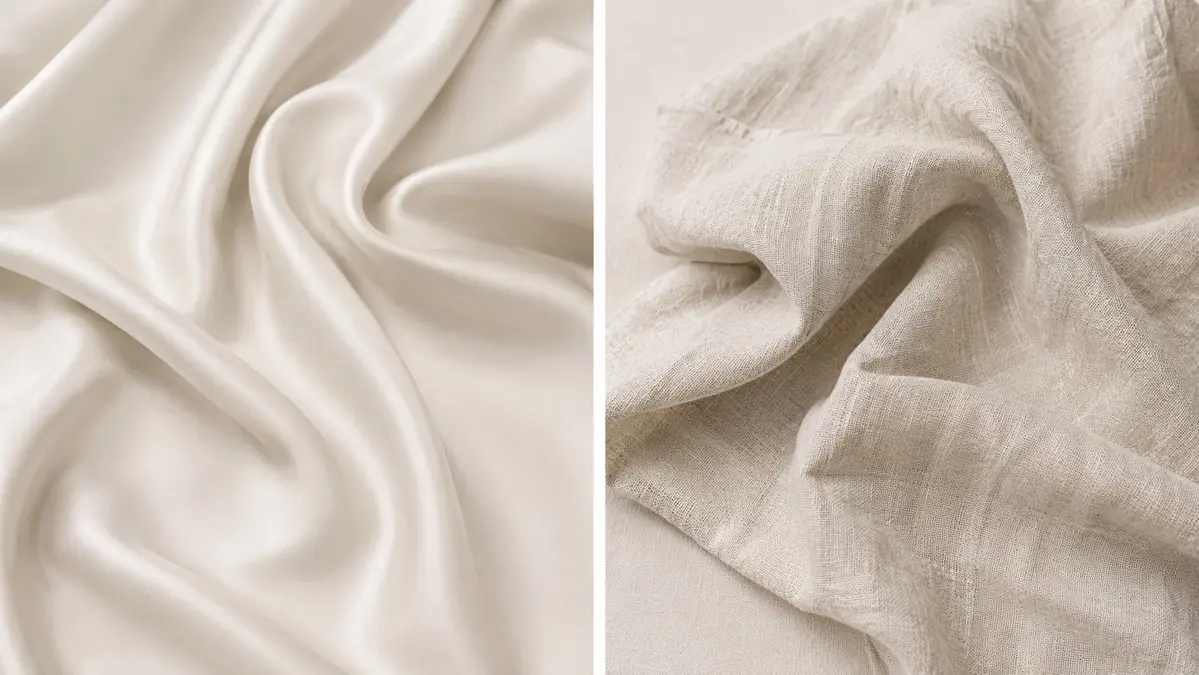
Table of Contents
For linen vs Tencel lyocell breathability, linen is often the safer choice when the priority is maximum direct airflow—provided it is a lightweight, relatively open woven fabric. Tencel™ Lyocell can also be very comfortable in heat, especially when sweat management, smoothness, and a soft drape matter most. But neither fiber has a universal air-permeability ranking that applies to every fabric.
The practical answer is to compare the actual fabric, not just “linen” with “lyocell.” A loose, lightweight linen shirt can pass much more air than a dense lyocell jersey. Conversely, a heavy or tightly woven linen may feel less ventilated than a lightweight lyocell woven fabric. Fabric construction, mass, finish, fit, and layering determine much of the result.
Air permeability is not the same as feeling cool
Air permeability measures how readily air passes through a fabric under specified test conditions. In clothing and bedding, higher air permeability generally helps body heat and humid air escape. It is an important part of ventilation, particularly in dry heat or whenever a breeze can move through the garment.
But a fabric can feel cool for other reasons:
- It may take up moisture from the skin effectively.
- It may allow moisture vapor to move outward.
- Its surface may feel cool and smooth at first contact.
- Its garment shape may hold fabric away from the skin.
- It may simply contain less material because it is lighter or thinner.
These properties overlap, but they are not interchangeable. A claim that a fabric “wicks moisture” does not prove it has high air permeability. Likewise, a fabric with high airflow is not automatically best at handling perspiration in humid weather.
This distinction matters because the label Tencel™ refers to branded lyocell fiber, while linen refers to fiber made from flax. Both are cellulosic materials, but fibers alone do not define the finished textile’s pore structure or clothing microclimate.
Why linen often feels airier
Linen is commonly made into plain-woven, warm-weather fabrics with visible texture and relatively open spacing between yarns. That common construction is a major reason linen has a reputation for crisp breathability and ventilation.
When a linen fabric is light in mass and not tightly packed, air can move through the spaces between yarns. A relaxed linen shirt, wide-leg trouser, or loose bedding weave can also create distance between the fabric and the body. That air space helps reduce the trapped heat and humidity next to skin.
However, “linen” does not guarantee an open fabric. A dense linen twill, a heavyweight upholstery-style linen, a lined linen garment, or a coated linen can restrict airflow substantially. The material may still have linen’s characteristic texture, but it may not deliver the airy sensation people expect from summer linen.
A source discussing summer comfort makes the same useful distinction: lightweight open-weave linen can provide excellent airflow, while dense linen constructions can restrict it. The source also notes that fabric architecture changes the result.
Why Tencel lyocell can still feel cool in warm weather
Lyocell is often valued for its smooth hand, fluid drape, and moisture interaction. In practical terms, a light lyocell fabric may feel less rough against the skin than linen and can be appealing when a wearer dislikes linen’s crisp, textured surface.
Its smoothness can affect subjective comfort. A fabric that slides easily and feels soft may seem less clingy or irritating when warm, even if it is not as open to airflow as a loose linen weave. Lyocell garments also often drape closer to the body, which can look elegant but may reduce the airy, breezy feeling of a boxier linen garment.
That does not make lyocell inherently warm. A lightweight, loosely constructed lyocell woven fabric can be a strong summer option. But a dense lyocell knit, a heavy sateen-like weave, or a close-fitting garment can hold more warmth and moisture near the body than its fiber description suggests.
The construction details that decide the comparison
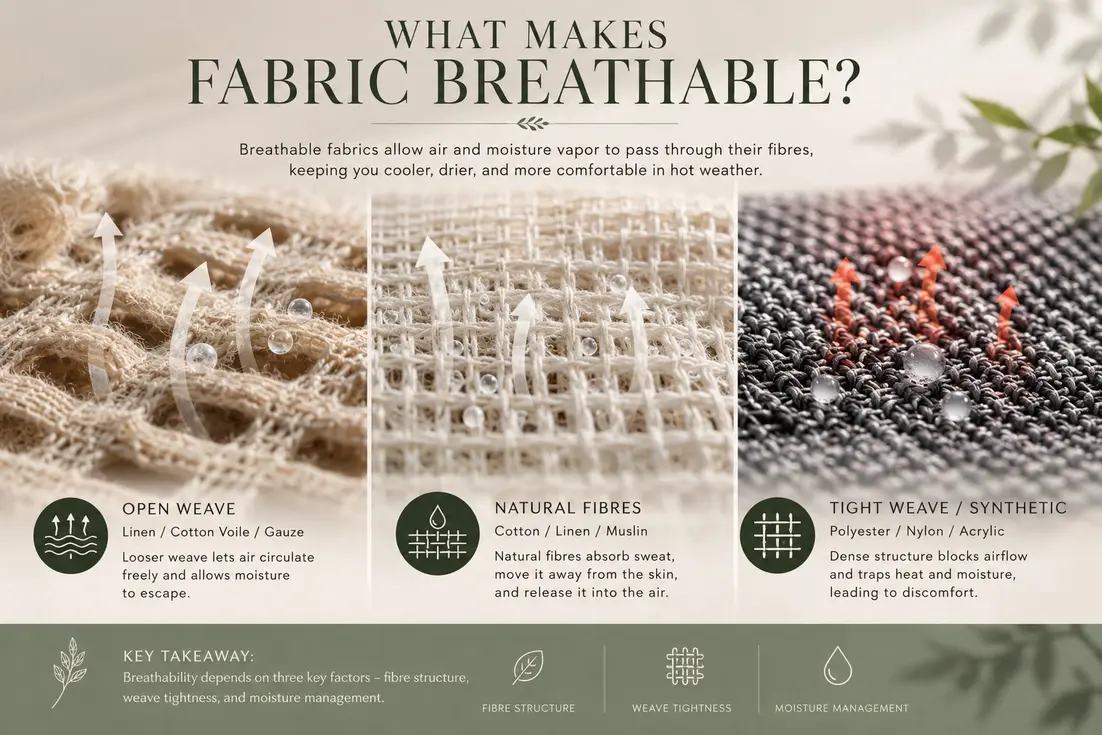
Source: cdn.shopify
If two products do not publish air-permeability test results, these details are more useful than broad claims about “breathable fibers.”
Weave or knit structure
Woven fabrics and knitted fabrics can behave very differently. An open plain weave usually allows more direct air movement than a compact, high-density weave. Knits can also be highly ventilated, but their loop structure, stitch density, and recovery affect the result.
For linen, an open plain weave is commonly associated with a breezy summer feel. For lyocell, a light woven construction may provide a more polished, flowing alternative. A dense jersey can be soft and comfortable, yet less ventilated than either of those options.
Fabric mass and thickness
GSM, or grams per square meter, describes fabric mass per area. It can help identify whether one fabric is likely to be lighter than another, but it is not a direct breathability test.
A low-GSM fabric often has less material between skin and air, which may help it feel lighter in heat. Still, a low-weight fabric can be tightly woven, while a somewhat heavier fabric can have an open construction. Consider GSM alongside visible density, thickness, and intended use.
Yarn size, twist, and density
Finer yarns can be packed closely together to make a smooth, dense fabric. Coarser yarns can also be arranged in an open weave. The number of yarns, their spacing, and their twist all affect the gaps through which air can pass.
This is why neither “fine and silky” nor “natural and textured” reliably predicts ventilation. The finished structure is what matters.
Finishes, coatings, and blends
Finishing can alter pore spaces, surface feel, stiffness, and moisture behavior. Resin finishes, coatings, heavy printing, lining, and laminated layers may reduce ventilation. Blending linen or lyocell with other fibers can also change the final fabric’s density, stretch, drape, and drying behavior.
When shopping, check whether a product is 100% linen or lyocell, a blend, lined, brushed, coated, or made with stretch yarns. These details can matter more than a marketing headline about cooling.
Clothing fit can outweigh small fabric differences
A loose linen shirt can outperform a close-fitting lyocell top for airflow simply because it lets air circulate around the body. At the same time, a very soft, light lyocell garment may feel better for someone who finds stiff linen uncomfortable or abrasive when sweating.
For hot-weather clothing, favor these features when ventilation is the goal:
- Relaxed rather than skin-tight fit
- Minimal lining and fewer heavy layers
- Lightweight fabric
- A visibly open or less compact construction
- Shorter sleeves, wider legs, or looser silhouettes where appropriate
For bedding, the same logic applies differently. The sheet’s smoothness, moisture response, weight, and weave influence comfort, while room temperature, humidity, mattress protectors, and duvet weight can have equally large effects.
Which should you choose?
Choose lightweight, open-weave linen if you want the most traditionally airy feel, prefer a textured surface, and wear clothing in very hot conditions where direct ventilation is valuable. Linen is especially compelling in loose shirts, dresses, skirts, trousers, and unlined layers.
Choose lightweight Tencel lyocell if you want a smoother surface, softer drape, and moisture-focused comfort without linen’s crisp texture and pronounced wrinkling. It can be an excellent choice for shirts, dresses, sleepwear, and sheets, as long as the construction is not dense or heavy.
For either fiber, do not assume that a product is cool because it is marketed as natural, plant-based, moisture-wicking, or breathable. Ask for fabric weight, weave or knit type, whether it is lined, and ideally air-permeability or moisture-vapor test data.
A Reddit user asking about this exact comparison noted difficulty reconciling broad claims about rayon-family fabrics and breathability. That uncertainty is justified: without knowing the specific construction and test method, a universal linen-versus-lyocell airflow claim is not evidence-based.
The most reliable rule is simple: for direct airflow, compare the openness and weight of the actual fabric; for all-day comfort, also consider moisture handling, surface feel, and garment fit.
References
- Tencel vs Linen: Understanding Two Different Approaches to Summer Comf – Airlayer™. airlayer.shop. https://www.airlayer.shop/blogs/founder-notes/tencel-vs-linen-understanding-two-different-approaches-to-summer-comfort
- Lyocell Fabric vs Linen: Effectiveness in Heat Retention. eureka.patsnap.com. https://eureka.patsnap.com/report-lyocell-fabric-vs-linen-effectiveness-in-heat-retention
- Linen vs TENCEL™ Lyocell: Comfort and Sustainability – OGLmove. oglmove.com. https://oglmove.com/blogs/knowledge/linen-vs-tencel%E2%84%A2-lyocell-sustainability-and-comfort-compared
- Linen vs Cotton vs Tencel: Which One Is Right for Your Body Type and C – NJ3ATELIER. nj3atelier.com. https://nj3atelier.com/blogs/fashion/linen-vs-cotton-vs-tencel-which-one-is-right-for-your-body-type-and-climate
- Tencel vs Cotton vs Bamboo vs Linen: Coolest?. arthcrafted.com. https://www.arthcrafted.com/blogs/monday-blues/tencel-vs-cotton-vs-bamboo-vs-linen-coolest
- What Is Lyocell? Fabric, Benefits, Care & Drawbacks. sensoire.com. https://sensoire.com/what-is-lyocell
- Air permeability of Tencel Lyocell vs Linen : r/textiles - Reddit. reddit.com. https://www.reddit.com/r/textiles/comments/149zckm/air_permeability_of_tencel_lyocell_vs_linen
- Best Bedding for Taiwan Humidity: Tencel vs Linen Moisture Control .... world.taobao.com. https://world.taobao.com/lang/en-us/shopping-guide/2036045816539381760.htm