Mannequins in the Fashion Industry: Types, Uses and Importance
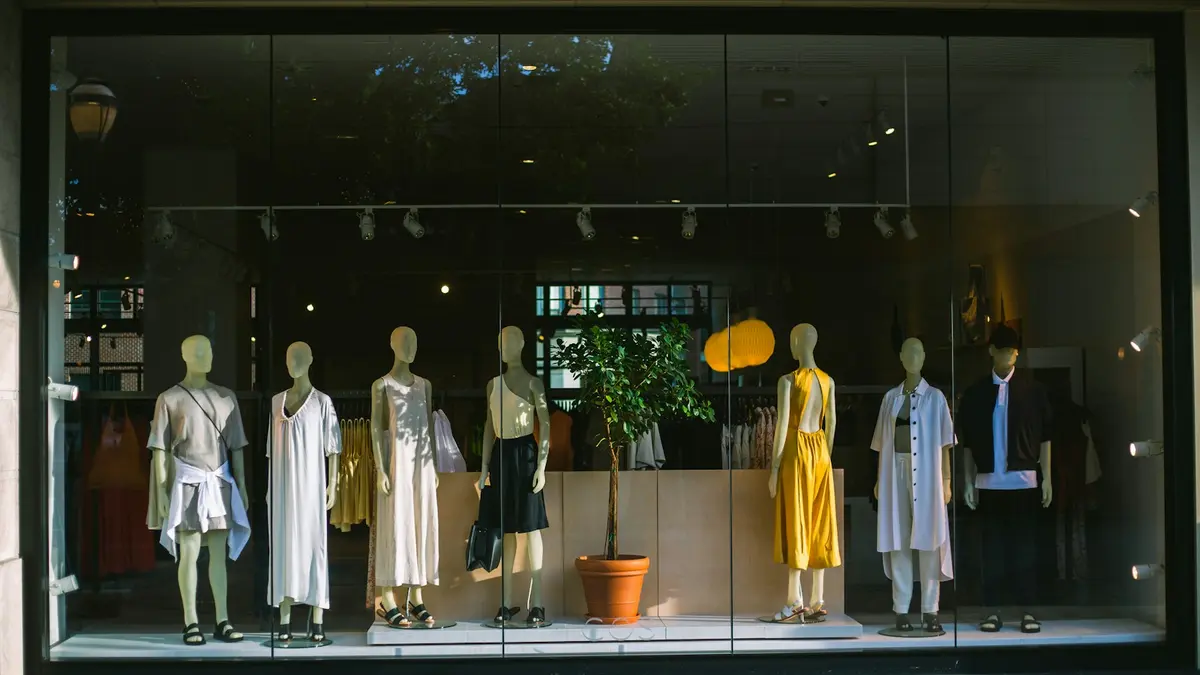
Table of Contents
Overview of Mannequins in Fashion
Mannequins are used throughout the fashion industry as display forms, styling tools and garment-evaluation aids. In retail, they present clothing in a worn context, helping shoppers see silhouette, proportion, layering and coordinated accessories. In product development, dress forms and fit mannequins provide a stable surface for reviewing samples before further fitting or production decisions are made.
The term mannequin can describe a full-body retail figure, a torso form, a head form or a technical dress form. Their design, pose, body proportions and finish vary according to the intended use. A fashion retailer may select an expressive full-body mannequin for a window display, while a pattern room may use a measurement-controlled dress form to assess a garment sample.
Mannequins therefore sit at the intersection of visual merchandising and apparel development. They help communicate a collection visually, support styling decisions and provide a repeatable reference point for evaluating garment appearance. However, a mannequin is not a substitute for all wearer trials: live fitting remains important when comfort, movement, body variation and real-use performance must be assessed.
What Is a Mannequin?
A mannequin is an artificial human-shaped form used to display apparel, accessories or related merchandise. Retail mannequins are commonly dressed in complete outfits to show customers how individual products can work together. They may appear in shop windows, at store entrances, on sales floors, in showrooms and at trade events.
By presenting garments on a three-dimensional body form, mannequins communicate information that may be less apparent on a hanger or folded display. They can show garment length, sleeve volume, neckline position, trouser break, layering possibilities and the relationship between apparel and accessories. A styled figure can also help express the intended mood of a collection, such as formal, casual, athletic, seasonal or occasion-based dressing.
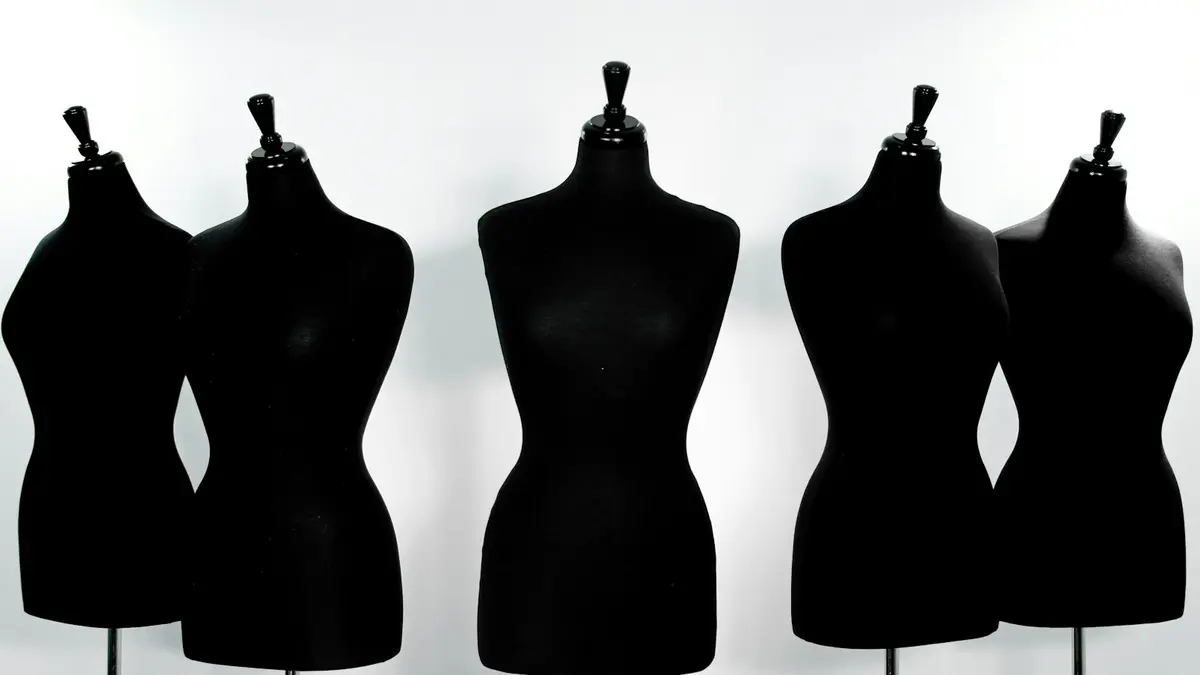
In apparel development, technical forms are used differently from decorative retail mannequins. Their dimensions are selected to represent a target size or body specification, allowing designers and product teams to inspect sample garments consistently. The accuracy and suitability of the form are especially important when it is used for fit-related decisions.
Types of Mannequins Used in Fashion Retail
Fashion retailers use several mannequin types, from highly stylized figures to compact torso forms. Selection depends on the merchandise category, brand identity, available floor space, display budget, fixture system and desired visual effect. Some stores use a consistent mannequin family throughout the space, while others combine full-body and partial forms for different product areas.
Source: Unsplash
Abstract Mannequins
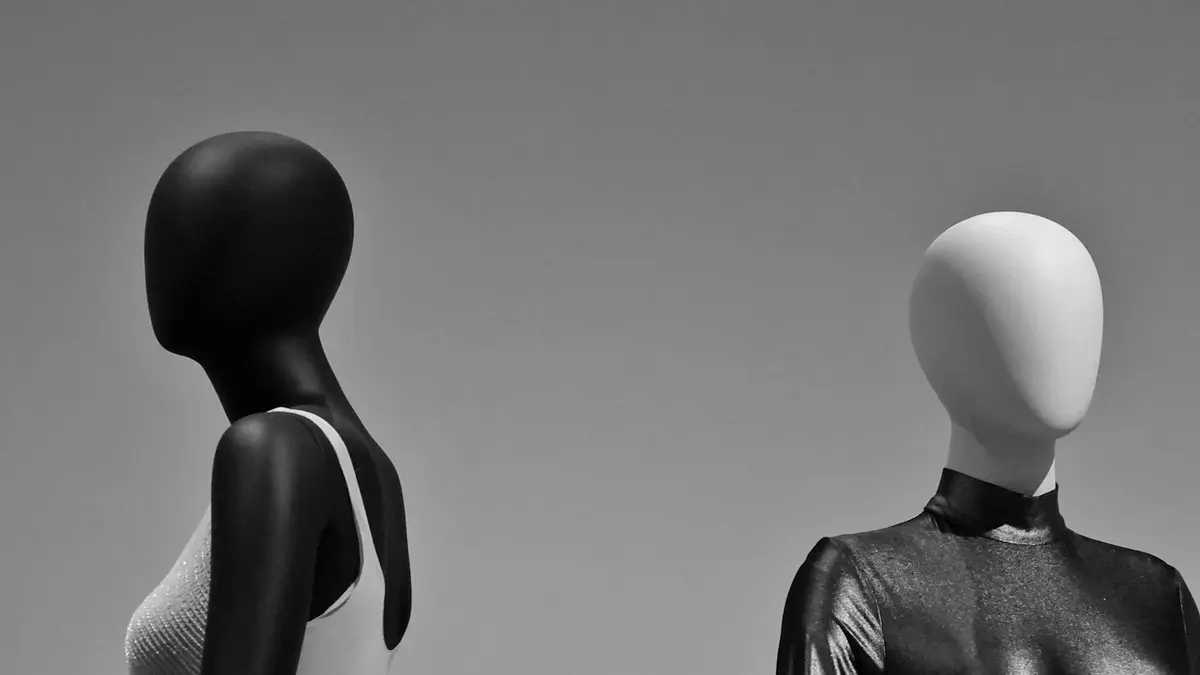
Abstract mannequins use simplified, stylized or artistic human forms rather than attempting to reproduce a lifelike person. Their heads may be featureless, geometric or elongated, and their surface finishes may be matte, glossy, metallic, colored or textured. Some include deliberately emphasized body contours, hands or poses to create a distinctive visual identity.
These forms are often useful where the retailer wants garments to be seen within a contemporary, conceptual or design-led environment. Because facial details are reduced or absent, shoppers may focus more directly on the clothing, color palette and overall silhouette. Abstract mannequins can also support visual consistency when a brand uses bold fixtures, sculptural interiors or highly curated displays.
Realistic Mannequins
Realistic mannequins are designed to resemble human figures more closely. They may have natural-looking proportions, modeled facial features, skin-toned finishes, painted details and optional wigs. Their pose may be relaxed, walking, seated or gesture-based, depending on the merchandising concept.
A realistic figure can support retail environments that aim for a more familiar or narrative presentation. For example, a retailer may use realistic mannequins to suggest how a collection could appear in everyday, professional, formal or lifestyle settings. The choice should remain consistent with the brand aesthetic, since highly detailed figures can draw attention away from garments if their styling, makeup or pose conflicts with the merchandise.
Headless Mannequins
Headless mannequins are full-body or partial-body forms without a head. They are widely used when the retailer wants clothing to remain the primary visual focus and does not need facial expression, hairstyle or head styling to communicate the display concept.
They can be practical in compact layouts or areas with lower ceiling heights because their overall vertical profile is reduced. Headless forms are available in different body types, finishes and poses, including standing, seated and action-oriented options. They may be used for menswear, womenswear, childrenswear, sportswear and accessories, depending on the product presentation required.
Torso Mannequins
Torso mannequins display the upper body only, typically including the shoulders, chest, waist and upper hip area. They are commonly used for shirts, blouses, jackets, knitwear, bras, swimwear, scarves and selected accessories. Their smaller size makes them useful for tables, shelving, wall fixtures and crowded merchandise zones.
Many torso forms are lightweight and easier to reposition than full-body mannequins. Some display systems use detachable arms, neck blocks, heads or bases, allowing retailers to adapt a form to different garments. Compatibility varies by manufacturer and model, so retailers should confirm available components before standardizing a mannequin system.
Lingerie and Sensual-Display Mannequins
Lingerie and sensual-display mannequins are designed for intimate apparel, swimwear, shapewear and, where appropriate, adult-oriented merchandise. Their form, stance and surface finish are selected to present close-fitting garments clearly while maintaining the visual direction of the store.
These mannequins may be full-body forms, bust forms, lower-torso forms or leg displays. Modular components can make dressing easier, particularly for garments with narrow openings, delicate straps or fitted construction. Retailers should select poses and styling that suit their customer base, brand values and the practical needs of the merchandise.
Why Mannequins Matter in Fashion Retail
Mannequins are central visual-merchandising tools because they turn individual products into a complete, visible outfit. A window or in-store display can introduce featured garments, demonstrate styling combinations and provide a quick visual entry point before a shopper handles the merchandise or speaks with a sales associate.
Source: Unsplash
They are particularly useful for showing products that benefit from body context. Tailored jackets, dresses, outerwear, activewear and layered looks can appear very different when displayed on a figure rather than on a rail. A mannequin also gives merchandisers a controlled way to direct attention toward seasonal launches, key color stories, coordinated accessories or specific product categories.
Assessing Garment Size and Fit
A mannequin with dimensions relevant to the intended garment size can support an initial review of fit and proportion. It enables teams to see whether a garment sits at the expected shoulder point, waistline, hip level or hem length. It can also help identify obvious issues such as imbalance, twisting, uneven placement or inadequate ease.
This type of assessment is preliminary. A static form cannot fully replicate human posture, movement, soft-tissue variation, comfort perception or the effects of different body shapes. For this reason, apparel teams commonly combine form evaluation with fittings on live models or wearers when the product and development stage require it.
Reviewing Fit, Drape and Design Appearance
Designers, sample rooms and garment manufacturers use forms to examine how fabric behaves on the body. They may assess drape, grain alignment, seam balance, pocket placement, collar shape, sleeve hang and the relationship between garment components. These reviews are especially valuable when comparing design intent with the appearance of a physical sample.
The form should be appropriate for the target measurement specification. A sample assessed on an unsuitable form may appear acceptable even when it does not match the intended wearer profile. When product ranges cover multiple sizes or different fit blocks, teams may need several forms to review proportion changes across the range.
Considering Body Shape in Garment Evaluation
Garment fit depends on more than a single labeled size. Relationships among chest, waist, hip, shoulder and torso measurements affect how a garment sits on the body. A form that represents only one proportion may not reveal all fit risks across the intended customer population.
Retail and styling discussions often use descriptive categories such as hourglass, pear, apple, rectangle, triangle or inverted triangle. These terms can help communicate broad proportion patterns, but they are not universal fit standards and should not replace measurement-based product development. Technical evaluation should rely on the brand’s approved size chart, fit block, grading rules and wearer-testing process.
Inspecting Garment Construction and Samples
Mannequins and dress forms provide a stable platform for inspecting garment samples during development. Teams can check construction details such as seam placement, dart direction, panel alignment, closures, collar construction, sleeve setting, lining behavior and decorative trim placement.
Using a form with suitable measurements helps product teams distinguish between a construction issue and a mismatch between the garment and the evaluation form. The review may lead to pattern adjustments, sewing-method changes, specification updates or additional fitting stages before bulk production.
Advantages of Using Mannequins
Mannequins act as nonverbal visual sales aids. They allow shoppers to view apparel as an outfit rather than as isolated items, making it easier to understand how garments, footwear, bags, jewelry and other accessories may be combined. This is useful in self-service environments as well as in stores where sales associates provide styling support.
They also help retailers create visual stories. A grouped display can suggest a season, activity, occasion or lifestyle theme through pose, garment selection, color coordination and surrounding props. For example, one display may present workwear layering, while another may focus on travel clothing, eveningwear or athletic apparel.
From an operational perspective, mannequins can keep a styled look visible throughout the day without requiring a person to model the outfit. They can supplement staff-led presentation, but their commercial effect depends on factors such as product appeal, pricing, store traffic, lighting, display maintenance and the overall customer experience. It is not appropriate to assume that a mannequin alone will directly increase sales.
Future Directions for Mannequin-Based Displays
Physical mannequins remain relevant because they provide a tangible, three-dimensional way to present clothing in retail spaces. Future display approaches are likely to combine these established forms with digital product visualization, interactive store fixtures and online merchandising tools.
Digital photography, 360-degree garment views and virtual visualization can help customers examine apparel from multiple angles outside normal store hours. These tools may complement physical displays by extending product presentation to e-commerce, social media and digital catalogues. Their usefulness depends on image quality, accurate styling, clear size information and realistic representation of color and fabric behavior.
Three-dimensional visualization and virtual garment technologies may also support design review and retail presentation. Adoption will vary by company size, budget, workflow and technical capability. Physical forms will continue to have practical value where teams need to drape, pin, inspect, dress or display actual garments.
References and Further Reading
For publication, supporting material should be drawn from verifiable books, trade resources, apparel-development texts and reliable retail-display sources. Bibliographic details, edition information and online accessibility should be checked before references are added to the final article.