How Should Brands Evaluate Mycelium Textile Samples Before Sourcing?
Table of Contents
Brands should evaluate mycelium-based textile materials as complete constructions rather than as a single bio-based ingredient. Before approving a supplier, assess whether a sample has the usable dimensions, appearance, durability, finishing chemistry, cost, and production availability required for one specific product—not merely whether it looks like leather.
This is especially important in mycelium textile sourcing because materials sold as mycelium leather can differ substantially in thickness, backing, coating, surface finish, and production maturity. A promising small swatch may be appropriate for a decorative panel or limited-edition accessory but unsuitable for a bag strap, shoe upper, seating surface, or product that will flex repeatedly.
Start with the end use, not the sustainability story
Write a short use-case brief before requesting samples. Include the product component, expected use conditions, desired appearance, required size, seam or edge treatment, and target retail price. This turns an interesting material conversation into a sourcing decision.
For example, a mycelium material intended for a wallet face has a different risk profile from one used for a tote-bag strap. A strap must tolerate repeated bending, tension, edge wear, hardware contact, and likely abrasion against clothing. Upholstery and automotive applications may require yet another level of consistency and durability.
Ask the supplier which uses it actively recommends for the exact finished construction you are considering. Do not assume that a material promoted for accessories is automatically suitable for every accessory component.
A useful first question is: “What product applications has this specific thickness, backing, and finish been developed for?” Follow it with: “Which applications do you not recommend?” A supplier that identifies limits is often more useful than one offering broad, unqualified claims.
Evaluate the sample as a material system
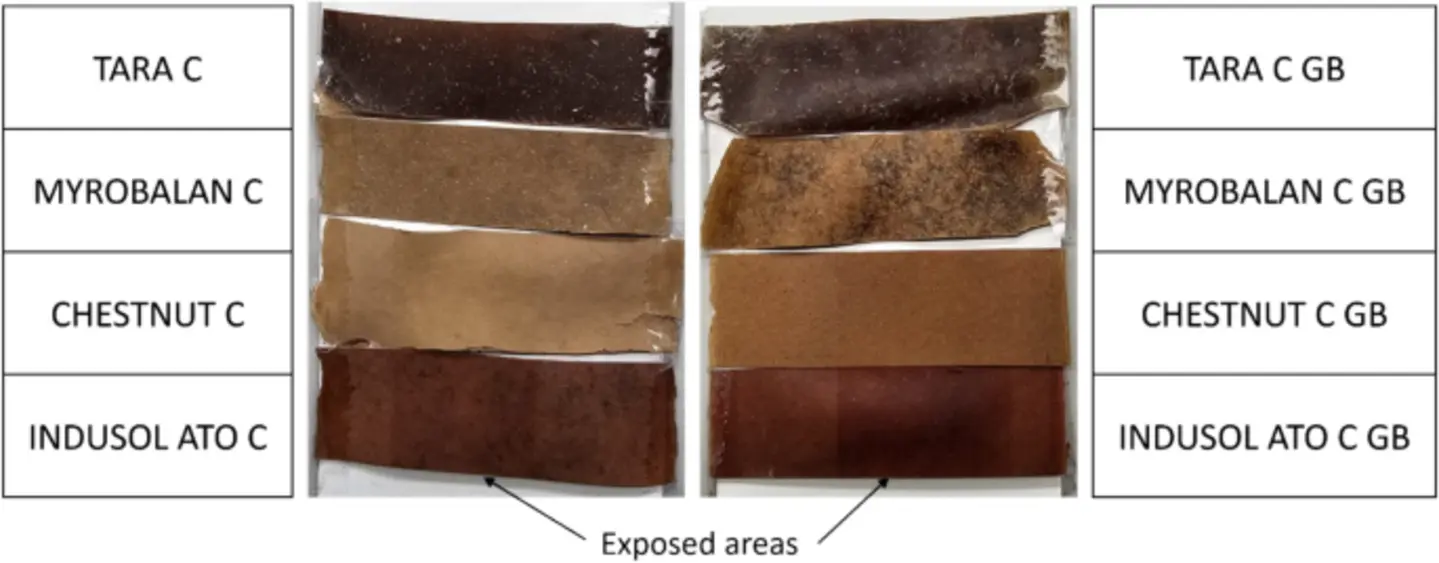
A finished mycelium leather alternative may include a mycelium-derived layer plus textile reinforcement, adhesive, pigment, protective topcoat, or polymeric finish. Those elements can determine much of the final material’s hand, stretch, abrasion resistance, water response, cleanability, and end-of-life options.
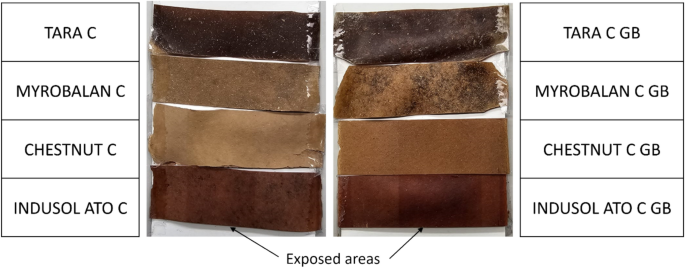
Source: media.springernature
Request a material specification that separates the construction into layers. At minimum, ask for:
- the material composition of the visible surface
- the backing or reinforcement type and fiber content
- binders, adhesives, and coatings used in the finished material
- whether polyurethane, acrylic, silicone, or other polymeric components are present
- colorants and surface treatments, where the supplier can disclose them
- thickness range and how much it may vary within and between production lots
- the intended care and cleaning method
This is not a reason to reject every material containing a synthetic component. A coating or backing may be necessary for the required performance. The sourcing issue is whether the brand understands the tradeoff and represents the product accurately. A material can be partly bio-based and still rely on polymeric finishing chemistry.
A discussion on r/textiles illustrates why this question matters. One user considering a mycelium-based tote strap said they were concerned about finishing chemicals and described a supplier whose tannery partner used a small amount of PU in finishes. This is an individual account, not evidence that all mycelium materials use PU, but it is a sensible prompt to request construction-level disclosure before making environmental claims.
Check usable dimensions and material yield
Do not evaluate sample size only as a presentation issue. It affects design freedom, material waste, cutting yield, prototype cost, and eventual unit economics.
Ask for the standard sheet dimensions, the largest dimensions currently available, and whether dimensions differ between development samples and production orders. Then map those dimensions against your pattern pieces. A sample that works for a card holder may not produce a single uninterrupted bag panel or strap.
Also ask whether the supplier sells the material by sheet, hide-equivalent area, roll, or another unit. Clarify whether quoted dimensions are nominal or guaranteed usable dimensions. Edge irregularity, visual variation, defects, and areas that cannot be cut for visible product panels can materially change yield.
Make a simple cutting plan using your actual components. Record:
- usable area after margins and defects
- number of components produced per sheet
- whether directional texture affects cutting layout
- whether matching color or grain across components is possible
- scrap generated per product
A material with a higher price per area can sometimes be viable if it has more consistent usable yield. Conversely, an apparently affordable sample may create high waste if panel sizes, edge quality, or color variation limit cutting efficiency.
Ask for evidence behind durability claims
Mycelium material durability should be evaluated against the stresses of the final product. Supplier demonstrations and marketing language can be useful starting points, but they are not substitutes for application-specific performance information.
Ask which tests were performed on the exact construction offered to you, including the backing and finish. Request the test method used, the date, the laboratory or internal testing status, the result, and the tested sample condition. If the supplier cannot share full reports, ask for a clear written summary of what was tested and what the result means for the intended application.
For many leather-like applications, relevant areas of inquiry include abrasion, repeated flexing, tear resistance, tensile behavior, surface adhesion, color transfer, staining, moisture exposure, and resistance around folded or sewn edges. The right priorities depend on the product. A fashion clutch may prioritize surface appearance and flexing; an everyday backpack may place greater emphasis on abrasion, load-bearing areas, and hardware contact.
Inspect the sample physically, but recognize the limits of informal handling. Bend it repeatedly at likely fold lines. Examine the grain for whitening, cracking, delamination, or loss of finish. Rub light and dark fabrics against it to look for visible color transfer. Check whether the backing separates at a cut edge. These observations can identify questions for the supplier, but they do not replace controlled testing.
If the material passes initial review, make a functional prototype before committing to production. Use the actual seam allowance, reinforcement, hardware, adhesives, and edge treatment planned for the product. Many failures occur at interfaces rather than in the flat material itself.
Review repairability and product-care implications
A durable product is not necessarily repairable, and a repairable product is not necessarily easy to care for. Ask whether the surface can be cleaned, refinished, patched, recolored, or professionally repaired. Determine whether heat, solvents, abrasion, oils, or common cleaners could damage the finish.
This matters for customer service as much as sustainability. If a product cannot be repaired or cleaned without damaging the coating, the brand should avoid making broad longevity claims. Ask the supplier for recommended care language and confirm whether it applies to the specific color and finish under consideration.
Qualify commercial readiness separately from sample quality
A beautiful sample does not confirm scalable supply. Mycelium-based materials are still navigating challenges around capacity, consistency, cost, and supply-chain maturity. Industry sources also describe commercialization as uneven: some materials have appeared in luxury applications while broader volume economics and reliable capacity remain constraints.
Ask suppliers for direct answers on:
- minimum order quantity for development and production
- price basis, currency, and whether pricing changes by finish or volume
- development lead time and bulk-production lead time
- available production capacity and capacity reserved for existing customers
- expected batch-to-batch variation in color, thickness, texture, and hand
- reorder conditions and whether the same construction will remain available
- quality-control process, defect policy, and replacement terms
- geographic origin of cultivation, finishing, and conversion
Avoid treating an indicative sample price as a production price. Costs may change when a supplier must produce custom color, larger formats, specialized backing, or a finish tailored to your product.
A staged commitment can reduce risk: begin with samples, then functional prototypes, then a small pilot run before placing a larger order. This approach also lets the brand evaluate manufacturing behavior such as cutting, stitching, skiving, embossing, bonding, and edge finishing.
Substantiate sustainability claims with specific language
“Mycelium” does not automatically mean plastic-free, biodegradable in every environment, low-impact in every category, or preferable to every other material. The environmental profile depends on feedstocks, energy, coatings, backing, chemicals, transport, manufacturing yield, product life, and disposal route.
Ask what sustainability evidence the supplier can provide for the exact material. Useful documentation may cover bio-based content, composition, manufacturing inputs, restricted-substance information, chemical management, and end-of-life limitations. If evidence applies only to an unfinished mycelium substrate, do not extend it automatically to the coated and backed production material.
Use claim language that matches the evidence. For example, if a supplier can document that a material contains mycelium-derived content and a textile backing, say that. Do not market it as fully biodegradable or plastic-free unless the complete finished construction supports that statement.
Make approval conditional, not emotional
Create a written approval sheet for each candidate sample. Score it against the criteria that matter to your product: appearance, usable yield, manufacturability, construction disclosure, performance evidence, repairability, price, minimum order, lead time, and claims support.
The strongest sourcing choice may not be the sample that feels most novel. It is the one whose documented construction, demonstrated suitability, commercial terms, and sustainability evidence align with what your brand can reliably make and honestly communicate. For early-stage mycelium materials, that often means choosing a narrower application, validating it through prototypes, and keeping a qualified alternative material available until supply and performance are proven in production.
References
- 3 questions that disqualify 80% of mycelium suppliers - YouTube. youtube.com. https://www.youtube.com/watch?v=OdOBTtIYVTk
- Mycelium Leather Market Share & Forecast to 2033. persistencemarketresearch.com. https://www.persistencemarketresearch.com/market-research/mycelium-leather-market.asp
- Mycelium Leather Specifications and Production Details - LinkedIn. linkedin.com. https://www.linkedin.com/posts/junext-biotechnology_mycelium-biomaterials-sustainablefashion-activity-7503397974786637824-hxZe
- Mycelium Leather and Lab-Grown Fabric Commercialization 2026 | YXX Fabric. yxxfabric.com. https://yxxfabric.com/insights/biofabrication-mycelium-lab-grown-fabric-2026
- Beyond Cotton: The Lab-Grown Materials Shaping the Future of Fashion. sumas.ch. https://sumas.ch/blog/beyond-cotton-lab-grown-materials-shaping-the-future-of-fashion
- [PDF] Mycelium Textile Upholstering: Scaling strategies for bio-leather .... acsa-arch.org. https://www.acsa-arch.org/proceedings/Annual%20Meeting%20Proceedings/ACSA.AM.113/ACSA.AM.113.27.pdf
- Mycelium-based biotextile: a Muush’s creation | Tocco.Earth. tocco.earth. https://tocco.earth/article/mycelium-based-biotextile-muush
- Mycelium Leather Market Size, Growth & Forecast 2032. credenceresearch.com. https://www.credenceresearch.com/report/mycelium-leather-market