Why Do Brands Blend Natural Fibers With Polyester?
Table of Contents
Brands blend natural fibers with polyester because a blend can be designed to balance comfort and natural texture with easier care, shape retention, durability, and lower material cost. A cotton or linen garment containing polyester is not automatically misleading or low quality. The useful question is whether the fiber mix delivers a benefit that matters for the garment’s intended use—and whether the marketing is clear about what shoppers are getting.
Natural fiber polyester blends are common because no single fiber is ideal for every product. Cotton is valued for softness, absorbency, and comfort. Linen is known for breathability, a dry textured feel, and a distinctive relaxed appearance. Polyester contributes strength, resilience, quick drying, and resistance to shrinking and wrinkling. Combining them is a practical compromise, not a universal upgrade.
A Reddit discussion asking why so many brands add polyester to cotton or linen reflects a reasonable shopper concern: a natural-fiber name can create a more premium impression even when the finished garment contains a substantial synthetic portion. That concern is worth keeping in mind, but polyester can also have a real functional purpose. The label percentage, fabric construction, garment type, and price together provide more useful information than the presence of polyester alone.
What polyester changes in a natural-fiber fabric
Polyester is a durable synthetic fiber that generally holds its shape well and absorbs little water compared with cotton or linen. In a blend, those characteristics can change how the fabric behaves during production, daily wear, and laundering.
A brand may add polyester to a natural fiber fabric to improve:
- Wrinkle resistance. Cotton and especially linen can crease readily. Polyester’s resilience can help a garment look smoother after sitting, packing, or washing.
- Shape retention. Polyester can reduce the tendency of a garment to shrink, stretch out, or lose its original form over repeated laundering.
- Durability. Polyester is strong and resistant to abrasion, which can be useful in everyday shirts, uniforms, workwear, bedding, and frequently worn casual clothes.
- Drying time. Because polyester takes up relatively little water, a blend often dries faster than an all-cotton or all-linen fabric.
- Color retention and printability. Polyester can support durable, vivid color in some applications and is widely used in printed apparel.
- Production consistency. Blends can help manufacturers create fabrics with repeatable weight, appearance, and handling characteristics at scale.
Those advantages do not mean that more polyester is always better. A higher polyester percentage generally makes a fabric behave less like its natural-fiber component. It may feel less breathable, have a smoother or more synthetic hand, and be more likely to retain odor than a comparable fabric with more cotton or linen.
Why cotton-polyester blends are so common
A cotton polyester blend is one of the most familiar examples of fiber blending because the two fibers offset some of each other’s limitations. Cotton contributes a softer, more breathable, more absorbent feel than pure polyester. Polyester adds durability, wrinkle resistance, and easier laundering than pure cotton.
This makes the blend especially useful for products that need to withstand frequent washing and regular wear. T-shirts, sweatshirts, school uniforms, work shirts, hospitality textiles, and bed linens often use cotton-polyester constructions for that reason.
The ratio matters. A fabric with more cotton will usually feel closer to cotton and may be more comfortable in warm conditions, but it can still wrinkle and shrink more than a polyester-rich version. A polyester-rich blend generally emphasizes easy care, durability, and shape retention, while giving up some of the breathability and natural feel shoppers may expect from cotton.
That is why a 50/50 fabric and a 65/35 fabric should not be treated as interchangeable simply because both are described as cotton-polyester. The percentages are part of the product specification, not small print to ignore.
Why linen-polyester blends exist
Linen is admired for its cool feel, visible texture, and relaxed drape, but pure linen wrinkles easily. For some shoppers, those creases are part of linen’s appeal. For others—particularly people buying travel clothing, office apparel, uniforms, or easy-care summer separates—they are a drawback.
A linen polyester blend can retain some of linen’s texture and airy character while reducing wrinkling, helping the garment hold its shape, and making it easier to wash and dry. Polyester may also make a linen-based fabric more resistant to abrasion in areas that see frequent friction, such as collars, cuffs, and seats.
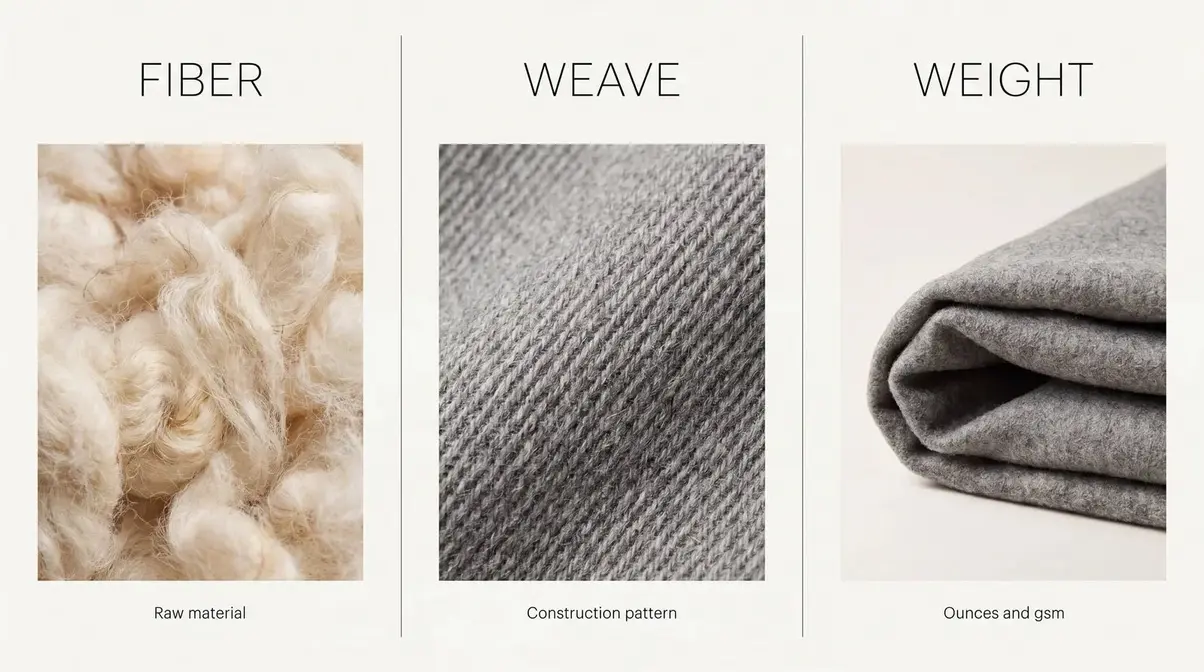
Source: sartoro
The trade-off is important: a polyester-linen garment is not the same as pure linen. It may wrinkle less, but it may also have less of linen’s crispness, absorbency, and distinctive feel. A shopper who specifically wants the full character of linen may prefer a high-linen fabric. A shopper who wants a linen look with less maintenance may reasonably prefer the blend.
Blending is also a cost decision
Performance is not the only reason brands blend fibers. Polyester can cost less than some natural fibers, and replacing part of a cotton, linen, wool, or silk content with polyester can lower material costs. For a brand, that may make an item more affordable, improve margins, or allow a particular look to be produced at a larger scale.
Cost management is not inherently deceptive. A lower-priced linen-polyester shirt may be a sensible option if its composition is plainly disclosed and its price reflects the blend. The problem arises when branding heavily emphasizes a natural fiber while the fiber-content label reveals that it is a minor component, or when vague terms such as “linen feel” obscure what the garment actually contains.
A product can be both commercially motivated and useful. The shopper’s task is to decide whether the trade-off is worthwhile for the price and intended use.
Polyester does not simply add benefits
Fiber blend performance always involves compromises. Polyester may improve wrinkle resistance and durability, but it can reduce the natural fiber’s breathability and moisture absorption. In warm or humid conditions, that difference may matter more than it does in a jacket, sweatshirt, or uniform.
Polyester apparel can also retain odors more readily than natural-fiber clothing. High heat can be a concern as well, since synthetic fibers can be damaged by excessive ironing or drying temperatures. Care instructions should therefore be followed rather than assuming a blend can be treated exactly like all-cotton or all-linen clothing.
Environmental trade-offs are another consideration. Polyester is a synthetic polymer, and mixed-fiber garments can be harder to recycle than products made from one fiber type. Recycled polyester may reduce reliance on virgin synthetic input, but adding it to a natural fiber does not eliminate the end-of-life challenge created by a blend.
How to tell whether a blend serves you
Start with the fiber-content label, then match it to how you expect to use the garment.
A natural-fiber polyester blend may be a good choice when you want an everyday item that is easy to wash, dries relatively quickly, resists wrinkles, and holds up to frequent wear. It can be particularly practical for travel clothing, uniforms, casual shirts, bedding, and garments that need dependable shape retention.
A higher natural-fiber content may be preferable when breathability, absorbency, softness, a traditional linen texture, or a fully natural feel is your main priority. This can matter most in hot-weather clothing, sleepwear, or garments worn directly against sensitive skin.
Look beyond the headline material name. “Cotton shirt” or “linen dress” can describe an important fiber in the fabric, but the percentage tells you how much of it is present. Also consider the fabric weight, knit or weave, lining, finish, garment shape, and care instructions. A well-designed blend can outperform a poorly made pure-fiber garment for a particular purpose, while a vague blend label can still be a sign to look more closely.
Ultimately, the best choice is not “natural good, polyester bad” or the reverse. It is whether the composition honestly matches the garment’s price, marketing, care demands, and the way you plan to wear it.
References
- Why do so many brands blend natural fibers with polyester?. reddit.com. https://www.reddit.com/r/textiles/comments/1sjszq6/why_do_so_many_brands_blend_natural_fibers_with
- Cotton-Polyester vs. Linen-Blend: Which Plant Fiber Blend Truly Works for You? - Moda Material. modamaterial.com. https://modamaterial.com/plant-fiber-blends-cotton-polyester-linen
- Cotton Polyester Blend Explained: Pros, Cons, Applications. merchize.com. https://merchize.com/cotton-polyester-blend
- Sustainable Fabric Blends Explained: What Shoppers Should Know | Wove. woveapp.com. https://woveapp.com/blog/sustainable-fabric-blends-explained
- Polyester vs. Cotton: All you need to know in 2026 | Printful. printful.com. https://www.printful.com/blog/guide-to-cotton-polyester-and-blended-fabrics
- Cotton Blends – Sustainable Fashion. sustainfashion.info. https://sustainfashion.info/cotton-blends
- What Are the Rules for Blending Fabrics Like Cotton, Wool, and Polyester? - Moda Material. modamaterial.com. https://modamaterial.com/blending-fabrics-cotton-wool-polyester
- Cotton-Polyester Blend Fabric: Properties, Uses, And .... ninghow.com. https://ninghow.com/blog/cotton-polyester-blend-fabric