What Does OEKO-TEX Standard 100 Actually Certify?
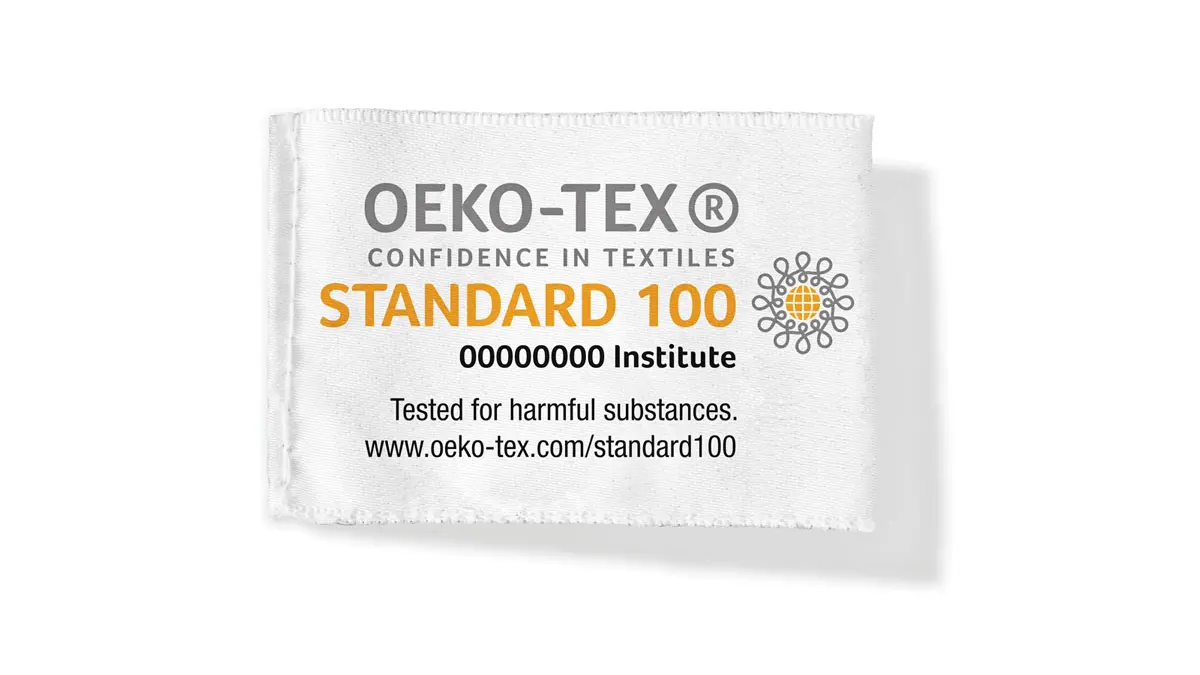
Table of Contents
OEKO-TEX® STANDARD 100 certifies that a specified textile article, material, accessory, or textile-related product has been tested for substances that could be harmful to human health and meets the standard’s applicable requirements. It is a product-safety certification focused on harmful-substance testing—not a blanket claim that a product is chemical-free, organic, sustainable, recycled, or ethically made.
That distinction is the key to the OEKO-TEX Standard 100 meaning. A valid claim can be valuable, especially for products worn close to the skin or used by babies. But buyers should treat it as evidence about the certified product’s chemical-safety scope, then separately assess any environmental, organic, labor, or performance claims.
What STANDARD 100 covers
STANDARD 100 uses laboratory testing for harmful substances in textiles and related materials. The requirements are based on the article’s intended use: the more intensive the skin contact and the more sensitive the user, the stricter the human-ecology requirements must be. OEKO-TEX’s official overview describes four product classes.
- Product Class I: Articles for babies and children up to 36 months. This class has the strictest requirements.
- Product Class II: Articles intended for direct skin contact, such as many garments and bed linen.
- Product Class III: Articles with little or no direct skin contact.
- Product Class IV: Furnishing and decorative materials.
The product class matters. A claim that a furnishing textile is certified to Class IV does not make it equivalent to an article certified for babies under Class I. Likewise, a Class II fabric may be relevant for an adult T-shirt but does not automatically establish the appropriate claim for babywear.
For a finished textile product, the certification is not meant to be a claim about only one attractive ingredient. According to Hohenstein’s STANDARD 100 FAQ, a finished good must have its product and components or inputs tested to support the claim. That can include materials and components such as the fabric, sewing thread, buttons, and zippers where applicable.
Source: cdn.sanity
What it does not certify
The most common mistake is turning a safety label into a broad sustainability label. STANDARD 100 does not, by itself, prove any of the following:
- Organic fiber content. A STANDARD 100-certified cotton item is not necessarily organic cotton. A certified polyester item is still polyester.
- Recycled content or responsible material sourcing. Those are separate material-origin and chain-of-custody questions.
- Low environmental impact across production. Product testing does not measure a factory’s total water use, energy use, wastewater performance, or carbon footprint.
- Social compliance or fair labor conditions. The certification does not on its own audit wages, working hours, worker representation, or broader labor practices.
- Chemical-free status. Textiles are made with chemicals at many stages. The standard addresses specified harmful substances and limits in the certified article; it does not promise the absence of all chemicals.
- Freedom from every allergy or skin reaction. A person can react to fibers, finishes, dyes, friction, heat, detergents, or individual sensitivities even when a textile meets a harmful-substance standard.
If the buying goal is an organic textile, ask for evidence specific to organic content, such as GOTS certification where applicable. If the goal is broader responsible production, look for evidence covering facility and supply-chain practices. Hohenstein notes that STANDARD 100 is not an eco or sustainability claim, while OEKO-TEX’s MADE IN GREEN label incorporates STANDARD 100 alongside additional production-focused requirements.
Does a certification number without a visible product label prove the claim?
Not automatically—but it can be a legitimate starting point for verification.
A discussion linked from the research behind this article asked whether a product advertised as OEKO-TEX certified could be legitimate when the website showed a certification number but the physical product did not display the label. That question reflects a sensible buyer concern: a number is useful only if it is current and applies to the exact item being offered, not merely to a supplier, factory, fabric roll, or similar-looking product. The discussion itself is not proof of any particular seller’s claim.
For business buyers, Hohenstein advises that a product label alone is not sufficient proof. Buyers should request the valid certificate, confirm that the label number and certification body correspond to the certificate, and make sure the product is included in the certificate scope.
In other words, absence of a hangtag or sewn-in consumer label is not conclusive evidence of a false claim. However, a seller should be able to provide documentation that connects the claim to the exact product.
How to verify an OEKO-TEX certification number
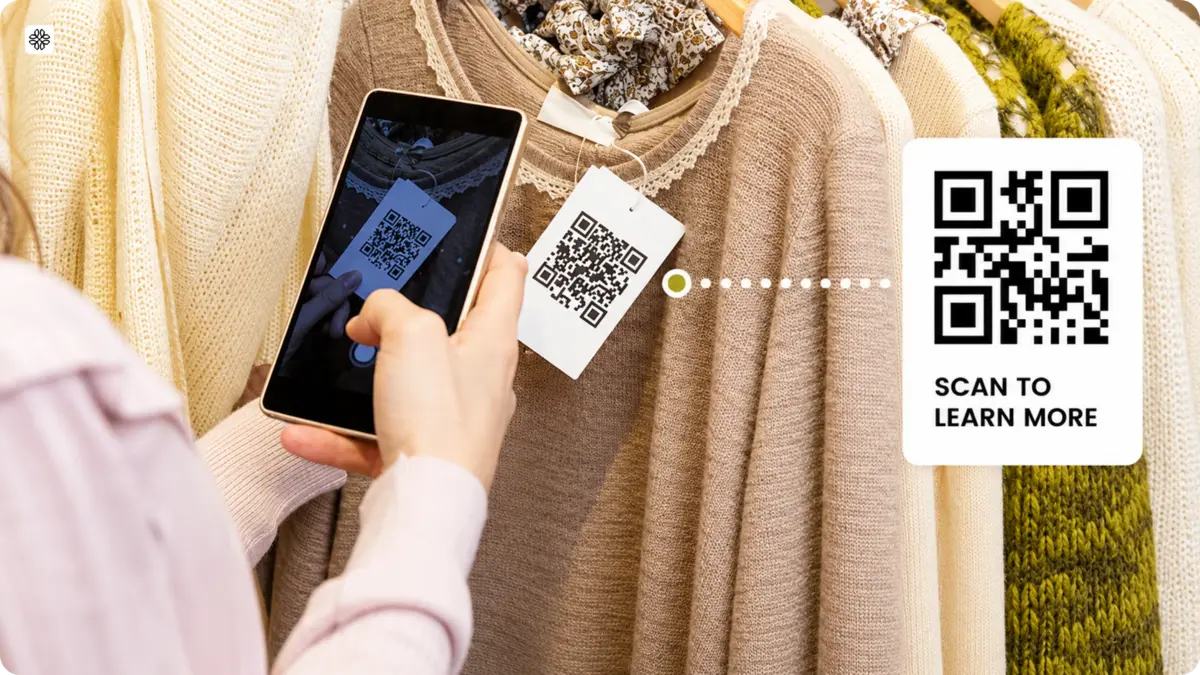
Use the official OEKO-TEX Label Check rather than relying only on a logo displayed in a product listing. OEKO-TEX says buyers can scan the QR code on a label or enter the certificate number to check the certified product.
When reviewing the result, compare it carefully with the item you intend to buy.
1. Confirm the standard
Make sure the record refers specifically to STANDARD 100, not another OEKO-TEX program. OEKO-TEX has multiple labels and certifications with different scopes. A claim about a facility or chemical input is not the same as a finished-product STANDARD 100 certification.
2. Match the certificate scope to the product
Read the product description in the verification result or certificate. Does it cover the relevant article type, material, construction, and processed state? A certificate for undyed fabric, for example, should not be casually assumed to cover a finished, printed garment unless the scope supports that conclusion.
3. Check the product class
The product class should fit the product’s intended use. This is especially important for baby products, underwear, bedding, and items worn directly against skin.
4. Check that the certificate is current
STANDARD 100 certificates are time-limited and must be renewed. A number that once referred to a valid certificate is not enough if the current status has lapsed. Check validity at the time of purchase or delivery, not just when a supplier first shared the number.
5. Ask about additions made after certification
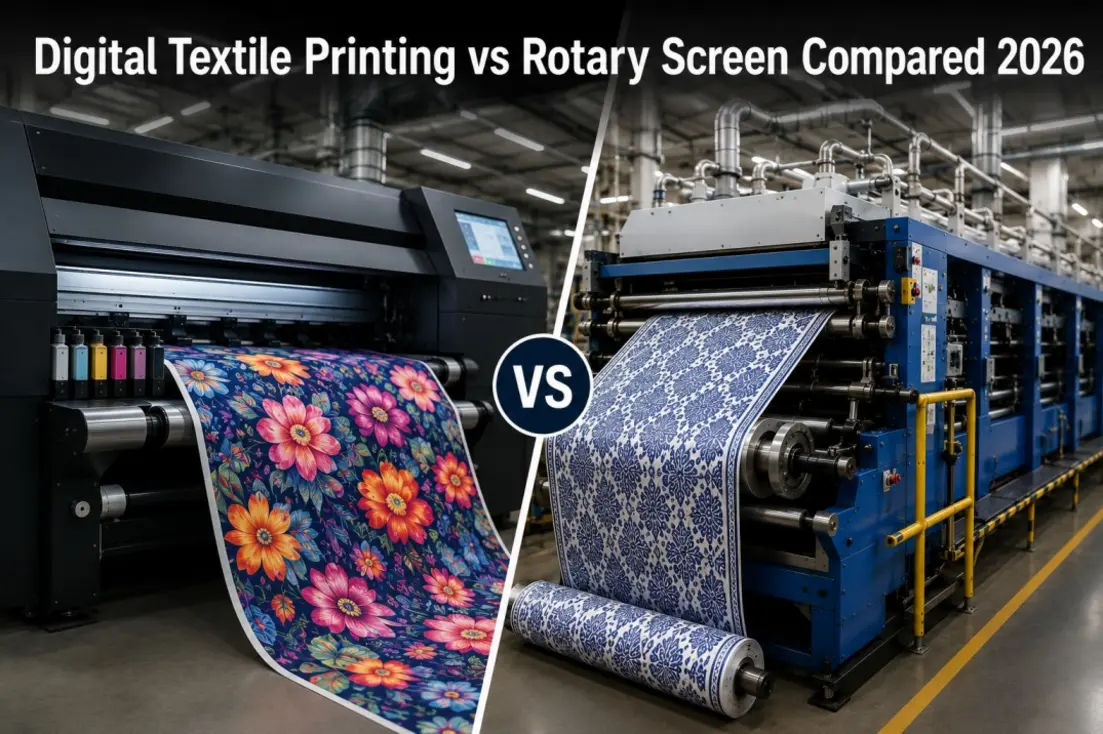
Printed graphics, coatings, embroidery, embellishments, replacement trims, or other later changes can affect whether the finished item remains within the documented scope. If a claim matters to your purchasing decision, ask whether those additions are included in the certification.
A practical way to read a product claim
A precise claim sounds like: “This finished garment is certified to OEKO-TEX STANDARD 100, Product Class II, under certificate number [number].” It gives a buyer something specific to verify.
A weak claim sounds like: “Made with OEKO-TEX fabric,” “OEKO-TEX materials,” or simply “non-toxic,” with no scope, certificate number, or current documentation. The fabric may genuinely have been certified, but that does not necessarily establish certification for the completed item.
STANDARD 100 is worth taking seriously within its boundaries. It provides a structured, independently administered way to evaluate harmful-substance risks in a defined textile product. The strongest buying decision comes from matching that evidence to the claim you actually need: product safety, organic origin, environmental performance, social responsibility, or a combination of them.
References
- Oeko-Tex Standard 100: what the label really guarantees · TKNP. tknp.io. https://tknp.io/en/resources/oeko-tex-standard-100
- OEKO-TEX STANDARD 100: Meaning, Scope & Limits | Siluxe. siluxe.fr. https://siluxe.fr/blogs/journal/oeko-tex-standard-100-meaning-scope
- What Is OEKO-TEX Certification? STANDARD 100 Guide. gogonano.com. https://www.gogonano.com/oeko-tex-safe-and-sustainable-textiles?lang=en
- Your Guide to the OEKO-TEX® Certification – State of Matter Apparel. stateofmatterapparel.com. https://stateofmatterapparel.com/blogs/som-blog/your-guide-to-the-oeko-tex%C2%AE-certification
- OEKO-TEX Standard 100: Complete Guide for Brands (2027). portugalclothingfactory.com. https://www.portugalclothingfactory.com/blog/oeko-tex-standard-100-guide
- Designers & Homeowners: Verify OEKO-TEX Fabric Claims in Two Minutes. workroom-wisdom-and-fabric-finds.ghost.io. https://workroom-wisdom-and-fabric-finds.ghost.io/oeko-tex-fabric-meaning
- OEKO-TEX® STANDARD 100 FAQ. hohenstein.us. https://www.hohenstein.us/en-us/oeko-tex/output-control/standard-100/faq
- OEKO-TEX® STANDARD 100. oeko-tex.com. https://www.oeko-tex.com/en/our-standards/oeko-tex-standard-100