How Can You Prevent New Clothes From Bleeding Dye in the Wash?

Table of Contents
New clothes are most likely to bleed dye during their first few washes, especially dark denim, black knits, and highly saturated red, blue, purple, or orange garments. To prevent color bleed in laundry, read the care label, keep the new item away from whites and pale colors at first, wash it in cold water on an appropriate gentle cycle, and avoid overloading the machine.
You do not necessarily need to run a full-sized load for one or two new garments. A small load of similarly dark items is a practical alternative, provided every item is colorfast enough to risk washing together. The important rule is not load size by itself; it is avoiding contact between a possible dye shedder and clothes that could be visibly stained by color transfer.
Start with the care label, not the color alone
A garment’s care label should determine the maximum safe washing method. Follow its temperature, cycle, detergent, and drying instructions even when you are trying to control dye release. Some items are labeled hand-wash only, dry-clean only, or wash separately. Those directions take priority over general laundry advice.
Color is a useful risk signal, but it is not a guarantee. A pale item can release color, while a deep-colored garment may be stable. New garments merit caution because they can retain excess or loosely attached colorant, often called fugitive dye. During washing, that loose dye can enter the water and deposit on another fabric.
Treat these garments as higher-risk on the first wash:
- Dark indigo or black denim
- Bright red, orange, purple, and deeply dyed blue garments
- New dark cotton T-shirts, sweatshirts, and knits
- Items whose labels say “wash separately” or warn that color may rub off
- Clothes that leave color on your hands, a towel, or another fabric when damp
Do a quick dye-release check when you are unsure
Source: novitatradeltd
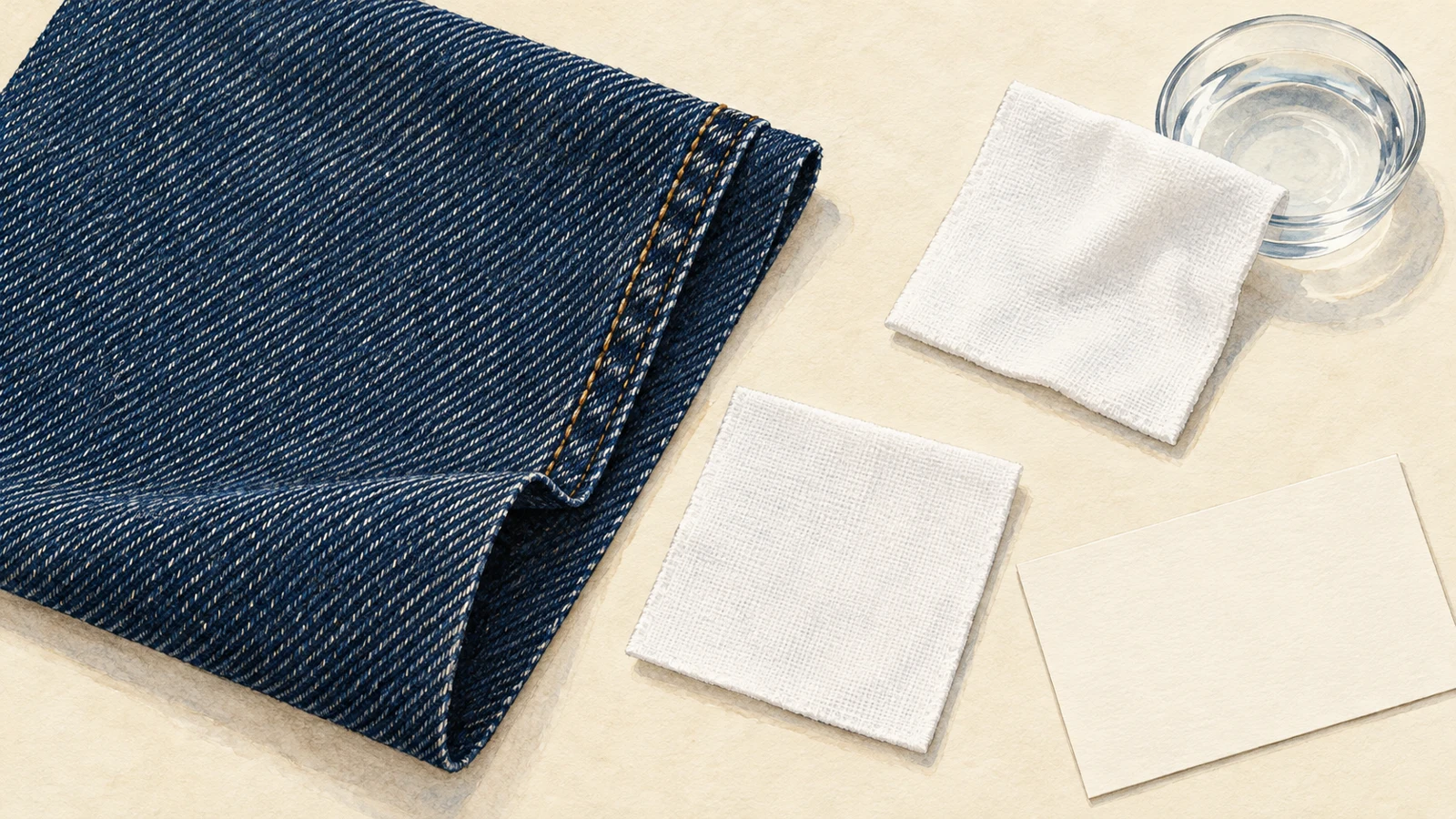
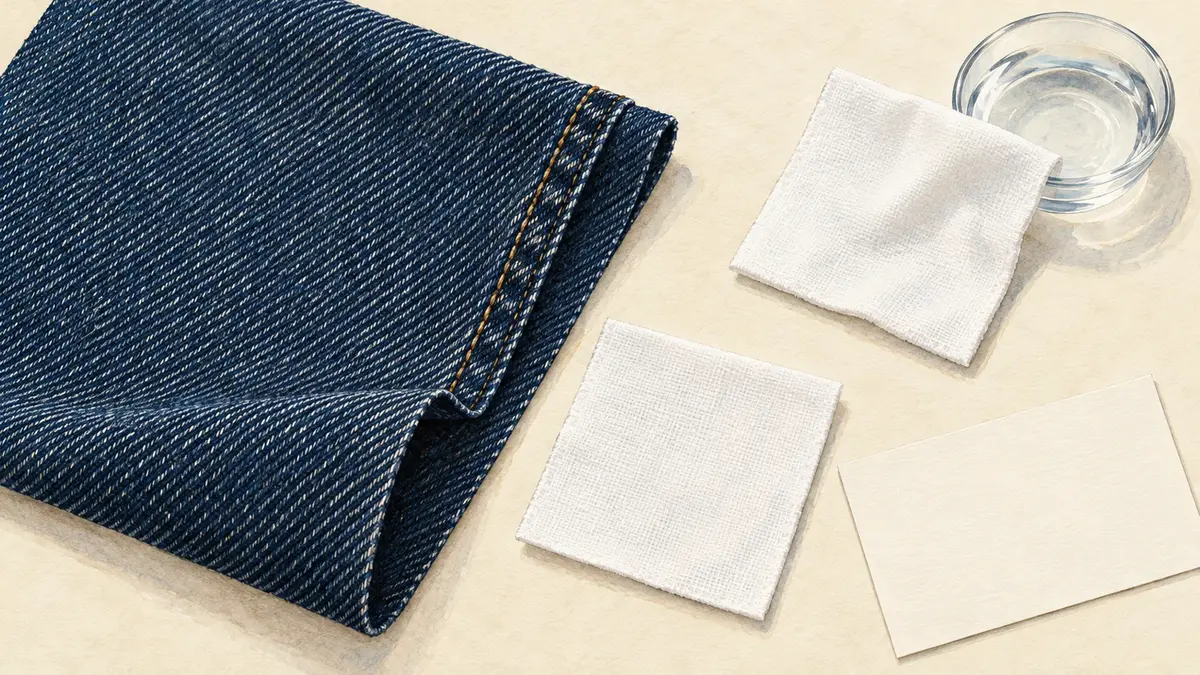
Before mixing a new garment into a load, dampen a white cloth with cold water and rub it gently over a hidden area, such as an inside hem or seam. If visible color comes off onto the cloth, consider the garment a higher-risk item and continue washing it separately or only with similarly dark pieces.
This is a screening test, not a promise of wash fastness. Friction from a cloth and the conditions inside a washer are different: detergent, water volume, agitation, time, and temperature can all change how much dye comes out. Still, a positive result gives you a clear reason not to put the item in with whites, light colors, or delicate fabrics.
A laundry discussion on Reddit captures the common concern: a shopper who had bought two shirts asked whether a separate load was really necessary and whether it would be enough to stop bleeding. The practical answer is that a first separate wash can lower the risk to other clothing, but it does not guarantee that all loose dye will be removed in one cycle. Continue to judge the garment by its label, its color release, and the results of later washes.
Use this first-wash routine
1. Wash the garment alone or with low-risk dark items
The safest option is to wash a new potentially bleeding garment by itself. If that is impractical, combine it only with dark garments that you would not mind becoming slightly darker or duller if transfer occurred.
Do not make its first load a mixed load of whites, cream, beige, pastel colors, or light gray clothing. Light fabrics show transferred dye easily, and once the load has dried, removal can become more difficult.
A small load is acceptable. In fact, avoiding an overloaded washer helps water and detergent circulate and reduces heavy fabric-on-fabric rubbing. Just choose a water level and cycle appropriate to the machine and garment label.
2. Choose cold water unless the care label requires otherwise
Cold water is generally the sensible starting point for washing new colored clothing. It helps reduce dye release compared with warmer water and is less stressful for many colored garments. Use a detergent designed to work in cold water, and select a normal or gentle cycle according to the care label and the fabric’s construction.
Do not use hot water simply to “set” the dye. Heat can increase dye release from some garments and may also cause shrinkage, distortion, or damage to heat-sensitive fibers and finishes. If a care label requires a warmer wash for hygiene or another reason, follow the label—but keep that garment separated from vulnerable colors.
3. Turn dark garments inside out
Turning a garment inside out does not make unstable dye permanently bond to the fabric. It can, however, reduce abrasion on the visible outer surface during washing and may help limit surface wear and fading. Close zippers, fasten hooks, and separate rough items from delicate ones to reduce rubbing.
4. Use the right amount of detergent
Use the detergent dose directed for your machine, water hardness, soil level, and load size. Adding extra detergent is not a reliable way to stop bleeding. Too much detergent can be difficult to rinse away and may leave residue, while too little may not clean the load well.
Avoid adding random laundry additives in the hope of fixing a dye problem. A garment’s dye chemistry and finish are determined during manufacturing; home washing cannot reliably recreate that process.
What color-catching sheets can and cannot do
Color-catching sheets may help capture some loose dye in the wash water. They can be an extra safeguard in a load of compatible colored garments, but they are not a substitute for sorting. A sheet cannot make it safe to wash a new red shirt with white underwear, a cream sweater, or a favorite pale blouse.
Use them as backup, not permission to ignore a “wash separately” label. If a garment releases enough dye to noticeably color the wash water or stain a test cloth, separation remains the more dependable choice.
Do vinegar or salt stop dye bleeding?
Vinegar and salt are widely suggested home remedies, but neither is a dependable universal fix for fugitive dye in ready-made clothing. Dye fixation depends on the fiber, dye type, and manufacturing process. A vinegar rinse may be compatible with some laundry routines, but it should not be treated as a guarantee that a new garment will stop bleeding. Salt also should not be relied on to permanently set dye in a finished garment.
The lower-risk strategy is simpler: separate the garment, use cold water, follow the label, and reassess after each wash. If an item repeatedly releases substantial color despite careful laundering, keep it separate longer or ask a professional cleaner for guidance, particularly if it is valuable, delicate, or labeled dry-clean only.
When can you begin mixing the garment into regular loads?
There is no universal number of washes after which every garment is safe. Some sources suggest that much of the excess dye from new items is often removed after the first few washes, but garment behavior varies. Check the item over time rather than relying on a fixed count.
You can gradually lower your level of caution when the garment has been washed cold several times without coloring the water noticeably, transferring dye to a white test cloth, or affecting similar dark items. Even then, continue to wash darks separately from whites and very light colors as a routine habit.
If dye transfer already happened, act before drying
If you open the washer and see unwanted color transfer, do not put any affected item in the dryer. Heat can make transferred dye harder to remove. Separate the bleeding garment from the affected clothes immediately.
Rewash the affected items promptly, following each care label. For washable white or light-colored items, an oxygen-based laundry booster may be an option if the garment label permits it. Check the product directions and test any treatment on an inconspicuous area when appropriate. Chlorine bleach is not suitable for many fabrics and colors, and it should only be used when both the garment label and bleach instructions allow it.
Never mix bleach with vinegar, ammonia, or other cleaning products. If the item is delicate, dry-clean only, expensive, or still stained after careful rewashing, professional cleaning may be the safer next step.
The best first-wash decision is conservative but not wasteful: wash a questionable new garment alone or with a few compatible dark pieces, use cold water, and keep it out of light-colored loads until it has shown that it is stable.
References
- Prevent Dye Bleeding in Laundry: Best Practices. newcreationsfabricsinc.com. https://www.newcreationsfabricsinc.com/blogs/news/prevent-dye-bleeding-laundry
- Preventing Color Bleeding: A Complete Guide. aybel.shop. https://aybel.shop/en/blogs/articles/evitare-che-il-colore-stinga-guida-completa
- Color Bleeding in Laundry: How to Prevent and Fix It | Speed Queen. laveries-speed-queen.fr. https://laveries-speed-queen.fr/en/blog/color-bleed-prevent-fix
- Washing Whites With Colors: How to Prevent Color Bleeding Without Sorting - Automatic Laundry. automaticlaundry.com. https://automaticlaundry.com/washing-whites-with-colors-how-to-prevent-color-bleeding-without-sorting
- Shaffer Shares Tips to Prevent Color Bleeding in Mixed Loads | Press Releases | norfolkdailynews.com. norfolkdailynews.com. https://norfolkdailynews.com/online_features/press_releases/shaffer-shares-tips-to-prevent-color-bleeding-in-mixed-loads/article_292a6d2b-c7a0-5051-8e95-5863487d72ce.html
- Prevent Color Bleeding in Dark Clothes: Expert Fabric Care Tips - Mandy’s Laundry. mandyslaundry.com. https://mandyslaundry.com/prevent-color-bleeding-fading-dark-clothes-fabric-care
- How to Avoid Fading Clothes When Washing Them. abanderado.com. https://www.abanderado.com/en/blogs/care-and-wash/how-to-avoid-stretching-when-washing-clothes-the-definitive-guide
- How to Prevent Color Bleeding in Mixed Loads | Shaffer Dry Cleaning Tucson. shafferdrycleaning.com. https://shafferdrycleaning.com/how-to-prevent-color-bleeding-mixed-loads