How to Reduce Sample Revisions Before Bulk Apparel Production

Table of Contents
Introduction to Controlling Sample Revisions
Repeated sample rounds are rarely caused by one sewing or pattern problem. More often, they result from incomplete product information, unclear approval criteria, scattered feedback, or factories working from different file versions. When unresolved decisions are carried into sampling, each new sample may redefine the product rather than verify that it can be reproduced.
The practical objective is not to eliminate necessary development samples. It is to give every sample a defined purpose, such as checking fit, confirming fabric behavior, approving decoration, or validating pack-out. Controlled information, measurable comments, and formal approval scopes help teams reduce apparel sample revisions that do not add useful learning.
Why Apparel Sample Revisions Repeat
Recurring revisions usually indicate a process-control failure. The sample room may be asked to interpret incomplete requirements, while reviewers may assess the result against expectations that were never recorded in the working specification.
Sampling Begins Before Critical Decisions Are Final
Sampling should not begin until the team has identified what is final, what is provisional, and what the sample is expected to prove. Fabric, color, measurements, construction details, trims, and artwork do not all need to be fully approved for every early-stage sample, but their status must be explicit.
A substitute-fabric fit sample can support pattern development, but it cannot reliably approve final color, hand feel, drape, decoration performance, or finished appearance. Similarly, an approximate zipper or stock label may be acceptable for an early construction review but must not become an accidental bulk standard.
Feedback Is Subjective or Contradictory
Comments such as “make it more oversized” or “improve the fit” do not tell a pattern maker what to change. They also invite different interpretations. Conflicting instructions from design, merchandising, technical, and commercial reviewers can create another avoidable revision cycle.
Use one controlled comment file for each sample. It should state the sample purpose, approval scope, temporary materials, unresolved decisions, and the final consolidated instruction. The factory should not have to decide which email, photograph, or reviewer has priority.
Build a Complete, Controlled Product Information Set
Document control is the basis of repeatable sampling. A factory can execute consistently only when all active files describe the same current product.
Maintain One Current Product File Set
The active set should include sketches or technical flats, measurement specifications, bill of materials, construction requirements, artwork, placement details, labels, and packaging instructions. A designated coordinator should consolidate decisions from messages, marked images, and meetings before issuing them to the sample team.
A useful release package identifies its revision number or date and links related files. For example, an updated chest measurement should be issued with the corresponding pattern revision, not as an isolated spreadsheet change.
Clearly Identify Approved and Provisional Details
Mark relevant requirements as approved, pending, substitute, or not applicable. This prevents a temporary stock fabric, zipper, trim color, or artwork mock-up from being interpreted as the final production requirement.
Remove superseded files from active working folders or clearly archive them. Historical records remain valuable for traceability, but only one approved file set should guide current sampling and production preparation.
Confirm Fabric, Weight, Color, and Performance Together
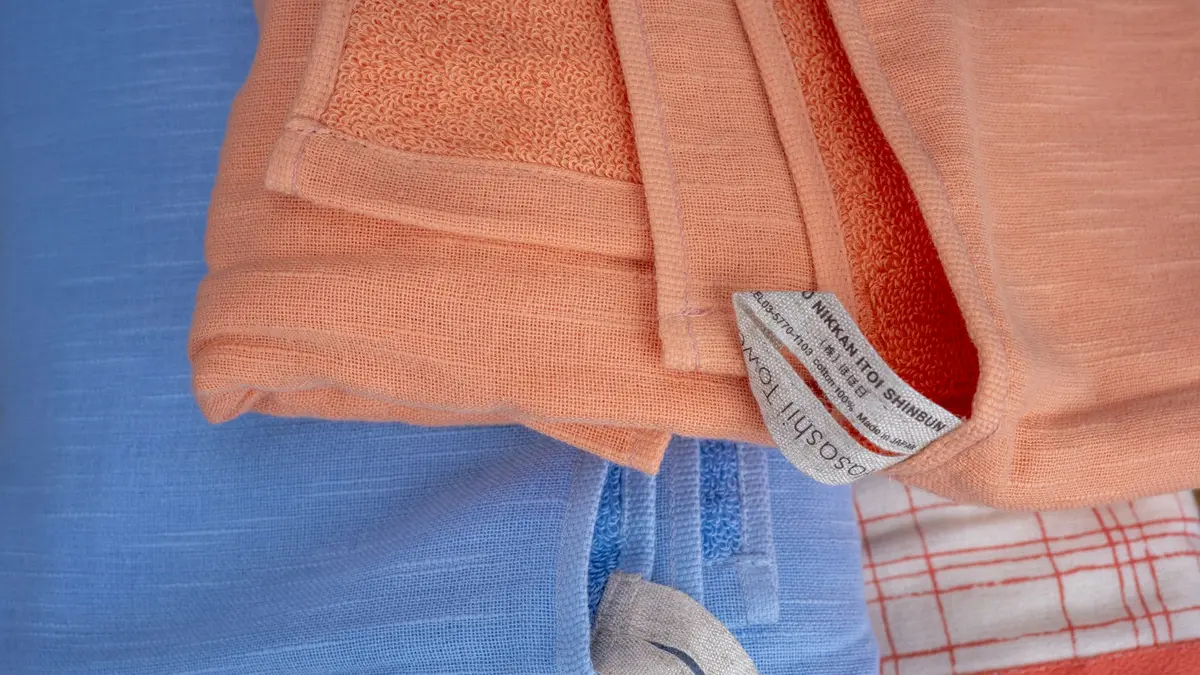
Material approval is not only a fabric-name decision. It combines fabric identity, physical behavior, color, finish, and the intended production-use status.
Source: Unsplash
Document the Material Used in Each Sample
For every sample, record composition, construction, GSM, color status, finish, supplier or material reference, and whether the fabric is intended for bulk use. Fabric weight, stretch, shrinkage, and drape can change silhouette, seam behavior, and apparent measurements. A difference seen on a garment is not automatically a pattern problem.
Review material in an agreed condition. Washing, pre-shrinking, laundering, and finishing can alter dimensions, surface appearance, and handle. If the garment is assessed after washing, the specification should state the relevant wash condition rather than comparing it with an unwashed reference without explanation.
Distinguish Color Direction From Final Color Approval
Digital images are useful for communicating color direction, but screen settings, lighting, cameras, and image processing can change perceived color. Final color approval should identify an agreed physical reference and specify which fabrics and trims must match it, including any accepted variation.
If sample fabric changes, reassess affected fit, measurement, color, and decoration observations before ordering pattern corrections. A heavier, stretchier, or differently finished fabric may explain a visible change that would otherwise prompt an unnecessary pattern revision.
Make Fit and Measurement Feedback Actionable
Fit review becomes efficient when the intended silhouette and measurement method are defined before the sample is evaluated.
Set the Fit Standard Before Review
State the base size, target fit, intended silhouette, and measurement method. Reviewers should distinguish among a measurement deviation, a pattern-balance issue, construction distortion, fabric behavior, and a new design preference.
Use consistent point-of-measurement names and procedures. Diagrams are especially useful for curved seams, shoulder points, rib openings, elasticated areas, and measurements that may be taken relaxed or stretched. Without a shared method, two teams can report different results from the same garment.
Translate Fit Comments Into Pattern Instructions
Each fit comment should identify the location, current condition, required direction, adjustment amount where known, and related areas to review. For example: “Increase finished half chest by 1 cm at base size; review armhole and sleeve-cap balance after change” is more actionable than “body too tight.”
Photographs can support the finding, but they should not replace revised measurements or a defined pattern action. Update the pattern version and measurement chart together, and link each requested correction to the current specification.
Approve Printing, Embroidery, and Other Decoration as Production Processes
Decoration approval should verify not only visual artwork but also the production artwork revision, placement, technique, and interaction with the intended garment material.
Finalize Artwork and Placement Requirements
Approve the final artwork file, finished dimensions, color reference, orientation, and placement measurements. Measure placement from stable garment reference points, such as high-point shoulder, centre front, neck seam, or side seam. State whether a dimension refers to the artwork edge, centre, or another defined point.
Track artwork content, print or embroidery color, placement, and decoration technique as separate approval items. A correct logo file does not prove that its placement or production method is correct.
Evaluate Decoration on the Intended Fabric
Review printing and embroidery on the intended bulk fabric whenever possible. Fabric stretch, texture, color, and finish can affect edge definition, coverage, distortion, adhesion, stitch appearance, and overall visibility. A decoration that appears acceptable on a stable development fabric may behave differently on the final material.
Any change in fabric or decoration technique should trigger reassessment of the affected characteristics rather than automatic transfer of earlier approval.
Factory Decoration Verification
Before approving a decoration trial, verify that the artwork revision matches the sample request. Measure finished decoration dimensions and placement from the defined garment reference points. Confirm whether the trial uses the intended bulk fabric and the intended production technique, and record any difference clearly.
Close Labels, Trims, and Packaging Before Final Approval
Product readiness includes components and pack-out. A garment can look correct while still containing unresolved trim, labeling, folding, or packing requirements.
Verify Components and Their Placement
Check labels, hangtags, closures, drawcords, eyelets, and other trims against the current bill of materials. Review color, size, location, orientation, attachment method, and applicable artwork or text.
Identify every temporary or substituted component. Functional trims may affect comfort, garment weight, washing, folding, and use, even when they appear visually acceptable on the sample.
Review the Full Pack-Out Configuration
Review folding, polybagging, stickers, hangtag position, size assortment details, and carton markings where applicable. Garment approval alone does not resolve presentation or packing problems discovered after production starts.
Reconcile the complete sample pack-out with the current bill of materials, then approve it as a configuration rather than as a collection of separate assumptions.
Control Sample Comments and Revision History
Centralized feedback and traceable change control prevent old instructions from reappearing in later rounds.
Use One Numbered Sample Comment Sheet
Consolidate feedback before it reaches the factory. Number each issue and assign a category, such as fit, measurement, construction, material, artwork, trim, packaging, or documentation. For every item, record the requested change, factory response or action, related revision, reviewer, and closure status.
If instructions conflict or cannot be executed, resolve the issue before the next sample is made. A factory response is not a substitute for a buyer-side decision on unclear requirements.
Separate Corrections From New Design Decisions
A correction fulfills an existing requirement; a new design decision changes that requirement. This distinction matters because a new decision may affect materials, lead time, costing, approved components, or work already completed.
Keep historical comments for traceability, but maintain only the latest approved files in the active release set. Before another sample is requested, every open item should be closed, rechecked, deferred with a defined owner, or formally accepted as a deviation.
Use a Final Approval Gate Before Bulk Production
A pre-bulk approval gate confirms that the physical sample and all production documents represent the same approved product.
Source: Pexels
Check the Revised Sample Before Dispatch
Before dispatching a revised sample, check it against the current pattern, measurement chart, comment sheet, material status, decoration requirements, trim list, and packaging instructions. Include a measurement report and revision summary so the receiver can verify completed actions efficiently.
Known differences should be disclosed directly. A transparent note about substitute fabric or unavailable trim is more useful than an implied assumption that the sample represents full bulk readiness.
Define Exactly What Final Approval Covers
Final approval should specify what has been approved: fit, measurements, fabric, color, construction, decoration, trims, labels, and pack-out. A sample made in substitute material cannot give final approval for characteristics affected by that substitution.
Before bulk cutting, close unresolved items or record them as accepted deviations. Confirm that the sample, pattern, specification, artwork, bill of materials, and packaging revisions are compatible. Any later change should follow controlled updating and a review of its production impact.
Conclusion: Make Every Sample Round Produce a Controlled Decision
Reducing revisions does not mean rushing development or avoiding necessary testing. It means making each sample round answer defined questions and converting the result into controlled decisions.
Complete product information, measurable fit standards, clear material status, component and pack-out approval, and disciplined revision history all reduce avoidable rework. Bulk production should begin only when the approved physical sample can be reproduced from the current production file set and every team is working to the same requirements.