How to Reduce Sale Yarn and Hard Waste in Weaving
Table of Contents
Sale Yarn in Weaving: Definition and Significance
Sale yarn is a category of hard waste generated in weaving and associated preparation departments. It generally consists of residual yarn, damaged packages or unidentified yarn that cannot be confidently returned to the correct sort or reused in production. Because its fibre blend, count, shade, lot identity or remaining usable length may be uncertain, it is often sold at a value far below the cost of the original yarn.
Hard waste should not be grouped automatically with soft waste. Soft waste may include recoverable loose fibre or process sweepings, while sale yarn is usually package-based or length-based residual material requiring segregation, identification and reuse decisions. Recording sale yarn by sort can reveal recurring problem lots that disappear when all waste is pooled together.
Why Controlling Hard Waste Matters
Reducing hard waste improves yarn realization: a greater share of purchased yarn becomes fabric or identifiable reusable stock. This can lower manufacturing cost, improve material accountability and protect margins, particularly where yarn represents a major share of conversion cost.
Waste control also supports better housekeeping, clearer material flow, lower handling losses and more disciplined loom-shed practices. In addition to financial benefits, minimizing avoidable textile waste can reduce disposal and resale dependence, improve workplace organization and support environmental objectives.
The value of a 1% reduction in hard waste is mill-specific. It depends on yarn consumption, yarn purchase or production cost, the resale value of sale yarn, and the cost of implementing controls. For example, a mill consuming 10,000 kg of yarn per day would prevent 100 kg of hard waste per day at a 1% reduction. The financial benefit should be calculated as the recoverable value of retained yarn minus the resale value that would otherwise have been received, less any additional control cost.
Main Categories of Weaving Waste
Weaving losses can be grouped as process waste and incidental waste. This distinction is useful because some losses arise from necessary operations, whereas others indicate preventable faults in materials, machines, handling or work methods.
Process Waste
Process waste is material loss associated with a required production operation. Yarn consumed or lost during knotting and joining between packages is one example. The quantity can often be reduced through suitable machine settings, correct joining practice and operator training, but it cannot normally be eliminated completely because the operation itself requires yarn handling and joining.
Incidental Waste
Incidental waste is not inherent to a necessary processing step. It may result from slough-off, yarn cuts, entanglement, package defects, poor handling or incorrectly issued residual yarn. The level of incidental waste can vary with package length, yarn count, end and weft breaks, loom condition, humidity, handling discipline and operator practice.
Investigating this category is important because it contains many of the losses that can be prevented through better package preparation, maintenance, humidity management and traceable material issue.
Case Study Context: Reducing Sale Yarn in a Weaving Mill
This case study concerns a weaving mill making a varied fabric mix that included worsted suiting, wool-blended fabrics, ring denim and shirting. A broad product range increases the number of yarn counts, blends and sorts moving through preparation and weaving. Without clear identification, residual yarn from one style can easily become unsuitable for another.
The improvement effort focused first on sorts producing the largest quantities of sale yarn. This prioritization directs attention to the highest material losses rather than spreading effort equally across all styles. The central issue was not only yarn breakage: it was the loss of sort, blend and usable-length identification that reduced the value of remaining yarn.
Sale-Yarn Control Process
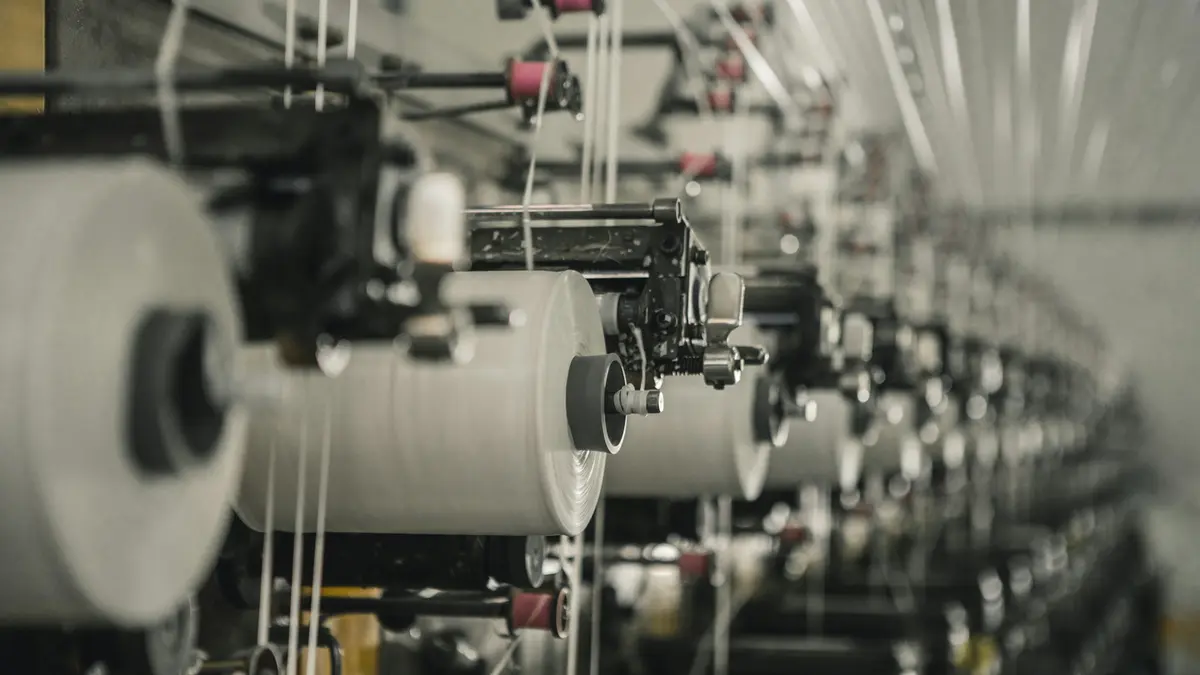
A practical sale-yarn control process begins with identifying the yarn sort and continues through mending-package preparation, issue to the loom shed, balance return and final segregation of unusable yarn. Each transfer point should preserve the connection between the package and the production sort.
Source: Unsplash
A simple control sequence is:
- Identify the sort, count, blend and applicable beam or loom requirement.
- Prepare a mending package at the approved weight for that sort.
- Label the package and issue it with the corresponding beam or loom assignment.
- Record package weight, issue date and destination in an issue register.
- Check the returned balance at shift end or beam completion.
- Return verified usable yarn to controlled stock and segregate only untraceable or unsuitable material as sale yarn.
The purpose is to prevent usable residual yarn from entering a mixed waste stream simply because its origin is no longer known.
Yarn Flow Through Preparation, Weaving, and Inspection
The typical material route moves through winding, warping, drawing-in, weaving and grey inspection. During weaving, additional warp yarn may be needed to mend end breaks. If these packages are issued in excessive quantities, without sort labels or without return checks, remaining yarn can become untraceable after the beam is complete.
Sort labels and verified package weights maintain accountability. A package should carry sufficient information to link it to the appropriate yarn sort and production activity. The issuing department and loom shed should be able to reconcile issued weight, returned weight and estimated consumption before residual yarn is classified as waste.
Goals of Weaving Waste Minimization
The main goals of waste minimization in weaving include:
- reducing yarn loss and material cost;
- improving loom-shed efficiency and material availability;
- lowering avoidable handling, storage and liability exposure;
- improving employee ownership through clear work standards;
- supporting a cleaner public image and better workplace conditions; and
- reducing the environmental burden associated with avoidable textile waste.
These goals are linked: better material control can improve both profitability and operational discipline.
Method Used to Reduce Hard Waste
The case-study approach examined end-break frequency for major sorts over defined time intervals. The mill then prepared sort-specific package lists, rewound mending packages to controlled weights and issued them with beams of the corresponding sort. Six months of sale-yarn data were reviewed to establish the pattern before and after the intervention.
An issue register provided the basic control record. At minimum, it should capture the yarn sort, package weight, issue date and returned balance. Many mills may also benefit from recording beam number, loom number, shift, operator, package identification and disposition of returned material.
Comparing Production by Loom and Sort
Production comparisons should be made under comparable conditions. A loom operating a different sort, construction, speed or shift pattern may not provide a valid baseline for another loom. Reviewing production per loom by sort helps identify relevant differences in output, end-break behaviour and mending-yarn demand.
The objective is not to compare all looms mechanically, but to compare similar operating conditions and investigate meaningful deviations.
Estimating Mending-Yarn Requirements
Mending-yarn issue should be based on observed end-break frequency rather than on a large common package. The mill can measure end breaks over a known fabric length, estimate the likely number over the full beam length and add a practical allowance for missing ends, loom condition, speed, humidity and operator practice.
The reported study used approximately one metre of yarn per end-break repair as a mill-specific planning assumption. Required length can then be converted to package weight using the applicable yarn count. This is a planning calculation, not a universal standard: beam length, fabric style, loom speed and break performance should trigger a review of the issue quantity.
Standard Package Weights for Mending Yarn
Standard mending-package weights help prevent over-issue. For each common sort, the mill can define a package weight based on expected repair demand and issue known-weight packages with the related beam.
The standard should be controlled by sort and reviewed when style requirements, beam lengths, yarn counts or loom conditions change. A standard package is most useful when it is paired with labeling and return-balance verification.
Reducing Mending-Package Size
Before the reported study, mending packages were commonly in the range of about 500-600 g. The intervention used smaller rewound packages of approximately 50-80 g for the applicable sorts. Smaller packages reduced the quantity of yarn left at the loom when a style or beam was completed.
This was a case-study outcome, not a universal recommendation for every weaving mill. The suitable package size depends on the sort, break rate and expected repair requirement. Checking the returned balance at the end of each shift was an important supporting control because it identified unused yarn before its traceability was lost.
Interpreting Sale-Yarn Collection Trends
The case-study graph compared collected sale-yarn weight over time. Its collection intervals were reported as five-day periods. Such charts are useful only when the collection method, period length and production context remain comparable.
Source: Unsplash
A downward trend after introducing sort-wise mending-package control may indicate improvement, but it should be interpreted alongside production volume, fabric mix and yarn consumption. Normalizing the data helps distinguish true process improvement from a temporary reduction in production.
Reported Results of Sale-Yarn Reduction
The reported weekly average sale-yarn collection decreased from 11.56 kg to 3.63 kg. This represents a reported reduction of 7.93 kg per week. On an annualized basis, using 48 production weeks, the reduction was reported as 380.64 kg.
For ongoing comparison across different sorts, mills should consider reporting sale yarn as kilograms per 1,000 metres of fabric, as well as against yarn consumption. These normalized measures make it easier to compare periods with different production volumes.
Estimating Annual Savings from Lower Sale Yarn
Sale yarn may contain mixed fibres, uncertain blends or unknown usable lengths, which can limit its resale value. The source case used a historical yarn-cost basis of Rs 400-600 per kg for selected yarn types and reported an annual saving of Rs 1,33,224.
That reported figure should be treated as a historical case-study result rather than a current benchmark. A mill should calculate net savings using current yarn cost, sale-yarn resale proceeds, actual retained or reused yarn value, rewinding labour, labels, recordkeeping and any additional inspection cost. The key economic benefit is the difference between the value of controlled, usable yarn and the much lower value of unidentified sale yarn.
Key Takeaways for Loom-Shed Waste Control
Waste should be investigated systematically from fibre and yarn preparation through fabric production and inspection. The most useful controls are often simple: define mending-package standards, identify packages by sort, issue only the required quantity and verify returned balances.
A wider waste-minimization programme can include waste identification, mass and energy balances, improvement-option assessment and feasibility analysis. At loom-shed level, a sort-wise mending register is a low-cost tool that can make previously hidden residual yarn visible and actionable.
Frequently Asked Questions About Sale Yarn and Hard Waste
The following answers summarize common practical questions about sale yarn, traceability and hard-waste measurement in weaving.
What Does Sale Yarn Mean in Weaving?
Sale yarn is hard waste arising from weaving or preparatory operations. It often includes residual yarn that cannot be returned to controlled stock because its original sort, condition or usable length is uncertain. Its value is therefore usually lower than the value of identifiable production yarn.
How Can a Weaving Mill Reduce Hard Waste?
Issue mending yarn by sort and controlled weight instead of using large common packages. Use clear labels, maintain an issue register, check yarn at the loom shed and record returned balances. These controls reduce over-issue and prevent residual yarn from becoming untraceable.
What Causes Sale Yarn in a Textile Mill?
Common contributors include end breaks, package faults, cuts, entanglement, slough-off, poor handling and unsuitable mending-yarn issue quantities. Humidity, loom condition, yarn quality and weak return-control practices can also affect the amount of sale yarn generated.
Can Sale Yarn Be Reused for Weaving?
Residual yarn may be reused when its sort, count, blend, quality and condition remain verified and it meets the requirements of the intended fabric. Mixed, contaminated, damaged or untraceable yarn should normally be segregated as sale-yarn stock rather than returned to weaving.
How Is Hard-Waste Percentage Calculated in Weaving?
Hard-waste percentage is calculated as:
Hard-waste percentage = (hard-waste weight / defined yarn consumption) × 100
The denominator must be defined consistently within the mill’s reporting system. Waste may also be monitored by loom, by sort or as kilograms of sale yarn per 1,000 metres of fabric.