How to Reduce Work-in-Progress Inventory in Garment Manufacturing
Table of Contents
Reducing WIP in Garment Manufacturing
Reducing work-in-progress (WIP) inventory is a core production-control objective in garment manufacturing. WIP consists of cut components, partly sewn garments, washed garments awaiting finishing, and other units that have entered production but are not yet ready for shipment. A factory needs enough WIP to keep successive operations supplied, but too much WIP usually signals an interruption in flow rather than productive capacity.
In apparel production, excess WIP can hide bottlenecks, delay the discovery of defects, occupy floor space, complicate bundle handling, and make delivery status harder to assess. The objective is not simply to remove all inventory between operations. Instead, the aim is to maintain a controlled quantity of correctly prioritized work so that each process can operate steadily without creating long queues.
The most effective WIP-reduction effort combines measurement with practical improvements in planning, layout, methods, capacity, quality control, and operator capability. Factory teams should first identify where inventory accumulates, determine why it is waiting, and then remove the underlying constraint. This approach improves piece flow while protecting quality and delivery performance.
A useful starting point is to map the normal garment route from cutting through sewing, washing or other value-added processes where applicable, finishing, packing, and dispatch. The map should show transfer points, inspection points, rework loops, temporary storage locations, and the person or team responsible for recording movement. WIP can then be reviewed by style, color, size, order, line, operation, and production stage.
Understanding Work in Progress (WIP)
Work in progress, also called work in process, refers to inventory that has entered manufacturing but has not yet become a completed finished product. In garment factories, the terms are generally used interchangeably. WIP may be counted as pieces, bundles, lots, panels, garment sets, or equivalent units, depending on the process and the factory’s reporting system.
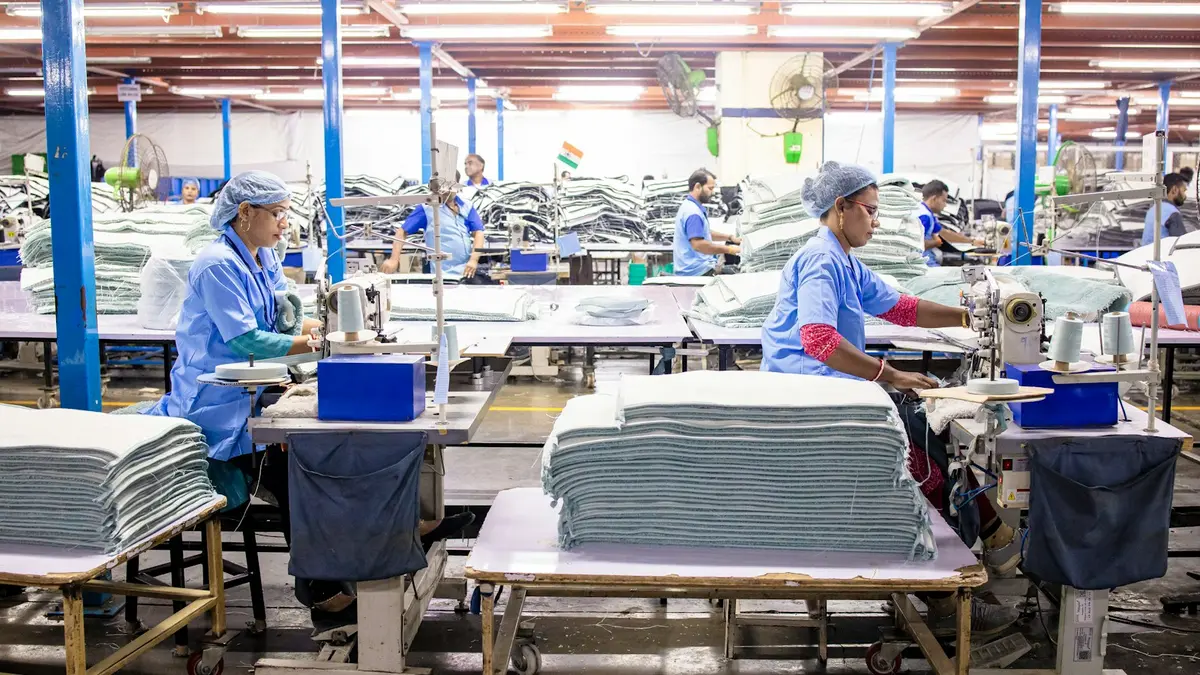
Source: Unsplash
Garment WIP begins when fabric or components are released into production. For example, cut fabric parts waiting to enter a sewing line are cutting-stage WIP. A bundle that has completed some sewing operations but is waiting for the next operation is sewing WIP. Garments waiting for washing, pressing, measurement checks, final inspection, tagging, folding, or packing are also WIP until they meet the factory’s defined completion point.
WIP should be measured at meaningful control points rather than estimated from visual impressions. A production team may count bundles physically, record barcode scans, use bundle tickets, or rely on a manufacturing execution system. Whatever method is used, the definitions must remain consistent. If a bundle is counted as sewing WIP when issued to the line, it should not also be counted as cutting WIP after the transfer.
A practical distinction is needed between normal operating WIP and abnormal WIP. Normal WIP is the limited quantity required to connect sequential operations at the intended production pace. Abnormal WIP is inventory waiting because of an imbalance, breakdown, missing input, quality hold, unclear priority, insufficient operator skill, or another disruption. Reducing abnormal WIP should be the main improvement target.
Line balancing is particularly important because apparel sewing lines consist of linked operations with different standard times, machine requirements, and skill demands. If one operation produces faster than the next operation can accept work, bundles accumulate before the slower process. The buildup may appear to keep workers busy, but it does not increase the line’s finished output. It can instead lengthen the time required for a garment to travel through the line.
Why WIP Control Matters in Garment Production
WIP control provides operational visibility. When quantities are recorded by stage and compared with the production plan, managers can see whether an order is moving as expected or becoming delayed in a specific department. This information supports daily production meetings, order-status reporting, capacity decisions, and corrective action before a delivery risk becomes severe.
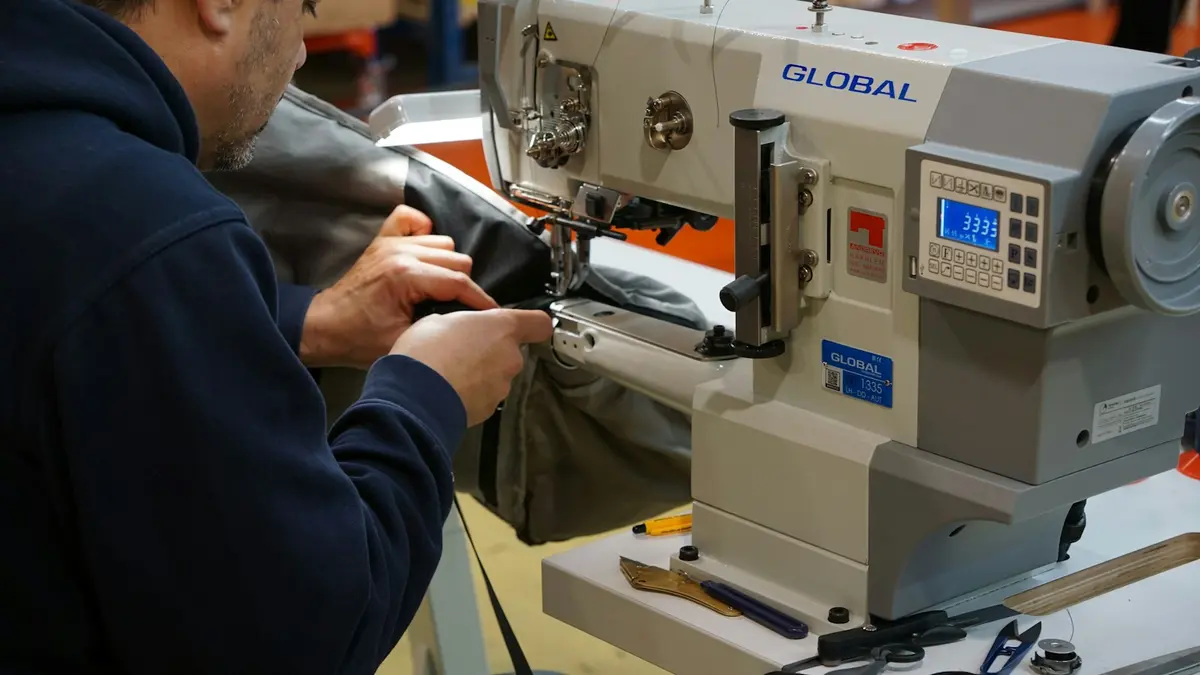
Source: Unsplash
Accurate WIP records can also support product costing and pricing work. WIP quantities help account for materials and conversion activity that have entered production but are not yet represented in finished-goods output. For costing purposes, however, WIP data must be used with a defined valuation method and reliable production records. WIP alone does not establish a selling price; pricing also depends on material cost, labor, overhead, quality requirements, commercial terms, margins, market conditions, and customer expectations.
How excess WIP affects performance
A large quantity of partly completed garments can make a line appear active while masking poor flow. If thousands of bundles are waiting before one operation, supervisors may not immediately see which process is restricting output. The line may continue feeding work into the queue, even though the constrained operation determines the maximum rate at which finished garments can be completed.
Excess WIP creates several operational risks:
- Longer lead time: A garment spends more time waiting between value-adding operations.
- Lower visibility: Production status is harder to verify when bundles are dispersed across racks, trolleys, and workstations.
- Delayed defect detection: A recurring sewing or measurement defect may affect many pieces before the issue is identified.
- More handling and mix-up risk: Additional movement, storage, and sorting increase the chance of missing parts, size mixing, color mixing, or bundle loss.
- Space congestion: Excess bundles can obstruct material flow, access to machines, inspection areas, and emergency routes.
- Misleading productivity signals: High output at individual operations may not translate into high completed-garment output.
A bottleneck is any resource, operation, approval, material supply point, or quality gate that limits the flow of garments through the process. It may be a slow sewing operation, an unavailable special machine, a shortage of trained operators, delayed trims, repeated alteration work, or a finishing inspection constraint. The key management principle is to identify the current constraint and protect its effective working time. Feeding more inventory into earlier operations without addressing the bottleneck generally increases WIP rather than throughput.
Measuring WIP by production stage
Stage-level WIP is normally calculated by comparing the quantity received or completed by an upstream stage with the quantity transferred, accepted, or completed by the following stage. The exact formula depends on the factory’s routing, quality status definitions, and reporting rules.
| Production stage | Basic WIP logic | Typical control point |
|---|---|---|
| Cutting | Cut quantity released minus quantity issued to sewing | Cut bundles awaiting line issue |
| Sewing | Quantity received into sewing minus quantity transferred to the next approved stage | Bundles or garments waiting within or after sewing |
| Washing | Quantity received by washing minus quantity released after washing approval | Garments awaiting wash, dry, or wash inspection |
| Finishing | Quantity received for finishing minus packed or otherwise completed accepted garments | Garments awaiting finishing, final inspection, or packing |
For a simple controlled flow, a general calculation can be expressed as:
Stage WIP = Quantity received by the stage − Quantity transferred out as accepted output
In practice, the calculation should be adjusted for rejected pieces, rework, approved alterations, losses, cancelled quantities, and partially processed bundles. For example, garments held for repair should be recorded separately from garments moving normally through the stage. Combining rework with regular WIP can conceal both quality losses and true production flow.
Physical verification remains important. A daily system report may show that material was transferred, while the actual bundles are still waiting at a workstation or in a hold area. Regular reconciliation between records and floor counts improves confidence in production data and prevents inaccurate order-status reporting.
Practical methods to reduce WIP
WIP reduction works best when it is managed as a cross-functional improvement activity rather than only a sewing-floor responsibility. Merchandising, planning, cutting, sewing, quality, maintenance, finishing, stores, and industrial engineering teams all influence flow.
Improve pre-production planning. Before bulk production begins, confirm fabric availability, trims, patterns, markers, approved samples, operation breakdowns, quality requirements, machine needs, and delivery priorities. Incomplete readiness often causes cut parts to wait while the factory resolves missing inputs or unclear specifications.
Use a flow-oriented line layout. Arrange machines, work aids, inspection points, and bundle movement routes to reduce unnecessary transport and backtracking. Operations that are frequently linked should be located so that work can move directly and safely between them. The best layout depends on product complexity, machine type, line design, and available space.
Balance the line around realistic capacity. Compare each operation’s expected capacity with the target line output. Reallocate work, add trained support, divide an operation, combine compatible tasks, or adjust operator assignments where practical. Balancing should be reviewed after style changes, absenteeism, quality problems, and changes in target output because the constraint can move.
Apply method study. Observe how operators perform repetitive tasks and identify avoidable motion, poor workstation setup, difficult handling, excessive bundle size, machine delays, or inconsistent work methods. Improvements should be tested without compromising garment quality, ergonomics, or safety. A simpler, repeatable method can reduce variation and make flow more predictable.
Match release quantity to downstream capacity. Cutting and sewing departments should not release large quantities simply because upstream capacity is available. Release should reflect the ability of the next process to absorb and process work. Smaller, controlled releases make problems visible sooner and reduce the amount of inventory exposed if a quality issue occurs.
Strengthen operator training and flexibility. Operators need the required technical skill for assigned operations, but cross-training can also help a line respond to changing constraints. When several trained people can support a critical operation, the factory has more options to recover from absenteeism, uneven output, or a temporary rise in demand.
Maintain clear WIP records. Record incoming quantity, outgoing quantity, rework quantity, rejects, and physical location at each defined stage. A simple manual board can be useful for a small line, while larger factories may use barcode, RFID, or digital production-tracking systems. The value comes from timely, accurate use of the data, not from the technology alone.
Act quickly on quality holds. WIP held for inspection or repair should have an owner, reason code, quantity, and disposition deadline. Quality teams should trace repeated defects to the source operation and correct the cause. Holding defective garments without feedback allows the same problem to continue and increases the eventual rework burden.
Key Takeaways for Managing Garment WIP
WIP represents garments, components, or bundles that are moving through manufacturing but have not yet reached the defined finished-goods stage. It is a necessary part of production flow, yet it must be controlled carefully. The right quantity supports continuity between operations; uncontrolled accumulation indicates waiting, imbalance, or another source of lost flow.
Effective WIP management links operational control with commercial performance. Reliable stage-level information helps factories monitor order progress, evaluate capacity, identify bottlenecks, contain quality problems, support cost accounting, and provide more dependable delivery updates. When managers can distinguish normal operating WIP from delayed or blocked inventory, they can focus improvement effort where it has the greatest impact.
The most dependable WIP-control practices include thorough pre-production planning, practical line layout, line balancing, method improvement, realistic capacity assessment, operator development, disciplined quality feedback, and accurate movement records. These measures should be reviewed continuously because style complexity, order quantity, available skills, machine condition, and customer requirements can change the production constraint.
Stage-level calculations provide a common language for production decisions. By comparing upstream output with downstream transfer or completion, teams can locate where garments are waiting and investigate the cause. Cutting, sewing, washing, and finishing should each have clear entry and exit definitions so that WIP figures are consistent and useful.
Ultimately, reducing WIP in garment manufacturing is about improving flow rather than merely reducing a count on a report. A factory that releases work in line with downstream capacity, resolves bottlenecks promptly, and maintains visible production records can shorten lead time, improve control of quality issues, use floor space more effectively, and convert production effort into completed garments more reliably.