How Can You Tell Whether a Bedsheet Is Suitable for Sewing a Garment?
Table of Contents
Yes, a bedsheet can be suitable for sewing a garment, but it should be judged as fabric rather than as bedding. The best candidates are clean, sound sheets with enough usable yardage, a fiber content that fits the project, appropriate drape and opacity, and no hidden wear in high-friction areas.
For sewing clothes from bedsheets, start with the pattern—not the print. A crisp cotton sheet may be excellent for a button-up shirt, pajama set, gathered skirt, apron, or loose dress, yet disappointing for a fluid blouse that needs a soft, body-skimming fall. Evaluate the sheet before cutting, wash it as you would the finished garment, and make a small test sample if the project matters.
Start with the pattern’s fabric requirements
Read the pattern envelope or instructions before buying or cutting a sheet. Look for whether it calls for woven or knit fabric, the recommended fabric types, stretch requirements, and whether the garment needs structure or fluidity.
Most bedsheets are woven fabrics with little or no stretch. They can work well for patterns designed for woven cotton, cotton blends, linen-like shirtings, or lightweight poplin-type fabrics. They are usually not a direct substitute for jersey, rib knits, stretch wovens, swimsuit fabric, or fabrics with a very fluid drape.
A sheet is more likely to work when the pattern has:
- Simple woven-fabric construction
- Ease through the body rather than a close, stretch-dependent fit
- Gathered, pleated, or lightly structured sections
- Straightforward seams and modest shaping
- A need for a crisp or softly structured finish
Be more cautious with fitted trousers, tailored jackets, bias-cut dresses, slip dresses, clingy tops, or designs that depend on stretch recovery. A pretty print cannot compensate for the wrong fabric behavior.
Identify the fiber content first
Check the care tag on the sheet, its packaging if available, or any attached label. Fiber content affects comfort, pressing, shrinkage, wrinkle behavior, dye response, and the appropriate iron setting.
Cotton sheets
Cotton is often one of the easiest choices for beginner-friendly garments. It is commonly suitable for shirts, pajamas, children’s clothes, casual dresses, skirts, aprons, and linings. Depending on the weave and finish, cotton sheets can feel crisp, smooth, lightweight, or comparatively substantial.
Cotton may wrinkle, and it may shrink if it has not already been washed repeatedly. Prewash and dry it in the way you expect to launder the completed garment before cutting.
Linen or linen-blend sheets
Linen sheets and linen-rich blends can be good choices for relaxed shirts, wide-leg pants, loose dresses, and warm-weather separates. Their texture and tendency to wrinkle are part of the finished look. Check carefully for thin spots, because linen may become weaker in repeatedly worn areas even if the rest of the sheet looks attractive.
Polyester and polyester-blend sheets
Polyester sheets may resist wrinkles and can be durable, but they often behave differently from cotton during cutting, pressing, and wearing. They may feel slick, hold static, or be less breathable than a natural-fiber sheet. Use a lower iron temperature and test an inconspicuous corner first, since excessive heat can damage synthetic fibers.
A polyester sheet may suit a loose garment, costume, sleepwear, or a project where easy care matters. It may be less appealing for a garment intended to feel cool and breathable in warm weather.
Rayon, bamboo-derived, modal, or unknown blends
Labels using terms such as bamboo may not tell you everything about the fabric’s behavior. Treat the care label as useful information, but still test the cloth. Fabrics made from regenerated cellulose fibers can have soft drape, but their strength, pressing needs, and response to laundering vary by construction and blend.
If the fiber is unknown, do not assume it will behave like cotton. Wash a small area, press a scrap cautiously, and reserve the sheet for a low-risk project until you understand it.
Assess weight, body, and sheet fabric drape
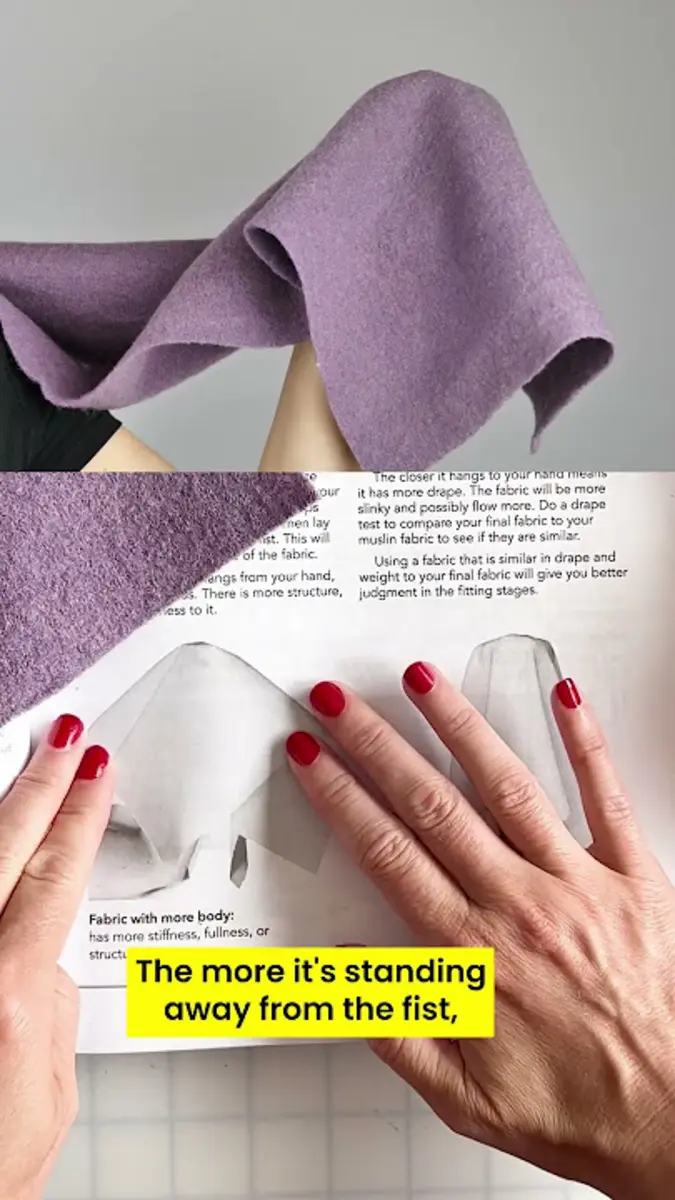
Drape is the way fabric hangs, folds, and conforms to the body. Weight alone does not determine drape: two cotton sheets can feel very different because of yarn size, weave density, finish, and previous laundering.
Source: i.ytimg
Try three quick evaluations:
Hold it up
Lift a broad section of the sheet by one edge. Notice whether it falls in soft folds, hangs in a fairly straight plane, or feels stiff and board-like. A soft fall is useful for loose dresses, gathered skirts, and relaxed blouses. A crisper sheet is often better for shirts, shirt dresses, pajamas, and garments that benefit from some shape.
Scrunch and release it
Gently squeeze a handful of fabric and release it. This is not a complete performance test, but it helps reveal whether the fabric rebounds and drapes or keeps a rigid, rumpled shape. Consider whether that behavior suits the intended garment rather than treating wrinkles as automatically good or bad.
Compare it to the pattern image
Look at the garment silhouette. Does it stand away from the body, hold pleats, or show crisp collars? A firmer sheet may be appropriate. Does it skim, swirl, collapse into soft folds, or depend on a fluid look? Many standard sheets will be too crisp or too light for that result.
Fabric-selection guidance consistently emphasizes that weight and drape can change a finished garment substantially, even when two fabrics have similar fiber content. A pattern’s recommended fabric types are therefore a practical starting point, not a minor suggestion.
Check opacity in the light
A sheet can look substantial while folded and still become transparent when worn over skin or stretched across curves. Hold a single layer up to a window or bright lamp. Then place your hand behind it and check how clearly its outline shows.
Pay particular attention to pale colors, white sheets, loosely woven sheets, and fabrics intended for skirts, dresses, shorts, or fitted tops. If the fabric is too sheer for the design, you may be able to add a lining, build a layered garment, or choose a different project. Do not assume a garment will be opaque simply because the sheet worked as bedding.
Also inspect the reverse side. Some printed sheets are noticeably paler on the back, which may matter for cuffs, collars, facings, rolled hems, gathered ruffles, or any construction that exposes the wrong side.
Inspect condition beyond obvious stains
Secondhand or well-used sheets need a closer inspection than new yardage. Spread the sheet in good light and look across the entire surface, not only at the most visible center panel.
Avoid or cut around:
- Thin, shiny, or weakened areas
- Small holes, snags, or pulled threads
- Fading concentrated at folds or exposed sections
- Yellowing, discoloration, or persistent odor
- Pilling or a roughened surface
- Stiff patches from unknown residue
- Worn edges and damaged hems
The middle of a fitted sheet, pillowcase opening, and areas that receive repeated rubbing may wear differently from the rest. Fitted sheets can offer useful fabric, but elasticized corners, curved construction, and irregularly shaped usable areas make layout more difficult than with a flat sheet.
A sheet with a small flaw is not automatically unusable. Position a stain inside a facing, pocket, waistband, underarm area, or other hidden section only if it will not compromise the fabric’s strength. Do not place an area that is thin or fraying in a seam under tension.
Verify the grain before laying out pattern pieces
Sheets are not always perfectly squared to the grain. In the supplied sewing discussion, a contributor specifically advised checking that the sheet is not skewed before using it for garment cutting. That caution matters because grain affects how a garment hangs and twists.
Look at the weave lines, printed stripes, checks, or repeated motifs. They should run consistently along the length and width. If the fabric seems twisted, pull it flat without force and examine whether the threads appear perpendicular.
For a striped or checked sheet, misalignment becomes especially visible in a garment. Use the actual thread grain rather than relying entirely on a printed design or a hem edge. If the sheet is badly skewed, choose a project with forgiving shapes, use small pieces, or pass on it.
Wash and press before cutting
Prewashing is essential for repurposing bedsheets into clothing. It removes storage odors and surface residue, reveals whether dye runs, and allows shrinkage or texture changes to happen before pattern pieces are cut.
Wash the sheet according to its label when possible. If the label is missing, use a cautious approach appropriate to an unknown fabric and avoid aggressive heat until you know how it responds. Dry it as you intend to dry the finished garment.
Then press a test area. This step matters because a sheet can seem promising until heat reveals problems such as stubborn creasing, shine, melting risk, or a finish that changes under the iron. In a sewing discussion about using sheets, contributors advised makers to pay close attention to fiber labels, final garment drape, and how the material presses. That is a sensible practical standard for any upcycled clothing fabric selection.
Use the lowest reasonable iron setting for uncertain fabrics, especially synthetics, and test in an inconspicuous place. A pressing cloth can add protection when you are unsure.
Match common sheet types to approachable garments
The following pairings are starting points, not guarantees:
Crisp cotton or percale-like sheets
Try button-up shirts, shirt dresses, elastic-waist skirts, pajama sets, aprons, simple shorts, children’s clothes, or toile-style practice garments. Their relative crispness can support collars, facings, and gentle gathers.
Soft, frequently washed cotton sheets
Consider relaxed tops, sleepwear, peasant-style blouses, casual dresses, loose skirts, or lightweight summer layers. Check opacity before making bottoms or an unlined dress.
Linen or linen-rich sheets
Use them for easy shirts, tunics, loose trousers, drawstring garments, or boxy dresses. Expect wrinkles and choose a design where that character looks intentional.
Smooth polyester sheets
Consider costumes, loose lounge pieces, simple tops, or garments where wrinkle resistance is more important than natural-fiber feel. Test seam handling and pressing first, because slippery fabric can shift while cutting and sewing.
Worn but stable sheets
Use the strongest areas for pocket linings, facings, muslins, linings, quilt components, patchwork, or small accessories. They may not be worth the time required for a complex garment with demanding fit and finishing.
Make a test sample before committing
If you have enough fabric, cut a small rectangle from an edge or damaged area. Wash and press it, sew a seam, press the seam open, and handle it as the finished garment will be handled. If relevant, test a buttonhole, gather, hem, or interfaced section.
This small sample can reveal whether the fabric puckers, frays heavily, resists pressing, shifts under the presser foot, or becomes too sheer after laundering. It also gives you a chance to choose needle, thread, seam finish, and iron temperature before working on the garment itself.
When a bedsheet is not the right choice
Pass on the sheet when it is badly worn, smells persistently after washing, has extensive discoloration, lacks enough sound fabric for the layout, or does not match the pattern’s need for stretch, weight, or drape. It is also reasonable to avoid investing detailed tailoring, difficult fitting, or elaborate finishes in fabric that has not passed a basic condition and pressing check.
Sheets are valuable as affordable practice material, linings, and wearable fabric when selected thoughtfully. The key is to judge the specific sheet in front of you: identify the fiber, examine the weave and grain, check opacity, test the drape and iron response, and choose a pattern that lets those qualities work in its favor.
References
- How to Sew Clothes from Bedding And Why It Works - sour grapes. sourgrapesbyemt.com. https://sourgrapesbyemt.com/blogs/my-blog/how-to-draft-a-sewing-pattern-from-your-own-clothes
- sewing with sheets and other second hand textiles - YouTube. youtube.com. https://www.youtube.com/watch?v=hId0xcksSCc
- How Do You Choose the Right Fabric for Your Next Sewing Project?. miamilivingmagazine.com. https://www.miamilivingmagazine.com/post/how-do-you-choose-the-right-fabric-for-your-next-sewing-project
- Understanding Fabric Drape – the thread. blog.fabrics-store.com. https://blog.fabrics-store.com/2025/08/10/understanding-fabric-drape
- Learn to Sew - Episode 2 | How to Choose Fabric for Sewing Clothes. youtube.com. https://www.youtube.com/watch?v=6wzGNbVXQWI
- From Bed to Bodice: What to Look for When Using Sheets for Fabric. thepragmaticcostumer.wordpress.com. https://thepragmaticcostumer.wordpress.com/2016/03/13/from-bed-to-bodice-what-to-look-for-when-using-sheets-for-fabric
- Why shouldn’t I use sheets? : r/sewing. reddit.com. https://www.reddit.com/r/sewing/comments/11omc2a/why_shouldnt_i_use_sheets
- How to Choose the Right Fabric for Each Sewing Project | Domestika. domestika.org. https://www.domestika.org/en/blog/14763-how-to-choose-the-right-fabric-for-each-sewing-project