What Should You Consider Before Using Solution-Dyed Acrylic for Indoor Upholstery?
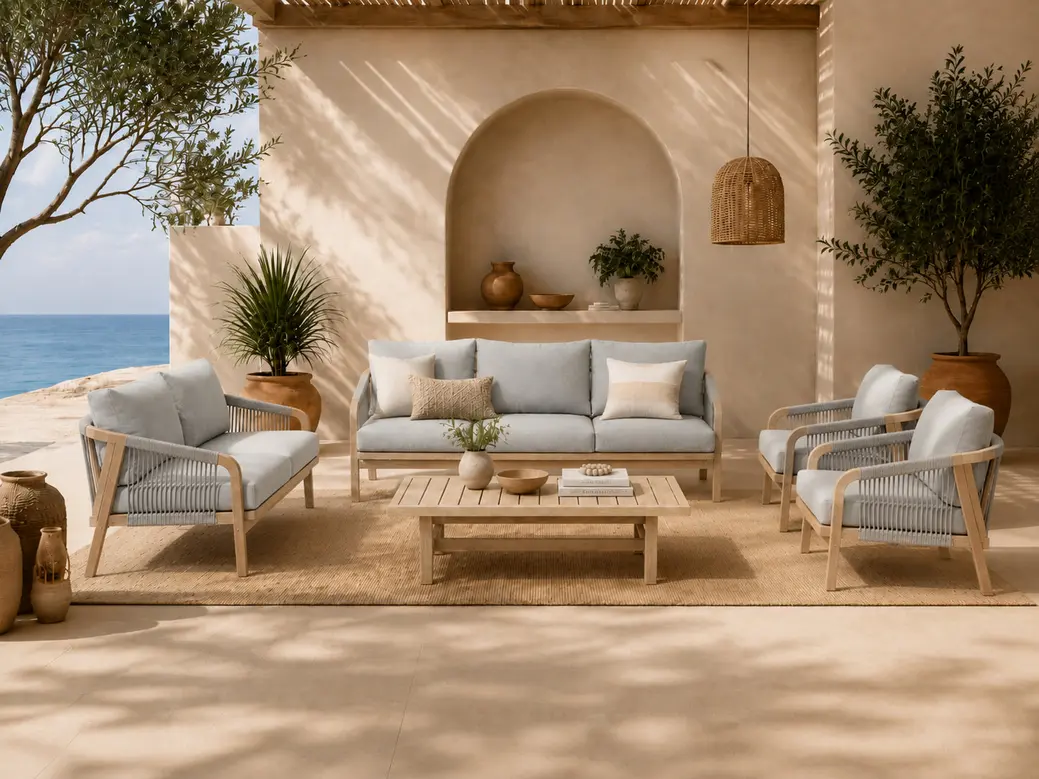
Table of Contents
Solution-dyed acrylic can be an excellent choice for indoor upholstery when your sofa, chair, window seat, or slipcover gets frequent direct sun, faces messy daily use, or may eventually move between indoor and outdoor spaces. Its central advantage is exceptional fade resistance: color is incorporated into the fiber during production rather than applied only to the finished yarn or fabric surface.
But solution-dyed acrylic indoor upholstery is not automatically the best choice for every room. “Indoor/outdoor” describes intended use and performance goals, not a single standard of softness, abrasion resistance, stain protection, or style. Before ordering yardage or choosing a sofa cover, evaluate the particular fabric’s construction, cleaning instructions, hand feel, abrasion information, and price—not just its fiber label.
Start with the reason you are considering it
Solution-dyed acrylic earns its reputation primarily through UV and color performance. A sofa beside tall south- or west-facing windows, a glass-enclosed sunroom, and a bright window seat can receive enough light to fade many textiles over time. In those settings, acrylic’s resistance to sun fading is a practical benefit rather than an outdoor feature you will never use.
This is also why the material is widely used for awnings, marine applications, and outdoor cushions. A supplied Reddit discussion about whether Sunbrella is excessive for indoor upholstery similarly identifies solution-dyed acrylic’s intended advantage as resisting fading better than ordinary polyester in sun exposure. That observation is useful context, but it should not be read as proof that every indoor project needs acrylic or that all polyester upholstery fades quickly.
If the furniture sits in a low-light room and your main concern is softness, a tailored look, low cost, or a particular pattern, an indoor-only upholstery fabric may be the better value.
Understand what solution dyeing does—and does not do
In solution dyeing, pigment is added before the synthetic fiber is formed. The color therefore runs through the fiber rather than sitting only near its exterior. This is the basis for the strong colorfastness associated with solution-dyed acrylic and solution-dyed polyester.
That process does not guarantee every other performance property. It does not, by itself, make fabric waterproof, stainproof, abrasion-proof, or equally easy to clean. Those qualities depend on the yarns, weave, fabric weight, backing, coatings, stain treatments, and the manufacturer’s finished product.
For example, water repellency may come from a finish, while waterproof performance generally requires a coating or specialized construction. A water-repellent finish can wear over time and may need maintenance. Do not assume a fabric marketed as indoor/outdoor will protect cushion foam from a large spill or repeated moisture exposure.
Check abrasion and pilling as separate questions
Acrylic upholstery fabric can be durable, but fiber content alone does not tell you how well it will withstand years of sitting, rubbing, pets, or active children. A tightly constructed furniture-weight fabric may perform very differently from a lighter acrylic intended for decorative cushions or awnings.
Ask the seller or manufacturer for the product’s upholstery suitability and available performance documentation. In particular, look for information on abrasion resistance and pilling resistance, then compare fabrics designed for the same application. A well-made polyester fabric can outperform a lighter or lower-quality acrylic fabric in abrasion resistance.
Pilling deserves separate attention because it affects appearance rather than simply whether the fabric tears or wears through. Surface pills can develop when loose fiber ends work their way out under rubbing. Yarn quality, weave structure, and use conditions all matter. If pilling would be especially frustrating on a frequently used family sofa, request a swatch and rub it by hand before purchasing. That small test cannot predict long-term performance, but it can reveal whether the texture, surface fuzz, and weave are acceptable to you.
Judge comfort from the actual fabric, not the outdoor label
Early outdoor fabrics often had a stiff or utilitarian reputation, which is why some shoppers hesitate to use them indoors. Modern solution-dyed acrylic can have a soft, comfortable hand, and products are available in solids, textures, woven patterns, and upholstery-weight constructions.
Still, not all options feel alike. Some are crisp and structured; others have a softer, more textile-like surface. Marine-oriented or heavily finished products may feel firmer than fabric developed specifically for cushions and indoor seating.
Order a generous swatch when possible. Place it where the furniture will sit, view it morning and evening, and touch it after it has been in the room for a while. This helps you assess texture, sheen, color undertones, and whether the fabric feels appropriate for long lounging rather than merely durable.
Breathability also depends more on construction and cushion design than on the phrase “indoor/outdoor.” A dense weave, backing, and foam cushion can feel warmer or less airy than an open, lighter upholstery textile. For a deeply upholstered sofa in a climate-controlled room, this may not matter much. It can matter more for a slipcover, a close-fitting chair seat, or furniture used in a warm sunroom.
Consider static and your preferred aesthetic
As a synthetic fiber, acrylic can be prone to static in dry indoor conditions. Static is not necessarily a deal-breaker, but it may be noticeable in heated homes during dry seasons, especially with throws, pet hair, or loose clothing. Room humidity, fabric construction, and routine vacuuming can influence how noticeable it becomes.
Also think about the visual effect you want. Solution-dyed acrylic often excels in clean, durable solids and outdoor-friendly patterns. However, some indoor-only textiles offer a broader choice of delicate textures, intricate prints, velvet-like surfaces, or highly tailored decorative looks. Polyester is particularly common in printed upholstery because it can take print well, while other fibers and blends may better suit a specific traditional, formal, or natural-fiber aesthetic.
The right question is not whether acrylic looks “outdoor.” It is whether the exact fabric sample suits the room and feels good enough for the way you use the furniture.
Treat stain resistance as product-specific
Many solution-dyed acrylic fabrics are promoted as easy to clean, and spills can often be addressed with mild soap and water. The colorfast nature of solution-dyed fibers can also make some cleaning approaches less risky for color loss than with less colorfast materials.
However, stain resistance is not identical to solution dyeing. Oil-based stains, food pigments, ink, pet accidents, and unknown household cleaners can behave differently. Some performance fabrics are engineered around stain and moisture resistance as their main benefit; for example, olefin-based performance upholstery is often positioned as a bleach-cleanable option for busy indoor households.
Before purchase, download or request the care instructions for the exact fabric. Check:
- Which spills can be treated with soap and water.
- Whether bleach solutions are permitted and at what dilution, if any.
- Whether spot cleaning, professional cleaning, or machine washing is recommended.
- Whether the fabric has a removable cover or is intended for fixed upholstery.
- Whether certain cleaners, solvents, brushes, or heat sources are prohibited.
Never rely on care instructions from a different brand simply because both fabrics are solution-dyed acrylic. Finishes and construction can change the approved cleaning method.
Compare it with indoor alternatives based on the room
Choose solution-dyed acrylic when fade resistance is the non-negotiable priority. It is particularly well suited to a sunroom, a sofa beside expansive windows, a bright coastal home, a window seat, or upholstery that must tolerate both indoor living and occasional outdoor use. It can also make sense for households that value easy-care fabrics and are comfortable paying for a specialized performance textile.
Consider solution-dyed polyester when you want strong colorfastness and performance potential but are comparing more price-sensitive options. It may offer a practical balance for a sunny indoor room, though the specific fabric still needs its own abrasion, stain, and care review.
Consider olefin-based performance upholstery if moisture and stain management are the bigger concern than prolonged direct sun. It is often marketed for easy cleaning and indoor family use, but its hand feel, texture, color selection, and construction should be assessed just as carefully.
Choose a conventional indoor upholstery fabric when the room has limited sun exposure and design or tactile comfort is more important than outdoor-level fade performance. A quality indoor fabric may deliver the softer hand, refined texture, pattern scale, or lower price you want without paying for performance you will not use.
Make the final decision with a swatch and specification sheet
The best solution-dyed acrylic upholstery fabric is not simply the one with the strongest outdoor reputation. It is the one that matches your light exposure, household habits, design goals, and maintenance tolerance.
Before committing, compare at least a few swatches in the actual room and ask for product-specific details on intended use, abrasion performance, pilling information, cleaning procedures, backing, and warranty terms. Check whether the quoted price reflects the fabric alone or also the extra labor sometimes needed for pattern matching, seam placement, or cushion construction.
If your furniture is in direct sunlight for much of the day, solution-dyed acrylic is often worth the premium because its fade resistance addresses a problem that is difficult to reverse. If the piece lives in a shaded room, select it because you genuinely like its feel, appearance, and care profile—not simply because it is known as an outdoor fabric.
References
- Solution-Dyed Acrylic vs Polyester for Outdoor Fabric. workroom-wisdom-and-fabric-finds.ghost.io. https://workroom-wisdom-and-fabric-finds.ghost.io/solution-dyed-acrylic-vs-polyester
- Acrylic Fabric vs. Performance Olefin Upholstery Explained | Revolution — Revolution Fabrics. revolutionfabrics.com. https://revolutionfabrics.com/pages/acrylic-performance-fabric-guide
- Should I Use Solution-Dyed Acrylic Fabric? - Sailrite. sailrite.com. https://www.sailrite.com/why-use-solution-dyed-acrylic-fabric
- Solution Dyed Acrylic Performance Fabrics - KOVI Fabrics. kovifabrics.com. https://www.kovifabrics.com/category/solution_dyed_acrylic
- Best Fabric for Sofa - How to Pick a Sofa Fabric that Lasts. ballarddesigns.com. https://www.ballarddesigns.com/howtodecorate/2017/04/whats-the-best-fabric-for-my-sofa
- Sunbrella-like Wheat Tan | Indoor / Outdoor Upholstery Fabric | Furniture Weight | Solution Dyed Acrylic | 54" Wide | By the Yard - Fabric Warehouse. fabricwarehouse.com. https://fabricwarehouse.com/sunbrella-like-wheat-tan-indoor-outdoor-upholstery-fabric-furniture-weight-solution-dyed-acrylic-54-wide-by-the-yard
- Durable outdoor furniture: solution-dyed acrylic vs polyester. facebook.com. https://www.facebook.com/kingspawnandjewelry/posts/heres-something-worth-knowing-before-you-invest-in-outdoor-furniture-not-all-out/1566424368828352
- 2 Yard Piece of Sunbrella-like Wheat Tan | Indoor / Outdoor Upholstery Fabric | Furniture Weight | Solution Dyed Acrylic | 54" Wide | By the Yard - Fabric Warehouse. fabricwarehouse.com. https://fabricwarehouse.com/2-yard-piece-of-sunbrella-like-wheat-tan-indoor-outdoor-upholstery-fabric-furniture-weight-solution-dyed-acrylic-54-wide-by-the-yard