Which Garment Industry SOPs Should Be Made Into Videos?
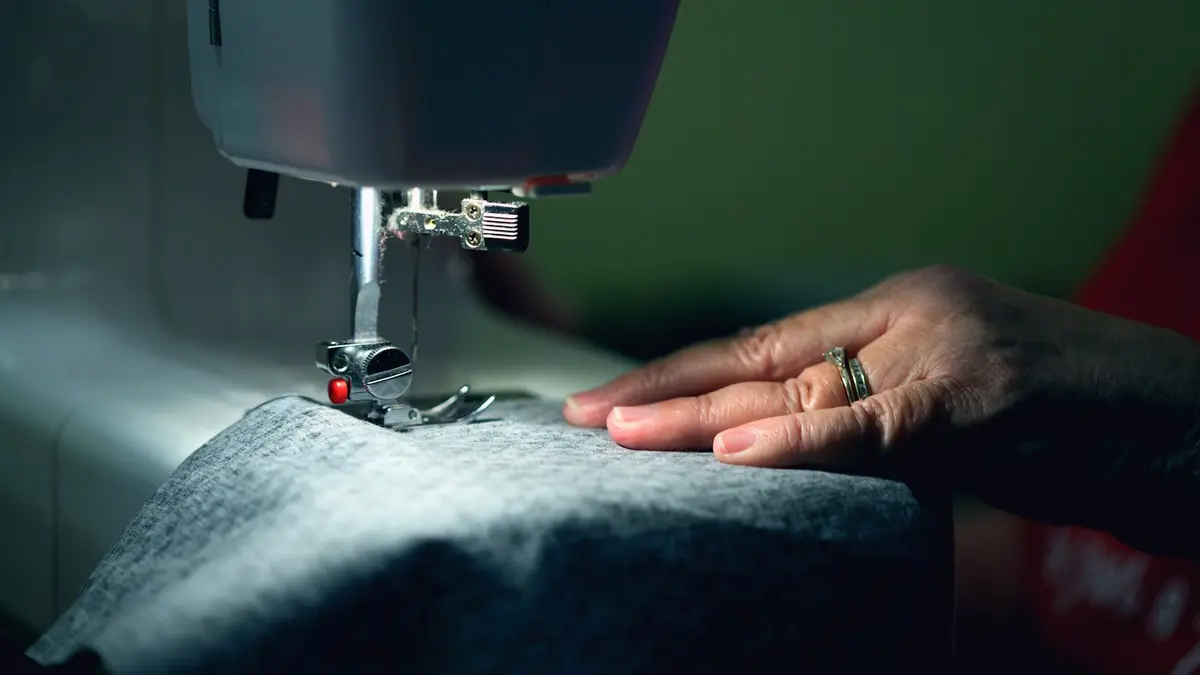
Table of Contents
Video Should Solve a Documentation Problem, Not Just Be More Engaging
Video is not automatically a better format than a written standard operating procedure. A factory should create SOP videos when a written document cannot efficiently communicate an essential part of the work: movement, sequence, location, timing, machine response, visual acceptance criteria, or safe physical technique. The decision should be based on instructional value rather than the assumption that employees simply prefer watching video.
Written SOPs remain effective for onboarding packs, repeat-task reference, shift handovers, controlled records, and procedures that an experienced operator can understand from a checklist or diagram. A clear written instruction may be all that is needed for a carton-label approval, a trim issue log, a maintenance record, or an approval route.
Video adds more value where the operator needs to see the work being done. Examples include threading an industrial sewing machine, setting a folder or guide, adjusting a loom, checking calibration points, identifying finishing defects, demonstrating fabric relaxation handling, or showing the order of operations during garment pressing and packing. In such cases, visual sequence and workplace context can reduce ambiguity that would otherwise require long written explanations.
The best question is not, “Would this SOP look good as a video?” It is, “What would an operator understand from seeing this that they may not understand from reading it?” If the answer is substantial, the SOP may be a useful candidate for video.
Four Tests for Deciding Whether an SOP Merits Video
A practical way to prioritize SOP videos for garment industry operations is to screen each procedure against four conditions: frequency, consequence of error, difficulty of explaining the physical action, and repeated training demand caused by turnover or workforce expansion.
An SOP that meets two or more conditions can enter a video-production shortlist. This is not a safety classification, a legal compliance assessment, or a substitute for a formal risk assessment. It is a production-planning tool that helps a factory focus its limited filming, review, translation, and update resources on procedures where video is likely to add distinct value.
1. The Procedure Is Performed Frequently
Frequently performed tasks create repeated opportunities for inconsistent instruction. When an operator completes the same activity many times per shift, small differences in technique can become habitual. Informal shortcuts may spread between operators, lines, or shifts, especially when supervisors demonstrate the work verbally and each trainer emphasizes different details.
In apparel manufacturing, recurring sewing operations, bundle handling, packing, metal-detector checks, machine-setting routines, inline inspection points, and end-line quality checks are common candidates. A short video can give new employees and transferred operators a consistent view of the intended sequence before they begin supervised practice.
Frequency alone does not mean that every task needs a video. A low-impact activity performed often may still be adequately supported by a one-page visual work instruction, a machine-side checklist, or a simple written SOP. Video is more useful when repetition is combined with another factor, such as a difficult motion, a high defect risk, or repeated need for induction training.
2. Errors Can Have Serious Consequences
Not all mistakes carry the same consequence. An error in a simple administrative approval may be inconvenient but easy to correct. By contrast, an incorrect procedure around moving machinery, cutting equipment, steam equipment, chemicals, electrical isolation, dyeing operations, or material traceability may create risks to people, equipment, product quality, or production continuity.
In textile and garment factories, the consequences may include operator injury, machine damage, contamination, incorrect shade handling, fabric-lot loss, defective garments, rejected shipments, or an interrupted production line. Procedures with these outcomes deserve greater scrutiny during training design.
Video can help clarify the sequence of actions, the location of controls, the condition of materials, and the visible signs that indicate a correct or incorrect setup. However, a video does not prove that a person can perform the work safely or correctly. Safety-critical activities may require supervised practical instruction, role-specific authorization, observation, and competence assessment. Factories should also review applicable workplace safety, machine-safety, chemical-handling, and training requirements for the location where the work is performed.
3. The Physical Action Is Difficult to Describe in Writing
Some operations can be explained in a few lines of text. For example, entering production data into a system, submitting a purchase request, or escalating a delivery issue may be well served by written steps and screenshots. Physical processes are often different. Written instructions can become lengthy when they must describe hand position, fabric direction, tension, component orientation, alignment marks, pressure, timing, and the order in which actions occur.
A video may communicate these details quickly. It can show how an operator supports stretch fabric while feeding it through a machine, aligns a pattern piece with notches, adjusts a sewing-machine guide, checks needle-to-edge distance, threads a machine, or positions a garment before pressing. Close-up footage can also show the difference between an acceptable seam appearance and a defect such as puckering, uneven topstitching, skipped stitches, or incorrect seam allowance.
The key issue is not whether the task is physical, but whether the physical detail matters. If a text instruction can accurately explain the procedure without excessive interpretation, written guidance may be sufficient. If the result depends on a motion or visual cue that is hard to describe, video is likely to offer an advantage.
4. Staff Turnover Repeats the Same Training Demand
Seasonal recruitment, production expansion, new-line startup, shift changes, and high turnover can place heavy training demands on line supervisors and technical teams. When the same procedure must be demonstrated repeatedly to new operators, a reusable training video can provide a consistent baseline explanation.
This is particularly useful for stable operations that recur across many lines or departments. Examples may include basic machine-start checks, standard packing methods, fabric inspection routines, garment measurement technique, finishing standards, or line-clearance preparation. Supervisors can use the video to introduce the expected method, then provide practical coaching and confirm whether the learner can perform the operation.
A video is less valuable when the procedure changes frequently or when the work varies substantially by style, fabric type, customer requirement, or machine configuration. In these cases, the cost of filming and revising may exceed the benefit.
Every video should have an owner and a document-control link to its source SOP. When the controlled written SOP changes, the related video should be reviewed for accuracy. Otherwise, operators may continue following an outdated visual demonstration even after the written procedure has been revised.
Many SOPs Are Better Kept as Written Documents
Converting an entire SOP library into video is usually inefficient. Written documents are quicker to revise, easier to print, simpler to compare during audits, and more practical when users need to locate a specific code, measurement, table, record field, or approval condition.
Procedures that commonly remain effective in writing include line-clearance checklists, maintenance records, quality-control forms, measurement tables, defect-code lists, chemical inventory records, packing specifications, contact lists, approval flows, and document-routing instructions. These materials are often used as controlled references rather than as demonstrations of a physical technique.
Administrative workflows are also often better in text, particularly when they are simple, role-based, or subject to frequent policy changes. Experienced workers may need a concise reminder rather than a full video. A printed checklist at the point of use can be more practical than asking an operator to replay a recording while working.
A hybrid model is normally the strongest option. Keep the written SOP as the controlled source of requirements, revision history, records, and detailed conditions. Use video to explain the difficult action, the critical visual standard, or the practical sequence that text cannot communicate efficiently.
Score the SOP Library Before Recording Anything
Before buying equipment, choosing a platform, or scheduling filming, review the SOP library using the four tests. A simple table helps departments compare procedures consistently and prevents video production from being driven only by the most visible requests.
| SOP or work instruction | Performed frequently | Error has serious consequence | Difficult to explain in text | Repeated training demand | Likely format |
|---|---|---|---|---|---|
| Sewing-machine threading and setup | Yes | Yes | Yes | Often | Video plus written SOP |
| Emergency shutdown sequence | Varies | Yes | Yes | Yes | Video, practical instruction, controlled SOP |
| Fabric inspection method | Yes | Yes | Often | Often | Video plus inspection standard |
| Garment folding and packing method | Yes | Moderate | Yes | Often | Video plus packing specification |
| Expense approval route | Varies | Usually low | No | Low | Written procedure |
| Contact-list update | Low | Usually low | No | Low | Written procedure |
An SOP meeting at least two conditions is a reasonable candidate for the video shortlist. The scoring does not determine legal obligations, safety classification, or operator authorization. Instead, it identifies where a visual learning asset may reduce ambiguity, improve consistency, or reduce repeated explanation.
The process also helps factories distinguish between useful video and unnecessary content. A large document library may contain hundreds of procedures, but only a small group may benefit meaningfully from filming.
Create the Priority List Before Selecting a Production Method
Select the SOPs first and the production method second. A factory that starts with cameras, editing software, or presentation templates may create polished content for procedures that did not need video in the first place.
For software workflows, screen recording can be effective. It can show how to enter inspection data, release a production order, create a nonconformance report, or retrieve a digital specification. For physical garment and textile operations, footage from the real workspace is usually more useful because the trainee must see the actual machine, material, tools, controls, and work posture.
An existing controlled Word or PDF SOP can be adapted into a training resource, but it should first be reviewed for its audience and learning objective. A new operator may need basic orientation and slow demonstration; a mechanic may need close-up technical detail; a supervisor may need to understand verification points and records. One video does not always suit all roles.
Multilingual access may also be important in factories with diverse workforces. Visual demonstrations, simple narration, subtitles, labels, and terminology checks can help reduce misunderstanding. Where procedures contain customer-sensitive information, machine settings, or restricted internal methods, access should be limited to relevant roles through the factory’s normal training and document-control process.
Completion status and watch time can indicate whether assigned personnel opened or viewed training material. They do not demonstrate that an operator can perform the procedure correctly. Verification should include observation, practical demonstration, supervisor sign-off, quality results, or another appropriate competence check.
Physical Procedures Often Require Real Camera Footage
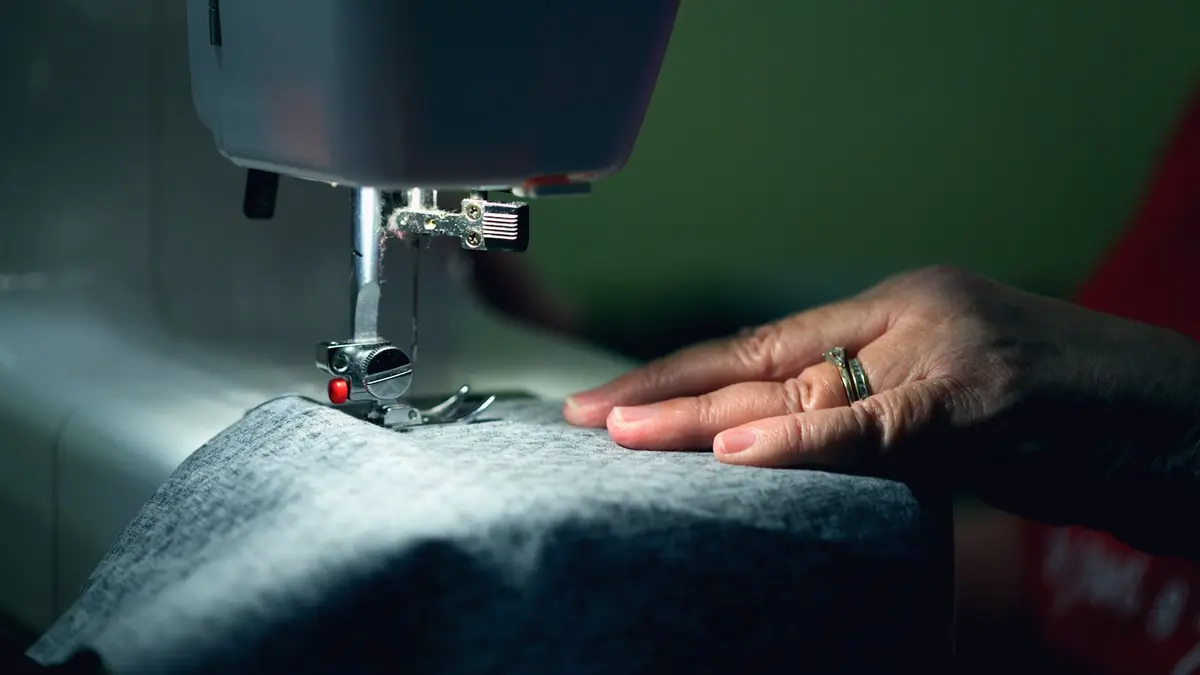
When the lesson is a physical technique, the video should normally show the real process. Close-up footage is especially valuable for equipment work, safety demonstrations, fabric handling, threading, loom adjustment, sewing methods, dyeing preparation, finishing technique, and maintenance tasks.
Source: Unsplash
A useful recording should show the relevant hands, tools, controls, materials, and machine area without distracting background activity. Multiple angles may be needed where the operator must understand both body position and component location. For quality-related work, the video can include clear examples of acceptable output and visible defects, provided the criteria remain aligned with the controlled quality standard.
Narrated explanations, diagrams, animations, or generated presenters can support orientation and explain why a step matters. They should not replace visual evidence when the action itself is the lesson. A presenter can describe needle selection, for example, but actual footage is more effective for showing how a needle is installed, checked, and aligned on a specific machine.
The written SOP should remain the controlled reference for requirements, limits, revision status, and exceptions. The video should demonstrate the parts of the procedure that are difficult to communicate in text. Start with a small pilot: choose representative SOPs, assess whether employees use the videos, gather supervisor and quality-team feedback, and compare the training value against the effort required to maintain the content. Expand the program only where video demonstrably improves instruction.