How Can You Spin a Wool and Linen Blend for Weaving?
Table of Contents
A wool and linen blend can be spun for weaving, but the easiest route is not to treat wool and flax as interchangeable fibers. Start with mostly wool and a modest amount of short flax tow, card or blend the fibers thoroughly, spin a firm and fairly smooth singles, then ply and sample it before committing to a warp.
For a beginning spinner, a wool-dominant flax wool yarn is usually more workable as weft than warp. Wool gives the blend cohesion and draftability; flax contributes crispness, density, and a cooler hand. A pure or high-linen blend becomes progressively less elastic and less forgiving under weaving tension, especially if it is unevenly spun.
Why wool and linen are difficult to spin together
“Linen” is the yarn or fabric made from flax fiber. Wool is a protein fiber with natural crimp, while flax is a bast fiber: a long, relatively straight plant fiber with little elasticity. Their different behaviors affect every stage of fiber blending for handspinning.
Wool fibers have crimp, which helps them hold together in a drafted fiber supply. Crimp also gives a wool yarn loft and some recovery after stretching. Flax fibers are smoother, denser, and inelastic. They do not spring back in the same way, and they can feel stiff or crisp before use and washing.
Length is another major issue. Fine line flax is often prepared as very long, parallel fibers. That preparation is excellent for traditional linen spinning, but it does not readily mix with the much shorter staple lengths common in wool. Drafting a long, slick flax fiber and a shorter crimped wool fiber at the same time can cause the flax to hang back, pull out in streaks, or form thick-and-thin areas.
A discussion in the r/Handspinning community highlights these practical concerns: participants noted the contrast between flax stiffness and wool elasticity, as well as the challenge created by their very different staple lengths. The same discussion suggests carders or a blending board to create a more consistent fiber ratio throughout the preparation.
This does not mean linen wool compatibility is impossible. It means the blend needs a purpose and a preparation that respects both fibers.
Choose the right flax before you start
For a first wool-and-linen blend, choose flax tow, not prized long line flax.
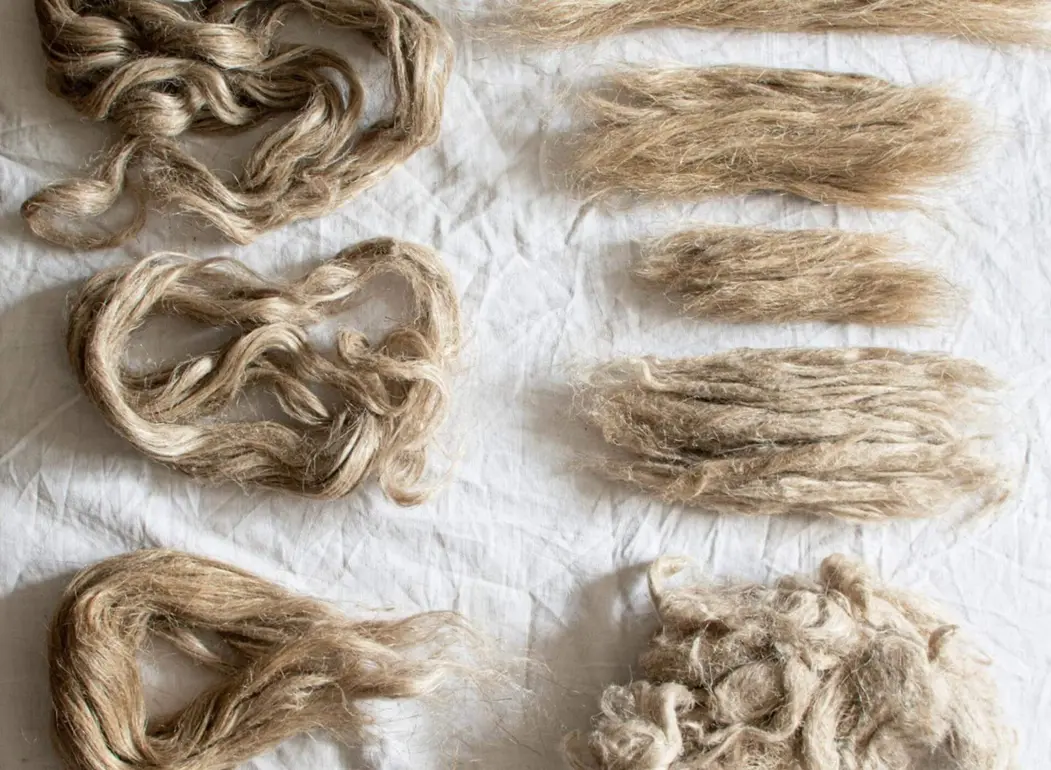
Flax tow contains shorter fibers removed during processing. It is generally fluffier and more manageable than long line flax. A flax-processing guide from Marina Skua describes sorting tow by fiber length and using the shorter, softer material in a wool blend. Those shorter fibers can be carded further and mixed with wool using hand carders or a drum carder.
Long line flax can be spun on its own, usually from an aligned supply, because its long fibers are an advantage when handled with traditional flax-spinning methods. Cutting or heavily disrupting good line flax simply to force it into a wool preparation sacrifices what makes that flax valuable in the first place.
Use flax tow when you want a blended yarn. Reserve line flax for a separate linen yarn, or consider using linen for one yarn system and wool for another in the same woven cloth.
Start with a wool-dominant blend
A beginner does not need to begin with an equal blend. In fact, a high percentage of flax can make drafting more difficult and can reduce the elasticity that makes wool pleasant to spin.
Try a small sample that is predominantly wool, with flax added as an accent. This lets the wool carry the structure of the fiber supply while allowing you to see what the flax changes in the yarn and fabric. If the sample drafts smoothly and produces a cloth you like, you can increase the flax in later trials.
Choose a wool that is not extremely short or delicate. A medium or longer-staple wool with some body is generally easier to control than very fine, short-staple wool. A prepared combed top can work well if the flax has been shortened and distributed evenly, while a carded preparation is often more forgiving for short tow because it does not require all fibers to be perfectly parallel.
Avoid adding several unfamiliar fibers at once. Wool, flax, silk, cotton, ramie, or synthetics may each alter drafting and yarn behavior. Learn what one addition does before making a three-fiber blend.
Prepare the fibers so they can draft together
The goal is not perfect uniformity. The goal is a fiber supply in which wool and flax appear consistently enough that one does not repeatedly draft away from the other.
Source: cdn.shopify
1. Open and sort the flax tow
Pull the tow apart gently. Remove hard fragments, obvious tangles, and very long coarse pieces that will not integrate into the wool. If the tow includes a wide mix of lengths, separate the longest pieces from the shortest fluffy material.
Do not expect flax tow to behave exactly like wool roving. It may feel slicker and may resist being pulled apart. Work in small amounts so it does not form a dense clump in the carding tool.
2. Weigh or divide the fibers consistently
If you want repeatable yarn, prepare the wool and flax in deliberate portions. You can weigh them if you have a scale, or divide each material into visually equal bundles for a small sample.
Consistency matters because an uneven fiber ratio can create sections that behave like wool yarn and others that behave like much stiffer flax yarn. That variation may be interesting in an art yarn, but it is less useful when you need predictable weaving behavior.
3. Card in thin layers
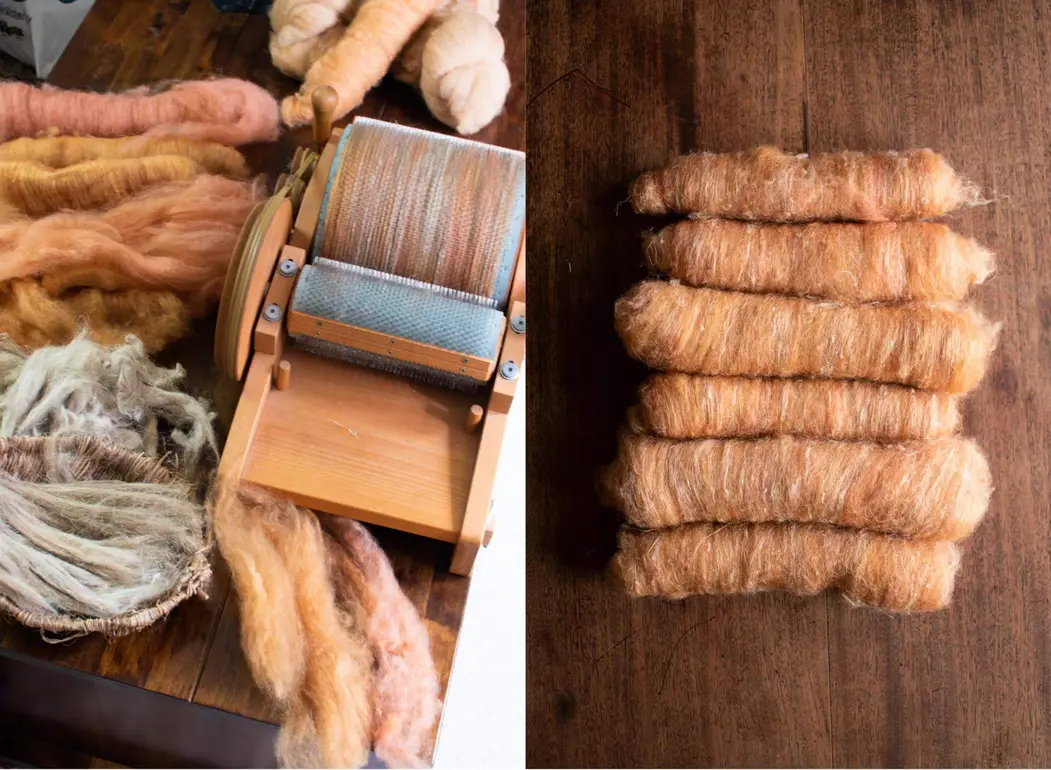
Use hand carders, a blending board, or a drum carder. Lay down a thin layer of wool, add a sparse scattering of flax tow, and cover it with more wool. Card or blend repeatedly until the flax is dispersed rather than sitting in distinct clumps.
A blending board is useful for making small controlled batches. Hand carders are slower but allow close inspection of the fibers. A drum carder can prepare larger quantities, but feed it lightly; overloading may leave flax clumps or create a dense batt that is difficult to draft.
Source: marinaskua
4. Make a manageable form for spinning
For a more woolen-style yarn, pull the batt into strips or make loose rolags. For a smoother yarn, gently attenuate the blended fiber into a narrow roving-like strip. Either approach can work, but the key is that the strip drafts steadily.
Before spinning the full batch, pull a few inches apart with your hands. If flax repeatedly slides out as a separate bundle, blend again. If the preparation feels compacted, open it up rather than trying to force a difficult draft at the wheel.
Spin with enough twist for a stable weaving yarn
Use a drafting method that gives you time to control the fiber supply. A short forward draw, short backward draw, or another controlled draft is usually easier than trying to spin the blend quickly. Keep your hands far enough apart that the fibers can slide; a general handspinning principle is to space them beyond the staple length rather than gripping the same fibers from both sides.
Aim for a yarn that is even and moderately firm rather than lofty and fragile. Too little twist leaves a handspun weaving yarn prone to breaking and abrasion. Too much twist can make the yarn wiry and increase the tendency to kink, but a blend containing flax often needs more structural twist than an airy wool yarn.
The flax may create occasional crisp flecks or small slubs. Small, secure irregularities are not necessarily a problem for weft. However, stop and correct any section where a thick flax bundle is held by only a few wool fibers. That is a likely weak point.
A wheel is convenient for producing enough yarn for weaving, but it is not a requirement for sampling. A spindle can teach you how the blend drafts and how much twist it needs. If you use a wheel, select a comfortable ratio and take-up that lets you draft without the yarn being yanked from your hands. A fast take-up can make an already challenging blend harder to manage.
Ply the yarn before weaving with it
For most beginner weaving uses, a two-ply yarn is a sensible starting point. Plying balances the singles, increases cohesion, and makes the yarn more resistant to wear than a lightly spun single.
Make two similar singles and ply them in the opposite direction from the singles twist. Keep the plying tension steady. If one single contains much more flax than the other, the finished yarn can look and behave unevenly, so work from a well-mixed preparation.
After plying, wash and dry a sample skein according to the needs of the wool in the blend. Washing can help the wool fibers settle and bloom around the flax. Do not assume the yarn will gain wool-like elasticity after finishing; flax remains fundamentally inelastic.
Decide whether it belongs in warp or weft
For a first project, use your wool-and-linen handspun as weft. Weft yarn travels across the shed and generally experiences less sustained tension than warp yarn. You can appreciate the blend’s texture and color effects while avoiding the stress of dressing a loom with an unfamiliar yarn.
If you want to try it as warp, make and test a larger sample first. A warp yarn needs consistent diameter, sufficient twist, and enough abrasion resistance for heddles, reed, and repeated tension changes. Because flax reduces elasticity, tensioning requires more care. A yarn that is perfectly pleasant as weft may still be frustrating as warp.
Another practical option is to separate the fibers by yarn system: use a linen or cotton-like yarn for warp and a wool or wool-flax blend for weft. The Reddit handspinning discussion notes the historical use of linen warp with wool weft. This is not the same as a blended yarn, but it can better use the distinct strengths of each fiber.
Sample before spinning a full project quantity
Spin a small skein, weave a swatch, wash it, and inspect the result. Look for these questions rather than a single idea of success:
- Does the yarn survive winding, weaving, and finishing without breaking?
- Does the fabric feel too stiff, too scratchy, or pleasantly structured?
- Are flax clumps pulling loose from the yarn?
- Does the cloth have the drape, warmth, density, or texture you wanted?
- Is the yarn better as weft than warp?
A successful sample may not look like commercial wool-linen yarn. Handspun blends can show visible flax flecks, a dry texture, and controlled irregularity. What matters is whether the yarn is structurally sound and suitable for the fabric you intend to weave.
Common mistakes to avoid
Beginning with long line flax. Long fibers are difficult to integrate with ordinary wool staples. Choose flax tow for blending and save line flax for linen spinning.
Using too much flax in the first batch. A wool-dominant blend makes it easier to learn how flax changes drafting, twist, and finished fabric.
Carding only once. Incomplete mixing produces alternating wool-heavy and flax-heavy segments. Blend in thin layers and repeat as needed.
Spinning an airy single for a hard-working warp. Lofty yarn can be appealing, but weaving places demands on yarn. Add sufficient twist and ply when durability is needed.
Skipping the woven sample. A skein can look attractive while behaving poorly under loom tension. A small swatch is the most useful test of whether the yarn suits your intended weave.
The most reliable approach to spinning wool linen blend yarn for weaving is therefore simple: use short flax tow, keep wool in control of the blend, prepare the fibers thoroughly, spin a firm yarn, and begin with weft. Once you understand how your particular wool and flax behave together, you can adjust the blend ratio and construction with much more confidence.
References
- Beginning spinner with some unusual goals -- advice? : r/Handspinning. reddit.com. https://www.reddit.com/r/Handspinning/comments/druvi5/beginning_spinner_with_some_unusual_goals_advice
- How to Spin Flax - It’s Easier Than You Think!. youtube.com. https://www.youtube.com/watch?v=9Tn47G_nAuk
- Rescuing waste fibre: processing flax tow for spinning – Marina Skua. marinaskua.com. https://marinaskua.com/blogs/marinaskua/rescuing-waste-fibre-processing-flax-tow-for-spinning
- Spinning Ramie and Wool Together — is the yarn any good?. youtube.com. https://www.youtube.com/watch?v=hMSh6QYfy5k&vl=en
- What to know about Flax/Linen : r/Handspinning. reddit.com. https://www.reddit.com/r/Handspinning/comments/1eicc3g/what_to_know_about_flaxlinen
- Spinning flax into linen. | Aker Fiber Farm LLC. facebook.com. https://www.facebook.com/akerllc/videos/spinning-flax-into-linen-nhgrown-akff-akerlinen-handspun/3713980318842476
- On Merino and Linen — Arly Knits. arlyknits.com. https://www.arlyknits.com/blog/on-merino-and-linen
- Spinning | Southeast Fiber Arts Alliance. fiberartsalliance.org. https://www.fiberartsalliance.org/Basic_Techniques_M-Z/spinning