How to Conduct a Life Cycle Assessment for Textile Products
Table of Contents
Introduction to Textile Life Cycle Assessment
A textile life cycle assessment (LCA) is a structured method for evaluating the environmental impacts associated with a textile product across its life cycle. Depending on the study boundary, this can include fiber production, yarn and fabric formation, wet processing, garment manufacturing, distribution, consumer use, and end-of-life treatment.
LCA helps textile businesses move beyond single-issue decisions. For example, a material with lower fossil-resource use may have different implications for water demand, chemical management, durability, recycling, or use-phase energy. A properly designed assessment can support product development, supplier engagement, process improvement, environmental communication, and more informed sourcing decisions.
Typical textile concerns include greenhouse-gas emissions, energy consumption, freshwater use, eutrophication, acidification, chemical-related impacts, wastewater, waste generation, microfiber release, and end-of-life emissions. The relevance of each category depends on the product, geography, manufacturing technology, and intended use.
Development of LCA in the Textile Sector
Life cycle thinking developed through environmental and resource studies conducted during the 1960s and 1970s. Over time, the method became more standardized and was adopted across manufacturing sectors to compare products, processes, and packaging systems on a broader environmental basis.
Textile-sector interest grew as supply chains became more global and concerns increased about water pollution, energy-intensive processing, hazardous chemical use, fiber sourcing, and the environmental consequences of short product lifetimes. Textile products are particularly suitable for life cycle analysis because impacts can occur at many stages and may shift between stages when materials or processes change.
International standards, guidance from organizations such as UNEP, and European product-footprint initiatives have contributed to more consistent LCA practice. LCA principles also underpin environmental product declarations and product environmental footprint approaches, although each reporting program may set additional product-category rules.
Textile LCAs require product-specific choices. Fiber type, agricultural inputs, polymer production, spinning efficiency, dyeing chemistry, electricity sources, laundering assumptions, product durability, and end-of-life routes can all materially affect results.
What Is a Life Cycle Assessment?
Life cycle assessment is a method for compiling and evaluating the inputs, outputs, and potential environmental impacts of a product, service, or system over its life span. ISO 14040 and ISO 14044 describe the general LCA framework and its iterative nature.
The four connected phases are:
- Goal and scope definition: establish why the study is being performed, what it covers, and how results will be used.
- Life cycle inventory (LCI): collect and quantify inputs, outputs, emissions, and wastes.
- Life cycle impact assessment (LCIA): convert inventory flows into impact indicators using a selected characterization method.
- Interpretation: evaluate data quality, identify major contributors, test assumptions, and develop conclusions consistent with the study goal.
An LCA does not automatically identify a universally “best” textile. Results depend on the functional unit, system boundary, datasets, allocation choices, impact method, and assumptions. Transparent documentation is therefore essential.
Set the Goal and Scope of a Textile LCA
The first practical step is to define the decision the LCA is intended to support. A study designed for internal product development may use different data and communication rules from a comparative study intended for public environmental claims.
Key Goal-and-Scope Decisions
A functional unit provides the reference against which all inputs and impacts are calculated. It should reflect the service delivered, not simply the mass of material. “One garment” can be useful for a basic product assessment, while a more robust comparison may define wear performance, number of uses, fabric area, protective function, or required service life.
System boundaries must then be established. Common options include:
- Cradle-to-gate: from resource extraction through production at the factory gate. This is useful for material or manufacturing decisions but excludes consumer care and disposal.
- Cradle-to-grave: from raw-material extraction through use and end-of-life. This is often appropriate for a full product footprint.
- Cradle-to-cradle: includes circular pathways such as reuse, recycling, and recovery, while requiring clear rules for allocation and avoided-burden assumptions.
Select impact categories that fit the goal and known product risks. Global warming, water-related impacts, eutrophication, acidification, resource use, and toxicity-related categories may be relevant. Document assumptions about production geography, electricity mix, factory technology, garment lifetime, washing behavior, drying method, and disposal routes.
Build the Life Cycle Inventory for Textile Products
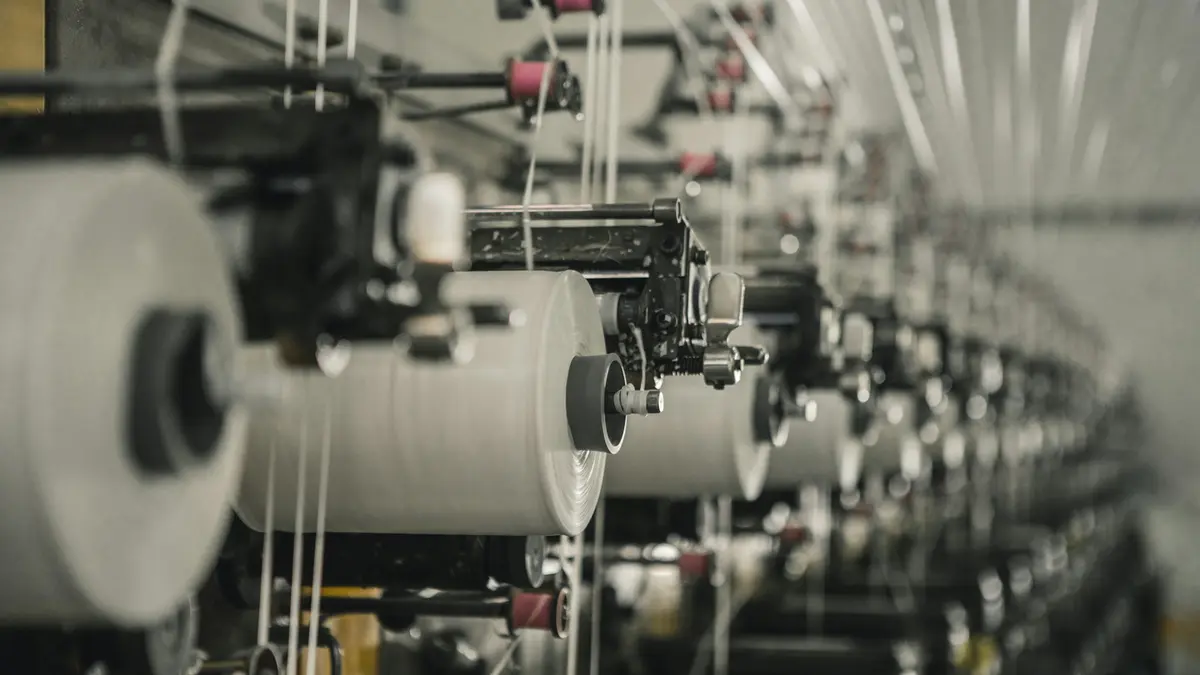
The life cycle inventory is the data-collection stage. It quantifies the materials, fuels, electricity, water, chemicals, packaging, transport, emissions, wastewater, wastes, and co-products associated with the defined product system. Primary data from suppliers and factories is generally preferable for processes that are important to the study results.
Source: Unsplash
The inventory should link each process to the functional unit. For example, if the functional unit is one finished shirt, fabric loss, cutting waste, trims, labels, packaging, and expected product lifetime should be represented consistently. Secondary databases can fill gaps, but their geography, age, technology, and representativeness should be checked.
Raw Material Sourcing
For natural fibers, relevant inventory flows can include land use, irrigation, fertilizers, pesticides, farm energy, harvesting, and transport. The appropriate inputs vary by crop, region, yield, and farming system.
For synthetic fibers, inventory work commonly includes fossil-resource extraction, monomer production, polymerization, melt processing, and fiber spinning. For regenerated cellulosic fibers, inventories may include pulp production, chemical or solvent use, energy demand, and solvent-recovery performance where applicable.
Yarn and Fabric Formation
Record electricity and thermal energy used in opening, carding, spinning, winding, weaving, knitting, and associated material handling. Yield losses, yarn breakage, fabric defects, and production waste can affect the amount of upstream material required per functional unit.
Where relevant, include sizing agents, desizing chemicals, lubricants, cleaning agents, and maintenance materials. Not every minor input requires the same level of detail; cut-off decisions should be documented and tested if they may influence results.
Dyeing and Finishing Operations
Wet processing is often data-intensive because it may require substantial water, heat, chemicals, and wastewater treatment. Capture dye classes, auxiliaries, salts, alkalis, acids, detergents, softeners, coatings, mordants, fixatives, and other finishing agents when they are relevant to the product.
Energy used for bath heating, washing, drying, curing, stentering, printing, and steam generation should be linked to the textile mass processed. Also record wastewater volumes, treatment approach, sludge generation, air emissions, and rejected fabric where available.
Distribution and Retail
Distribution data should identify transport mode, route length, shipment mass, loading assumptions, and major handling stages. Truck, sea freight, rail, and air freight have different emissions profiles, so replacing an unspecified transport assumption with actual logistics data can improve accuracy.
Include packaging materials such as polybags, cartons, hangers, protective films, and pallets if they are material to the functional unit. Retail energy may be included when the study scope and allocation method justify it.
Product Use Phase
The use phase should model realistic care behavior for the intended market. Relevant variables include washing frequency, wash temperature, machine efficiency, load size, detergent use, tumble drying, ironing, dry cleaning, and expected number of wears.
Service life is especially important. A durable garment used more times can distribute manufacturing impacts over more wears, provided its care requirements and replacement behavior are modeled consistently. Care labels, consumer research, and scenario analysis can help address uncertain behavior.
End-of-Life Pathways
End-of-life modeling may include reuse, resale, repair, recycling, incineration, landfill, composting, or export for sorting. Textile composition, trims, coatings, dyes, contamination, and collection infrastructure affect which routes are feasible.
Landfill and incineration can generate different emissions, while recycling models require explicit assumptions about collection, sorting, yield, substitution, and allocation. Textile laundering may also release microfibers, and dyeing operations can generate wastewater, sludge, and emissions that should be represented where data and study scope allow.
Perform the Life Cycle Impact Assessment
Life cycle impact assessment converts inventory flows into potential environmental impact results. For example, emissions of different greenhouse gases can be characterized into a common global-warming indicator, often expressed as kilograms of carbon-dioxide equivalent (kg CO2e).
The selected LCIA method supplies characterization factors that connect inventory flows to impact categories. LCA software such as SimaPro, OpenLCA, and GaBi can organize process models and apply available impact-assessment methods, but the quality of the result still depends on the model, datasets, and assumptions selected by the practitioner.
Common Textile LCIA Impact Categories
Common categories in textile LCAs include:
- Global warming potential, commonly reported in kg CO2e.
- Eutrophication, associated with nutrient releases to water or air.
- Acidification, associated with emissions that can contribute to acid deposition.
- Water use or water depletion, depending on the method and regional context.
- Human toxicity and ecotoxicity-related indicators, where the chosen method and inventory data support their use.
- Resource use, including fossil-resource or mineral-resource indicators in some methods.
Results should be interpreted category by category. A lower score in one category does not necessarily mean lower impact across all environmental concerns.
Interpret Results and Identify Hotspots
Interpretation identifies which life-cycle stages, materials, processes, or emissions contribute most to each impact category. These major contributors are commonly called hotspots. In textiles, hotspots may occur in fiber cultivation, polymer production, electricity-intensive spinning, wet processing, drying, consumer laundering, or end-of-life treatment.
Use contribution analysis to identify the processes driving results, then test improvement scenarios. Examples include changing fiber composition, increasing recycled content, improving dye fixation, using renewable electricity, reducing fabric loss, changing transport modes, or improving garment durability.
Sensitivity analysis is essential when important inputs are uncertain. Test plausible variations in washing frequency, product lifetime, electricity mix, factory efficiency, recycling yield, and transport. Recommendations should focus on changes that remain beneficial across realistic scenarios rather than on a single uncertain model outcome.
Challenges in Textile LCA Studies
Textile supply chains are multi-tiered and often lack complete primary data. A brand may know the final garment factory but have limited visibility into spinning, dyeing, chemical production, fiber sourcing, or waste treatment. Generic datasets can provide useful estimates, but they may not represent a specific supplier or region.
Results are also sensitive to methodological choices. Washing behavior, dryer use, local electricity generation, crop yield, production technology, and the year represented by a dataset can change conclusions. Comparisons are meaningful only when products provide an equivalent function and are modeled with consistent assumptions.
Practical responses include supplier questionnaires, metered utility data, chemical inventories, production records, third-party verification, and staged data-improvement plans. Established databases, including Ecoinvent and European life cycle data resources where available and appropriate, may support background processes but should not replace material primary data without review.
Standards and Software for Textile LCA
ISO 14040 and ISO 14044 provide the core principles, framework, requirements, and guidance for LCA. They emphasize goal definition, transparent assumptions, data quality, interpretation, and appropriate review when studies support comparative assertions disclosed to the public.
The Higg Index and related apparel sustainability tools are used in parts of the textile and apparel sector to assess environmental performance. Their use should be distinguished from a complete ISO-conformant LCA, as scope, methodology, datasets, and intended outputs may differ.
SimaPro, OpenLCA, and GaBi are commonly used LCA modeling tools. The appropriate choice depends on organizational needs, licensing, database access, methodological capability, and analyst competence. The European Union Product Environmental Footprint approach is another route intended to improve consistency and comparability of product environmental information under defined rules.
Textile LCA Application Examples
The following simplified examples show how an LCA can structure product decisions. They are illustrative scenarios, not universal product benchmarks. Actual results require product-specific data, a defined impact method, and transparent assumptions.
Example: Cotton T-Shirt
Consider a functional unit of one 150-gram cotton T-shirt. A simplified model may indicate approximately 2.5 kg CO2e and 2,500 liters of water under its particular assumptions. These figures should not be generalized because cotton origin, irrigation conditions, yarn and fabric production, dyeing, electricity, consumer care, and garment lifetime can substantially change results.
In such a model, irrigation and dyeing energy may be identified as key contributors. Potential improvement scenarios could examine certified or lower-input cotton systems where appropriate, more efficient irrigation, lower-impact dyeing routes, improved wastewater treatment, renewable energy, and longer garment use.
Example: Polyester Sportswear
Consider one 200-gram pair of polyester leggings. An illustrative study may estimate approximately 5.3 kg CO2e, while also recognizing that laundering can release synthetic microfibers. The result is sensitive to polymer source, recycled-content assumptions, knitting and dyeing efficiency, washing habits, drying, and end-of-life treatment.
Fossil-based feedstocks and consumer care may appear as hotspots in this scenario. Relevant alternatives may include recycled polyester where quality and traceability requirements are met, process-energy improvements, durable construction, microfiber-aware care guidance, and reduced unnecessary washing.
Emerging Directions for Textile LCA
Textile LCA is increasingly connected with digital product information. Factory utility meters, production systems, material traceability platforms, and supplier data exchanges may improve the availability of more current inventory data. However, digital data still requires verification, consistent units, and transparent calculation rules.
Blockchain-based traceability, QR-linked product information, digital labels, and digital twins may help organizations document material flows and communicate selected environmental information. AI-supported tools may also help designers test scenarios earlier in development, but their outputs require expert review and sound underlying data.
LCA data can also support extended producer responsibility planning, circular-design decisions, collection strategies, and reporting. Its value depends on maintaining methodological consistency rather than treating a footprint score as a stand-alone sustainability claim.
Key Takeaways
Textile LCA is both an environmental assessment method and a decision-support tool. It can help designers, manufacturers, sourcing teams, and brands identify important impacts across fiber production, manufacturing, distribution, use, and end-of-life.
A credible study starts with a clear functional unit and system boundary, builds a transparent inventory, applies suitable impact methods, and interprets results with sensitivity analysis. The most useful outcome is not simply a footprint number, but a defensible understanding of where improvements are likely to matter.
When supported by appropriate data, review, and communication practices, textile LCA can strengthen supply-chain improvement, product development, environmental reporting, and substantiated sustainability communication.
References and Further Standards
For formal LCA requirements and terminology, consult ISO 14040 and ISO 14044. For product-footprint approaches, consult applicable European Commission Product Environmental Footprint guidance and relevant product-category rules. OpenLCA documentation, LCA database documentation, and apparel-sector methodology resources can help users understand model construction, data selection, and reporting limitations.