Textile Manufacturing Process: Main Stages and Key Differences
Table of Contents
Textile Manufacturing Questions and Answers
The textile manufacturing process converts fibers, yarns, or textile webs into products with specified construction, appearance, comfort, durability, and performance. Depending on the product, production can include fiber preparation, yarn manufacture, fabric formation, wet processing, finishing, cutting, sewing, inspection, and packing. Each stage affects the next: uneven yarn can affect fabric appearance, inadequate preparation can reduce coloration consistency, and unsuitable finishing can alter handle or dimensional stability.

Source: Unsplash
There is no single process flow that applies to every textile product. A mill producing ring-spun cotton yarn follows a different route from a knitting operation making polyester jersey, a nonwoven producer bonding fiber webs, or an apparel factory assembling finished garments. The required route is determined by the fiber type, yarn or fabric construction, target shade or design, end use, quality requirements, available machinery, production volume, and commercial cost targets.
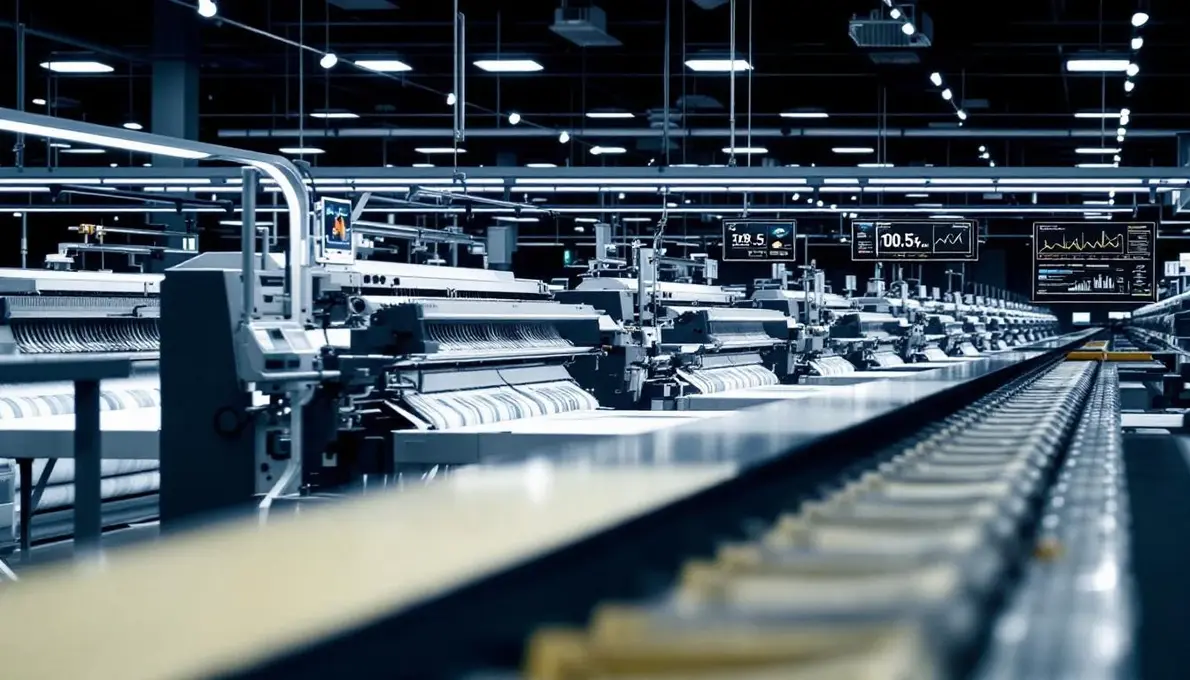
Modern textile production also depends on process control and automation. Sensors, laboratory testing, recipe management, machine monitoring, automated material handling, and inspection systems can help mills maintain repeatability. However, automation does not remove the need for technical decisions about fiber selection, construction, chemical preparation, color matching, finishing conditions, and final quality evaluation.
What Stages Are Involved in Textile Manufacturing?
A representative textile manufacturing sequence begins with preparing fibers, continues through yarn or fabric formation, and may then include coloration and finishing. If the final commercial product is apparel, the route extends into garment manufacturing. The sequence should be understood as a practical framework rather than a universal rule, because coloration and finishing can occur at several different points in the supply chain.
For staple-fiber yarns, the early stages often include opening, cleaning, blending, carding, drawing, and spinning. These operations separate and align fibers, remove or reduce unwanted material, blend components where required, and form yarn with a selected count and structure. Some yarn systems include additional operations such as combing, winding, doubling, twisting, or package preparation. Filament yarn production follows a different route, generally involving polymer extrusion, filament formation, drawing, texturing, winding, or other processes suited to manufactured fibers.
After yarn is prepared, it can be converted into fabric or used directly in later applications. Woven fabrics are formed by interlacing warp and weft yarns on a loom. Warp preparation may include winding, warping, sizing, and drawing-in or tying-in before weaving. Knitted fabrics are formed by creating interconnected loops, usually on weft-knitting or warp-knitting machines. The construction selected affects stretch, drape, cover, air permeability, surface texture, and the processing behavior of the fabric.
A typical route can be summarized as follows:
| Production area | Common operations | Main output |
|---|---|---|
| Fiber and yarn preparation | Opening, blending, carding, drawing, spinning, winding, twisting | Yarn package or prepared fiber material |
| Fabric formation | Warping, sizing, weaving, knitting, or nonwoven web formation and bonding | Greige fabric or textile web |
| Pretreatment | Desizing, scouring, bleaching, washing, heat setting, or other substrate-specific preparation | Clean and process-ready substrate |
| Coloration and design | Yarn dyeing, piece dyeing, garment dyeing, printing, or other color application methods | Colored or patterned textile |
| Finishing | Mechanical, chemical, thermal, coating, drying, compacting, raising, calendaring, or performance finishing | Fabric with required handle and properties |
| Product manufacture | Cutting, sewing, pressing, trimming, inspection, packing | Ready-made garment or made-up textile item |
Greige woven fabric commonly requires preparation before dyeing or printing. For cotton and many cotton-rich constructions, this may include desizing to remove weaving size, scouring to remove natural and processing impurities, and bleaching when a clean white base or bright color result is needed. Synthetic fabrics may require different preparation steps, while blends must be processed with attention to the behavior of each fiber component. Heat setting is frequently used for thermoplastic fibers and blends to help control dimensions and fabric form before or during later processing.
Color can be introduced at several points. Fiber dyeing colors loose stock before spinning. Yarn dyeing colors yarn before weaving or knitting and is often used when the final fabric requires colored stripes, checks, jacquard effects, or other yarn-level designs. Piece dyeing colors fabric after it has been woven or knitted. Garment dyeing colors cut-and-sewn items after assembly and can create particular visual effects, although the garment construction and component selection must suit the process.
Finishing is the stage in which fabric is adjusted for its intended appearance and performance. Mechanical treatments may modify surface texture, width, thickness, smoothness, pile, or dimensional behavior. Chemical and functional finishes may be used to influence properties such as softness, crease recovery, water interaction, soil release, or other end-use characteristics. Drying, curing, compacting, stentering, and inspection are also important because they help establish usable fabric dimensions and consistent quality.
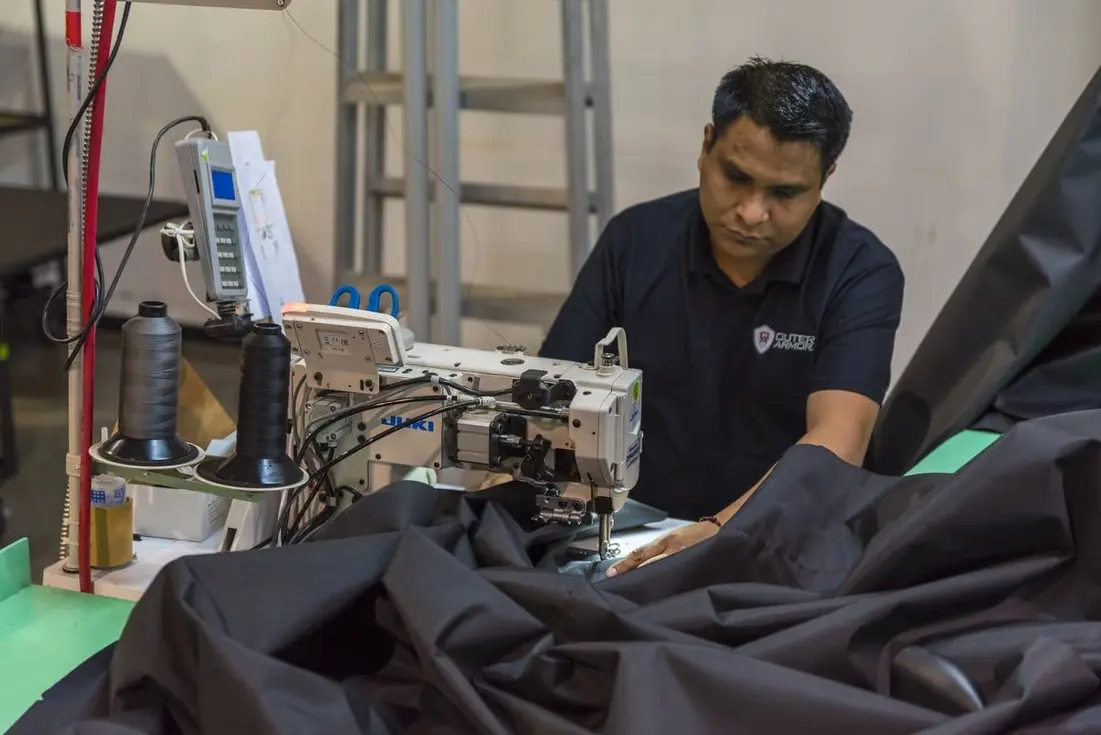
The endpoint depends on what the manufacturer sells. A spinning mill may finish its responsibility at yarn packages. A fabric mill may deliver dyed and finished rolls. A vertical manufacturer may control yarn, fabric, coloration, finishing, and garment production. For apparel, finished fabric is normally inspected before spreading, cutting, sewing, pressing, trimming, final inspection, packing, and shipment. Made-up home textiles and technical textile products may follow comparable assembly steps, but their equipment and quality criteria can differ.
Nonwovens are a useful reminder that textile manufacturing is not limited to spinning, weaving, and knitting. In a nonwoven route, fibers may be opened and formed into a web, then bonded mechanically, thermally, chemically, or by a combination of methods. The resulting material may be converted, coated, laminated, printed, or finished according to its intended application.
Does Every Textile Require Mercerization?
No. Mercerization is an optional treatment, used mainly for cotton and certain cotton-rich materials when its effects support the required product specification. It is not a mandatory stage in the textile manufacturing process, and many cotton fabrics, most synthetic textiles, wool materials, and numerous blended products are manufactured without it.
Mercerization treats cotton under controlled alkaline conditions, commonly using a concentrated sodium hydroxide solution. Depending on the process route, the material may be held under tension or allowed to relax. Control of concentration, temperature, time, washing, neutralization, tension, and fabric movement is important because these variables influence the final result. Mercerization can be performed on cotton yarn, woven fabric, knitted fabric, or other suitable cotton-based forms.
When correctly applied, mercerization can increase cotton’s luster, improve dye uptake, and modify its physical behavior. The luster effect is especially relevant for fabrics intended to have a cleaner, brighter, or more polished surface appearance. Improved dye affinity can assist in obtaining strong or more uniform color development, although final dyeing performance still depends on preparation quality, dye selection, recipe control, equipment, and washing-off procedures.
The effect on strength and dimensions should be considered in context. Cotton can show beneficial changes in strength when mercerized under suitable tension and controlled conditions. However, the actual result depends on fiber quality, yarn structure, fabric construction, machine settings, and the complete processing sequence. It should therefore not be assumed that mercerization will produce the same strength or shrinkage result for every cotton article.
Mills choose mercerization by balancing technical and commercial requirements. It may be selected for premium shirting, smooth woven goods, sewing thread, selected knitwear, or products requiring improved dye response and surface appearance. It may be omitted when the desired aesthetic is more natural or matte, when the construction does not justify the extra process, when the end use does not require its benefits, or when cost and production efficiency are higher priorities.
For sourcing and quality teams, the useful question is not simply whether a fabric is mercerized. The more relevant questions are why the treatment was specified, whether it is suitable for the fiber composition and construction, what appearance and coloration result is expected, and how the finished material will be evaluated. These considerations help connect a processing decision to the product brief rather than treating mercerization as a universal quality indicator.
How Do Textile Dyeing and Printing Differ?
Dyeing and printing are both coloration processes, but they apply color in different ways. Dyeing generally colors the full substrate, such as fiber, yarn, fabric, or a completed garment, to create an overall shade. Printing applies color selectively to defined areas of a textile surface to create motifs, repeats, stripes, placement artwork, or engineered designs.
In dyeing, the substrate is exposed to a dye liquor or another controlled color-application system. The dye is selected according to the fiber type and required performance. Process conditions such as temperature, time, chemical auxiliaries, liquor circulation, material movement, and rinsing influence color penetration, shade uniformity, fixation, and reproducibility. Dyeing may be carried out in packages, hanks, beams, jets, jigs, winches, padders, garment-dyeing machines, or other equipment appropriate to the material form.
Printing normally uses a prepared print paste, ink, pigment system, or other colorant formulation applied only where design elements are required. Common production methods include screen printing, rotary screen printing, transfer printing, and digital textile printing. The chosen method depends on the design, production scale, fabric type, required detail, color system, and available machinery. A printed fabric can retain the visible ground color of the substrate while carrying localized colored areas on its surface.
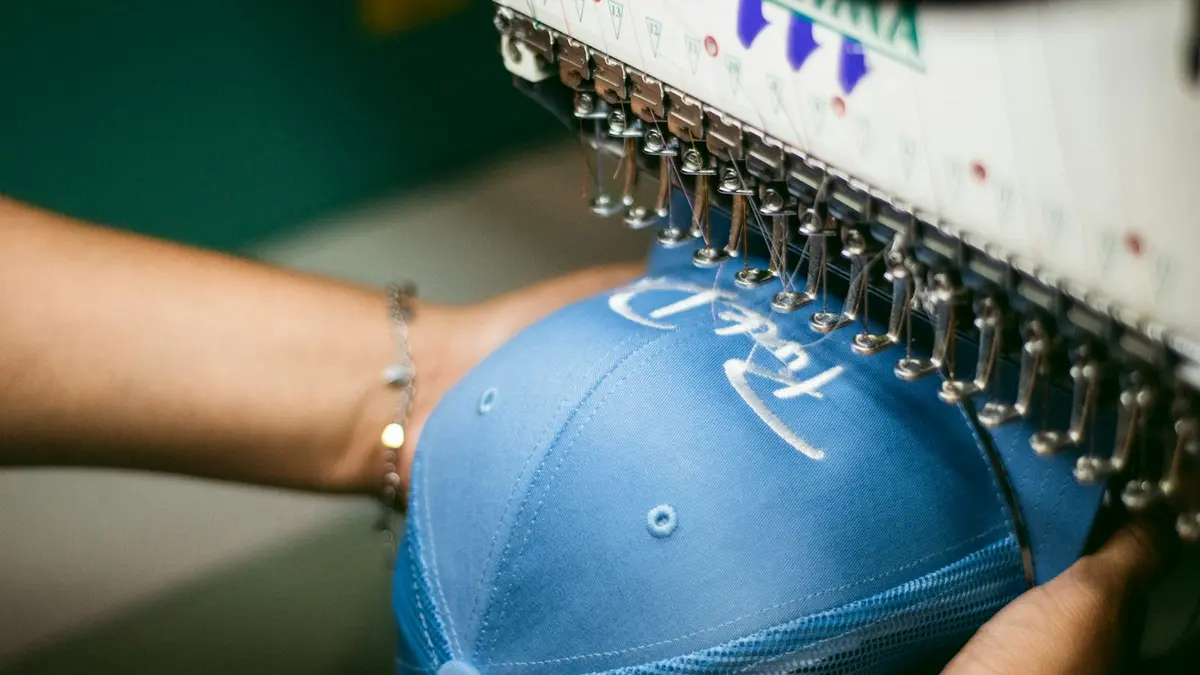
The main operational distinction is therefore coverage. A solid piece-dyed fabric is colored across its usable surface, while a printed fabric receives color according to a design layout. This distinction is not always visually absolute: a print may cover most of a fabric surface, and a dyed fabric may later receive a print. A product may also combine yarn dyeing, piece dyeing, printing, coating, embroidery, or other decorative processes.
Both dyeing and printing often depend on effective pretreatment. Cotton fabric intended for either route may be desized, scoured, and, where required, bleached to remove impurities and provide a more uniform base. Polyester, wool, silk, regenerated cellulosic fibers, and blends require preparation methods suited to their chemistry and construction. Inadequate pretreatment can contribute to uneven color, poor print definition, inconsistent absorbency, or reduced fixation performance.
Their downstream controls also differ. Dyeing generally focuses on shade matching, levelness, penetration, fixation, washing-off, and lot-to-lot reproducibility. Printing requires control of design registration, paste or ink viscosity, screen condition or digital file accuracy, application amount, drying, fixation, outline sharpness, and unwanted color migration. After both processes, washing, drying, heat treatment, and finishing may be needed to achieve the required appearance, handle, and performance.
For product development, dyeing is usually appropriate when a uniform ground shade is the main goal. Printing is appropriate when the visual identity depends on localized graphics, repeats, motifs, or placement design. The final decision should also consider fabric construction, fiber content, colorfastness requirements, lead time, minimum order quantity, expected design variation, and the finishing route needed for the end product.
Source: Unsplash