Textile Upcycling in High Fashion: Techniques, Workflow, and Challenges
Table of Contents
Introduction to Upcycled High Fashion
Textile upcycling in fashion is the design-led reuse of textiles, components, or whole garments that might otherwise be discarded. Instead of treating an offcut, damaged sample, unwanted uniform, or used garment solely as waste, the designer works with its existing color, construction, wear, and history. In high fashion, this can produce garments whose material variation and visible handwork are central to their value.
Upcycled fashion combines material stewardship with craftsmanship and storytelling. A faded work jacket, an antique linen panel, or an irregular bundle of mill remnants can influence silhouette, seam placement, decoration, and the final narrative presented to the customer. The result is often limited in quantity, but it can be technically sophisticated rather than improvised.
Historical Foundations of Textile Reuse in Fashion
Textile reuse predates contemporary sustainability terminology. In many households and communities, cloth was repaired, recut, pieced, quilted, and passed between generations because making new fabric was costly and labor-intensive. Repair therefore developed both practical and decorative languages.
Japanese boro textiles are associated with repeatedly patched and mended workwear and household cloth, often using indigo cotton fragments. Kantha traditions in parts of South Asia commonly join layers of used cloth with running stitches, producing functional quilts and embroidered surfaces. Patchwork also has diverse African and diasporic histories, with regional techniques and meanings that should not be reduced to one uniform style.
In nineteenth-century Europe and North America, garments were frequently altered, remade, or reused for children’s clothing and household textiles. Wartime “make do and mend” campaigns further encouraged repair and careful use of clothing under rationing. These practices offer important precedents for contemporary designers, although modern luxury upcycling operates within a different commercial and cultural context.
What Is Textile Upcycling Compared with Recycling?
Upcycling retains and repurposes all or part of an existing textile or garment. A designer may preserve a denim waistband, reconstruct shirt sleeves into a new bodice, or assemble offcuts into a patchwork panel. The material’s prior structure is often visible and becomes part of the design.
Recycling generally involves converting textile material into another feedstock, fiber, yarn, nonwoven material, or product. Mechanical and chemical recycling have different requirements, material limitations, and outputs. They are often better suited to standardized material streams than a studio-based remaking process.
The distinction is not a simple hierarchy. Upcycling can require comparatively little material transformation, but it may involve intensive sorting, cleaning, cutting, handwork, and quality control. Recycling can enable more uniform production, but may require collection, separation, processing, and compatible fiber inputs. Environmental performance depends on the specific materials, transport, processing, product life, and end-of-use pathway.
Why Upcycling Matters to the Fashion Industry
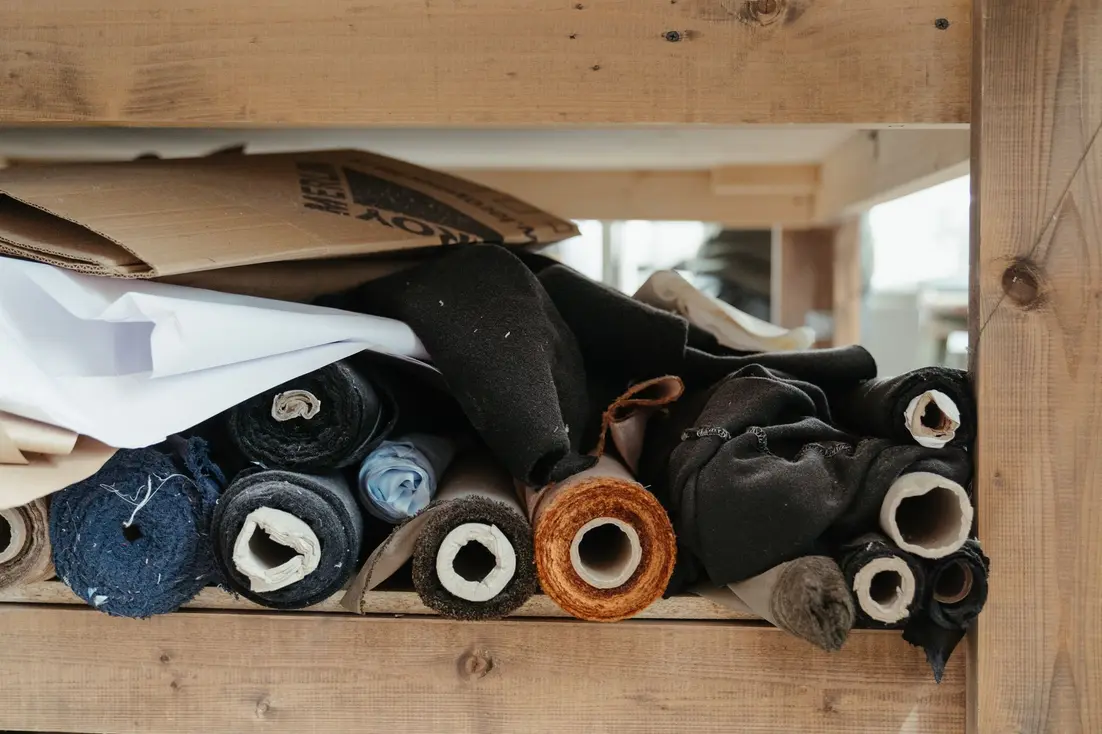
Fashion waste includes pre-consumer materials, such as cutting-room offcuts, flawed rolls, sampling leftovers, and surplus stock, as well as post-consumer garments collected after use. Some of these materials remain structurally sound and can serve as inputs for new products.
Reuse can divert usable textiles from disposal and may avoid purchasing some new material for a collection. It also supports slow-design approaches in which makers assess cloth carefully, design around available quantities, and build repair into the product’s life. These benefits should be evaluated case by case rather than assumed for every upcycled product.
For fashion teams, upcycling also develops practical capabilities: fabric recognition, seam analysis, repair, pattern adaptation, color balancing, and material inventory management. These skills help designers view material constraints as design information rather than only as production problems.
Upcycling Workflow: Turning Textile Scraps into Garments
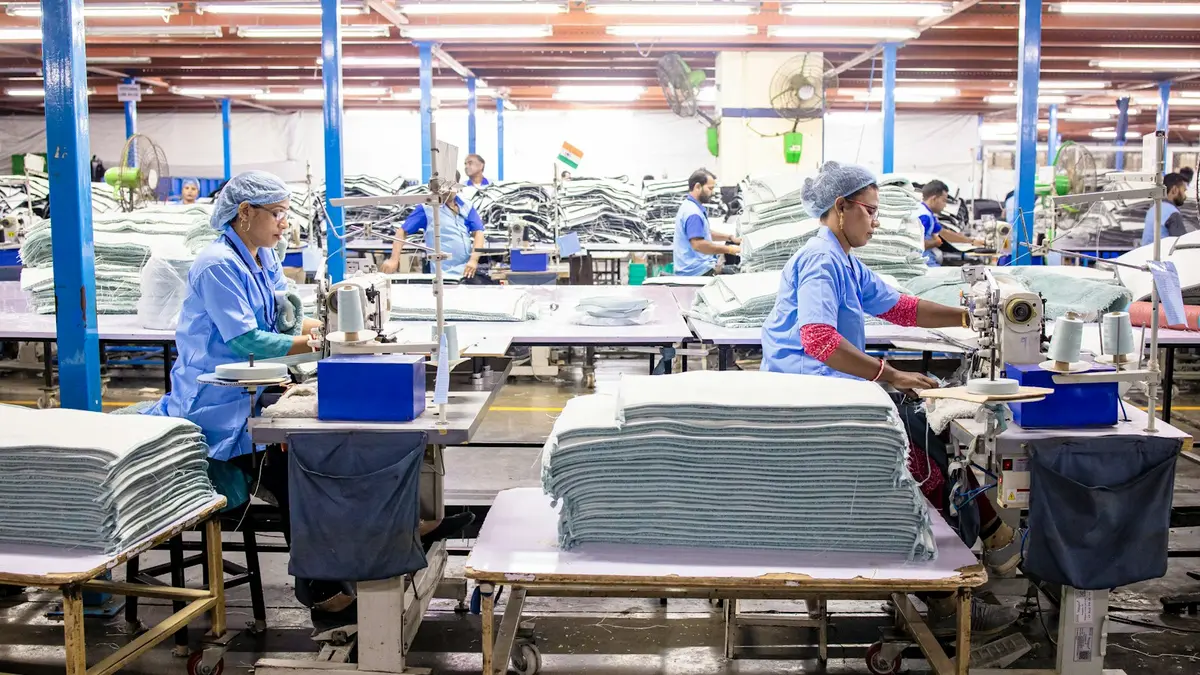
An upcycled garment moves through a controlled sequence of sourcing, inspection, design, construction, finishing, and documentation. Because recovered materials are irregular, the workflow must combine creative judgment with standard garment-production disciplines, including measurement, seam testing, fit review, and quality inspection.
Source: Unsplash
Material Sourcing
Potential sources include studio offcuts, mill deadstock, damaged samples, surplus uniforms, production remnants, thrifted garments, and unwanted inventory. Each source has different implications for fiber content, contamination risk, available yardage, color variation, and traceability.
Before use, materials should be inspected for stains, odor, damage, fading, weak areas, unstable coatings, and missing care information. Used garments may also require cleaning or laundering appropriate to their fiber and construction before cutting.
Sorting and Material Classification
Sort recovered textiles by fiber type where known, weight, stretch, weave or knit structure, color, surface condition, usable dimensions, and intended function. A stable woven cotton panel, for example, should not be treated as interchangeable with a drapey rayon blouse or an elastic knit jersey.
A material inventory can record measurements, photographs, condition notes, estimated fiber information, and available quantities. This reduces unnecessary handling and helps designers identify whether a garment concept is feasible before pattern development begins.
Design Development
Upcycled design can begin with a silhouette, a garment source, or a defined material batch. Modular panels, patchwork blocks, textile collage, and garment-led reconstruction are useful approaches where yardage is limited or inconsistent. The designer may preserve recognisable elements such as pockets, plackets, hems, labels, or faded areas as intentional visual features.
Zero-waste pattern planning can also be useful. It does not eliminate all waste automatically, but it encourages pattern shapes and layouts that respond closely to available material dimensions. A toile or digital prototype is valuable where multiple fabrics have different stretch, thickness, or drape.
Garment Construction Methods
Common methods include patchwork, appliqué, quilting, embroidery, visible mending, layering, and textile collage. Construction order matters: panels should be stabilized before they are incorporated into shaped areas such as armholes, necklines, waist seams, and closures.
Match seam types to material behavior. Reinforce fragile fabrics, grade bulky seam allowances, and test stitch length on unstable or loosely woven pieces. Modular seams, detachable panels, and accessible seam allowances can also support later alteration, repair, or partial disassembly.
Finishing, Documentation, and Product Storytelling
Finishing should make the garment wearable and durable, not merely visually complete. Linings, facings, binding, seam finishing, pressing, and reinforcement may be needed to manage mixed materials. Dyeing or over-dyeing should be assessed material by material, since fiber blends, finishes, and prior damage can produce uneven results and require suitable dye chemistry.
Origin labels and product notes can explain the recovered material source, reconstruction method, repair guidance, and expected variation. Practical planning tools include scrap inventories, material exchanges, overlock and hand-sewing equipment, mood boards, design software, and digital draping tools. Clear documentation supports both customer communication and internal quality control.
Design Techniques and Aesthetics in Upcycled Couture
Upcycled couture uses deliberate composition to turn irregular textiles into coherent surfaces and silhouettes. The strongest results generally make material variation look intentional while maintaining fit, comfort, and structural reliability.
Patchwork Couture
Patchwork couture joins selected textile pieces into a new continuous surface. Pieces may be arranged by color, scale, provenance, weave direction, or tonal contrast. A patchworked coat, gown, or denim garment can reference folk textile traditions while using highly controlled proportion and seam placement.
Deconstructed and Reassembled Garments
Deconstruction takes an existing garment apart and reuses its components in a new form. Sleeves can become sculptural panels, collars can be repositioned, and pockets can be retained as functional or visual details. The original garment’s construction becomes a design resource.
Martin Margiela and Comme des Garçons are widely associated with deconstructive fashion language. Deconstruction itself does not necessarily mean that a garment is upcycled; the distinction depends on whether recovered garments or materials are actually used and how they are documented.
Scrap Appliqué
Scrap appliqué cuts small remnants into motifs or abstract shapes and stitches them onto a base fabric or garment. It is useful for pieces too small to form conventional pattern components. Edge treatment may involve turning, raw-edge stitching, satin stitch, bonding, or layered embroidery, depending on the desired durability and effect.
Embroidery and Visible Mending
Visible mending makes reinforcement apparent rather than hidden. Running stitches, darning, patches, and decorative hand embroidery can stabilize worn areas while adding texture and contrast. For high-fashion applications, stitch density, thread selection, backing, and placement should be tested so that embellishment does not distort the base fabric.
Layered Textile Surfaces
Layering combines textiles of different weights and transparency, including sheer, felted, shredded, padded, or densely woven materials. Layers can create depth and movement in couture and stagewear, but they may also increase weight, restrict drape, or complicate cleaning. Sample testing is essential when combining materials with very different shrinkage, abrasion, or stretch behavior.
Tools and Digital Technologies for Upcycled Design
Digital material databases can help studios track available scraps, garment sources, locations, dimensions, and reuse history. A well-maintained inventory is often more valuable than a complex system because it connects material availability directly to design and production decisions.
Laser cutting can produce precise shapes in suitable textile materials, although heat effects, edge quality, and material safety must be checked before use. Digital pattern tools and nesting software may support layout exploration, while 3D garment simulation can assist early review of proportion, silhouette, and drape. These tools cannot fully predict the behavior of every aged, mixed, or repaired textile, so physical sampling remains necessary.
Embroidery machinery can improve repeatability for selected embellishment operations. Technology can support efficiency, but material-specific design decisions, repair work, and final quality assessment still require skilled human judgment.
Examples of Upcycling in High Fashion
Several fashion labels demonstrate different ways to position recovered materials through silhouette, handwork, limited production, and narrative. Their methods should be examined as individual practices rather than treated as identical models.
Marine Serre
Marine Serre has presented garments made with recovered and repurposed materials in documented collections and product categories, including denim, vintage towels, and deadstock T-shirts. These inputs are incorporated into the brand’s distinctive silhouettes and surface treatments, showing how familiar textiles can be recast within a fashion-forward visual system.
Bethany Williams
Bethany Williams is known for work that connects recovered materials with social collaboration and craft-based production. Projects associated with the label have used materials such as book offcuts and other waste-derived inputs, alongside partnerships intended to create social value. The precise material source and collaboration structure can vary by collection and should be described at collection level.
EILEEN FISHER RENEW
EILEEN FISHER RENEW is a take-back and resale/remaking program for eligible EILEEN FISHER garments. Collected pieces may be resold, repaired, renewed, or redirected through other recovery pathways depending on condition and program requirements. Remade products have included reconstructed approaches such as cutting, patching, and felt-based techniques for appropriate materials.
Bode
Bode is recognised for garments using historic and vintage textiles, including antique quilts, grain sacks, and vintage linens. Hand-appliqué and careful placement of existing textile features contribute to the garments’ narrative character. In this approach, the age, marks, and unevenness of the source material are treated as part of the product identity.
Challenges of Upcycled Fashion Production
Irregular material supply makes consistent colorways, sizing, fiber specifications, and repeat production difficult. A source garment may yield only a small usable area after damage, seam allowances, stains, and weak sections are removed. Manual sorting and reconstruction can also increase labor time.
Quality teams must manage mixed-material behavior, unknown care histories, variable shrinkage, and cleaning requirements. Brands should communicate honestly about variation and the presence of used or recovered materials. Traceability is especially important where claims concern material origin or circularity.
Scaling may be supported by modular product systems, small-batch production, local microfactories, and standardized reconstruction instructions. However, these approaches do not remove supply constraints. Reusing branded garments can also raise trademark, design, and consumer-confusion questions, so businesses should seek appropriate legal guidance for their market and product model.
Upcycling Education and Maker-Space Practice
Textile schools and community workshops can teach upcycling through material libraries, repair exercises, zero-waste cutting, garment analysis, and visible-mending projects. These activities build technical confidence while helping learners understand how fiber, construction, and damage affect reuse options.
Scrap challenges and design hackathons are useful applied-learning formats because they require participants to design within fixed material limits. Partnerships with thrift stores, alteration businesses, manufacturers, or mills can provide material inputs, provided that handling, hygiene, and storage procedures are planned in advance.
Business Models for Upcycled Fashion
Upcycled fashion can be offered through one-off studio couture, custom reconstruction, limited scrap-based drops, collaborative capsules, resale, and repair services. The appropriate model depends on material supply, labor capacity, target customer, quality requirements, and the level of variation a business can support.
Repair subscriptions and mending services can extend customer relationships beyond the original sale. Mill and brand collaborations may provide more predictable material streams than open-market sourcing. Commercial success should not be assumed: each model needs realistic costing for collection, sorting, cleaning, labor, sampling, logistics, and returns.
Future Directions for Textile Upcycling
Automated sorting, digital material records, and improved inventory systems may make recovered textiles easier to identify and allocate. Customer participation could also influence made-to-order reconstruction, for example through selection of available color groups, garment sources, or patchwork layouts.
Biodesign materials such as mycelium-based composites and bacterial cellulose remain developing areas with distinct processing and performance requirements. They should not be presented as direct substitutes for conventional textiles without product-specific evidence. Carbon scoring may help communicate product impacts, but any score needs transparent boundaries, assumptions, and methodology.
Key Takeaways
Textile upcycling in fashion transforms recovered garments and textile remnants into products with new functional, aesthetic, and narrative value. It builds on long histories of repair and reuse while applying contemporary garment design, production control, and brand communication.
For high fashion, waste is not simply a low-cost input. Its constraints can shape silhouette, surface, craftsmanship, and product story. Successful upcycling requires careful sourcing, material classification, construction testing, and honest documentation alongside creative vision.
References and Further Reading
Further reading should include verified resources on circular fashion, textile reuse, garment repair, material traceability, and the specific brand programs discussed above. When assessing environmental or social claims, prioritize sources that state their methodology, scope, and material assumptions clearly.