Traditional Textile Crafts of Sub-Saharan Africa: Techniques, Meaning and Modern Use
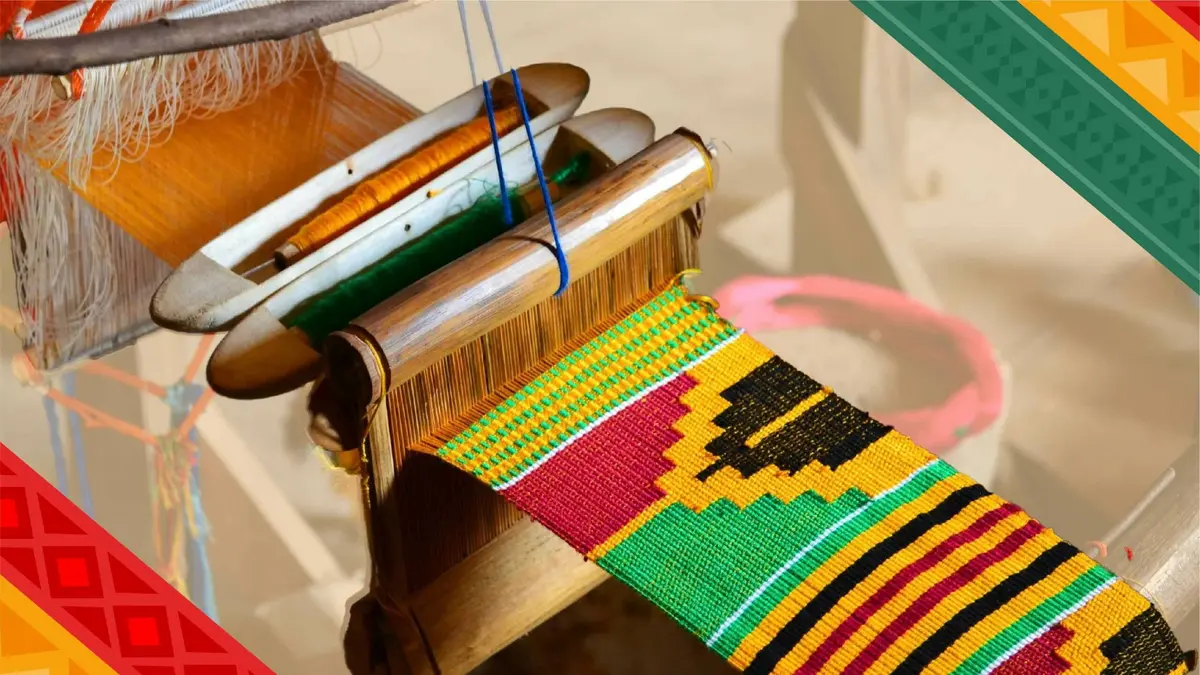
Table of Contents
Introduction to Sub-Saharan African Textile Crafts
Traditional textile crafts of Sub-Saharan Africa combine material knowledge, manual skill, visual design and cultural meaning. Cloth can communicate affiliation, status, memory, celebration or mourning, while its construction records decisions about fiber preparation, spinning, weaving, dyeing, patterning and finishing. The region contains many distinct textile systems; no single technique, motif or color language represents the continent as a whole.
Kente weaving from Ghana and Bogolanfini from Mali are widely recognized examples, but they belong to specific cultural and historical settings. Alongside them are Yoruba Adire resist dyeing, Ugandan bark-cloth making, Igbo Akwete weaving and numerous other practices. These traditions remain relevant in ceremonial dress, fashion, interiors, museum collections, education and digital design research.
Historical Roots of Textile Traditions in Sub-Saharan Africa
Textile production has deep roots across Sub-Saharan Africa, although dates, materials and surviving evidence vary considerably by region. Archaeological textiles rarely survive intact in humid conditions, so the history of cloth is also reconstructed through tools, written accounts, oral histories, visual evidence and continuing craft practice. Cotton weaving, bast-fiber production, dyeing and leatherworking developed in different places through local resources and exchange networks.
In many historical societies, textiles were more than clothing. They could function as exchange goods, signs of rank, ceremonial gifts, royal objects and materials used in religious or funerary contexts. Long-distance trade connected producers and consumers across the Sahara, the Sahel, coastal regions and inland markets, moving fibers, dyestuffs, imported yarns and technical knowledge.
Knowledge was commonly transmitted through households, specialist workshops, apprenticeships and community observation. Colonial economies, imported factory cloth and industrial production altered many local markets, but they did not end textile innovation. Makers adapted materials, motifs, product formats and sales channels while retaining locally meaningful practices.
Major Traditional Textile Techniques
The following examples demonstrate the technical range of traditional textile crafts of Sub-Saharan Africa. Each has its own community-specific terminology, production history, visual conventions and systems of knowledge. Meanings should therefore be interpreted through the relevant cultural context rather than treated as universal design codes.
Kente Weaving in Ghana
Kente is associated especially with Asante and Ewe weaving traditions in Ghana. It is generally made as a series of narrow handwoven strips on a horizontal treadle loom. The strips are then sewn edge to edge to create a larger cloth. Warp and weft planning, color sequencing and supplementary patterning demand close control from the weaver.
Cotton has long been important, while silk, imported yarns and silk-like commercial yarns have also been used in particular periods and markets. Some Kente cloths have named patterns, and colors or arrangements may be interpreted in relation to authority, achievement, spirituality, social relationships or ceremonial purpose. Such interpretations can differ among communities and users.
Kente has strong historical links with Asante royal and ceremonial dress, but contemporary Kente also appears in graduation garments, weddings, diaspora events, accessories and fashion collections. Its cultural importance makes accurate attribution and respectful sourcing essential.
Bogolanfini, or Malian Mud Cloth
Bogolanfini, often called mud cloth, is a Malian textile tradition associated with Bambara-speaking communities and other makers in the region. Production commonly begins with handwoven cotton cloth. The cloth is treated with plant-based dye baths, then decorated using fermented mud and, in some methods, discharged or overpainted to produce light and dark pattern contrasts.
The process depends on chemistry as well as drawing skill. Plant tannins, iron-rich mud, repeated applications, washing and drying contribute to the final color and surface. Lines, blocks, dots and geometric forms may be built gradually, with each stage affecting definition and durability.
Bogolanfini patterns can carry protective, social, narrative or aesthetic associations. Their meanings are not fixed across every cloth or market product, however. Commercial reproductions may borrow the visual language without preserving the cultural knowledge attached to particular motifs.
Adire Resist Dyeing in Nigeria
Adire is a Yoruba-associated resist-dyeing tradition, historically centered in southwestern Nigeria and frequently worked on cotton cloth. Indigo is a major colorant in many Adire traditions, producing blue grounds against reserved patterns. The word Adire includes several approaches rather than one single method.
Adire oniko uses tied or bound resist: portions of the fabric are folded, wrapped, stitched or tied before dyeing. Adire eleko uses a resist paste, often including cassava-based material, applied by hand or through stencils before dyeing. Other approaches may use stitched, folded, hand-drawn or mechanically repeated pattern methods, depending on the workshop and period.
The clarity of an Adire pattern depends on resist placement, fabric absorbency, dye concentration, immersion time, oxidation, rinsing and finishing. Contemporary producers may combine traditional indigo work with new colors, commercial fabrics and motifs, creating products for local dress and wider design markets.
Bark Cloth Making in Uganda and Central Africa
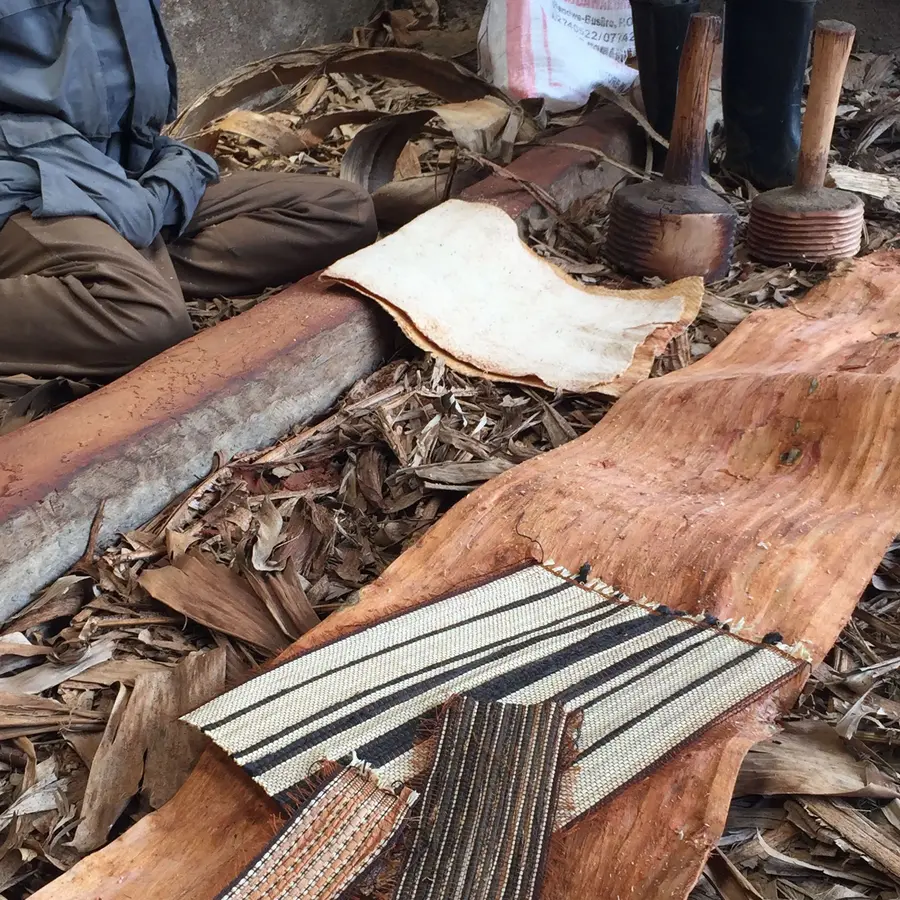
Bark cloth is a nonwoven sheet material made by removing and processing the inner bark of suitable trees. In Uganda, the best-known tradition uses the mutuba tree, Ficus natalensis. The bark is harvested in a way intended to allow the tree to regenerate, then softened, wetted and repeatedly beaten with grooved wooden mallets until it expands into a flexible sheet.
Source: Africa Imports
The resulting material often has a warm reddish-brown appearance, though color, thickness and finish vary. Bark cloth has been used in Buganda cultural life for royal, ceremonial, funerary and domestic purposes. Its production requires knowledge of tree management, timing, fiber behavior and controlled beating.
Ugandan bark-cloth making was inscribed by UNESCO on the Representative List of the Intangible Cultural Heritage of Humanity. That recognition applies specifically to the documented Ugandan practice; it should not be treated as a blanket designation for all bark-cloth traditions elsewhere in Central Africa.
Akwete Weaving in Nigeria
Akwete cloth is an Igbo weaving tradition associated with Akwete in southeastern Nigeria. Historically, women weavers have produced patterned cloth on local loom systems, using cotton and, in more recent production, commercially available yarns such as rayon or synthetic blends. Material choices and loom configurations can vary by workshop and production period.
Akwete textiles are known for patterned bands, geometric structures and visual references that may relate to local life, environment and cultural ideas. Motifs should not be assigned a single universal interpretation without documentation from the weaving community. Technically, the craft depends on accurate tension control, sequence planning and the coordinated use of colored yarns.
Fibers, Colorants and Natural Dye Processes
Materials are determined by ecology, trade access and local specialization. Cotton is important in many West African weaving and dyeing traditions. Silk and imported yarns have entered particular weaving systems, while bark cloth relies on tree bark rather than spun fiber. Other plant materials may provide cordage, bast fibers, tannins or dye ingredients.
Indigo remains one of the most significant blue colorants in African dyeing traditions. Other plant, mineral and organic materials can produce yellow, brown, red or orange tones, but their results depend on species, preparation, water chemistry and mordant use. Fermentation, heating, repeated dipping, oxidation, washing and solar drying all influence color development.
Natural inputs are not automatically low-impact. Environmental performance depends on water use, harvesting practices, land management, fuel demand, dye additives and wastewater handling. A responsible assessment compares the full process rather than assuming that handmade or plant-based production is always environmentally benign.
Cultural Meaning, Motifs and Social Use
Textiles can act as visual communication. They may mark family identity, age, profession, rank, political affiliation, remembrance or a life transition. Cloth selection, color, scale, drape and the way a textile is worn can be as meaningful as the motif itself.
Kente pattern names and color associations are often discussed in relation to social values, leadership, protection or celebration. Bogolanfini patterns may be linked to knowledge, protection, personal history or social roles. These readings should be approached carefully: meanings can be regional, historical, gender-specific, ceremonial or known only within a particular community.
Textiles are used in documented contexts including births, marriages, funerals, festivals, achievements and rites of passage. Their role is not merely decorative. In many settings, the choice of cloth participates in the social event and helps make its significance visible.
Contemporary Design and Product Applications
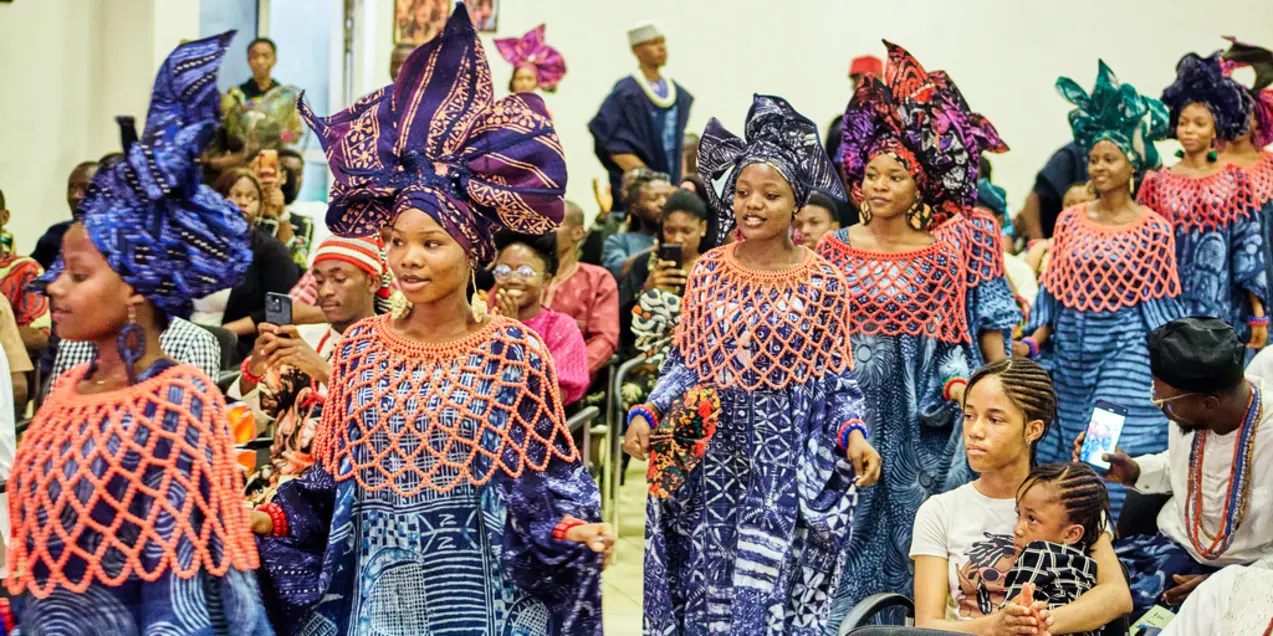
Heritage textiles are adapted for contemporary clothing, accessories, footwear, wall hangings, cushions, upholstery and soft furnishings. Designers may retain an original cloth as a statement material, or translate aspects of its structure and palette into new silhouettes. Product development should distinguish between using authentic hand-produced cloth and printing a motif derived from it.
Source: Garland Magazine
Digital illustration, pattern visualization and CAD tools can help designers study repeat systems, colorways and garment placement. Digital interpretation is not the same as cultural ownership, and online circulation can make copying easier. Where traditional designs are identifiable, designers should seek consent, credit makers and establish fair commercial terms.
Handcrafted textiles can align with slow-fashion discussions because they may emphasize durability, repair, limited production and maker visibility. Practical constraints remain important: hand production requires time, stable material supply, safe working conditions and a price that recognizes skilled labor.
Markets and End Users
Domestic markets remain central to many textile traditions. Ceremonial, wedding, festival and everyday dress purchases can sustain makers alongside sales to visitors and international buyers. Demand varies by season, income, religious calendar, fashion trends and availability of lower-cost imitations.
Potential end users include fashion designers, apparel brands, interior and home-furnishing businesses, collectors, museums, researchers, educators and students. Workshops, exhibitions, craft fairs, cultural festivals and fashion events can increase visibility and support direct encounters with makers, although they do not guarantee sustained income.
For buyers, useful sourcing questions include who made the textile, what materials were used, whether the cloth is handmade or printed, how motifs are attributed, and how value is shared across the supply chain.
Barriers to Preservation and Responsible Growth
Mass-produced imitations can compete with artisan-made textiles on price while obscuring differences in labor, material quality and cultural origin. This may reduce artisans’ ability to differentiate their work, especially when retailers use generic labels or uncredited patterns.
Knowledge transfer can also be affected by migration, limited training opportunities, changing career aspirations and uneven access to equipment or markets. These pressures do not produce the same outcome everywhere: some communities maintain strong apprenticeship systems, while others need new pathways for younger makers to participate.
Raw material supply may be affected by land-use change, climate variability, tree loss and industrial agriculture. Possible responses include cooperative organization, training, shared equipment, e-commerce, storytelling, improved logistics, access to finance and fair-trade-oriented purchasing. Their success depends on local governance, market conditions and meaningful artisan control.
Technology, Documentation and Craft Innovation
Digital documentation can record loom structures, dye recipes, motif vocabularies, oral histories and production sequences when communities agree to participate. CAD-based textile tools can assist with visualization, sampling and controlled reproduction, but documentation should not expose restricted knowledge or make culturally significant designs freely available for copying.
Traceability systems, including blockchain-based records, are emerging options rather than universal solutions. Their usefulness depends on affordable access, reliable data entry, transparent governance and whether makers benefit from the information collected. A simple maker label, cooperative record or QR-linked product story may be more appropriate in some cases.
E-commerce and social platforms can connect cooperatives and independent makers with wider audiences. They also create requirements for photography, fulfillment, customer communication, digital payments and intellectual-property protection. Technology is most valuable when it supports, rather than replaces, community knowledge and decision-making.
Future Directions for Regenerative Cultural Economies
A resilient future for heritage textiles depends on cultural continuity, equitable value distribution, environmental care and room for makers to innovate. Certification, community-led tourism, artisan residencies, collaborative design laboratories and policy advocacy can be useful pathways when they are designed with local priorities rather than imposed from outside.
Indigenous knowledge rights, informed consent and community control over cultural assets are central considerations. Makers should be able to decide which knowledge is shared, which motifs are commercially available and how benefits are distributed when designs enter new markets.
Traditional textile systems offer valuable lessons for ethical fashion: skilled labor should be recognized, material origins should be understood and design should remain accountable to people and place. They should not, however, be presented as universally sustainable models without examining their specific resource conditions.
Key Takeaways
Traditional textile crafts of Sub-Saharan Africa encompass distinct technical systems, cultural histories and material practices. Kente, Bogolanfini, Adire, Ugandan bark cloth and Akwete weaving are important examples, but they are not a complete inventory of regional textile knowledge.
Their continuing relevance comes from the connection between making and meaning: fibers, dye processes, loom techniques, motifs, ceremony and contemporary design are interrelated. Future viability depends on sustained artisan participation, respectful innovation, fair purchasing, investment in skills and protection for cultural rights.
References
- Traditional Textile Crafts of Sub-Saharan Africa: Techniques and Modern Applications. https://www.textileschool.com/27884/traditional-textile-crafts-of-sub-saharan-africa-techniques-and-modern-applications
- Craftsmanship of Traditional Woven Textile Kente - UNESCO Intangible Cultural Heritage. https://ich.unesco.org/en/RL/craftsmanship-of-traditional-woven-textile-kente-02130
- Barkcloth Making in Uganda - UNESCO Intangible Cultural Heritage. https://ich.unesco.org/en/RL/bark-cloth-making-in-uganda-00139
- Africa Fashion: Cloth of a Continent - Victoria and Albert Museum. https://www.vam.ac.uk/articles/cloth-of-a-continent-africa-fashion
- Adire: Tied and Dyed Indigo Textiles - Victoria and Albert Museum. https://www.vam.ac.uk/articles/adire-tied-and-dyed-indigo-textiles