Types of Textile Dyeing Machines by Material Form and Dyeing Method
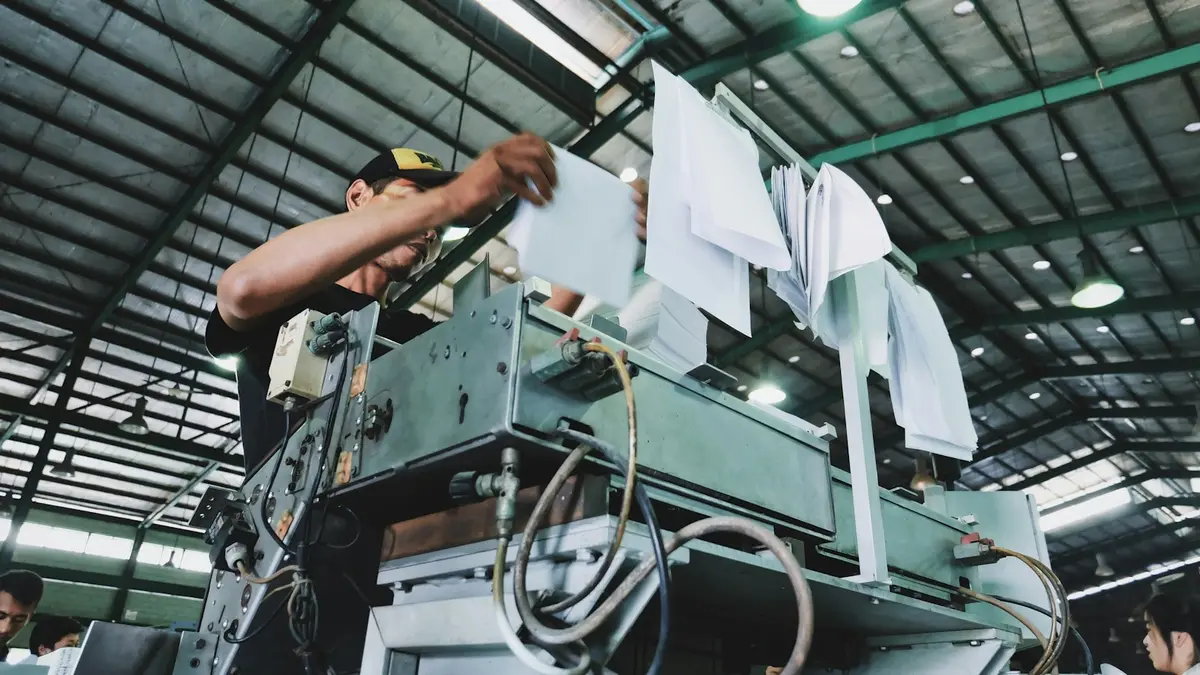
Table of Contents
Textile Dyeing Machine Types
Textile dyeing machines are processing systems designed to bring dyes, chemicals, water, heat, and textile material together under controlled conditions. Depending on the process, the machine may circulate dye liquor through a stationary material package, move the material through a relatively still bath, or circulate both the fabric and liquor. Controls for temperature, time, pressure, liquor flow, pH, and chemical addition help achieve the required shade, levelness, penetration, and reproducibility.
The main types of textile dyeing machines can be classified first by the form of material being dyed: loose fiber, yarn, fabric, or garments. A second useful classification is based on the dyeing method and movement of material and liquor. These classifications overlap because a package dyeing machine, for example, is defined both by its yarn-package form and by forced liquor circulation.
Classification by Textile Material Form
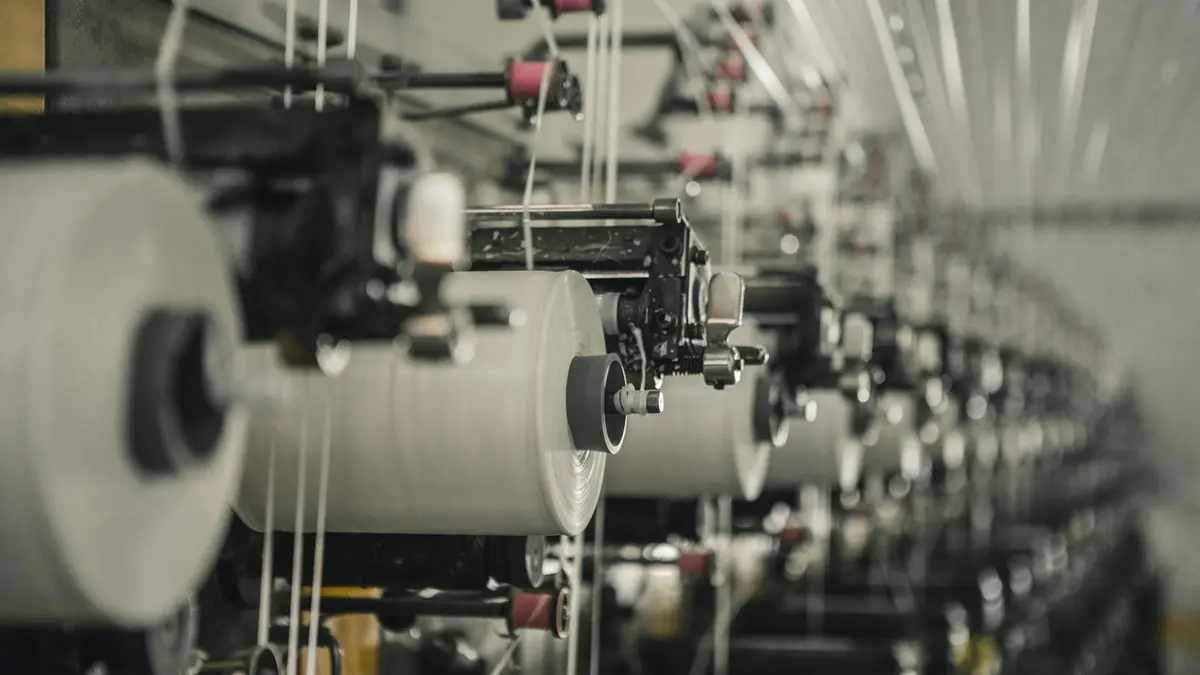
Machine selection begins with the physical form of the textile substrate. Fibers can be dyed before spinning; yarn can be dyed as hanks, packages, or warp; and fabric can be processed in rope form or open width. Garment dyeing is another broad category, although it requires equipment suited to completed articles, trims, seams, and dimensional stability.
Source: Pexels
The form and quantity of material affect machine construction, carrier design, pump capacity, liquor ratio, loading method, and fabric-handling arrangements. Delicate materials need low-tension handling, while dense yarn packages need controlled flow to ensure dye liquor reaches the package core. Production planning also influences selection: some equipment is suited to small, flexible batches, while continuous or semi-continuous systems are selected for larger volumes and repeatable production.
| Material form | Typical processing objective | Common equipment approach |
|---|---|---|
| Loose fiber | Color fibers before blending and spinning | Loose-stock or fiber dyeing machines |
| Hank yarn | Dye soft, open yarn skeins | Hank or skein dyeing equipment |
| Yarn package | Produce uniform dyed yarn for weaving or knitting | Package, cop, or cheese dyeing machines |
| Warp yarn | Color yarn arranged for warp preparation | Warp or beam/chain warp systems |
| Fabric | Dye woven, knitted, or nonwoven fabric | Jet, jigger, winch, beam, padding, or related machines |
| Garments | Dye completed apparel or made-up goods | Garment dyeing machines, often tumble-type systems |
Loose-Fiber Dyeing Machines
Loose-fiber, also called loose-stock, dyeing takes place before the fiber is spun into yarn. It is used when color blending, mélange effects, or fiber-level coloration are required. The fiber must be loaded so that liquor can pass through it evenly without causing excessive compaction, tangling, or damage.
Historical and specialized loose-stock equipment names found in textile literature include conical-pan, annular-case, Hussong, Jagenberg, Simplex, Dreze, Obermaier, and long-close loose-cotton machines. Several of these terms may identify legacy designs, manufacturers, or proprietary systems rather than universally standardized machine categories. For practical machine selection, it is more reliable to specify the fiber type, lot size, carrier arrangement, liquor-flow direction, temperature requirement, and degree of fiber-opening needed.
Modern loose-fiber systems commonly use perforated baskets or carriers inside a pressure vessel. A pump drives liquor through the fiber mass, often with reversible flow to improve penetration and reduce shade variation. Careful packing density is important: a package that is too tight restricts flow, while one that is too loose can create channels and uneven dyeing.
Yarn Dyeing Machines
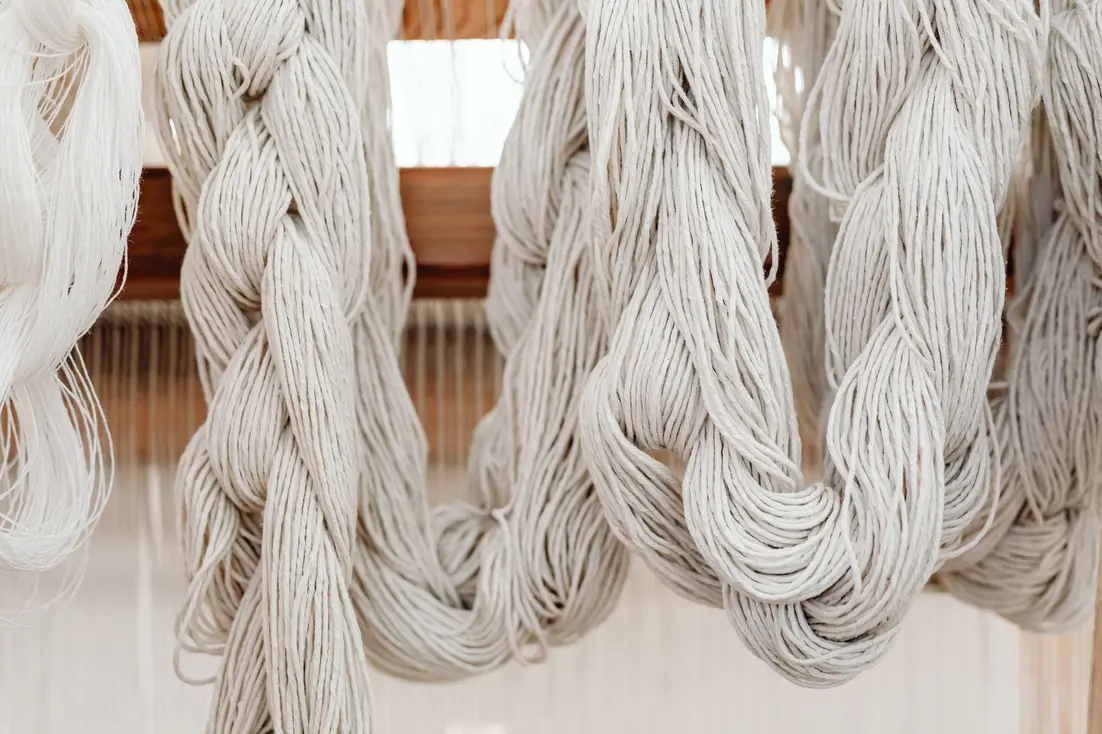
Yarn dyeing machinery processes yarn before fabric formation. It is widely used where colored stripes, checks, jacquard effects, engineered knitwear, sewing threads, or color-controlled yarn supplies are required. The two principal yarn forms are hanks and packages. Warp dyeing is also included in yarn-dyeing practice because the yarn is prepared for subsequent weaving.
Yarn-dyeing equipment must provide sufficient liquor access to all yarn layers while preserving yarn quality. Important operating considerations include yarn tension, winding density, package build, flow reversal, temperature rise, and the compatibility of dye class with the fiber. Poor liquor distribution can create barre, center-to-surface shade differences, or uneven penetration.
Hank Yarn Dyeing Equipment
Hank dyeing processes yarn in skeins or hanks. Because the yarn is open and relatively uncompressed, this form can be suitable for yarns that need a soft handle, bulky appearance, or low winding stress. Hanks are usually supported on rods, reels, or carriers that allow the liquor to contact the yarn while limiting entanglement.
Names historically associated with hank-form equipment include Hussong, Pulsatur, G.H.S., and Clauder Weldon machines. These names should be treated carefully in specifications because their exact design identity may vary across older technical sources and supplier literature. In current practice, buyers should ask whether the proposed machine is an atmospheric or pressure system, how hanks are supported, whether liquor flow is reversible, and what provisions exist for gentle yarn handling.
Hank dyeing is often selected for specialty yarns, woollen yarns, hand-knitting yarns, and yarns where package compression could affect bulk or dye accessibility. Its limitations can include greater handling labor, lower packing density than package dyeing, and a higher risk of yarn tangling if loading and unloading are not well controlled.
Package Yarn Dyeing Equipment
Package dyeing colors yarn wound onto a perforated support, such as a tube, cone, cop, or cheese carrier. The packages are mounted on spindles inside a closed vessel, and dye liquor is pumped through the yarn structure. Flow may be directed from the inside outward or from the outside inward; many systems reverse the direction during the cycle to improve levelness.
Package dyeing is valued for production efficiency, compact loading, and controlled processing of large yarn lots. However, successful results depend on consistent package density. If winding hardness differs significantly between packages, the liquor may move through each package at a different rate and create shade or penetration variation.
Cop Dyeing Machines
Cop dyeing machines process yarn wound in cop form, traditionally associated with spinning packages that have a tapered build. Cop carriers and loading arrangements must support the package shape while allowing liquor to reach the yarn layers.
Mather and Platt, Long Close, and Beaumont are names historically listed in relation to cop dyeing equipment. They are best understood as legacy manufacturer or design references unless a specific model and technical configuration are identified. When evaluating a cop dyeing system, the relevant practical questions are whether the carrier matches the cop geometry, whether the spindle seal prevents bypass flow, and whether the pumping system can maintain even liquor distribution through all packages.
Cheese Dyeing Machines
Cheese dyeing machines process cylindrical yarn packages generally known as cheeses. This is one of the most common package forms for yarn intended for knitting, weaving, sewing, and other downstream operations. Cheeses are wound on perforated tubes and mounted on dyeing spindles or carriers.
Obermaier, Franklin, and Krantz are names associated in older classifications with cheese dyeing machinery. In contemporary sourcing documentation, the more useful description is the machine’s vessel capacity, package size range, pump flow, maximum operating temperature and pressure, flow-reversal capability, and automation level. The objective remains the same: consistent dye penetration from package surface to core without damaging yarn or causing unacceptable package deformation.
Warp Dyeing Machines
Warp dyeing applies color to yarn arranged for warp preparation before weaving. The process may involve yarn sheets, beams, or chain-warp arrangements, depending on the production route and yarn type. It is particularly relevant where large quantities of warp yarn must receive a uniform shade before sizing and weaving.
Zittau, Ball, and chain warp machines are terms found in historical machine classifications. “Chain warp” remains a descriptive expression for a warp arrangement, while the other names may refer to older systems or origins rather than a universal modern machine taxonomy. Warp dyeing should therefore be specified by process format, such as beam dyeing, chain-warp dyeing, or sheet dyeing, together with yarn count, warp length, beam dimensions, color requirements, and downstream sizing conditions.
Fabric Dyeing Machines
Fabric dyeing machines process textile fabric after weaving, knitting, or other fabric formation. Fabrics may travel in open width, where width and surface appearance can be controlled, or in rope form, where the fabric moves as a continuous loop. The selected machine must balance dyeing uniformity with fabric tension, crease control, surface protection, and production efficiency.
Source: Unsplash
Common fabric dyeing machine categories include jet machines, jiggers, padding mangles, beam dyeing machines, winches, high-temperature winch systems, solvent dyeing equipment, and older specialized machinery. The term “Molter metal stand-fast” appears in some legacy lists but is not a consistently used modern technical classification; it should not be used in a purchase specification without confirmation from a reliable equipment source.
Winch dyeing traditionally moves rope-form fabric through a dye bath with the aid of a winch reel. High-temperature winch systems are designed to operate under conditions required for fibers such as polyester, but their suitability depends on pressure-vessel design, fabric type, and the dyeing recipe. Beam dyeing, by contrast, generally holds fabric wound on a perforated beam while liquor is forced through the fabric layers.
Jet Dyeing Machines
Jet dyeing machines are rope-form fabric systems in which dye liquor is circulated at high velocity and helps transport the fabric through the machine. The combined circulation of fabric and liquor distinguishes jet dyeing from package systems, where the material is held comparatively stationary, and from jiggers, where fabric movement is the main action.
Jet machines are widely used for knitted fabrics and many lightweight to medium-weight woven fabrics because they can provide enclosed processing and relatively efficient liquor circulation. Fabric handling must be carefully matched to the substrate: excessive hydraulic action can affect delicate constructions, while insufficient movement can contribute to creases or uneven dyeing.
Older descriptions may refer to special-temperature winches, machines with additional winches, partially folded machines, and fully folded machines as jet-related variants. These labels are not consistently standardized across current machinery terminology. It is preferable to compare actual operating features, including nozzle design, fabric transport method, liquor ratio, maximum temperature, pressure rating, air-flow assistance, and crease-control devices.
Jigger Dyeing Machines
A jigger dyes fabric in open width by passing it repeatedly from one roller to another through a relatively stationary dye bath. The fabric is wound and rewound over a set number of ends, allowing repeated contact with the liquor. Jiggers are especially associated with woven fabrics that benefit from open-width control.
In movement-based classification, a jigger is an example in which the textile material moves while the dye liquor is not continuously circulated through the material in the same manner as a package system. Good jigger operation requires controlled fabric tension, even winding, suitable bath volume, and careful management of dye exhaustion to avoid side-to-side or end-to-end shade variation.
Mather and Platt, closed jigger, and Cyclotric are names appearing in older lists of jigger equipment. A closed jigger generally indicates a more enclosed arrangement than an open atmospheric jigger, but exact capabilities must be confirmed for the individual machine. “Cyclotric” should likewise be verified as a specific design or trade designation rather than assumed to be a general performance class.
Padding Mangle Dyeing Machines
A padding mangle applies dye liquor by passing open-width fabric through a trough and then between squeeze rollers. The rollers control liquor pickup by expressing excess solution from the fabric. Padding is commonly part of continuous or semi-continuous dyeing routes, where the padded fabric is subsequently dried, steamed, batched, thermofixed, or otherwise developed according to the fiber and dye system.
Padding mangles are often described by roller or bowl configuration. Terms found in historical descriptions include two-bowl, three-bowl, fiber-bowl, Houbold-bowl, and Zittau-bowl arrangements. Because these terms can refer to particular construction styles or older proprietary designs, technical comparison should focus on measurable operating features: roller diameter, nip pressure, fabric width, trough arrangement, pickup control, roller covering, drive synchronization, and cleaning access.
Dyeing machines may also be described as open or enclosed. Open machines operate with an accessible bath or processing zone, while enclosed machines use a sealed vessel or chamber that can support pressure operation, reduced exposure, and higher temperatures where required. This distinction is useful, but it does not replace classification by material form or dyeing principle.
A practical summary of movement-based dyeing methods is as follows:
- Jigger dyeing: the fabric moves repeatedly through a comparatively stationary dye bath.
- Package dyeing: liquor is forced through yarn packages that remain mounted on carriers.
- Jet dyeing: both fabric and liquor circulate through an enclosed system.
- Padding: fabric moves continuously through dye liquor and squeeze rollers, followed by a separate fixation stage.
For machine selection, material form remains the starting point. Loose stock is processed before spinning; hanks are dyed as open skeins; packages include cop and cheese forms; warp systems prepare yarn for weaving; and fabric machinery is chosen according to whether the fabric should be handled in rope form or open width. The final decision should also consider fiber chemistry, dye class, batch size, shade requirement, water and energy use, labor availability, and the risk of tension, creasing, or surface damage.