How Can You Tell Whether Upholstery Fabric Will Work for a Garment?
Table of Contents
Yes, you can use upholstery fabric for garments—but only when the fabric’s weight, drape, seam behavior, comfort, and care needs match the pattern. Upholstery cloth is designed primarily to withstand rubbing, pressure, and furniture use. Clothing must also bend with the body, tolerate repeated seam stress, feel acceptable against skin, and survive garment-style laundering.
That distinction matters because a hard-wearing upholstery fabric is not automatically a durable clothing fabric. In a sewing discussion about repurposing home textiles, one contributor summarized the risk well: upholstery fabric may tolerate extensive surface rubbing, yet seams can fail when pulled under stretch. That anecdotal observation aligns with how seam slippage works: yarns can shift away from a stitched line when a seam is loaded, even if the fabric surface itself resists abrasion.
Start with the garment, not the fabric
The easiest way to decide whether upholstery fabric will work is to name the garment and identify how it will move.
Upholstery fabric is often a strong candidate for structured, low-mobility projects such as:
- Boxy jackets and chore coats
- Vests and waistcoats
- Straight skirts or A-line skirts
- Corset-style outer layers when the pattern and construction provide appropriate support
- Bags, belts, hats, and costume pieces
- Overshirts with generous ease
- Statement coats with simple shaping
It is usually a poor choice for garments that depend on fluid movement, body-hugging fit, or softness, including:
- T-shirts and knitwear
- Leggings and fitted trousers
- Lingerie and sleepwear
- Draped blouses and bias-cut dresses
- Soft gathered garments
- Close-fitting sleeves, crotch seams, or fitted bodices without enough ease
A fabric can look beautiful on a bolt and still become uncomfortable or restrictive once it is wrapped around elbows, shoulders, hips, and knees. Choose a pattern that works with the fabric’s natural behavior rather than trying to force the fabric to imitate a lighter apparel textile.
Check drape and stiffness before cutting
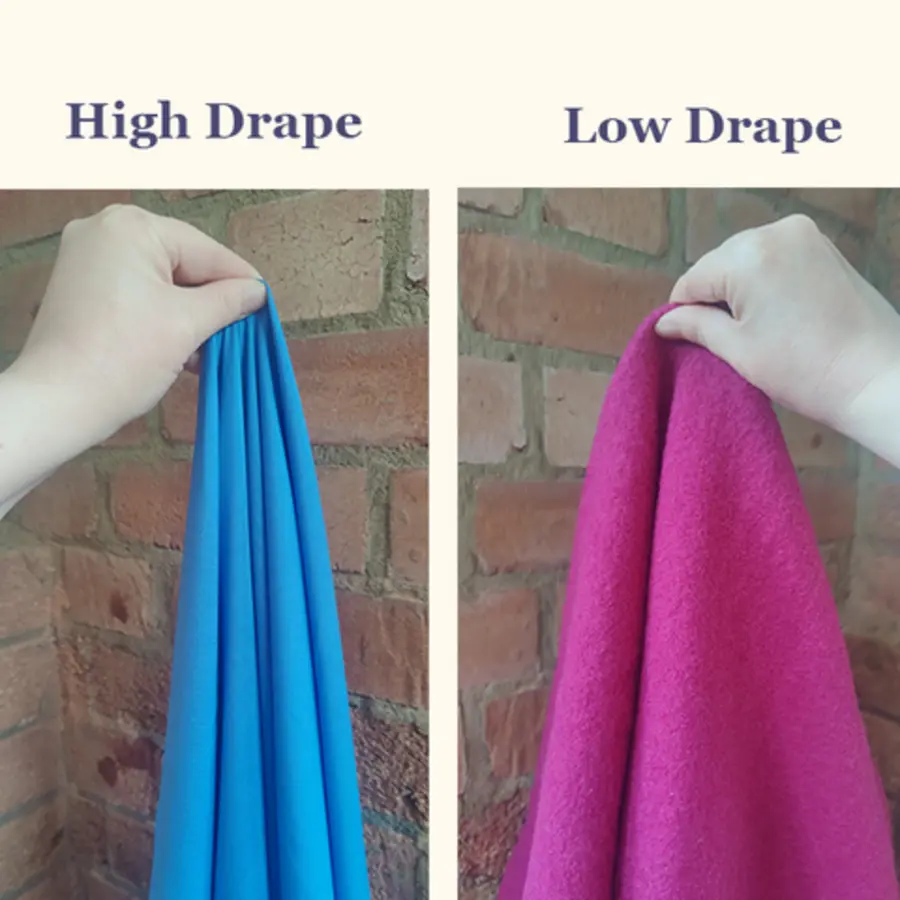
Fabric drape is the way a textile hangs, folds, and responds to gravity. Apparel fabrics often need controlled flexibility; many upholstery fabrics are intentionally dense, firm, coated, backed, or heavily textured.
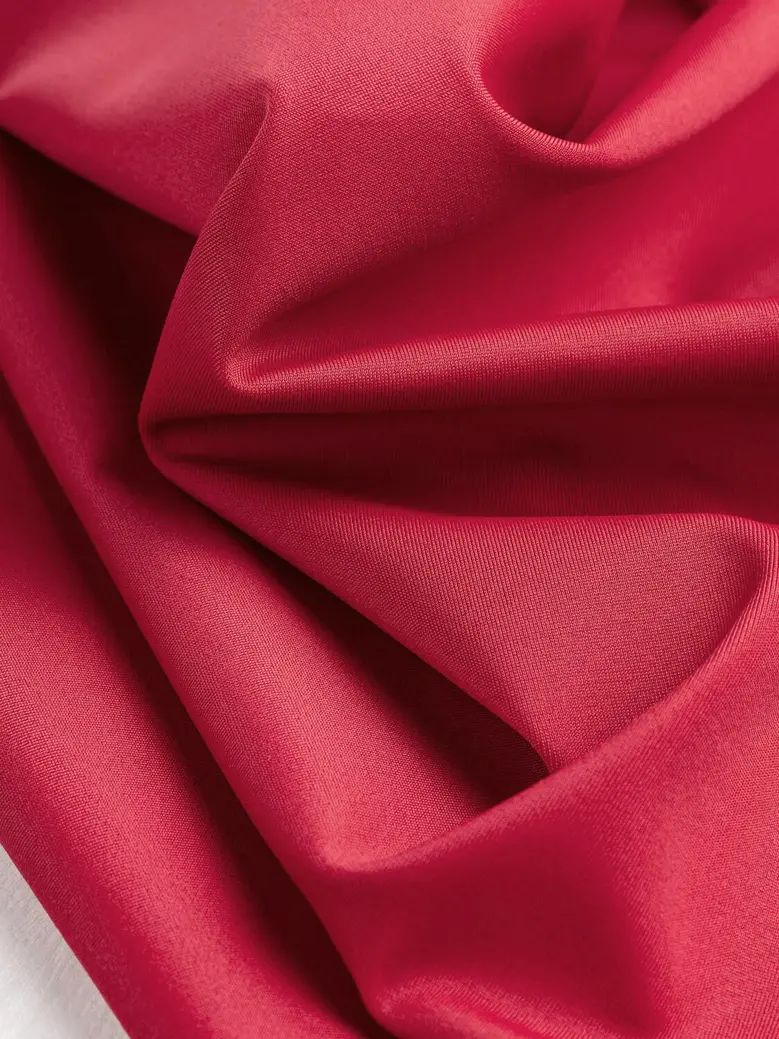
Source: cdn.shopify
Do a quick drape check with a decent-sized swatch. Hold the fabric by one edge and let it hang. Then loosely gather it in your hand and release it over your forearm or a hanger. Watch for three things:
Does it fold or stand away from the body?
If it holds large, angular folds or stands stiffly away from your arm, it may create a sculptural jacket or skirt. That can be desirable. It is less suitable for a blouse, softly pleated dress, or any pattern meant to skim the body.
Does it crease permanently?
Some upholstery fabrics develop sharp folds that remain visible after handling. Test a hidden edge or scrap by squeezing it firmly for a few seconds. Persistent creasing may be acceptable for a tailored look but frustrating in a garment meant to look relaxed.
Is there a backing or coating?
A bonded backing can add stability, but it may also make the material bulky, hot, stiff, or difficult to press. A coated surface may crack, mark, or react poorly to heat. Avoid assuming that a finish suitable for furniture will be comfortable or washable as clothing.
Weight matters, but it is not the whole answer
Heavy fabric is not automatically unsuitable. Weight can be useful when it supports the design: a substantial woven can give a coat, overshirt, skirt, or bag a crisp shape and help it resist wear.
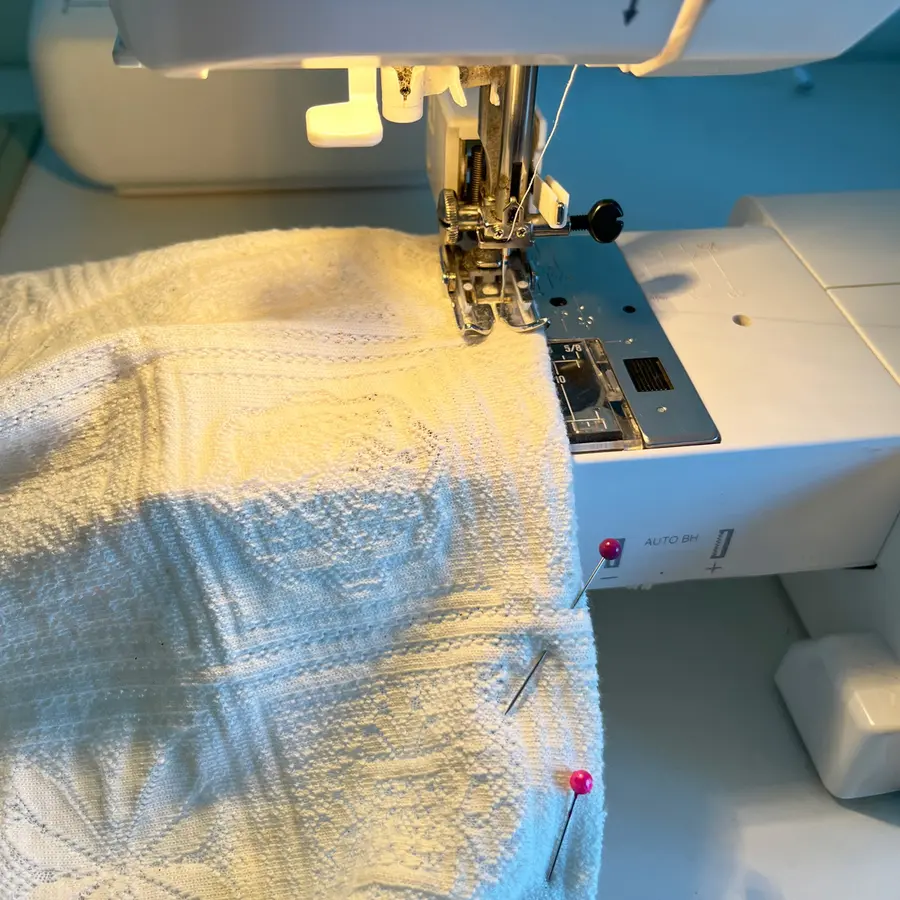
The problem arises when thickness combines with stiffness and bulk. Check how the fabric behaves in areas where several layers meet. Fold a sample into the approximate thickness of a seam allowance, hem, collar, waistband, or pocket edge. If your machine struggles to form even stitches through the stack, the finished garment may be difficult to sew cleanly.
Bulky fabrics can also make ordinary garment details uncomfortable. A thick seam at the underarm, neckline, crotch, or waistband may rub the wearer even when the garment fits correctly. Simplifying the pattern—using fewer seams, facings instead of bulky turned edges, or a lighter lining—can make upholstery fabric more wearable.
Test seam stress, not just abrasion resistance
Abrasion resistance measures how well a surface handles rubbing. Upholstery testing commonly uses methods such as Wyzenbeek or Martindale abrasion testing, but that information does not tell you whether a clothing seam will stay closed when you sit, bend, reach, or pull on a sleeve.
Seam slippage is the opening that occurs when yarns move away from a sewn seam under load. It is especially relevant for open weaves, smooth yarns, loosely woven decorative fabrics, and some fabrics treated with softeners or lubricating finishes. Sources on seam performance note that weave structure, yarn type, stitch density, seam allowance, thread choice, and sewing tension can all affect resistance to slippage.
Make a sample seam before cutting the garment:
- Cut two pieces large enough to grip comfortably.
- Sew them with the same seam allowance, thread, needle, and stitch length you expect to use in the garment.
- Press the seam as you normally would.
- Pull the pieces apart across the seam with steady force.
- Look closely at the stitching line.
If visible gaps form as yarns pull away from the seam, the fabric may not tolerate high-stress garment areas. A seam that looks fine while flat can still open when stretched around a shoulder, seat, or hip.
Do not rely on a stronger stitch alone to solve severe slippage. Once yarns begin shifting out of position, the fabric structure itself is the limitation. A wider seam allowance, a less fitted pattern, seam tape, lining, reinforcement at stress points, or a different seam construction may help in moderate cases. But if a sample opens easily, choose another fabric or reserve it for a low-stress design.
Look for fraying and edge stability
Some upholstery fabrics fray heavily because of their weave or yarn type. Others are so tightly woven that their cut edges remain relatively stable. Test a cut edge by rubbing it between your fingers and gently tugging at loose threads.
Heavy fraying does not automatically rule out a fabric, but it changes the sewing plan. You may need to finish every raw edge promptly with a serger, zigzag, overlock-style stitch, binding, or enclosed seam. Fabrics that shed fibers or unravel quickly can become difficult to manage during fitting and pressing.
Pay particular attention to decorative woven fabrics. A jacquard, chenille, or loose basket weave may look ideal for a coat or vest but can snag, distort, or release yarns at cut edges. Test scraps before committing to narrow seam allowances, clipped curves, or complex pocket shapes.
Evaluate comfort where the fabric touches skin
Furniture fabric does not always need to feel pleasant against bare skin. Before using upholstery fabric for garments, place a swatch against your neck, inner arm, and waist for several minutes. Consider whether it feels scratchy, stiff, sweaty, noisy, or irritating.
A lining can improve comfort, protect the inside of the garment, and reduce friction from bulky seams. However, lining does not fix a garment that is too rigid, heavy, or poorly suited to movement. It also does not remove potential discomfort at collar edges, cuffs, hems, or other exposed areas.
Texture deserves extra attention. Raised motifs, chenille yarns, metallic-looking threads, coarse linen-like weaves, and stiff finishes can be visually appealing but unpleasant at high-contact points. Use such fabrics selectively, perhaps for an outer jacket, trimmed panel, vest, bag, or skirt rather than a close-fitting top.
Check stretch and recovery realistically
Most woven upholstery fabrics have little true stretch, though they may give slightly on the bias. Do not mistake that small give for the reliable stretch and recovery required by fitted apparel.
If a garment pattern is drafted for knit fabric or depends on stretch for ease, select an appropriate apparel knit instead. For woven upholstery fabric, use a woven pattern with adequate wearing ease. Check whether the wearer can sit, raise both arms, bend at the waist, and take normal strides without stressing seams.
For fitted designs, make a test garment or at least test the critical areas in inexpensive fabric with similar stiffness. This is particularly important for sleeves, trousers, skirts with no vent, and fitted bodices.
Confirm care instructions before treating it as clothing
Many upholstery fabrics are intended for spot cleaning, professional cleaning, or limited water exposure. A garment, by contrast, may need regular washing because it touches the body.
Read the supplier information if it is available. If care details are unknown, test a hidden scrap before cutting: dampen it, let it dry, and inspect for color bleeding, stiffness changes, distortion, watermarking, or surface damage. Avoid claiming that a fabric is machine washable simply because it is durable enough for furniture.
Colorfastness also matters. Upholstery textiles may be tested for resistance to light and rubbing, but a garment faces additional conditions such as perspiration, laundering, body heat, and contact with other clothing. Wash or damp-test a swatch when practical, especially with dark, bright, or deeply saturated colors.
Sew upholstery fabric with an adjusted plan
When the fabric passes your tests, adapt the project to its properties. Use a fresh needle appropriate to the fabric’s density, test stitch length and tension on scraps, and avoid excessive unpicking because dense or decorative fabrics can show needle marks. Press cautiously, using a pressing cloth and a low-risk test area first, particularly if the material has a pile, coating, backing, or heat-sensitive fibers.
Choose simple construction where possible. Straightforward silhouettes, fewer curved seams, modest seam intersections, and minimal gathering usually produce better results than highly fitted designs. If you need reinforcement, apply it to stress areas such as pocket openings, shoulder seams, and closures rather than indiscriminately adding bulk everywhere.
Using upholstery fabric for garments works best when you treat it as a specialized material, not merely a tougher version of fashion fabric. A successful choice has enough flexibility for the garment, stable cut edges, seams that remain intact under pulling, tolerable next-to-skin comfort, and care requirements the wearer can realistically follow. If one of those essentials fails in a scrap test, change the pattern or choose a different textile before investing time in the full garment.
References
- Using Upholstery Fabric for Clothes: Creative Sewing Tips & Tricks. sewingtrip.com. https://sewingtrip.com/using-upholstery-fabric-for-clothes
- What Is Upholstery Fabric? Types, Durability & Uses | Linen Fabric Store. linenbeauty.com. https://www.linenbeauty.com/blog/what-is-upholstery-fabric
- Seam slippage in garments - An overview. advancetextile.net. https://www.advancetextile.net/2023/07/seam-slippage-in-garments-overview.html
- Textile testing | Seam slippage. zepelfabrics.com. https://www.zepelfabrics.com/journal/tips-how-to/a-deeper-look-into-textile-testing-seam-slippage
- Textile Testing: Seam Slippage | James Dunlop Textiles. jamesdunloptextiles.com. https://www.jamesdunloptextiles.com/journal/tips-how-to/textile-testing-seam-slippage
- Fabric Seam Slippage: Factors, Mechanism, Process and Way to Improve. fashion2apparel.com. https://fashion2apparel.com/fabric-seam-slippage-factors-mechanism
- Study on the Influence of Selected Fabrics and Stitching on .... mdpi.com. https://www.mdpi.com/1996-1944/15/11/3854