What Is the Difference Between Viscose, Modal, Cupro, and Lyocell?
Table of Contents
Viscose, modal, cupro, and lyocell are all regenerated cellulose fibers: plant-derived cellulose is dissolved, processed, and formed again into textile fiber. For a shopper, the practical shortcut is this: choose viscose when you want fluid drape at a commonly lower price and can give it gentle care; consider modal or lyocell for frequently washed next-to-skin clothing; and look for cupro when you want a smooth, silk-like lining or a particularly fluid woven fabric.
They are often grouped under the broad label rayon, especially in North American apparel language. But they are not interchangeable. Their manufacturing systems influence wet strength, surface character, care needs, common uses, and the environmental questions worth asking before buying.
The shared family: regenerated cellulose
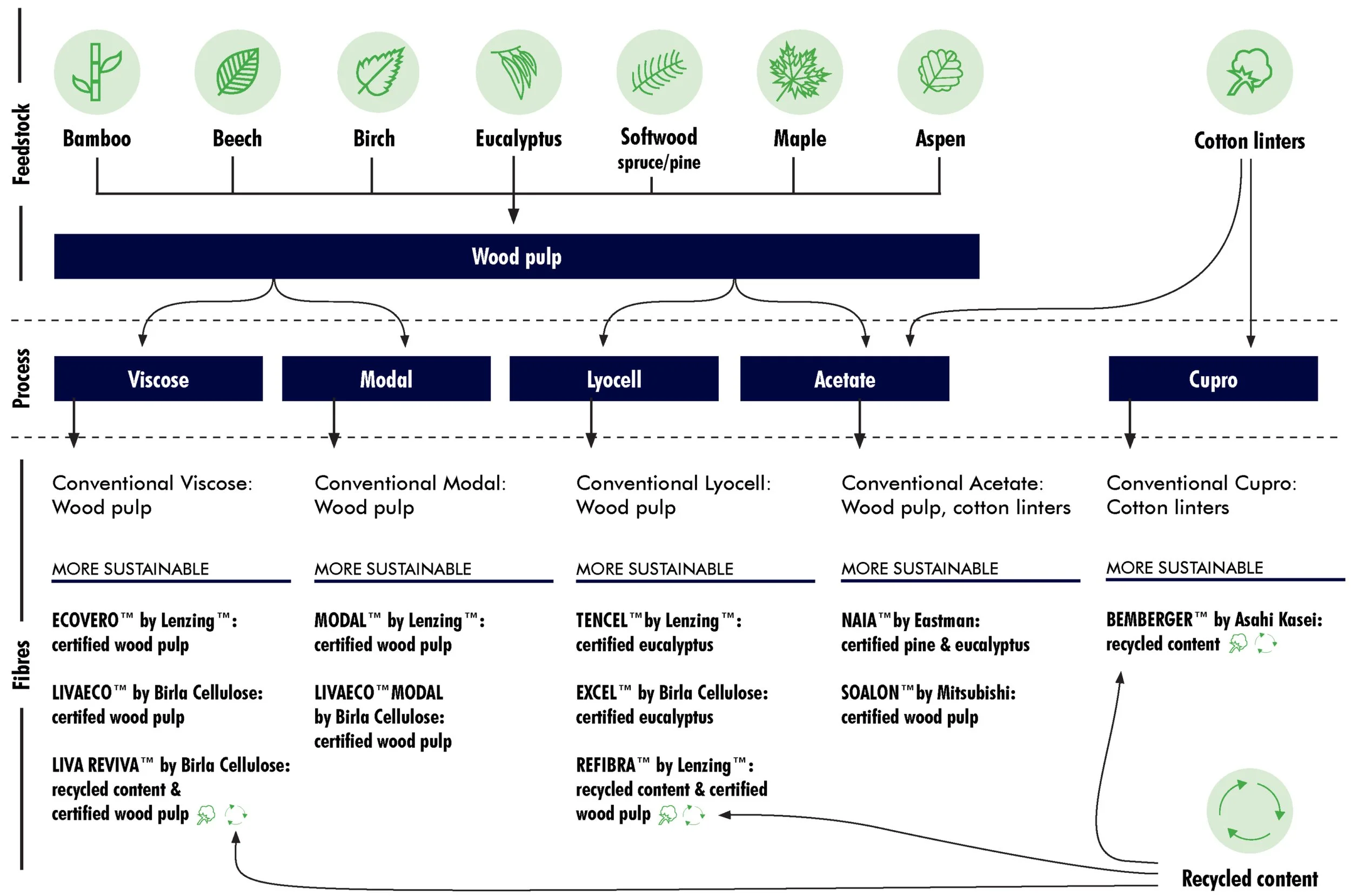
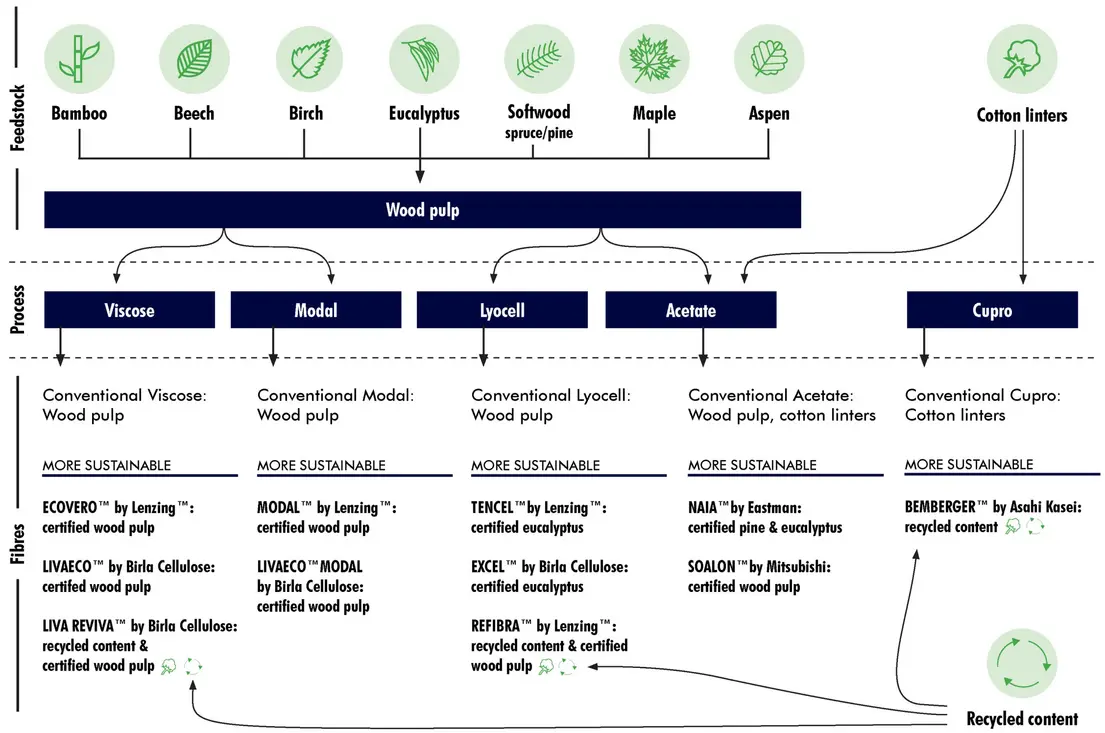
Cellulose is the structural material found in plants. In this fiber family, cellulose commonly comes from wood pulp, although cupro is often made from cotton linters: the short, fuzzy fibers left around cotton seeds after longer cotton fibers are removed.
Unlike cotton or linen, which are used as naturally occurring fibers, regenerated cellulose is chemically processed before it becomes a spinnable filament or staple fiber. That is why these materials can combine a plant-cellulose basis with smooth, silk-like handles, high absorbency, and highly variable performance.
“Rayon” is an umbrella term, but label language can be inconsistent. A garment labeled rayon may be conventional viscose rayon, while modal, cupro, and lyocell may be identified by their specific fiber names. The specific name is more useful than “rayon” alone when you are trying to predict how a garment will feel and wash.
Source: images.squarespace-cdn
Viscose: the common drapey rayon
Viscose is the best-known and most widely used regenerated cellulose fiber. It is valued for its soft hand, absorbency, color uptake, and graceful drape. In woven clothing, it is common in blouses, dresses, skirts, lightweight trousers, and linings. It can resemble silk in a satin weave or have a more matte, soft hand in challis, twill, jersey, or crepe.
The central tradeoff is wet performance. Standard viscose can lose substantial strength when wet, so it is more vulnerable to stretching, distortion, abrasion, and damage from rough laundering. A viscose garment may also wrinkle, shrink, or change shape depending on its construction, finish, and blend.
That does not mean every viscose item needs dry cleaning. Care instructions on the individual garment should lead, because yarn type, fabric structure, seam construction, and finishing all matter. Still, cold water, a gentle cycle or hand wash, low mechanical action, and avoiding aggressive wringing are sensible precautions when the label permits washing.
Modal: a stronger, softer rayon designed for repeated wear
Modal is also a regenerated cellulose fiber, often associated with beechwood pulp. It is generally made to meet higher wet-modulus performance than ordinary viscose. In plain language, it tends to retain its shape and strength better in wet use than standard viscose.
For shoppers, modal is often a practical choice for underwear, T-shirts, sleepwear, lightweight knitwear, and bedding. It is usually very soft, absorbent, and smooth against the skin. It is also commonly blended with cotton, elastane, or polyester, so the finished fabric may behave quite differently from 100% modal.
Modal is not automatically carefree. A thin modal-elastane jersey can be soft and stretchy but still snag, pill, or lose shape if it is poorly constructed. A modal fabric with a delicate finish may also need gentler treatment than a sturdier knit. Think of modal as generally more wash-resilient than ordinary viscose, not as indestructible.
Cupro: a smooth, silk-like fiber often used for linings
Cupro, short for cuprammonium rayon, is regenerated cellulose typically made from cotton linters. It is known for a very smooth, fluid, often slightly lustrous hand. You may also encounter the name Bemberg, which is a branded cupro fiber.
Cupro is especially associated with better-quality jacket, coat, skirt, and dress linings because it drapes well, feels smooth over clothing, and can help reduce the clingy static sensation associated with some synthetic linings. It is also used as a fashion fabric in blouses, dresses, and relaxed trousers where a liquid drape is desired.
Its main appeal is luxurious handle rather than ruggedness. Like other rayon-family materials, cupro can require careful laundering and may be better suited to garments that are not exposed to heavy abrasion. Check whether the garment is washable, dry-clean-only, or made as a blend. A cupro lining and a cupro outer fabric can have different care expectations because the garment construction is different.
Lyocell: a regenerated fiber with high wet strength
Lyocell is another regenerated cellulose fiber, usually made from wood pulp. It is often chosen for its smooth hand, absorbency, breathability, and comparatively strong wet performance. It appears in shirts, denim-like fabrics, dresses, jersey knits, bedding, underwear, and blends.
For the lyocell vs viscose decision, lyocell is usually the more forgiving option for a garment that will be washed regularly. It generally holds up better when wet and can offer a cleaner, slightly more structured hand than very fluid viscose, although weave, weight, finishing, and blending can change the result dramatically.
One issue to know is fibrillation. Under wet abrasion, some lyocell fabrics can develop fine surface fibers that create a peach-skin or slightly fuzzy appearance. This may be intentionally developed as a finish, but unwanted fibrillation can occur through harsh washing. Turning garments inside out, using a gentle cycle, and limiting abrasion can help preserve a smoother surface when the care label allows.
TENCEL™ is a brand name used for certain branded lyocell products, rather than a separate generic fiber category. A label saying TENCEL™ Lyocell identifies branded lyocell; it does not mean that all lyocell is TENCEL™.
Why the production route matters
All four materials are made by dissolving cellulose and regenerating it as fiber, but the chemical systems differ.
Traditional viscose production converts cellulose through a process that uses carbon disulfide. This chemical has serious worker-health and pollution implications when facilities do not control emissions and recover chemicals effectively. Modal is commonly described as a modified viscose-type fiber with improved wet performance, but its environmental profile still depends on its specific pulp source, chemical management, energy use, and manufacturing controls.
Cupro uses a different copper-and-ammonia-based dissolution route. Its use of cotton linters can make use of a cotton-processing byproduct, but that fact alone does not settle its environmental impact. Chemical recovery, wastewater treatment, energy, and factory controls remain important.
Lyocell uses a different solvent system, commonly described as a closed-loop process in which much of the solvent is recovered and reused. This can reduce chemical losses compared with conventional viscose processing. However, “closed loop” is not a complete sustainability verdict. Wood sourcing, forest management, energy, water, factory emissions, transportation, garment durability, and end-of-life all matter.
A more useful buying question is not “Which rayon is perfectly sustainable?” It is: What fiber is this, where does its cellulose come from, how transparent is the producer, and will I use the item for a long time? Certifications or sourcing claims related to responsibly managed forests can provide additional context, though they do not describe every impact in the finished garment.
How to choose between them in a store or fabric shop
Choose viscose if you want soft, flowing drape for a dress, blouse, skirt, or light woven project and are prepared to follow gentle care instructions. It can be an effective choice where movement and softness matter more than maximum wash durability.
Choose modal for underwear, tees, pajamas, and stretchy basics where softness and regular washing are priorities. Review the blend: modal with elastane behaves differently from woven 100% modal.
Choose cupro for a smooth lining, a refined drapey garment, or a silk-like feel without using silk. It is particularly useful when lining a tailored garment that needs to slide comfortably over other clothing.
Choose lyocell for shirts, dresses, bedding, denim-inspired fabrics, and everyday garments that need softness with comparatively better wet strength. It can be especially appealing when the brand provides credible information about pulp sourcing and production.
The fabric construction still matters most
Fiber content gives useful clues, but it does not predict every outcome. A heavy twill, a lightweight satin, a rib knit, and a brushed jersey can all be made with regenerated cellulose fibers and feel completely different. Blends also change behavior: elastane adds stretch, polyester can increase durability but introduces synthetic microfiber concerns, and cotton may alter texture and shrinkage.
Before deciding, look beyond the front label. Check the full fiber percentage, fabric weight and structure, care label, lining information, and whether the garment will face frequent washing or abrasion. Viscose, modal, cupro, and lyocell are related materials, but the best choice is the one whose finished fabric and care needs match the job you need it to do.
References
- Viscose vs Rayon Explained: What’s the Real Difference?. longancraft.com. https://www.longancraft.com/blogs/fabric-knowledge/viscose-vs-rayon-explained-whats-the-real-difference
- Viscose, Modal and Lyocell: Complete Guide to Regenerated Cellulosic Fibers — Compared to Polyester - Polyester Staple Fiber Partners from Asia - VNPOLYFIBER. vnpolyfiber.com. https://vnpolyfiber.com/viscose-modal-and-lyocell-complete-guide-to-regenerated-cellulosic-fibers-compared-to-polyester
- Viscose Fabric: What It Is, Pros, Cons & Care Guide. spocket.co. https://www.spocket.co/blogs/viscose-fabric
- Tencel vs Viscose vs Modal vs Rayon vs Lyocell. taihusnow.com. https://taihusnow.com/viscose-vs-tencel.html
- Viscose, Rayon, Modal, Lyocell, Cupro: Decoding Man-Made Textiles | Earth Day. earthday.org. https://www.earthday.org/viscose-rayon-modal-lyocell-crupo-decoding-man-made-textiles
- What’s the Difference?: Tencel, Lyocell, Lenzing, Modal, Cupro and Bemberg » BERNINA Blog. blog.bernina.com. https://blog.bernina.com/en/2024/09/whats-the-difference-tencel-lyocell-lenzing-modal-cupro-and-bemberg
- Regenerated Cellulose Fiber in Clothing: Viscose, Modal & Lyocell. greenercloset.com. https://greenercloset.com/blog/regenerated-cellulose-fiber
- Viscose, Modal and Lyocell: The Complete Guide to Regenerated Fabrics | Geyin.az Blog. geyin.az. https://geyin.az/en/blog/post/viscose-modal-and-lyocell-the-complete-guide-to-regenerated-