Why Is Apparel Sewing Hard to Automate?
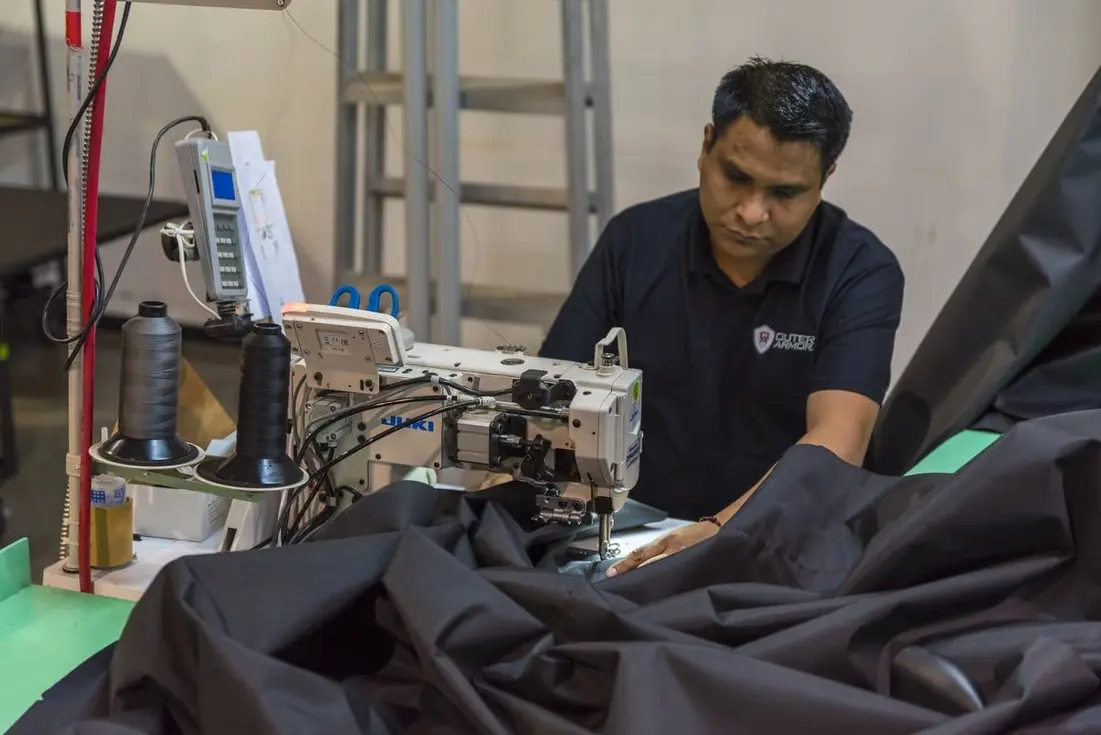
Table of Contents
Apparel sewing is hard to automate because a garment is made from soft, lightweight, changing materials rather than fixed, rigid parts. A robot can repeat a programmed motion precisely, but fabric can stretch, sag, wrinkle, slip, curl at an edge, or shift when it is picked up. Before a machine can sew accurately, it must first locate the correct piece, grip it without damaging it, orient it, align it with another piece, control tension, feed both layers consistently, and detect mistakes as they happen.
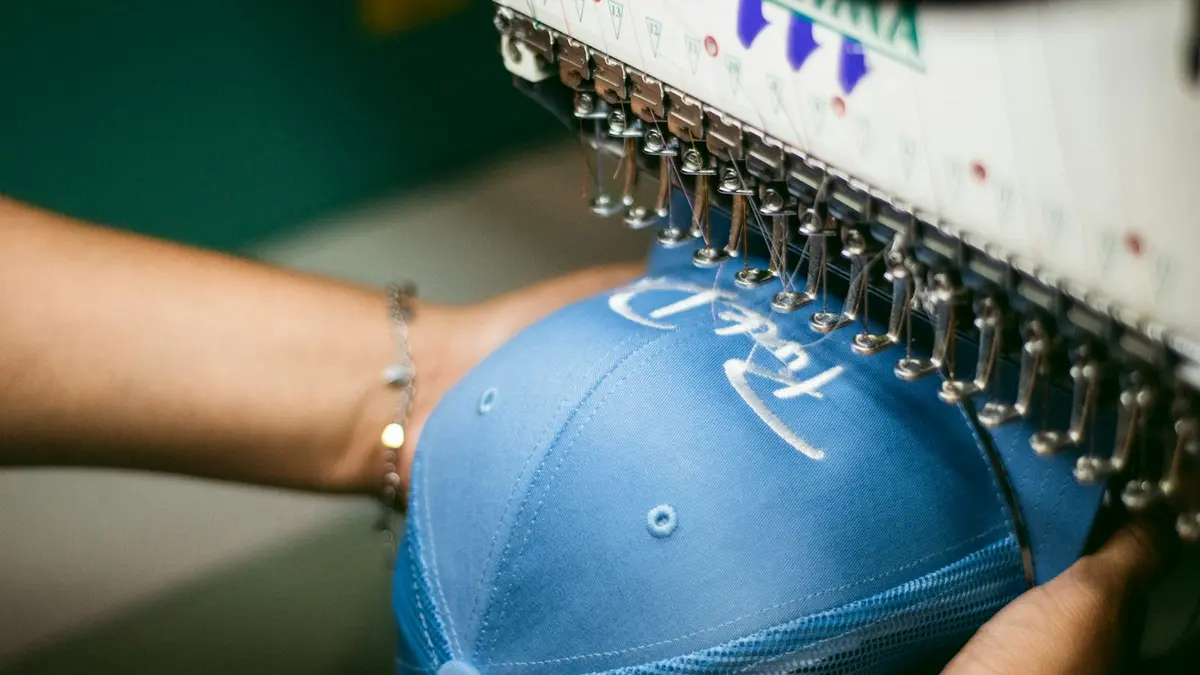
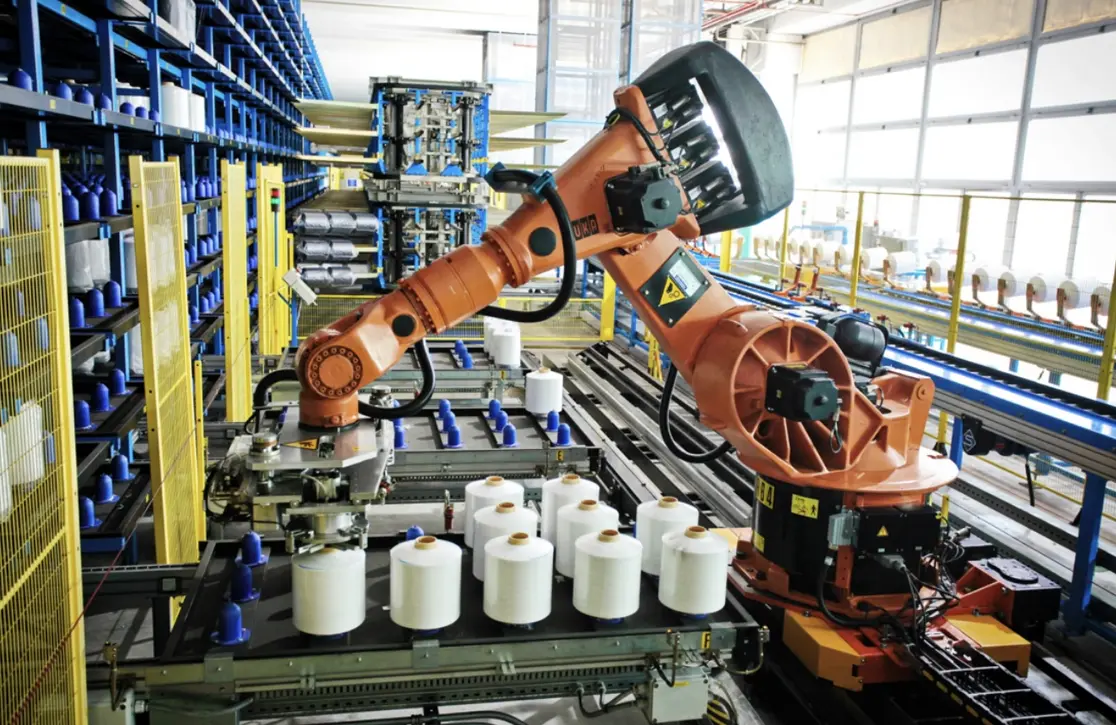
That is why apparel factories can automate many operations around sewing without fully automating sewing itself. Cutting, quilting, embroidery, fabric spreading, material transport, pressing, packing, and selected repetitive seam operations may be automated or semi-automated. The difficult part is the broad middle ground of assembling varied garment components reliably at production speed. In short, why apparel sewing is hard to automate comes down to deformable material control and the many small judgment calls that experienced operators make continuously.
Fabric does not hold a stable shape
Automation works best when every part arrives in a known position with predictable geometry. A stamped metal component, for example, can be grasped at the same point and placed into a fixture designed around its fixed shape. Cloth behaves differently.
A cut panel may look flat on a cutting table, then change shape as soon as it is lifted. Gravity affects drape. Knit fabrics may stretch. Woven fabrics can shift along the bias. Smooth, coated, lightweight, or slippery materials may slide against each other. Even airflow, static, or light contact can move a piece enough to affect seam placement.
This is the core issue in deformable materials automation: the material is not merely being transported from point A to point B. Its shape and condition are changing during the movement. A system must identify the fabric’s current state, predict how its movement will alter that state, and correct its action in real time.
A recent robotic-sewing research paper describes the challenge as a combination of perception, manipulation, and adaptive control. It notes that individual tasks such as seam tracking, tension control, and fabric feeding have been demonstrated, but a complete, general-purpose autonomous sewing workflow remains an open problem. The paper on robotic sewing and flexible fabric manipulation emphasizes that fabrics are lightweight, highly deformable, and sensitive to applied forces.
Source: automate
Picking up fabric is harder than picking up a part
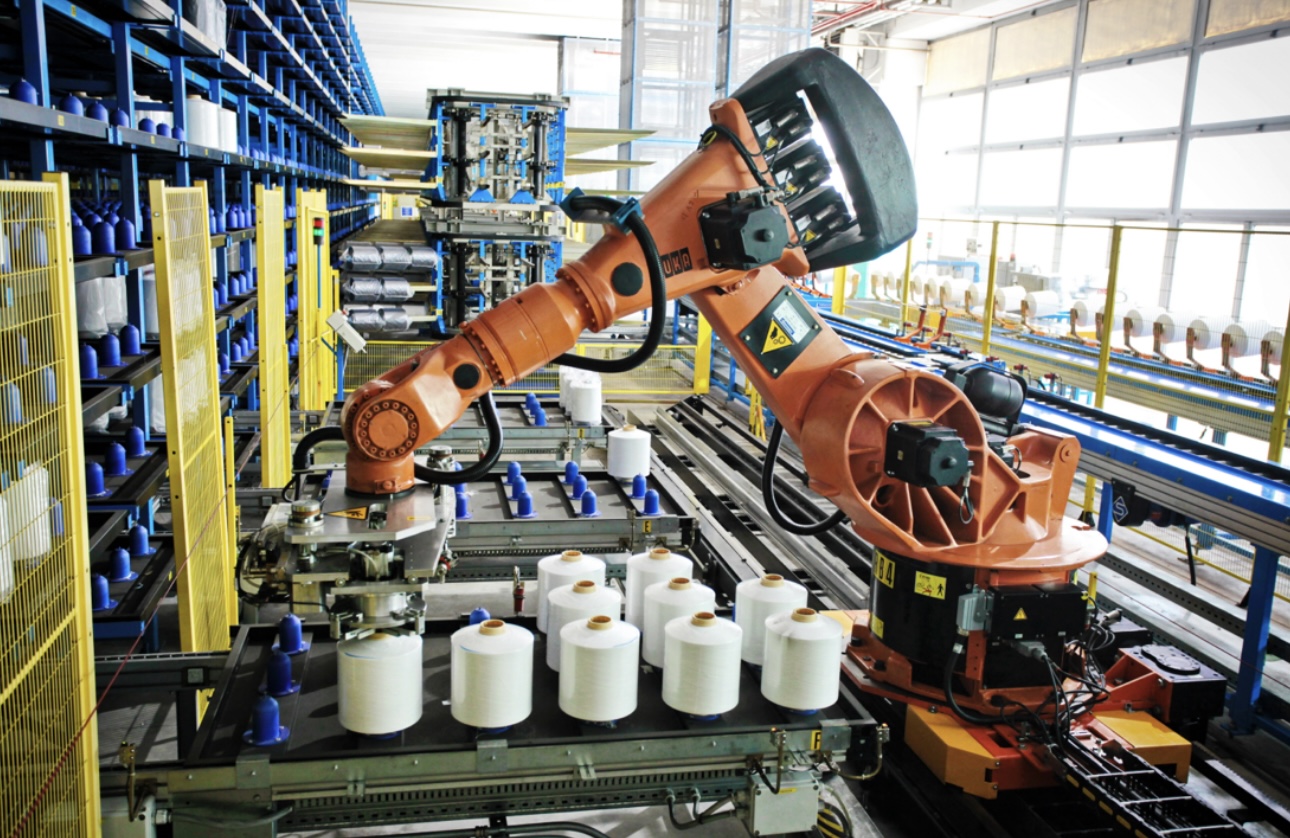
A factory worker can quickly separate layers, feel whether two plies are stuck together, pinch a corner, spread out a wrinkle, and adjust grip pressure without consciously calculating each motion. Fabric handling robotics must reproduce enough of that capability to work reliably.
Gripping presents several tradeoffs:
- Too little force: the fabric slips or droops.
- Too much force: the fabric may distort, crease, mark, or stretch.
- Vacuum pickup: can work on certain materials and shapes, but porous, textured, uneven, or loosely stacked fabrics may be difficult to separate or hold consistently.
- Mechanical grippers: can offer more controlled contact, but may snag delicate fabrics or require an accessible edge or corner.
- Multiple layers: are especially challenging because a system must know whether it has picked up one ply, two plies, or a partly folded stack.
The issue is not simply designing a stronger gripper. A stronger grip can create a different problem by changing the fabric geometry. For accurate assembly, the machine needs a grip that is stable while preserving the intended shape of the panel.
Alignment errors compound before the needle starts
Most garments are assembled from multiple pieces that must meet at specific edges, notches, curves, corners, seam allowances, and directional grain lines. A small mismatch at the start of a seam can become a visibly uneven shoulder, twisted side seam, puckered sleeve, or distorted collar by the end.
Humans use visual cues and tactile feedback to make rapid corrections. An operator can notice that one layer is feeding ahead of the other, pause slightly, redistribute fullness, rotate a curved piece, or guide an edge back toward the needle. This ability is particularly important for operations involving curves, stretch materials, gathers, bindings, collars, pockets, cuffs, and multi-layer assemblies.
Machine vision can identify edges, contours, markers, and seam paths under controlled conditions. However, recognizing an edge is not enough. The system must also determine whether the edge is correctly tensioned, whether the material below it is aligned, and whether a wrinkle is likely to become trapped in the seam.
In an interview on physical AI and apparel production, CreateMe CEO Campbell Myers described the challenge as manipulating deformable materials amid continual variation in stretch, drape, positioning, and other material properties. The key requirement is not robot accuracy alone, but a system that can understand the material state and adapt during handling.
Feeding fabric through a sewing machine requires coordinated control
An industrial sewing machine already automates a major part of sewing: it drives the needle, forms stitches, and moves material through feed mechanisms. But the operator often supplies the control that occurs around and ahead of the needle.
For a seam to be acceptable, the machine must maintain the intended stitch line while controlling several connected variables:
- fabric orientation relative to the needle;
- alignment of two or more layers;
- tension in the material;
- feeding rate and direction;
- seam allowance width;
- response to curves, corners, and changes in thickness;
- avoidance of folds, skipped stitches, puckering, or seam distortion.
A robot may be able to sew a straightforward, repeatable line when the material is constrained in a fixture or prepared in a consistent orientation. That is very different from sewing every operation in a shirt, dress, jacket, or pair of jeans. Each garment style can contain a mixture of straight seams, curves, enclosed sections, narrow components, layered intersections, and materials with different behavior.
The more a process requires flexible human-like repositioning, the more difficult it becomes to automate economically.
Variation in garments makes a universal sewing robot unrealistic today
Factories do not produce one perfectly uniform fabric part forever. They handle style changes, color changes, sizes, seasonal collections, material substitutions, customer requirements, and different construction methods. Even within one order, fabric behavior can vary with roll tension, finishing, cut direction, or layer handling.
A dedicated automated cell can make sense when the product is stable, the seam is repetitive, volumes are high, and the material is predictable. Examples may include consistent technical-textile components, simple textile panels, repetitive quilting patterns, or narrowly defined operations such as attaching a specific label, pocket, or reinforcement.
A flexible garment line is different. Every new product can require fresh setup, new handling strategies, revised vision parameters, machine adjustments, and validation. If changeover takes too long or the automated cell needs frequent human intervention, the expected labor savings may disappear.
This helps explain why cutting has advanced further than full sewing automation. Digital pattern data gives automated cutters a defined path, and fabric can be stabilized on a cutting surface, often with vacuum assistance. Sewing requires the system to control the material while it moves and changes shape. Textile World’s overview of automated cutting and sewing similarly distinguishes the relative maturity of automated cutting from the more limited range of automated sewing configurations.
Quality inspection is not just a camera problem
Automated inspection can identify some defects, such as missing components, obvious seam deviations, surface defects, or incorrect labels. But many garment-quality decisions are contextual.
A quality inspector may evaluate whether a seam is straight enough for the design, whether a wrinkle is temporary or permanently sewn in, whether fabric distortion affects fit, whether pattern alignment is acceptable, or whether a subtle defect will be visible when the garment is worn. Some problems are also hidden inside a seam or only become apparent after turning, pressing, washing, or stretching the garment.
Computer vision can expand quality control, especially when factories define clear defect examples and inspection conditions. Yet inspection does not eliminate the upstream problem. If a sewing system cannot consistently present, align, and feed the fabric, detecting the defect afterward may only identify rework rather than prevent it.
Automation is growing around sewing, not replacing every operator at once
The practical future of garment manufacturing automation is likely to be selective rather than all-or-nothing. Factories can gain value from automated cutting rooms, programmable sewing machines, template-guided operations, digital production tracking, vision-supported inspection, automated material movement, embroidery, pressing, and packing.
Within the sewing room, the strongest opportunities are usually operations with controlled inputs and limited variation. Jigs, clamps, templates, guides, and specialized attachments can make fabric behave more predictably. In some cases, redesigning the product or joining method can also reduce the need for complex robotic manipulation.
An article in The Robot Report argues that apparel automation may advance faster when manufacturers redesign processes around what machines can reliably control, rather than asking robots to copy every manual needle-and-thread action.
Online discussions reflect the same distinction. In a manufacturing-focused Reddit discussion, a commenter summarized the central constraint as fabric being “deformable.” That is an anecdotal observation rather than independent technical evidence, but it closely matches the engineering challenge described in robotics research: fabric’s changing geometry makes handling and assembly much harder than rigid-part automation.
The bottom line
Sewing automation is difficult not because factories lack fast sewing machines or capable robots. It is difficult because a garment seam depends on controlled material behavior before, during, and after the stitch is made. Fabric must be recognized, separated, gripped, aligned, tensioned, fed, and inspected while its shape can change at every step.
That is why garment manufacturing automation has progressed most quickly in stable, highly repeatable tasks and more slowly in flexible cut-and-sew assembly. Human operators remain valuable where touch, visual judgment, rapid correction, and adaptability are needed. As machine vision, force sensing, material models, and robotic handling improve, more specific sewing operations can be automated—but full, universal robotic sewing remains far more complex than simply placing a robot beside an industrial sewing machine.
References
- Interview: CreateMe CEO Campbell Myers on how physical AI could automate apparel manufacturing. roboticsandautomationnews.com. https://roboticsandautomationnews.com/2026/06/04/interview-with-createme-ceo-campbell-myers-from-stitching-to-bonding-physical-ai-could-transform-the-way-clothes-are-made/102258
- Future Trends of Automation in Apparel Manufacturing (2026 Guide) – Textile ERP Guide. textileerpguide.com. https://textileerpguide.com/future-trends-of-automation-in-apparel-manufacturing-2026-guide
- Textile Automation In 2025: Benefits And Challenges. tld-apparel.com. https://tld-apparel.com/news-inspired/textile-automation-in-2025
- Why deformable materials are physical AI’s real manufacturing test - The Robot Report. therobotreport.com. https://www.therobotreport.com/why-deformable-materials-are-physical-ai-real-manufacturing-test
- A Robotic sewing system for flexible fabric manipulation using computer vision, learning-based grasping and force control | International Journal of Intelligent Robotics and Applications | Springer Nature Link. link.springer.com. https://link.springer.com/article/10.1007/s41315-026-00590-3
- Textile and Apparel Manufacturing Automation: Careers…. automateamerica.com. https://automateamerica.com/blog/textile-and-apparel-manufacturing-automation-careers-weaving-the-future
- Textile and Apparel Manufacturing Automation: Careers…. automateamerica.com. https://automateamerica.com/beta/blog/textile-and-apparel-manufacturing-automation-careers-weaving-the-future
- Automated Cutting & Sewing Developments | Textile World. textileworld.com. https://www.textileworld.com/textile-world/features/2020/03/automated-cutting-sewing-developments