Why Does Some Linen Fabric Feel Delicate and Wear Out Faster Than Expected?
Table of Contents
Some linen fabric wears out sooner than expected because “linen” describes the fiber source, not one fixed level of quality or durability. Flax can produce strong, long fibers, but the finished fabric’s service life also depends on fiber selection, yarn evenness, fabric weight and weave, finishing, exposure to abrasion, and laundering. A lightweight or loosely built linen may be perfectly appropriate for an airy summer garment while being a poor choice for high-friction use.
So, why linen fabric wears out is not answered simply by whether the label says 100% linen. Well-made linen can be long-lasting, but not every linen is made from the same grade of flax fiber or engineered for the same job.
Linen strength is real, but it is not a guarantee
Linen is made from flax, a bast fiber valued for strength, breathability, and its characteristic crisp texture. Sources on linen commonly note that flax fibers can be stronger than cotton fibers and that linen becomes softer with washing and wear. That broad reputation is deserved—but it can create an unrealistic expectation that every linen shirt, dress, sheet, or furnishing fabric should tolerate heavy abrasion indefinitely.
Strength in a fiber is different from durability in a finished fabric. A fabric can contain strong fibers yet still wear prematurely if it is very thin, loosely woven, made with uneven yarns, weakened by a harsh finish, or used where rubbing is constant.
For example, a breezy linen voile, gauze, or open-weave shirting is designed to be light and breathable. It may feel delicate because it is delicate by construction. That is not necessarily a defect. Problems arise when shoppers expect the performance of a dense linen canvas, upholstery textile, or substantial trouser-weight linen from a fabric intended for low-stress apparel.
Fiber length affects yarn quality and surface fuzz
Longer, more regular flax fibers can be spun into smoother, more continuous yarns. Fewer fiber ends need to be held within the yarn, which can help produce a cleaner surface and reduce weak points. Sources discussing linen quality commonly associate long-line flax with finer, more consistent, and more durable textiles.
Short flax fibers are not automatically bad. They can be used in useful, sturdy products, including coarser fabrics and heavier utility materials. But when short fibers are used in a yarn that is poorly spun, uneven, or insufficiently bound together, the fabric may feel rougher and release loose fibers during wear and washing. That can make a new fabric appear fuzzy, linty, or prematurely tired.
A discussion in the supplied Reddit thread specifically raises this concern, suggesting that shorter fibers can make linen rougher and weaker and may work loose after washing. That is a useful observation about one possible cause, not proof that all contemporary linen uses short fibers or that short fibers alone explain every failure.
The more practical point is that fiber length works together with spinning quality. A fabric made from irregular yarn may show slubs, thick-and-thin areas, fuzz, or uneven openness. Some slubbing is an intentional linen aesthetic. Excessive unevenness, loose protruding fibers, or visibly thin areas can be signs that the fabric may not have a long service life in a high-wear application.
Yarn and weave construction can matter more than the label
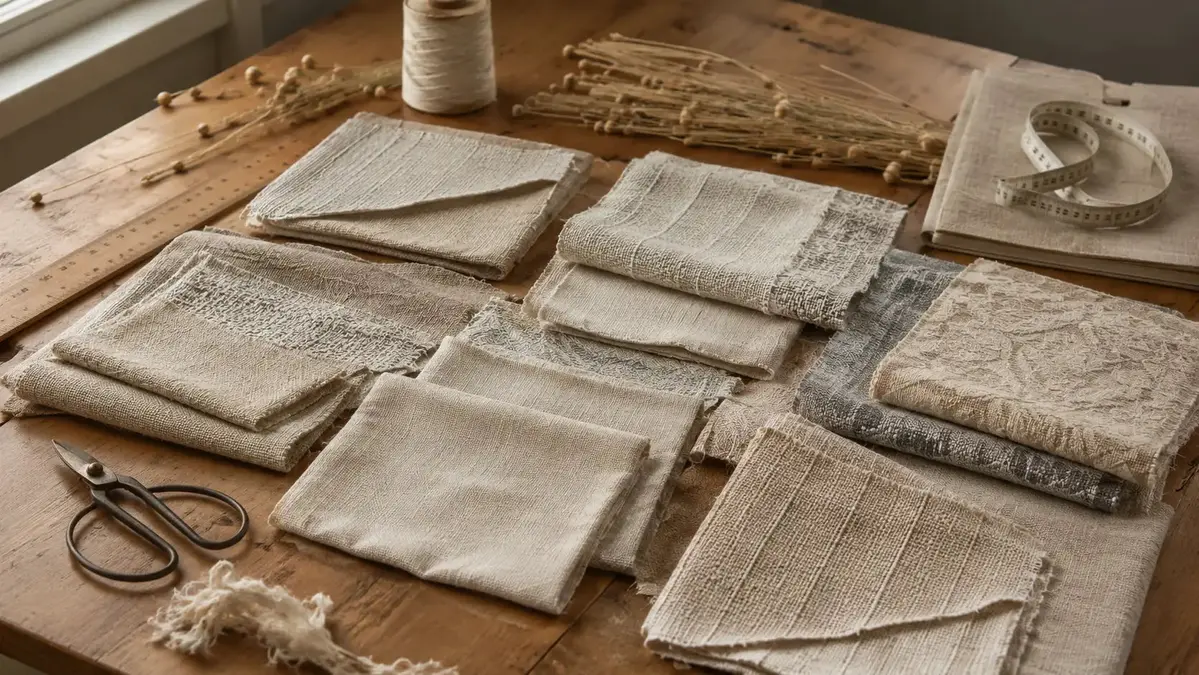
Two fabrics can both be 100% linen and perform very differently. The yarn thickness, yarn twist, thread spacing, weave structure, and overall fabric weight determine how much material is present to resist rubbing and strain.
A denser fabric made with sufficiently substantial yarns usually has more ability to withstand repeated abrasion than a very open, lightweight fabric. This is why thread count alone is not a reliable shortcut for linen quality. Flax yarns are generally thicker than cotton yarns, so linen cannot be judged by cotton-style thread-count expectations. Fabric density, balance, yarn quality, and intended use provide a more meaningful picture.
Source: cdn.shopify
Look closely at the cloth before buying or cutting it:
- Open spaces between yarns can be desirable for breathability, but they also leave less structure to resist rubbing and snagging.
- Very fine or sheer fabric may be right for a blouse or curtain, but it is more vulnerable at elbows, inner thighs, seams, and bag-contact areas.
- Uneven yarns may be decorative, but pronounced thin spots deserve caution.
- A dense, balanced weave generally gives better support than a sparse construction when durability is the priority.
- Visible distortion when the fabric is gently handled can indicate a loose construction that may shift or strain in wear.
This also explains why a linen fabric can be strong in a simple pull yet still wear through at a cuff, collar edge, seat, or underarm. Those locations experience repeated surface friction, bending, and localized pressure rather than one clean pulling force.
Finishing can change the first impression of linen
New linen does not always feel soft. It can feel crisp, dry, or slightly rough at first, and regular washing may soften it over time. But softness alone does not prove quality, and initial stiffness does not automatically mean a fabric is durable.
Mechanical softening, washing treatments, or other finishes can make linen feel more inviting at retail. Depending on the fabric and finish, that first softness may not tell you much about yarn quality or abrasion resistance. A finish can also mask a sparse or weak construction until the fabric has been washed and worn.
Conversely, a firm, slightly crisp linen may become more comfortable without losing its usefulness. The best approach is to evaluate the whole fabric: its weight, density, yarn appearance, surface condition, and suitability for the intended garment or home use.
Abrasion is often the real reason linen fails early
Linen is not especially elastic. It does not spring back from repeated bending the way some synthetic fibers or stretch fabrics can. That characteristic contributes to linen’s familiar wrinkles, but it also means high-friction zones deserve attention.
Abrasion can come from more than daily movement. Common sources include crossbody bag straps, seat belts, desk edges, tight footwear, rough upholstery, frequent kneeling, and repeated contact with other garments in a crowded wash. Linen used for upholstery also faces sliding, sitting, and repeated rubbing that a lightweight apparel linen was never intended to handle.
A fabric marketed for furniture should ideally be evaluated using abrasion information supplied for that exact textile, rather than assuming linen’s general reputation makes it suitable for hard daily use. Abrasion test results, when available, describe a particular fabric and test method; they should not be generalized to all linen.
Laundering can reveal weak yarns—or shorten fabric life
Gentle laundering usually helps linen remain useful and become softer. However, washing also creates mechanical action. If a fabric contains loose short fibers, a fuzzy surface, weak yarns, or a very open weave, repeated cycles can make those issues increasingly visible.
To reduce unnecessary wear, follow the care label first. In general, avoid treating linen as if it were indestructible. Excessive wringing, aggressive agitation, overloading a washer, and high-heat drying can increase stress on seams and fabric surfaces. Washing garments inside out can reduce face abrasion, especially for pieces with printed surfaces, buttons, rough trims, or frequent contact with other items.
For linen garments, it also helps to separate heavy abrasive items—such as garments with zippers, hooks, or coarse denim—from lightweight linen. Do not leave linen in direct strong sunlight for prolonged periods when fading or fiber weakening is a concern; sunlight exposure is particularly relevant for curtains and upholstery.
How to choose linen that is likely to last
Choose linen according to use rather than relying on the word “linen” as a durability rating. For trousers, workwear-style garments, bags, high-use table linens, or upholstery, favor a fabric that feels substantial, has a stable and fairly dense weave, and does not show obvious thin patches or excessive loose fuzz.
For shirts, dresses, and warm-weather layers, lightweight linen can be an excellent choice, but plan for its limits. Reinforce stress points in sewing, use seam finishes appropriate to fraying fabric, and avoid placing a fragile linen where constant strap friction or heavy abrasion is unavoidable.
When shopping online, ask for fabric weight, close-up photos, intended end use, fiber content, and care guidance. If possible, order a swatch. A swatch cannot predict every aspect of long-term wear, but it can reveal openness, transparency, yarn irregularity, surface fuzz, and how the cloth responds to handling.
The key takeaway is that linen is not one fabric performance category. Long, well-spun flax fibers and a sound construction can produce remarkably resilient cloth. Shorter or less regular fibers, weak yarns, lightweight construction, abrasion, and harsh care can make another linen feel rough, shed fibers, or wear through much sooner. Match the linen to the job, and judge the actual fabric—not just the fiber name.
References
- Is Linen More Durable Than Cotton? | MATTEO. matteola.com. https://matteola.com/blogs/bedding-blog/cotton-and-linen-bedding-durability-what-lasts-longer
- What Is Linen Fabric: Overview & Sustainability | Ecolife. ecolife.com. https://www.ecolife.com/learn/what-is-linen-fabric
- Performance Fabric vs. Linen: Which Suits Your Sofa? — cozyhome. cozyhomefurniture.com. https://www.cozyhomefurniture.com/blogs/blog/performance-fabric-vs-linen
- Abrasion resistance of linen under the microscope - Lotika. lotika.store. https://www.lotika.store/blogs/magazine/abrasion-resistance-of-linen-under-microscope-what-can-natural-elegance-withstand
- What is Linen Fabric? A Guide to Linen | Peacock Alley. peacockalley.com. https://www.peacockalley.com/pages/what-is-linen-fabric
- Why is linen nowadays a delicate fabric?. reddit.com. https://www.reddit.com/r/HistoricalCostuming/comments/1jjtnvc/why_is_linen_nowadays_a_delicate_fabric
- Understanding Linen Clothes: A Breathable and Timeless Fabric | Shantima. shantima.com. https://www.shantima.com/blog/understanding-linen-clothes-a-breathable-and-timeless-fabric
- Linen Upholstery Fabric: Pros and Cons | The Stated Home Blog. blog.thestatedhome.com. https://blog.thestatedhome.com/linen-upholstery-fabric-pros-cons