Why Do Soft Yarns Pill More Easily?
Table of Contents
Soft yarns often pill more easily because the qualities that make them feel plush—fine fibers, a lofty structure, low or moderate twist, and a fuzzy surface—can also make it easier for fiber ends to work loose under rubbing. Those loose ends create fuzz, the fuzz tangles into small balls, and some of those balls remain anchored to the garment.
But softness does not automatically mean poor durability, and a particular fiber is not destined to pill simply because it is soft. The answer to why yarn pills lies in the whole system: fiber length and strength, yarn twist and ply structure, the knitted or woven fabric, finishing, and the friction the finished item receives.
Pilling starts with friction, not simply wear
Pilling is a progressive surface-change process. Friction from underarms, bag straps, desk edges, seat belts, laundering, or fabric rubbing against itself can pull fiber ends toward the surface. That produces a fuzzy halo first. Continued rubbing twists some of those projecting fibers together into pills.
Whether the pills become highly visible depends partly on whether they stay attached. Strong, durable fibers can keep a pill connected to the fabric longer; weaker anchoring fibers may break and release it. That does not necessarily mean a fabric that sheds pills is more durable overall—it only means its pills may be less persistent.
Textile pilling tests reproduce surface rubbing under controlled conditions and then assess the resulting appearance. For example, the ISO 12945-1 box pilling test evaluates surface fuzzing and pill formation, using an appearance scale in which higher ratings indicate better resistance. Such results are useful for comparing specified fabrics, but they cannot perfectly duplicate every garment’s fit, use, and care routine.
Why soft wool pilling is a common concern
When makers discuss soft wool pilling, they are usually describing a real tradeoff rather than a universal rule. Very soft wool may use fine fibers and be spun to preserve loft and next-to-skin comfort. Fine fibers can create more surface ends, while a lofty yarn may leave those ends less firmly confined than a dense, firm yarn.
That combination can make fuzz form readily in high-friction zones. The softness itself is not the direct cause; it is a clue that the yarn may be built around fiber fineness, loft, and flexibility instead of maximum abrasion resistance.
A discussion in r/knitting captures the common maker observation that softer yarns can pill more readily than tighter, smoother ones. This is helpful practical context, but it should not be treated as a verdict on every soft yarn. Two soft yarns can perform very differently if they use different fiber lengths, spinning systems, twist levels, or fabric constructions.
Staple length affects how much fuzz can escape
Staple fibers are relatively short fibers spun together to make yarn. Wool, cotton, cashmere, and many regenerated or synthetic staple yarns are examples. A yarn made with shorter staples has more fiber ends within a given length of yarn than one made with longer staples.
More ends can mean more opportunities for fibers to migrate outward under abrasion. Longer fibers generally have more contact with neighboring fibers inside the yarn, which can improve cohesion and reduce surface hairiness. Filament yarns, made from continuous fibers, do not have the same density of staple ends and are often smoother at the surface.
Still, staple length is only one factor. A short-staple yarn can be carefully spun and knitted into a durable fabric, while a long-staple yarn can pill if it is loosely spun, loosely constructed, or used where it receives heavy abrasion. The useful takeaway is not “avoid short fibers,” but “expect yarns with many exposed ends to need more help from twist, ply, and fabric structure.”
Yarn twist holds fibers in place—up to a point
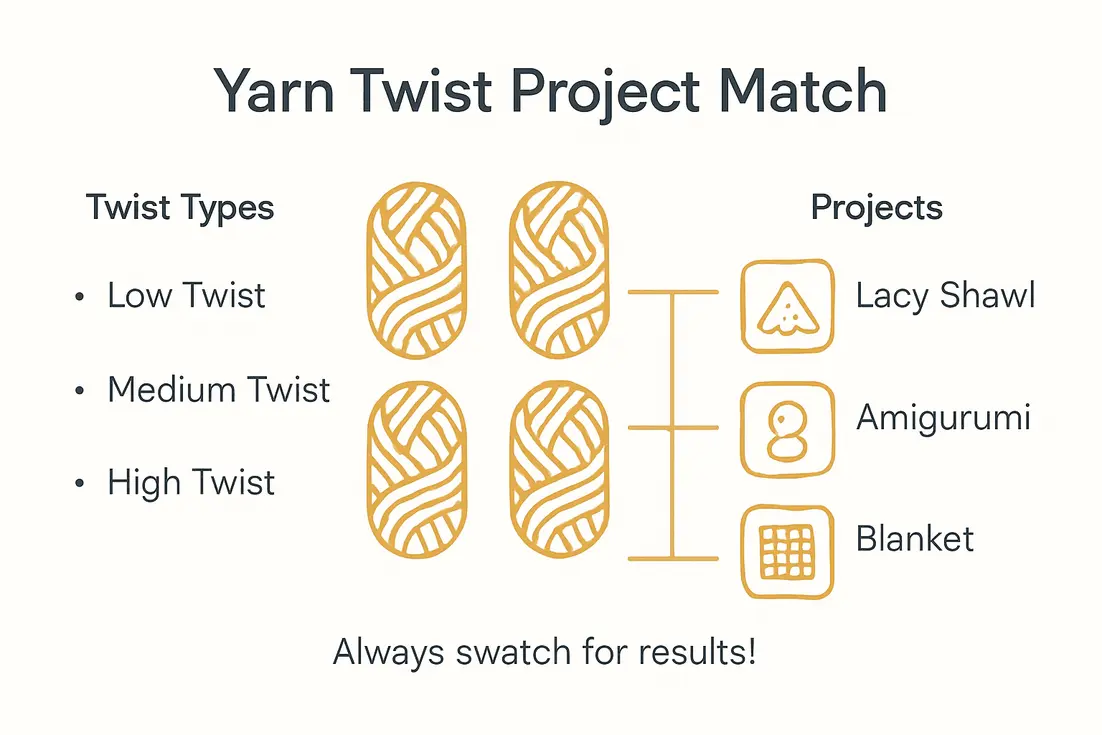
Yarn twist is one of the clearest construction factors affecting pilling. As twist increases, fibers are generally held more securely in the yarn body. This can reduce outward fiber migration and surface fuzz. Sources discussing pilling consistently identify low twist as a risk factor because loosely held fibers are more easily pulled free during rubbing.
The tradeoff is important: more twist can make yarn feel firmer, denser, and less cloud-like. Too much twist may create a ropey hand or alter drape and stitch definition. In a Handspinning discussion, a user noted both the role of friction in pilling and the risk that very high twist can feel ropey. That is an anecdotal observation, but it reflects the practical balance spinners and knitters often manage.
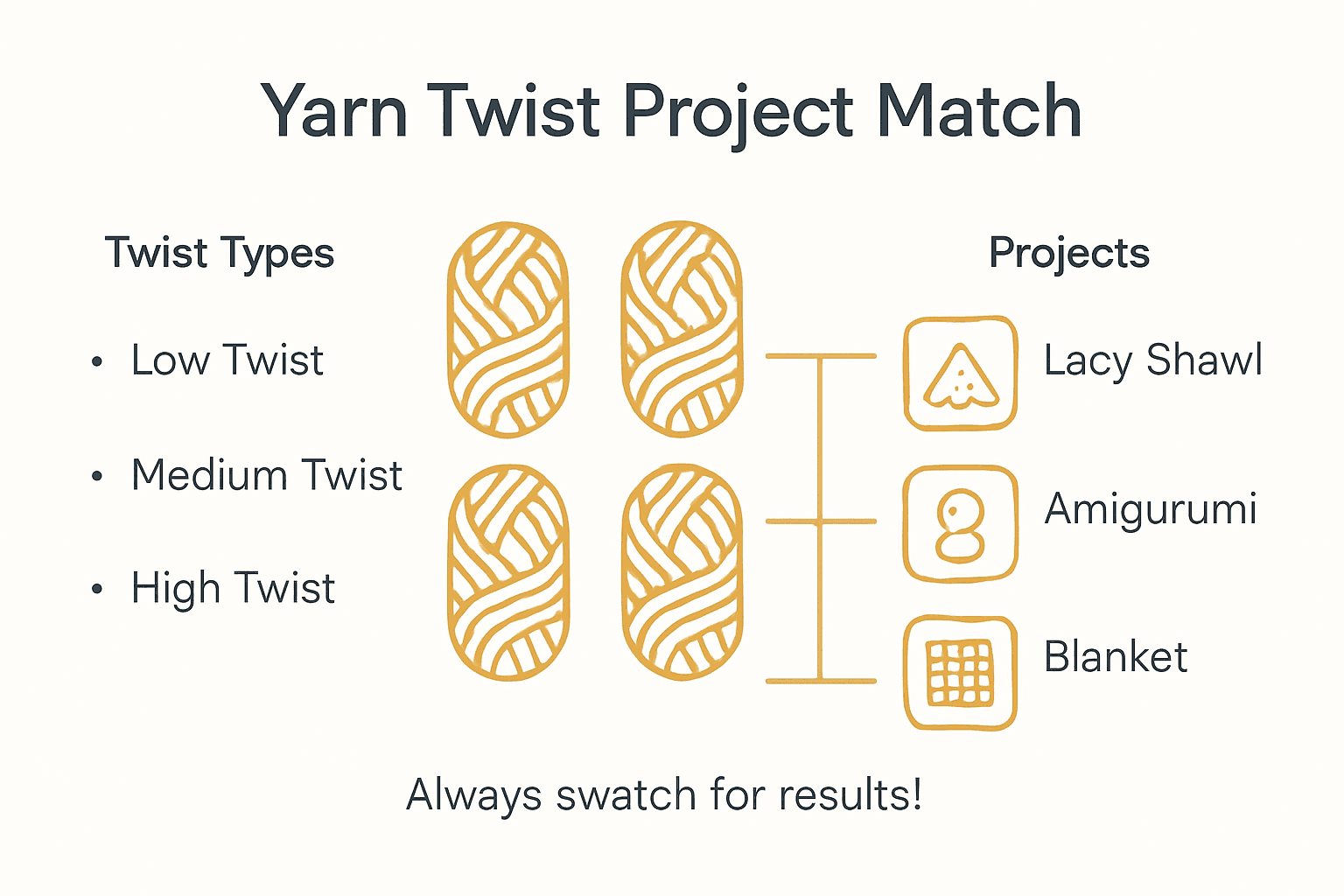
For makers, the goal is rarely the highest possible twist. It is enough fiber control for the intended use. A delicate shawl can prioritize loft and softness because it sees limited abrasion. Elbows, cuffs, everyday sweaters, and garments worn under outerwear generally benefit from yarns with more structural firmness.
Ply structure can improve stability
Ply matters because several strands twisted together can create a more stable, rounded yarn structure. A well-balanced plied yarn may resist flattening and abrasion better than a loosely constructed singles yarn, while also keeping fibers more organized.
This is not a guarantee. A multi-ply yarn can still be soft, low twist, or hairy, and a carefully spun singles yarn can be appropriate for low-abrasion projects. But when comparing similar yarns for a hard-wearing garment, a firmer, smoothly plied option is often the lower-risk choice.
Look beyond the number of plies. A yarn labeled as three-ply or four-ply may describe construction, weight, or marketing terminology depending on the brand and region. Handle the yarn if possible: Does it look smooth and compact, or airy and fuzzy? Do the strands appear firmly integrated, or do they separate easily? Those visible cues can be more useful than the ply number alone.
Source: csuxjmfbwmkxiegfpljm.supabase
Knit gauge and fabric density matter as much as yarn choice
Yarn does not pill in isolation; fabric does. A loose knit gauge creates a more open structure where yarn can move, flex, and rub more freely. It may also expose more yarn surface to abrasion. A denser fabric tends to support the yarn more firmly and can reduce movement that contributes to fuzzing and pills.
That does not mean every project should be knit tightly. Overly tight knitting can produce stiff fabric, reduce drape, and make a garment uncomfortable. Instead, use the yarn’s recommended gauge as a starting point, then consider the end use. For a sweater likely to rub at the sides, underarms, and cuffs, choosing a fabric at the firmer end of a suitable gauge range may be sensible if the fabric still has the desired feel.
A maker in r/AdvancedKnitting summarized this concern by noting that even a durable yarn can pill when knit at an extremely loose gauge. That is a useful reminder that yarn reputation alone cannot predict garment performance.
Fiber type affects how long pills remain visible
It is tempting to reduce pilling to a fiber ranking: one fiber pills, another does not. In practice, fiber type influences the process, but it does not replace construction and use conditions.
Blends can be especially complicated. When fibers have different strengths and breakage behavior, one component may help anchor pills formed from another. Strong synthetic fibers, for example, may allow pills to remain attached longer in some blends. Meanwhile, wool fabrics can develop surface fuzz because of their staple structure and scale-covered fibers, but the severity depends heavily on yarn design, knit density, and abrasion.
This is why a label alone cannot answer whether a yarn will pill. “Merino,” “cashmere blend,” “cotton,” or “acrylic” describes raw-material content, not the full engineering of the yarn or fabric.
How to choose soft yarn with less pilling risk
If softness is a priority, do not assume you must accept rapid pilling. Instead, look for a balanced construction.
Choose a yarn that is soft but not excessively fuzzy or loosely spun for garments that will receive daily friction. Longer-staple fibers, smoother surfaces, moderate-to-firm twist, and stable plies can all help reduce the likelihood that fibers will escape and tangle.
Match the yarn to the project. A very lofty, delicate yarn can be ideal for scarves, shawls, cowls, or occasional-wear layers. For a fitted sweater, children’s clothing, or a garment worn under a backpack, consider a yarn designed for sturdier use.
Swatch with the actual stitch pattern and intended gauge. After washing the swatch as you expect to wash the finished item, rub a small area gently between your fingers or against itself. This will not predict an exact pilling rating, but it may reveal rapid fuzzing, excessive halo, or a fabric that feels too open for its purpose.
Finally, treat pills as a performance issue rather than proof that a yarn is bad. Some pilling is normal in soft, staple-fiber knitwear, especially during early wear. A fabric that stays soft while managing surface fuzz reasonably well may be a better choice than one engineered solely for abrasion resistance. The best yarn is usually the one whose softness, structure, gauge, and expected use are in balance.
Header photograph: Ryj / Wikimedia Commons, licensed under CC BY-SA 3.0. Original image, unmodified.
References
- Pilling Resistance in Textiles. numberanalytics.com. https://www.numberanalytics.com/blog/ultimate-guide-pilling-resistance-textiles
- Understanding Fabric Pilling - Textile Tester. darongtester.com. https://darongtester.com/fabric-pilling
- What Causes Fabric Pilling? Fiber Friction Explained | Textile Care · asmr.education. asmr.education. https://asmr.education/faq/laundry/what-causes-fabric-pilling
- Pilling Resistance Testing | ISO 12945-1 | METS Lab. metslab.com. https://metslab.com/textile-testing-pilling-resistance
- Fabric Pilling Failure: Causes, Testing Methods and Prevention Techniques - Textile Tester. darongtester.com. https://darongtester.com?p=7079
- The Truth About Textile Fabric Pilling - Water Repellent Agent, Softener Flake, Silicone oil, Textile Enzyme, Textile Auxiliares. sylicglobal.com. https://www.sylicglobal.com/the-truth-about-textile-fabric-pilling
- What Role Does Yarn Twist Play in Preventing Fabric Pilling? → Learn. fashion.sustainability-directory.com. https://fashion.sustainability-directory.com/learn/what-role-does-yarn-twist-play-in-preventing-fabric-pilling
- Fabric Pilling Complaints? Learn Causes Before Customers Do! - Textile Tester. darongtester.com. https://darongtester.com/fabric-pilling-complaints