Wool Impurities and the Processes Used to Remove Them
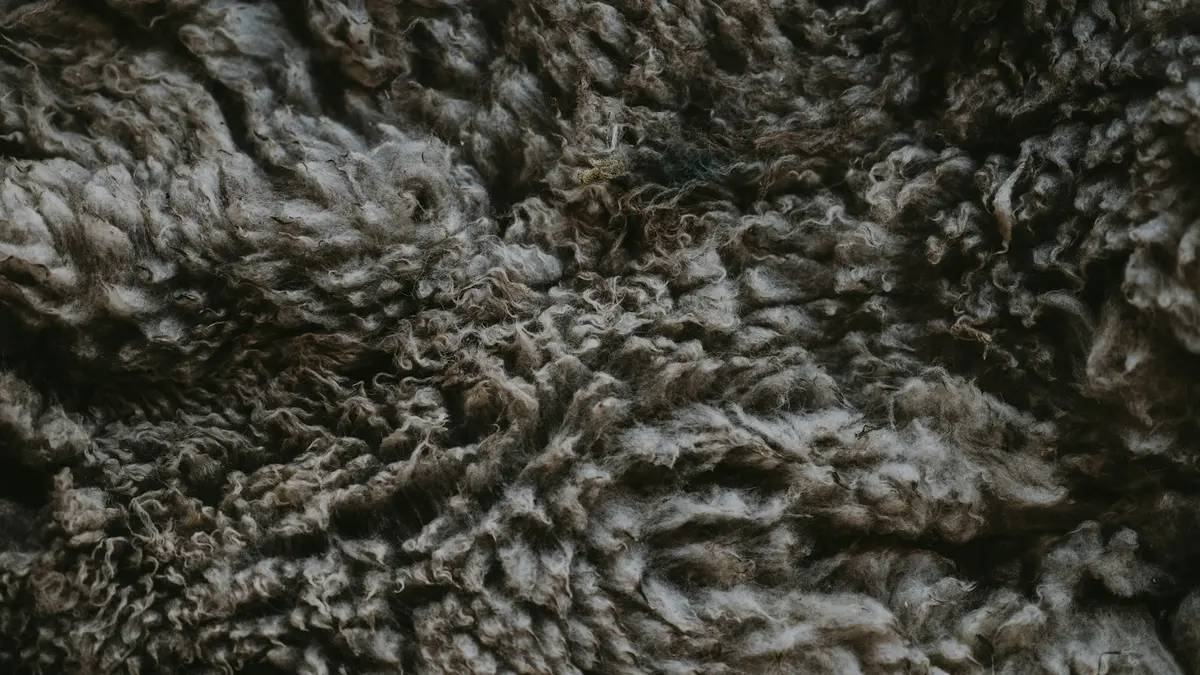
Table of Contents
Wool Impurities and Their Removal
Raw wool requires substantial preparation before it can be converted into consistent yarn, fabric, or finished apparel. Fleece removed from sheep contains natural wool substances as well as materials collected from the animal’s environment. Effective wool impurities removal is therefore not a single operation. It is a controlled sequence of sorting, washing, chemical treatment, mechanical separation, and, where needed, finishing.
The main distinction is between cleaning operations and finishing operations. Scouring and carbonizing are primarily intended to remove contaminants. Treatments such as crabbing, milling, and bleaching are generally used to stabilize dimensions, alter handle and appearance, or improve colour. Their use depends on whether the material is loose wool, sliver, yarn, woven fabric, knit fabric, or a finished wool product.
Introduction to Raw Wool Contamination
Wool is an animal fibre obtained from the fleece of sheep. Before processing, the fleece may contain wool wax, suint, salts from perspiration, soil, dust, sand, manure contamination, plant fragments, and handling-related foreign matter. The amount and nature of this contamination vary widely between sheep, regions, seasons, shearing practices, and fleece sections.
Source: Unsplash
In heavily contaminated clips, non-fibre material can represent a large share of the incoming raw-wool mass. It is therefore possible for impurities to account for 40% or more of greasy wool weight, although this should not be treated as a universal value. Clean-wool yield must be established for the specific wool lot through commercial testing or mill evaluation rather than assumed from a general average.
Scouring is the principal wet-cleaning stage. It removes much of the wool grease, suint, soluble salts, loose dirt, and fine particulate soil. Carbonizing is different: it is used when persistent vegetable matter, such as burrs, seeds, straw, or grass fragments, remains in the wool after normal cleaning and mechanical opening.
Contamination can also be introduced after wool leaves the farm. Fibre may pick up lubricants, spinning oils, machine dirt, dust, sizing materials, knitting oils, weaving contaminants, and dyeing or finishing residues. These later contaminants are managed through process-specific washing, solvent cleaning where appropriate, or wet-finishing operations.
Impurity Types Found in Raw Wool
Raw-wool contaminants are commonly classified as natural, acquired, and process-related materials. Natural components arise from the sheep and its skin environment, while acquired contaminants are picked up from the field, shed, transport system, or wool-handling equipment.
Natural impurities include wool wax, often referred to commercially as wool grease, and suint. Wool wax is a complex mixture of waxy substances associated with the fibre surface. Some fractions can be recovered from scouring liquors as wool grease or refined lanolin-related products. Oxidized, aged, or highly adherent grease may be more difficult to remove than fresh surface grease.
Suint consists largely of water-soluble salts and other perspiration-derived matter. It is generally more readily removed in aqueous scouring than wool wax. Its presence can contribute to the sticky or dirty character of greasy fleece, especially where dust has adhered to the fibre surface.
Acquired contaminants include:
- Soil, sand, dust, clay, and mineral particles
- Grass, leaves, seeds, straw, burrs, brambles, and small sticks
- Dung tags and other animal-contact contamination
- Paint marks, twine, plastic fragments, and packaging debris
- Metal, glass, or other foreign matter introduced during collection and transport
Vegetable matter is particularly important because it can remain entangled in the staple even after washing. Its quantity is strongly influenced by grazing conditions, weather, fleece management, and the amount of open or tender fibre in the fleece.
Proteinaceous contamination may also occur, especially as skin fragments, dried biological residues, or materials associated with animal handling. Such contamination is not normally treated as a single chemically uniform layer. Its composition and removability depend on the source, age, and extent of contamination. Sorting, scouring, and, in severe cases, rejection of affected wool may be necessary.
Impurity levels differ with sheep breed, nutrition, climate, pasture conditions, fleece location, wool fineness, and fibre structure. Fine wools can carry considerable grease and adherent dust because of their dense fibre populations, but this relationship is not absolute. Every wool class may show substantial variation between origin and season.
Typical Raw-Wool Impurity Composition
The composition of greasy wool is not fixed. The table below is a qualitative comparison of common tendencies in fine, medium, and long wool types rather than a universal percentage specification. Commercial clean-wool yield testing remains the appropriate method for evaluating a particular lot.
| Wool category | Fat and suint tendency | Sand and dirt tendency | Vegetable-matter tendency | Usable fibre proportion after cleaning |
|---|---|---|---|---|
| Fine wool | Often relatively high, especially where dense fleece retains grease | Can be high where fine fibres trap dust and soil | Varies strongly with grazing conditions and fleece management | Often lower than greasy weight suggests because of grease and dirt removal |
| Medium wool | Commonly moderate but highly variable by origin | Moderate to high depending on environment | Can range from low to significant | Usually intermediate between heavily contaminated fine wool and cleaner long wool |
| Long wool | Often lower in grease and suint relative to some fine-wool types | May be lower where fleece is more open, but soil contamination remains possible | Can be significant in exposed pasture environments | May provide a comparatively higher clean-fibre proportion in suitable clips |
The categories in this table overlap. A clean fine-wool clip may yield more usable fibre than a poorly managed long-wool clip. Likewise, vegetable matter can become the dominant issue in any wool type when sheep are exposed to seed-bearing plants, burrs, or dry pasture debris.
Wool Impurity Removal and Finishing Treatments
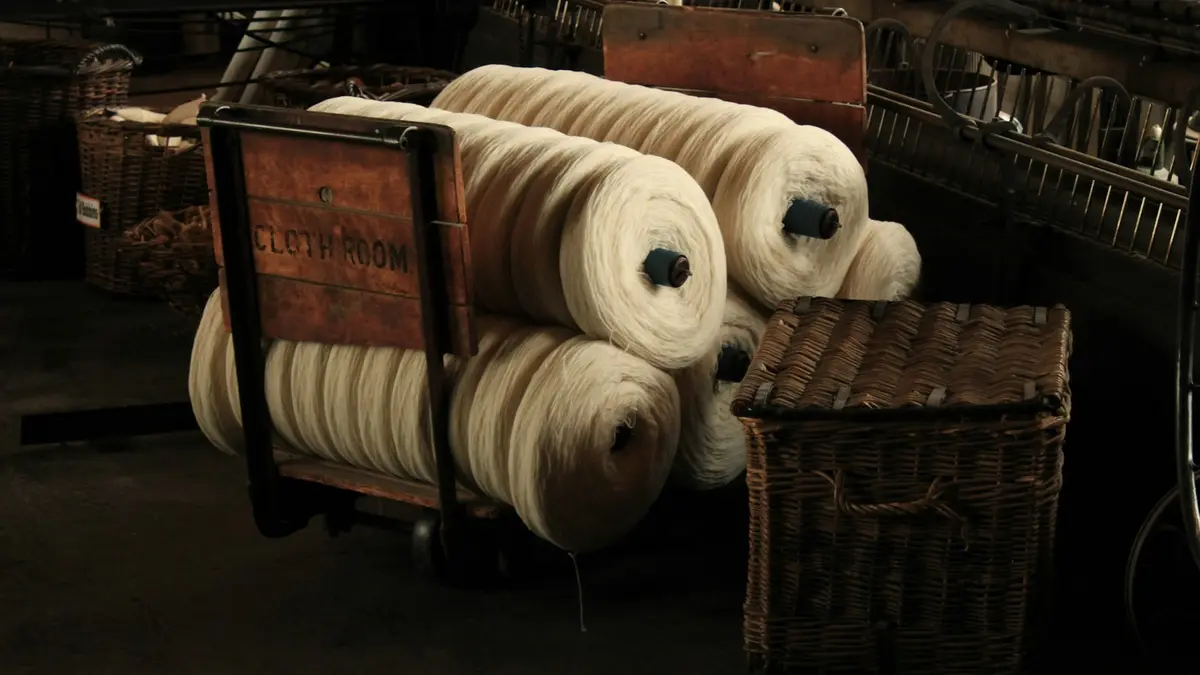
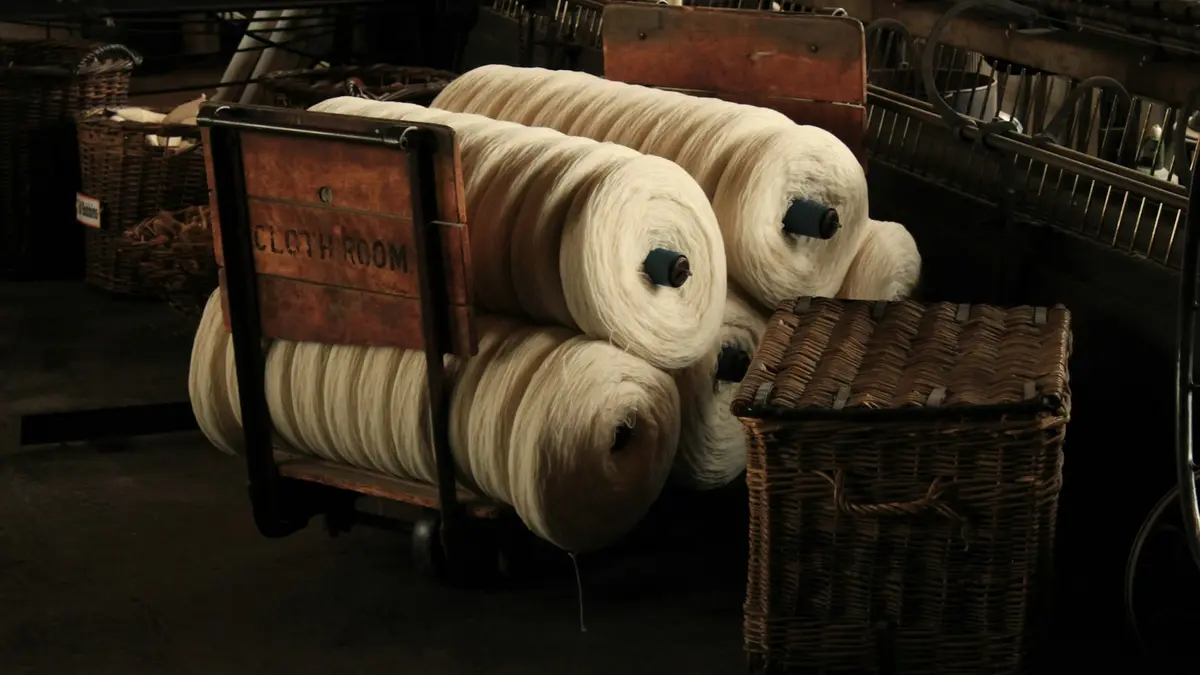
Wool processing routes are selected according to the condition of the incoming wool and the requirements of the final product. Loose wool intended for worsted spinning may be opened, scoured, dried, carded, and combed. Woollen-system processing may retain more short fibre and follow a different preparation route. Fabric finishing occurs later and may include crabbing, milling, bleaching, pressing, raising, decatizing, or other specialized treatments.
Source: Unsplash
Not every wool product receives every treatment listed below. Scouring is fundamental for most greasy wool. Carbonizing is used only when vegetable matter cannot be adequately removed by sorting, opening, carding, combing, or other mechanical methods. Milling and bleaching are product-dependent finishing operations rather than compulsory impurity-removal stages.
Impurity Groups and the Treatment Sequence
A practical wool-processing sequence begins by identifying the dominant impurity group. Grease and suint require aqueous cleaning; dirt requires washing, agitation, separation, and rinsing; persistent burrs and cellulosic debris may require carbonizing; and fabric distortion requires controlled setting. The usual process logic may include wetting, crabbing, scouring, carbonizing, milling, and bleaching, but their order and necessity depend on the material form and product route.
Wool grease contains waxy material that can be separated from scouring effluent under controlled recovery systems. Suint is largely water-soluble and is normally removed during scouring. Inorganic dirt includes sand, clay, and mineral dust, while organic dirt can include plant particles and biological residues. Careful process control is necessary because wool can felt, shrink, or lose strength if exposed to unsuitable temperature, pH, mechanical action, or prolonged chemical treatment.
Wetting
Wetting is used to ensure that wool or wool fabric is uniformly penetrated by water or treatment liquor. In fabric finishing, it may also support relaxation of strains created during weaving, knitting, winding, or earlier wet processes. Controlled wetting can help prepare the material for subsequent setting or finishing operations.
The appropriate wetting temperature depends on fibre condition, fabric construction, chemical system, and the next processing stage. It should be selected to avoid uneven relaxation, uncontrolled shrinkage, or premature felting. Rather than applying a single temperature limit to all wool goods, mills normally establish conditions through product trials and process specifications.
Crabbing
Crabbing is a wet-setting operation used mainly for wool fabrics. Its purpose is to reduce cockling, edge curling, seam distortion, and dimensional instability. The process helps set the fabric after weaving or during finishing so that it maintains a more stable form during later wet treatments and garment manufacture.
In a conventional arrangement, fabric may be wound onto a perforated roller and treated with steam or hot water under controlled tension. Rewinding can be used to improve treatment uniformity through the roll. Modern machinery and continuous finishing ranges may use different arrangements, but the principle remains the controlled application of heat and moisture while fabric dimensions are restrained.
Temperature, moisture level, exposure time, tension, and liquor pH all influence setting behaviour. Excessive tension can create distortion, while insufficient control can lead to uneven results. Claims that one pH value or pressure level always produces maximum setting should be treated cautiously because wool type, weave, prior dyeing, machinery, and finish requirements all affect the outcome.
Scouring
Scouring is the primary operation for removing wool grease, suint, loose dirt, soluble salts, and many particulate contaminants. It may be carried out on loose wool before spinning or on yarn and fabric after manufacturing. The objective is to clean the material while retaining fibre strength, softness, colour, and processability.
Wool is sensitive to harsh alkaline conditions, particularly when heat and mechanical agitation are also present. Strong alkali can damage the fibre surface and reduce strength. For this reason, wool scouring systems commonly use controlled detergent formulations with carefully managed pH. Mild alkaline materials may be used in some systems, but the exact chemical selection depends on grease level, water quality, effluent treatment, equipment design, and fibre type.
Industrial loose-wool scouring often uses multiple bowls arranged in a countercurrent sequence. Wool passes through detergent and rinse bowls, with squeezing between stages to remove contaminated liquor. Agitation loosens grease and dirt, while screens, sedimentation systems, hydrocyclones, or other separation equipment remove solids from the liquor. Cleaner water is generally introduced toward the final rinsing stages to improve washing efficiency.
Control of temperature and mechanical action is essential. Too little action leaves dirt and grease behind; too much can promote entanglement and felting. Scouring liquor management is also important because recovered grease, suspended solids, and detergent residues must be handled in accordance with environmental and wastewater requirements.
Carbonizing for Burr and Vegetable-Matter Removal
Carbonizing is used to remove cellulosic vegetable matter that remains in wool after scouring and mechanical cleaning. Typical targets include burrs, grass fragments, seeds, straw, leaf particles, and small pieces of woody plant material. It is especially relevant for wool from regions where pasture contamination is high.
The general method involves impregnating the wool with a controlled acid solution, removing excess liquor, drying, and heating under carefully managed conditions. The acid treatment degrades the cellulosic impurities more readily than the wool fibre. After heating, the weakened vegetable matter can be crushed, dusted out, shaken free, or removed through subsequent mechanical processing.
Carbonizing is not a casual washing treatment. Acid concentration, drying conditions, heating profile, moisture content, and post-treatment neutralization must be controlled to protect wool quality and worker safety. Over-treatment can damage fibre, alter colour, or create excessive loss. Carbonizing residues and acidic effluent also require suitable handling and treatment.
Milling, shaking, or mechanical opening after carbonizing helps release the brittle degraded residue from the wool mass. This mechanical stage is essential because chemical degradation alone does not automatically remove every particle from between fibres.
Milling and Controlled Felting
Milling is a controlled wet-finishing process that deliberately promotes felting in wool fabric. It is used to make cloth denser, more compact, warmer, and often more durable. The treatment can also change surface appearance, reduce porosity, and create a fuller handle.
Felting occurs because wool fibres have a scale structure and can migrate relative to one another under suitable moisture, heat, pressure, friction, and chemical conditions. During milling, fabric is worked in a controlled environment so that this migration occurs to the required degree. The desired result is consolidation, not uncontrolled shrinkage.
Milling may be carried out before or after dyeing depending on the product route and colour requirements. Traditional terminology may refer to soap milling, grease milling, and acid milling, although the exact meaning and industrial use of these terms can vary by mill and region. In all cases, the essential requirement is process control: excessive milling can produce unacceptable dimensional loss, stiffness, or surface defects.
Bleaching Wool
Bleaching is used when naturally yellowish wool must be made suitable for white, ivory, pastel, or pale-coloured products. It does not remove all forms of contamination; instead, it primarily improves visual whiteness by reducing yellow coloration and certain discolouration effects.
Sulfur dioxide has historical relevance in wool bleaching and reducing treatments. Such processes require enclosed equipment, ventilation, emission controls, and strict chemical safety procedures. They should only be operated under appropriate industrial controls because sulfur dioxide is hazardous to workers and the environment.
Hydrogen peroxide is a commonly recognized bleaching approach for wool, but it must be applied under carefully controlled conditions. pH, temperature, time, stabilizers or buffers, liquor ratio, rinsing, and final neutralization or acidification influence whiteness and fibre protection. Conditions suitable for one fabric may not be suitable for another because wool construction, dye history, fabric weight, and desired whiteness vary.
Winch and jigger machines may be selected according to fabric type and processing requirements. Open-width systems can be useful where control of creasing and width is important, while rope-form processing may suit other constructions. Bleaching should be followed by thorough rinsing and quality checks for shade, strength, handle, residual chemicals, and dimensional stability.