Why Is So Much Yarn Made in Turkey?
Table of Contents
Turkey is not secretly supplying every yarn aisle, but it is a highly visible manufacturing base because it has a large, mature textile supply chain. Yarn made in Turkey benefits from substantial spinning capacity, access to domestic and imported fibers, established dyeing and finishing operations, and strong export connections—particularly with nearby European markets.
For shoppers, the most important distinction is that a Turkish manufacturing label does not necessarily mean the yarn is a Turkish-owned retail brand. A company may own the brand in another country, buy from a Turkish mill, package the yarn for a private label, and distribute it through retailers around the world. That layered supply chain is one reason Turkish origin can appear repeatedly across seemingly unrelated yarn lines.
Turkey makes yarn as part of a larger textile system
Yarn production works best when it sits near the businesses that use yarn. Turkey has long had interconnected industries for spinning, knitting, weaving, dyeing, finishing, home textiles, and garment manufacturing. Rather than producing fiber alone, many companies can move material through several stages of conversion: fiber becomes yarn, yarn becomes fabric or knitwear, and fabric becomes a finished textile product.
That integration gives mills a practical reason to maintain yarn capacity. Some yarn is sold to outside buyers, while other output feeds affiliated or nearby producers of towels, apparel, hosiery, carpets, upholstery, and knitted goods. Turkey’s textile manufacturing is concentrated across multiple regions, with sources identifying centers including Istanbul, İzmir, Denizli, Bursa, Kahramanmaraş, Gaziantep, and Uşak. These clusters support specialized suppliers, technicians, machinery services, logistics, and textile buyers.
Turkey’s scale is particularly clear in cotton spinning. The International Cotton Advisory Committee’s overview of the Turkish cotton industry describes ring-yarn capacity of roughly 1 million tonnes and open-end yarn capacity approaching 550,000 tonnes. Those are industrial yarn categories used extensively in fabric and textile production, not just in consumer craft yarn.
Local fiber matters, but imported fiber matters too
Turkey produces cotton and wool, but domestic production is only part of the raw-material picture. A major textile country does not need to grow every fiber it spins; it needs reliable access to fibers, processing capability, and customers for the resulting yarn.
Cotton is central to Turkish textile manufacturing, and the country also participates actively in global cotton trade. The cotton-industry overview notes that cotton is freely traded in Turkey and that the modern spinning and weaving base was supported by substantial machinery investment over decades. Imported cotton can supplement local supply and let mills select fiber qualities suited to particular counts, strength targets, colors, blends, and end uses.
Wool follows a similar pattern. Turkey has its own sheep population and wool production, while processors also import raw wool to meet manufacturing needs. According to the International Wool Textile Organisation’s report on the Turkish wool industry, Turkey is a significant wool-yarn producer, with important production hubs in Bursa, Gaziantep, and Uşak. The report also describes raw-wool imports from countries including Australia, New Zealand, and South Africa.
This combination of local and imported inputs helps explain why Turkish mills can offer many yarn types: cotton, wool, acrylic, viscose, polyamide, and blends. It also means that “made in Turkey” identifies where the yarn was spun or processed, not necessarily where every raw fiber originated.
Proximity to Europe supports fast textile supply chains
Geography is a major advantage. Turkey is close to European customers relative to many large Asian manufacturing centers, and European markets have long been important destinations for Turkish textile and apparel exports. That proximity can simplify freight routes, communication, sampling, and replenishment for brands that need regular deliveries rather than a single seasonal shipment.
For yarn buyers, this matters because a mill’s location affects more than transportation distance. It can shape lead times, minimum-order arrangements, product development, and the ability to coordinate yarn with fabric or garment production. A buyer sourcing yarn for a knitting program, for example, may value a supplier that can also work within a regional network of dye houses, knitters, and garment manufacturers.
Turkey’s connection to export-oriented textile production is especially visible in home textiles. A Home Textile Journal market guide identifies European countries as key markets for Turkish home-textile exports and notes the importance of private-label manufacturing for European retail chains. The same export logic extends across other textile categories: mills serve both domestic manufacturers and international supply networks.
Why Turkish yarn appears in craft stores as well as factories
Most of Turkey’s spinning output is not necessarily sold as hand-knitting yarn. Large volumes go into industrial applications such as knitted fabric, woven cloth, socks, carpets, towels, and apparel. But a country with deep industrial yarn expertise can also support consumer yarn production.
Hand-knitting and crochet yarn require additional decisions beyond spinning: fiber blends, softness, twist, color ranges, ball winding, labels, pattern support, packaging, and retail distribution. Turkish companies and contract manufacturers can make these products alongside or separately from industrial yarns. Some operate their own recognizable yarn labels; others produce for distributors and private-label programs.
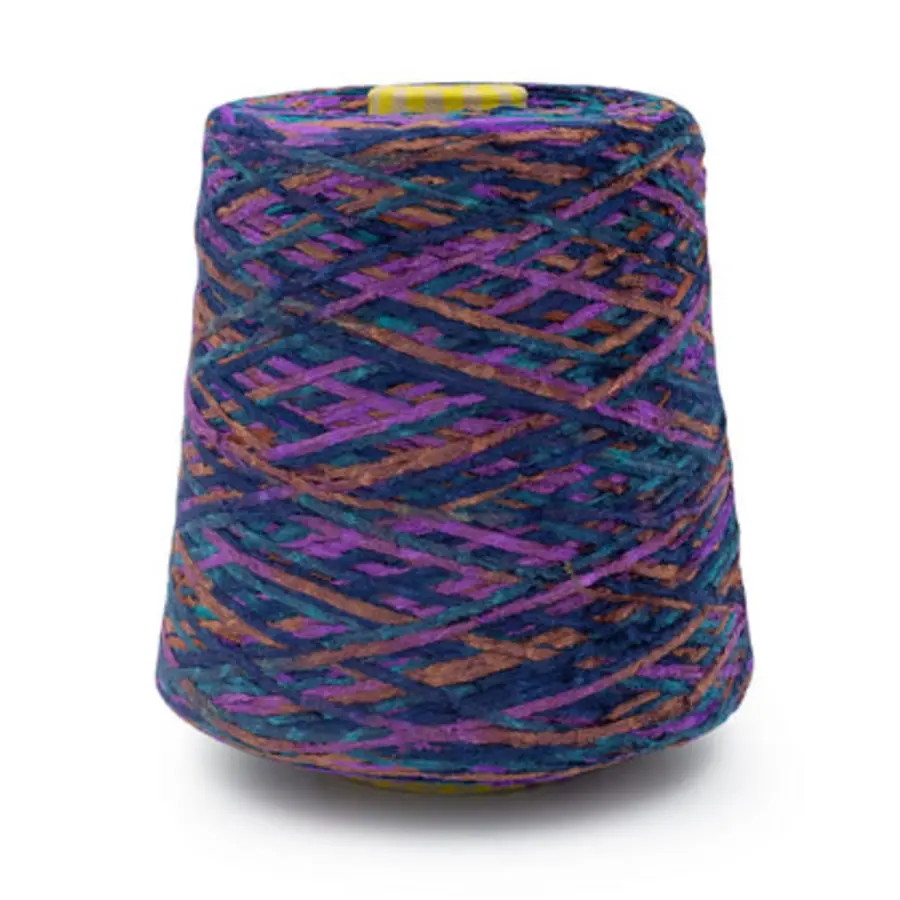
For example, trade-oriented coverage of Turkish yarn brands describes manufacturers offering broad ranges of natural, synthetic, and blended yarns. Such descriptions are useful for understanding the market’s variety, but buyers should still evaluate each line individually. Country of manufacture does not establish that every yarn has the same fiber quality, twist, dye consistency, labor conditions, environmental practices, or price level.
Source: silkcityfibers
A Turkish origin label is not the whole sourcing story
When comparing yarns, treat the country label as useful context rather than a complete quality rating. Two yarns made in Turkey may be very different because they use different fibers, machinery settings, dye processes, quality controls, and target price points.
It also helps to separate four questions:
- Where was it made? The label may identify Turkey as the spinning, dyeing, winding, or final manufacturing location.
- Who owns the brand? The brand owner may be Turkish or based elsewhere.
- Who supplied the fiber? Cotton, wool, and synthetic raw materials may come from multiple countries.
- Who sells it to you? A retailer, importer, online marketplace, or craft distributor may handle the final route to market.
That is why one store can carry a Turkish-made yarn under a familiar international brand while another sells a Turkish brand directly. Both can be genuine examples of Turkish yarn manufacturing, but their commercial paths are different.
Why the visibility can feel surprising to crafters
A discussion in the r/crochet thread that prompted this question includes a user’s observation that a friend bought low-priced discontinued yarn in bulk from a Turkish website. That is an anecdote, not evidence that all Turkish yarn is inexpensive or sold through closeout channels. Still, it illustrates how online wholesale, discontinued inventory, and direct international retail can make Turkish production more noticeable to consumers.
The broader explanation is less mysterious: Turkey has invested for decades in textile machinery and has enough spinning and downstream manufacturing capacity to serve both factories and consumer yarn markets. Its position between fiber suppliers, European buyers, and global retail distribution gives Turkish mills a durable role among the world’s yarn manufacturing countries.
So, if you keep seeing yarn made in Turkey, it is usually a sign of an established export-oriented textile ecosystem—not a clue that every brand, fiber source, or retail business behind that yarn is Turkish.
References
- THE TURKISH WOOL INDUSTRY. iwto.org. https://iwto.org/wp-content/uploads/2024/12/The-Turkish-Wool-Industry_IWTO-2024.pdf
- MOC - Turkey Textiles and Apparel Cluster Masterv8. isc.hbs.edu. https://www.isc.hbs.edu/Documents/resources/courses/moc-course-at-harvard/pdf/student-projects/MOC%20-%20Turkey%20Textiles%20and%20Apparel%20Cluster.pdf
- Turkish Textile Industry | Rawshot.ai. rawshot.ai. https://rawshot.ai/statistic/turkish-textile-industry
- Turkish Cotton Industry. icac.org. https://icac.org/wp-content/uploads/2025/01/turkey.pdf
- Discovering the Best Turkish Yarn Brands: A Guide to Quality, Color an. yarnpark.com. https://yarnpark.com/blogs/news/discovering-the-best-turkish-yarn-brands-a-guide-to-quality-color-and-craft
- Turkish textile industry and role of the cotton yarn spinning .... researchgate.net. https://www.researchgate.net/publication/294324902_Turkish_textile_industry_and_role_of_the_cotton_yarn_spinning_industry_in_the_world
- An Introduction to Yarn In Turkey. colossustex.com. https://colossustex.com/blogs/an-introduction-to-yarn-in-turkey
- Turkey’s Home Textile Industry: 2026 Market Guide - Home Textile Journal. hometextilejournal.com. https://hometextilejournal.com/turkeys-home-textile-industry-2026-market-guide