How Does Yarn Twist Direction Affect Yarn Untwisting While Crocheting?
Table of Contents
Yarn untwisting while crocheting can happen when the repeated yarn-over and pull-through motions remove twist from the yarn instead of reinforcing it. As twist is removed, the individual plies or fibers spread apart, making the yarn feel looser and increasing the chance that the hook catches only part of the strand.
The fix is not always simply to crochet more tightly. Your hook movement, the direction you wrap the yarn, the way yarn feeds from the ball, and the yarn’s construction can all contribute. If a yarn repeatedly opens near the hook, managing twist and choosing a more stable yarn can make a more noticeable difference than forcefully tightening every stitch.
What S-twist and Z-twist mean
Yarn twist is the spiral structure that holds fibers together in a single yarn or holds multiple plies together in a plied yarn. Twist contributes strength and cohesion: when it is reduced, fibers and plies can separate more easily.
To identify twist direction, look at the diagonal direction of the visible fibers or plies in a vertical section of yarn:
- S-twist slopes in the same direction as the center stroke of the letter S.
- Z-twist slopes in the same direction as the center stroke of the letter Z.
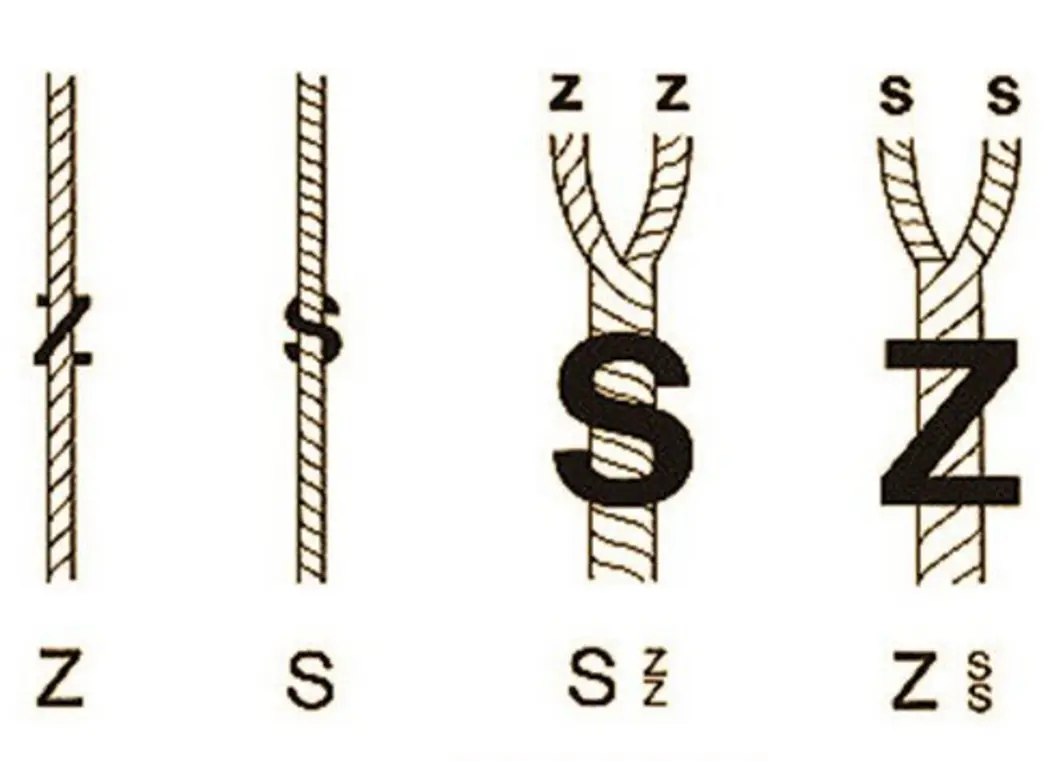
Source: brankaontextiles
A yarn may have twist at more than one level. For example, individual single plies can be spun in one direction and then combined in the opposite direction to make a balanced plied yarn. This is why the final, visible ply twist is generally the most useful feature to inspect when diagnosing crochet yarn splitting.
According to YarnSub’s explanation of yarn twist, many manufactured singles are Z-spun, while plied yarns commonly have a final S twist. That common construction can matter because crochet may apply torsion in the direction that loosens the final ply twist.
Why crochet can loosen yarn as you work
Every yarn-over rotates the working yarn slightly. Repeating the same motion across many stitches can add twist in one direction or remove it in the other. If your motion works against the yarn’s existing final twist, the plies can begin to unwind close to the hook and tensioning hand.
This does not mean that every crocheter will have the same result with the same yarn. Handedness, how the yarn is held, the direction of the yarn-over, hook rotation, stitch type, and tensioning method all affect the amount and direction of torsion applied.
Still, the underlying pattern is consistent: adding twist tends to make a yarn more compact and resistant to splitting, while removing twist makes it more open and easier to catch incorrectly. YarnSub notes that a loosened yarn is more likely to separate as the hook enters or leaves a stitch.
For many right-handed crocheters using a standard yarn-over motion, a commonly available S-plied yarn may gradually lose its ply twist. Crochet stitches with multiple yarn-overs can make the effect more noticeable because each stitch adds more opportunities to rotate the yarn.
A comparison published by Spin Off found that twist direction affected how a crocheted sample behaved: one yarn construction remained coherent while another began losing ply twist and separating during crochet. That result should not be treated as a universal rule for every crocheter, but it demonstrates why yarn direction and stitch motion are worth considering together.
Signs that twist is the real cause of splitting
A yarn may split because it is loosely spun, fuzzy, worn, or difficult to see—not just because of twist direction. Twist-related trouble usually has a recognizable pattern:
- The yarn opens mainly in the short section between your fingers and the hook.
- Plies separate more after several stitches, even when the yarn looked intact at the beginning.
- The strand looks flatter, looser, or more spread out as you work.
- The problem is worse in taller stitches or patterns with frequent yarn-overs.
- Stopping to let the yarn hang freely allows some twist to travel out or redistribute.
- The same hook and technique work normally with another yarn.
In a CrochetHelp discussion, a user-described explanation connected unraveling near the work to torsion applied against the yarn’s twist. That is a useful diagnosis to test, although the supplied discussion excerpt is an anecdotal troubleshooting observation rather than a controlled comparison.
How to troubleshoot yarn untwisting while crocheting
Check the yarn near the hook, not only in the skein
Stop after several stitches and inspect the working yarn a few inches before the hook. Compare it with an untouched area of yarn. If the working section has visibly separated plies, you are likely removing twist during crochet.
Also look at the actual stitch. A hook can split yarn because it enters at an awkward angle, even when the yarn itself is stable. If the yarn is opening before the hook enters the stitch, twist loss is more likely to be part of the issue.
Let accumulated twist release periodically
Pause every so often and allow the working yarn to hang without tension. If it spins, kinks, or visibly relaxes, twist has accumulated in the strand. Letting the yarn dangle can redistribute that twist before it becomes severe enough to open the plies.
This is especially useful when working from a small ball, a cake, or a center-pull skein where the path of the yarn can encourage extra rotation.
Try feeding from the other end of the ball
Changing from a center pull to an outside pull, or vice versa, can change how the yarn rotates as it is withdrawn. It will not alter the yarn’s manufactured twist, but it can alter the additional twist introduced while feeding yarn into the project.
The Crochet Crowd explains that the direction in which yarn leaves the inside or outside of a ball can affect whether use adds or removes twist. If your yarn becomes looser with one feed direction, try the other before abandoning the project.
Keep the ball or cake from rolling freely if it repeatedly spins while you pull yarn. A yarn bowl, project bag, or stationary container can reduce unwanted rotation during stitching.
Adjust the yarn-over motion carefully
A small change in how the hook catches yarn can change the torsion applied to the working strand. Some crocheters experiment with wrapping yarn in the opposite direction around the hook when a particular yarn is persistently splitty.
This should be approached as a controlled test, not a blanket correction. Make a small swatch using your normal motion, then another using the altered wrap direction. Compare whether the yarn remains compact and whether the resulting stitches look correct.
Guidance from YarnSub cautions that reversing the wrap direction is not a complete solution: it may introduce excess twist or affect the fabric. If the stitches become awkward, distorted, or inconsistent, return to your usual method and try a different yarn or feed direction instead.
Avoid over-gripping the working yarn
Very tight tension can make a splitty yarn harder to control. When the yarn is pulled hard across a finger or through a tensioning path, the hook may snag an exposed ply rather than glide under the full strand.
Aim for steady, moderate tension. Keep the yarn supported, but avoid pinching it directly beside the hook. Slowing down briefly at the point where the hook enters the stitch can also prevent catching one ply.
Change tools if the hook is catching fibers
A hook with a rough spot, damaged throat, or sharp edge can worsen crochet yarn splitting. Smooth hooks with a comfortable throat and tip may help the hook pass through the whole stitch instead of snagging a single strand.
A larger hook can sometimes reduce friction, but it also changes stitch size and fabric density. Use it only if the pattern’s gauge and fabric requirements allow the adjustment.
When changing yarn is the best solution
Some yarns are simply less forgiving for crochet. Low-twist yarns, softly spun singles, loosely plied yarns, and highly fuzzy yarns may separate even with careful handling. A yarn that has already been repeatedly frogged can also become more open and difficult to work.
If a project is at the planning stage, look for a yarn with a firm, clearly defined plied construction. A tightly coherent yarn is generally easier to insert a hook into and less likely to split. If you know that your usual crochet motion tends to loosen a particular final twist direction, testing a yarn with the opposite final twist can be worthwhile.
The practical recommendation is to swatch before committing to a large project. Make enough stitches to see whether the yarn stays round and coherent near the hook. A yarn that starts untwisting in a small swatch is unlikely to become easier after hundreds of stitches.
The key takeaway
Yarn twist direction can contribute directly to yarn untwisting while crocheting because crochet motions repeatedly rotate the working strand. When those motions remove the yarn’s final twist, plies open, the hook catches strands unevenly, and splitting becomes more frequent.
Before changing your entire technique, try the simplest interventions: let the yarn unwind periodically, switch between center and outside feeding, ease excessive tension, and inspect whether your hook is catching fibers. If the problem continues, choose a firmer yarn construction or test a yarn whose final twist works more favorably with your natural crochet motion.
References
- Yarn twist. yarnsub.com. https://yarnsub.com/articles/twist
- Twist Direction: S vs. Z Twist | Spin Off. spinoffmagazine.com. https://spinoffmagazine.com/twist-direction-s-vs-z-twist
- Crochet/Knit: Z Twist vs S Twist: Which Is Best for You? Including spinning yarn demo!. youtube.com. https://www.youtube.com/watch?v=oQ7OR5O1sXM&vl=en-US
- How to Avoid Yarn Untwisting As You Crochet? #crochet. youtube.com. https://www.youtube.com/shorts/5Mhv04GIdKA
- Crochet and Yarn: Seriously Twisted | Doris Chan Crochet. dorischancrochet.com. https://dorischancrochet.com/2014/03/03/crochet-and-yarn-seriously-twisted
- Adding twist to splitty yarns. yarnsub.com. https://yarnsub.com/articles/techniques/adding-twist
- Why does yarn untwist while crocheting?. facebook.com. https://www.facebook.com/groups/418432931904794/posts/2518944695186930
- It’s All About The TWIST!. janiecrow.com. https://www.janiecrow.com/blog/its-all-about-the-twist