How to Set Up a Zero-Waste Textile Design Studio
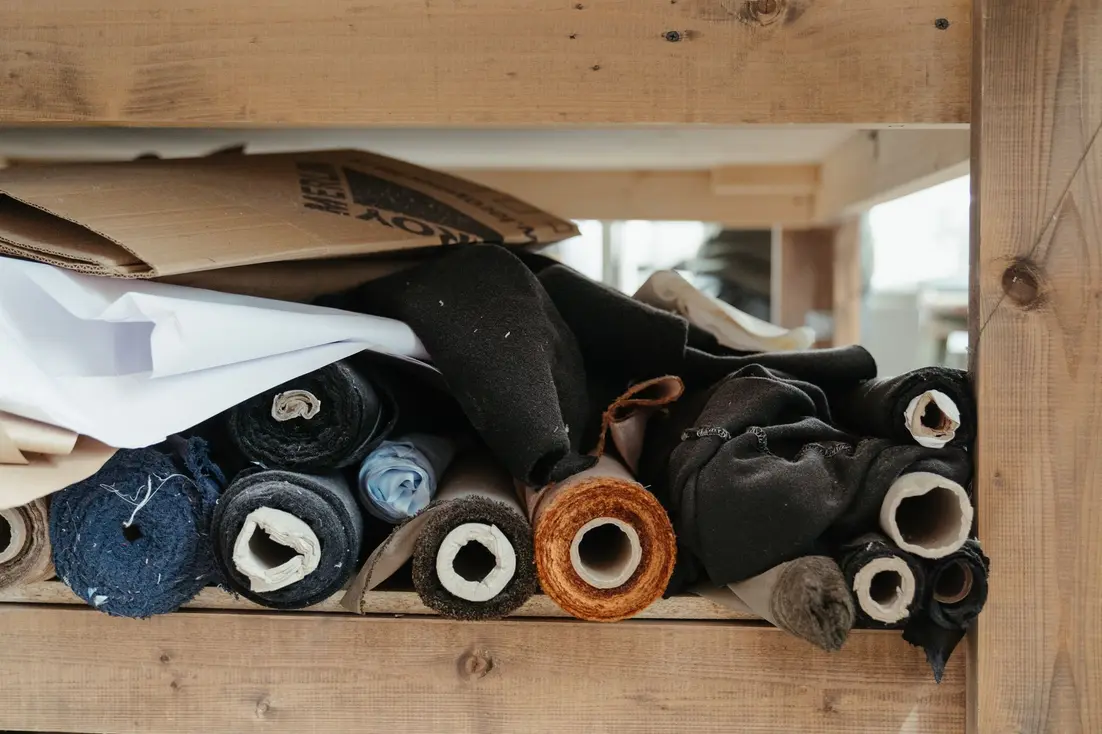
Table of Contents
Introduction to Zero-Waste Textile Studios
A zero-waste textile design studio is a workspace organised to prevent waste before it is created, then keep unavoidable remnants in use at their highest practical value. It addresses fabric off-cuts, paper patterns, sampling, dye residues, packaging, water use and energy consumption as connected design and operational issues rather than separate disposal problems.
The approach is relevant to students, independent designers, fashion start-ups and established textile or apparel businesses. Constraints can also be creatively productive: a fixed fabric width, a limited deadstock roll or a scrap-only brief can generate new silhouettes, surface treatments and construction methods.
Origins of Zero-Waste Textile Design
Textile reuse has long been associated with repair, scarcity and local material knowledge. Patchwork quilting, Japanese boro mending, kantha stitching in South Asia and strip-woven traditions including kente all demonstrate ways textiles have been extended, recombined or valued beyond their original use. These traditions should not be treated as identical forms of modern zero-waste design, but they offer useful precedents for resource-conscious making.
Contemporary zero-waste fashion design developed as a distinct design field through practitioners and researchers including Timo Rissanen and Holly McQuillan. Their work helped shift attention from managing cutting-room waste after production to preventing it during pattern development, when garment shape, fabric width and construction can still be changed.
Identifying Waste Streams in a Textile Design Studio
Start by mapping where materials enter, move through and leave the studio. Common waste streams include fabric off-cuts, test garments, pattern paper, damaged samples, dye baths, pigment residues, chemical containers, shipment packaging and energy lost through poorly scheduled equipment.
Record practical examples, such as small cut pieces with no assigned use, obsolete printed patterns, leftover screen-print paste, plastic film around fabric rolls and machines left powered while idle. Include end-of-life planning at this stage: identify whether each material can be reused, repaired, recycled through an available route, composted where appropriate, or must be treated as waste.
Core Principles for a Zero-Waste Studio
Use prevention as the first priority. Develop patterns around usable fabric width, specify materials only after checking stock, and avoid ordering surplus for uncertain concepts. Keep material information with every roll, swatch and sample: supplier, fibre composition, finish, colour method, quantity, care requirements and realistic end-of-life options.
Build reuse, repair and recovery into routine work rather than relying on occasional clean-outs. A studio can reserve larger remnants for components, sort smaller pieces for surface design, repair tools before replacement and return compatible waste to a defined internal use. Inventory discipline is essential: deadstock and surplus textiles are useful only when quantities, quality and composition are known.
Setting Up a Zero-Waste Textile Studio
Studio setup combines changes to workflow, physical layout, purchasing rules and design decisions. Begin with a baseline, make sorting convenient at the point of use, then introduce tools and systems that help the team reduce repeat sampling and improve cutting accuracy.
Begin With a Resource and Waste Audit
Audit one representative project from concept through sampling, finishing and dispatch. Measure fabric purchased and cut, usable remnants retained, scraps discarded, paper consumed, water used in wet processes and energy-intensive equipment hours. A simple spreadsheet is sufficient if entries are consistent.
Set baseline indicators such as fabric utilisation percentage, kilograms of scraps retained for reuse, samples made per approved design and packaging units per shipment. Review the audit after each collection or project; the purpose is to reveal priorities, not to create perfect data immediately.
Plan the Studio Layout for Material Efficiency
Arrange the space so the low-waste choice is the easiest choice. Place labelled collection points beside cutting and sewing areas for reusable fabric, paper, recyclable packaging and compostable plant matter where a suitable local system exists. Keep uncertain materials separate until their fibre content is confirmed.
Use adaptable cutting tables that accommodate the widths most often used in the studio. Store reusable blocks, rulers and templates visibly on wall racks or in indexed drawers. Position scrap storage near the cutting table, and make a clear route from cutting to sorting, sewing, repair and dispatch so materials do not disappear into mixed bins.
Select Resource-Efficient Studio Tools
Choose equipment according to the studio’s actual volume and materials. Digital cutting and marking systems can improve layout accuracy when operators prepare files well, although their value depends on maintenance, power use and whether production volume justifies the equipment. For smaller studios, careful manual markers, sharp cutting tools and reusable templates may be more appropriate.
Refillable-ink printing systems can reduce disposable cartridge waste where printing is necessary. LED lighting generally uses less electricity than older lighting technologies, while sewing machines with efficient motors or power-saving modes can reduce idle consumption. Switchable power strips and scheduled shutdown procedures often provide a low-cost starting point.
Use Digital Design and Virtual Sampling Tools
3D garment and pattern software can help designers assess silhouette, proportion, print placement and fit assumptions before making every physical mock-up. CLO 3D, TUKAcad and Optitex offer different pattern, visualisation and production capabilities; verify current functions, file compatibility and training requirements before selecting a system.
Digital samples do not replace all physical testing. Fabric drape, seam performance, shrinkage, colour and finish still need material-based assessment. However, virtual iteration can reduce unnecessary paper patterns and early-stage toile production when used with a defined approval process.
Create a Traceable Material Library
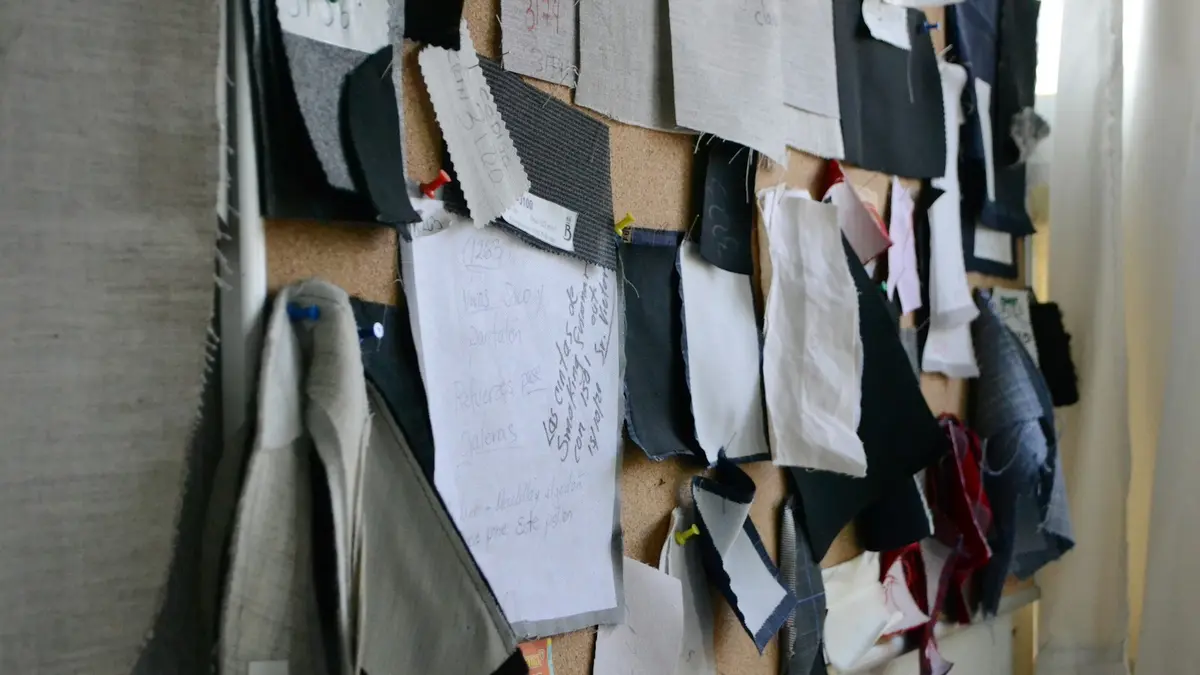
Build a library of deadstock, recovered textiles, upcycled materials and selected fibres suited to the intended use. Attach a durable record to each swatch or roll with supplier, composition, width, usable length, weight where known, colour, finish, care guidance and available certification documentation.
Use length labels and a live scrap register so designers can see what exists before buying. Sort remnants by size, fibre type, colour and finish. In dye areas, adaptable measuring tools, closed containers, low-flow spray tools and clearly labelled vats can help control water and material use. Natural-dye work should be planned with the same attention to safety, wastewater and fibre compatibility as any other wet process.
Zero-Waste Textile Design Methods
Zero-waste methods work best when they influence the brief from the start. The goal is not merely to hide scraps after cutting, but to connect material width, pattern geometry, construction, repairability and expected product life.
Source: Unsplash
Zero-Waste Pattern Cutting
Zero-waste pattern cutting arranges pattern pieces as interlocking or tessellated shapes across a defined fabric rectangle. Designers may use full-width panels, shared seam lines, shaped negative spaces or integrated details to minimise unused area.
Complete utilisation is not always feasible. Directional prints, pile fabrics, grain requirements, fabric defects, sizing, seam allowances and commercial fit expectations can create practical limits. Record actual marker efficiency and retain unavoidable remnants for a planned secondary use rather than claiming zero waste without measurement.
Modular Garment Construction
Modular garments use repeatable units such as squares, rectangles, strips or standard panels. These forms can reduce complex cutting losses and allow components to be replaced when a cuff, pocket or panel wears out.
Design modules with compatible seam allowances, attachment methods and grading logic. A replaceable part is only useful if the wearer can obtain or make a replacement, so provide repair instructions and retain a small quantity of matching material where possible.
Transformable and Adaptable Garments
Reversible garments, adjustable ties, detachable sleeves and removable layers can give one product several configurations. When these features are durable and genuinely useful, they may extend wearing opportunities and delay replacement.
Avoid adding complexity without purpose. Extra fasteners, trims and layers can complicate repair, recycling and care, so assess whether the adaptable feature improves use enough to justify its material and construction impact.
Multi-Size Pattern Grading
Multi-size or adjustable patterns can accommodate a range of body measurements through ease, closures, pleats, ties or modular components. Reusable digital blocks and graded pattern systems can also reduce repeated paper drafting.
Fit testing remains necessary across the intended size range. Document fit assumptions, body measurements and adjustment limits so a broad-size concept does not become a vague or poorly fitting product.
Strategies for Upcycling Fabric Scraps
Create a designated scrap area before scraps accumulate. Sort remnants by size, fibre type, stretch, colour and finish, then assign each category to a realistic pathway. Larger pieces may become pocket bags, facings, bindings, piping, patches or small accessories; mixed pieces can support patchwork and collage textiles.
Narrow woven strips can be joined or twisted for handweaving, depending on fabric strength and fraying behaviour. Compatible fibres can be processed into felted or stitched composite surfaces, while clean, suitable scraps may be used as stuffing where product requirements allow. Avoid mixing unknown fibres when a later recycling route requires a single composition.
Lower-Impact Dyeing and Textile Finishing
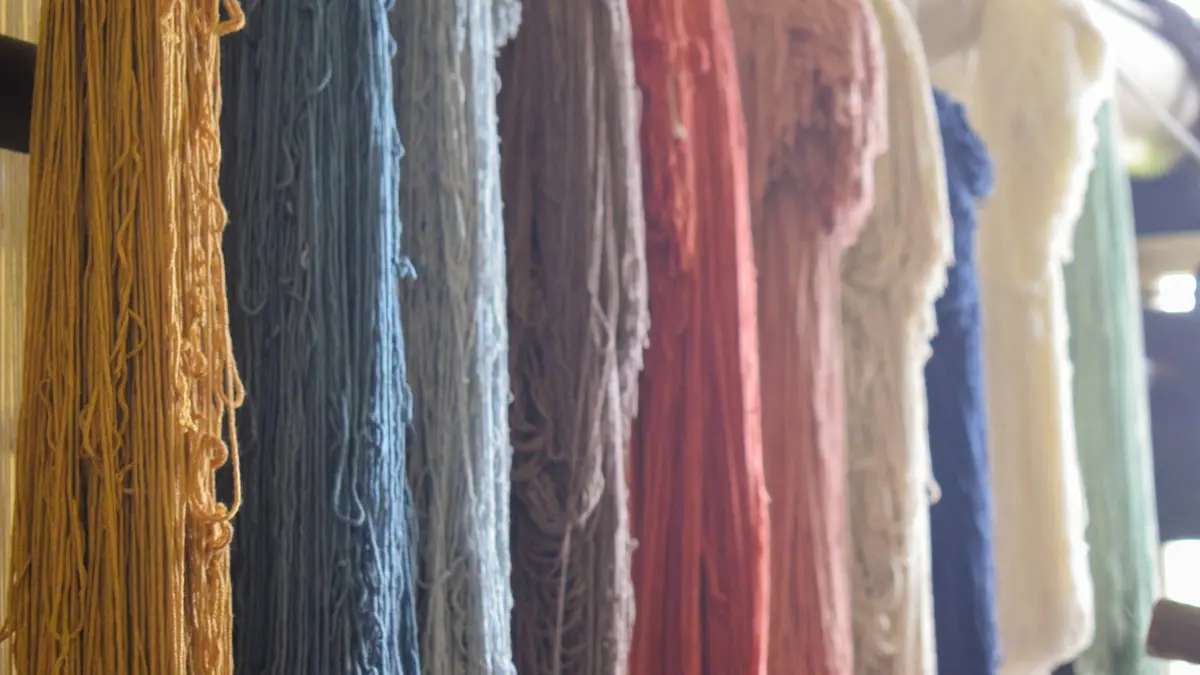
Wet processing requires controls for water use, chemical handling and wastewater. Plant-derived colour sources such as turmeric, indigo, madder and onion skins can produce varied effects, but “natural” does not automatically mean non-toxic, colourfast or low impact. Results depend on fibre, mordant, extraction method, water chemistry and wash testing.
Source: Unsplash
Use the smallest practical dye bath, measure inputs, reuse compatible baths only when performance is acceptable and keep dye records. Bundle dyeing places plant material or coloured scraps against cloth, then uses moisture and steam or heat to transfer colour and pattern. It can be an effective surface-design technique, but it still requires heat, water, controlled handling and fastness testing.
Mordants and auxiliaries need particular care. Alum, soy milk and tannin-containing plant materials are used in some natural-dye practices, but their suitability varies by fibre and process. Do not discharge dye or mordant residues without understanding local wastewater requirements. Water recovery systems may be feasible for rinsing or non-critical cleaning in some studios, but require filtration, storage, testing and local regulatory compliance.
OEKO-TEX certifications address specific tested substances or product classes depending on the standard and certification scope. GOTS applies requirements across certified organic textile processing and includes restrictions relevant to inputs and wastewater management. Neither label is a blanket guarantee for every dye operation; verify the current certificate and scope for each supplier and material.
Zero-Waste Inventory Control and Material Sourcing
Purchase against a design plan, forecast and verified stock count rather than trend-driven accumulation. Before ordering, check whether existing rolls, offcut bundles or approved substitute materials can meet performance requirements. Record minimum order quantities, delivery packaging, defects, shrinkage allowance and likely leftover quantities.
A live materials board can show roll lengths, reservations, incoming deliveries, scraps available for reuse and planned destinations for remnants. Consider reduced-packaging supply options and biodegradable or compostable materials only when their full use conditions and local end-of-life route are suitable. Compostability claims are not useful if the studio has no appropriate collection or processing system.
Building Team Capability and a Low-Waste Culture
Waste prevention is a shared studio responsibility, not a task assigned only to the cutter or studio assistant. Review audit results with designers, pattern cutters, technicians, buyers and production staff so each person can see how decisions affect material use.
Run short skills sessions on marker planning, scrap sorting, digital files, repair construction and safe wet processing. Document successful experiments as internal case studies with pattern notes, photographs, material inputs and limitations. Treat waste constraints as a prompt for structured experimentation, while maintaining quality, safety and fit standards.
Examples of Zero-Waste Textile Practice
Zero Waste Daniel is known for garments and accessories made from pre-consumer textile waste, with communication focused on the origin and use of discarded materials. Its practice illustrates how visible patchwork and scrap-based construction can become part of a brand language rather than an invisible back-end process.
Tonlé, a Cambodia-based apparel brand, has publicly described using surplus materials and production approaches intended to minimise waste. Make/Use in New Zealand has been associated with open-source pattern sharing and participatory making. Practices, product ranges and packaging policies can change, so studios should verify current information directly before using these organisations as operational benchmarks.
These examples show possible directions, not a universal formula for commercial success. Costs, labour, supply consistency, customer expectations and local recovery infrastructure determine what is practical for each business.
Common Zero-Waste Studio Challenges and Responses
The learning curve for zero-waste pattern cutting can be significant. Address it with technical tutorials, small-scale prototypes and post-project reviews instead of expecting every collection to achieve full material utilisation immediately. Build competence through measurable improvements in marker efficiency and remnant recovery.
Deadstock availability can be irregular, so combine verified surplus materials with newly sourced lower-impact fabrics when consistency, safety or volume is required. For larger operations, digital markers and nesting algorithms can improve cutting layouts, but outputs still require human review for grain, defects, print direction and production constraints.
Customer education also matters. Explain material origin, visible joins, repair options and care requirements clearly. Distinctive zero-waste construction may be a value proposition when customers understand why it differs from conventional products.
Emerging Directions in Zero-Waste Textile Design
Digital product passports, blockchain-based tracking and other traceability systems may improve material information sharing, but their usefulness depends on accurate data entry and participation across the supply chain. AI-assisted cutting and nesting tools are developing quickly and may support faster layout exploration, although they do not remove the need for material knowledge and quality control.
On-demand production can reduce overstock risk when lead times, pricing and customer expectations support it. Local-loop studio models may connect designers with nearby repair services, recyclers, mills, community makers and recovered-material suppliers, reducing transport and improving access to material knowledge.
Biodesign is another emerging area. Materials such as bacterial cellulose can be grown under controlled conditions, but scale, durability, finishing, consistency and end-of-life performance remain active technical questions. Treat new material claims as prototypes requiring testing rather than as automatic waste solutions.
Key Takeaways
A zero-waste textile design studio combines environmental responsibility with disciplined design development. The most effective systems begin with measurement, reduce unnecessary purchasing and sampling, make material information visible and create planned uses for unavoidable remnants.
Studios of different sizes can apply the approach through better layouts, pattern development, material libraries, digital tools, team training and customer communication. Zero-waste design is both an operating model and a circular-design position: it asks every project to account for material use before, during and after production.
Further Reading and Source Organizations
For further study, consult the Zero Waste Design Collective for zero-waste design education and practitioner perspectives; Fashion Revolution for resources on transparency and fashion-system change; and the Ellen MacArthur Foundation for circular economy principles relevant to textiles and fashion. Check current publications and programme pages, as guidance and organisational resources evolve over time.